Built for daily prep in busy kitchens
A stainless work table is a fixed prep surface made for food handling, packing and light assembly work. In a catering kitchen it earns its keep because it is easy to wipe down, does not hold odours, and handles the knocks that come with knives, trays, mixing bowls and crates of produce. For bakeries, school kitchens, canteens and takeaway prep areas, it is often one of the first items to be set up and one of the last to be changed.
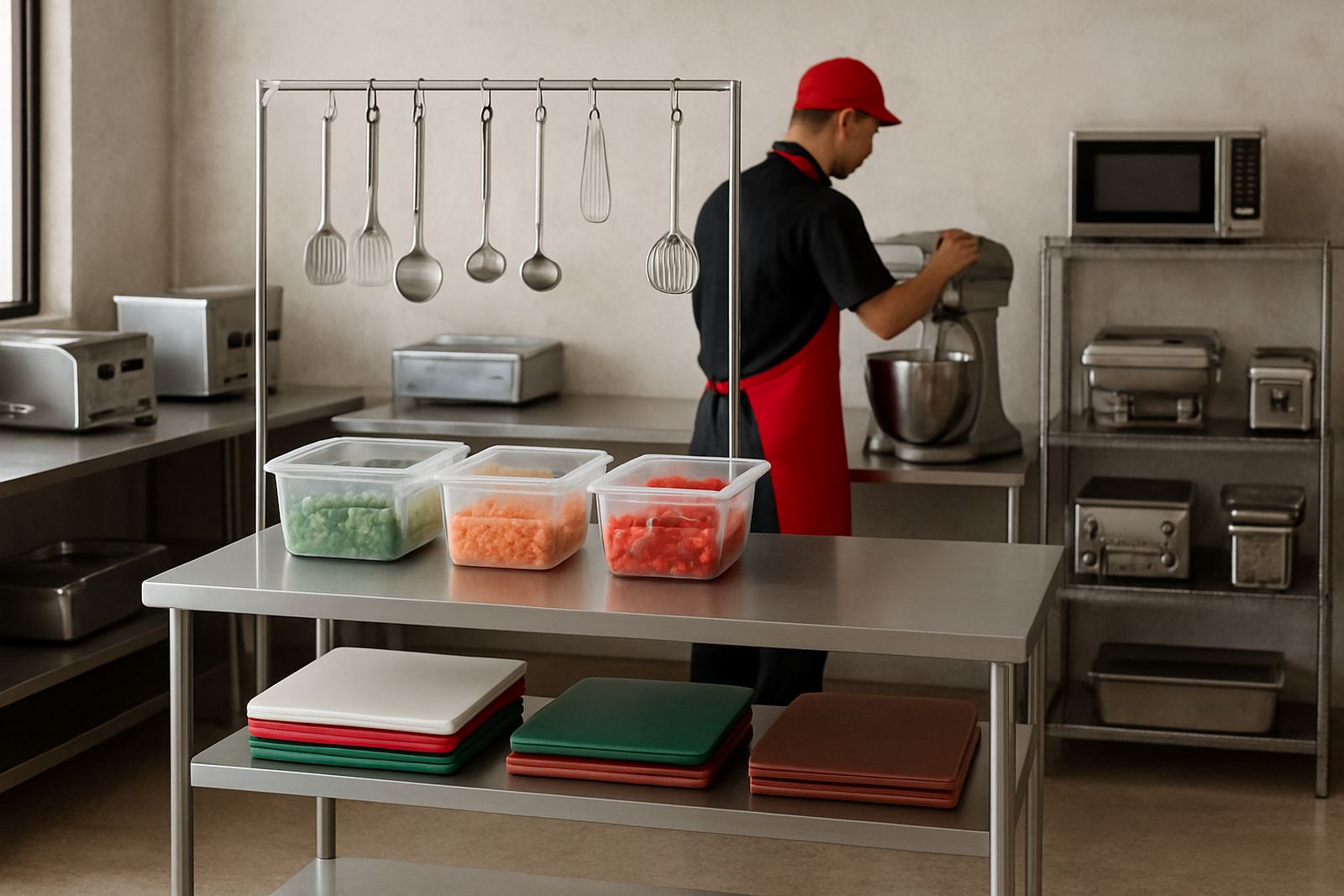
These tables are commonly used for pastry rolling, washing and sorting veg, plating cold dishes and setting out ingredients before service. In Pretoria and the surrounding Gauteng areas, they are also a good choice where space is tight and equipment needs to be arranged neatly for inspections and daily cleaning.
- Suitable for dry prep and general kitchen work
- Easy to sanitise between tasks
- Works well beside fridges, sinks and shelving
- Useful in front-of-house packing spaces too
Sizes and options that suit different kitchens
We supply stainless work tables in a range of lengths and widths so you can match the table to the room, the workflow and the operator. Common sizes include 900 mm, 1200 mm, 1500 mm and 1800 mm lengths, with widths usually around 600 mm or 750 mm. Height is often around 850 mm to 900 mm, which suits most kitchen work without making the operator stoop too much.
You can also choose tables with an undershelf for trays, containers or stock pots, and some setups benefit from a splashback if the table sits against a wall. If the kitchen is small, a compact table with one shelf can save a lot of floor space. If you need packing room or pastry work, a wider top gives more elbow space and keeps ingredients within reach.
- Lengths from 900 mm to 1800 mm
- Widths usually 600 mm or 750 mm
- Undershelf options for storage
- Some tables can be supplied with a splashback
Where a stainless work table fits best
These tables suit bakeries, cafes, deli prep rooms, school kitchens, church kitchens, butchers, guest houses and small production kitchens. They are also useful in any place where food gets portioned, assembled or packed before going out to customers. If you are setting up a new kitchen in Centurion or reworking a service area in Midrand, a work table often becomes the central point around which the rest of the equipment is arranged.
In humid coastal conditions stainless steel is often preferred because it is easier to maintain than many other finishes, but even inland in Pretoria dust and regular wiping matter. A table should sit in a position that does not block walkways, fire exits or access to fridges and handwash points. If the table is placed near a wall, leave enough room for cleaning behind and below it.
- Bakeries and pastry prep areas
- Vegetable cleaning and sorting stations
- Cold kitchen and packing areas
- Back-of-house storage and assembly spaces
Installation is simple, but placement still matters
Most stainless work tables do not need electrical power or gas connections, so installation is usually straightforward. What does matter is the site layout, the floor level and the way the kitchen moves from one task to the next. A table on an uneven floor can wobble, which is not ideal when you are portioning food or working with sharp tools.
We can assist with delivery and positioning in Pretoria, Centurion, Midrand, Kempton Park, Boksburg and Randburg. If the table is going into a tight room or up a narrow passage, check the access route before ordering. It helps to know whether the table must fit through a standard doorway, down stairs, or into a lift. On site, a level table is easier to clean and more comfortable for the team.
- No electricity or gas required
- Check doorway width and turning space
- Confirm floor level and final position
- Allow access for cleaning on all sides where possible
Care, servicing and long-term use
Stainless steel is practical, but it still needs proper care if you want it to last. Daily cleaning with warm water and a suitable food-safe cleaner is usually enough for normal use. Avoid harsh scouring pads that scratch the surface, and do not leave salty water or strong chemicals sitting on the table overnight. In kitchens that work through load-shedding or busy shift changes, a quick wipe down after each service is often the easiest way to keep the table in good order.
If the table is used in a wet area, check for loose fasteners, bent legs or signs of movement under load. We also assist with preventive servicing, workshop refurbishment and breakdown repairs on other catering equipment, so if the table is part of a larger kitchen that needs attention, we can look at the full setup. A table that is cared for properly should give years of service with very little fuss.
- Clean after each shift
- Avoid abrasive pads and harsh acids
- Check bolts and leg stability regularly
- Keep the area around the table dry where possible
What to confirm before you place an order
Before ordering, measure the room properly and decide what the table must do every day. A pastry station may need a wider top, while a veg prep station may need more length and storage below. If you already have fridges, mixers or chafing dishes in the room, work out how staff will move between them without crowding each other. That small bit of planning saves trouble later.
Please check the exact opening size, whether you need a splashback, and if an undershelf will help or get in the way. It is also worth noting any municipal or landlord rules about food prep, drainage or cleaning access in the premises. If you are sourcing for a used kitchen setup, we can help you compare condition, size and fit before you commit. Send your measurements to quotes@afchain.co.za and we will prepare a practical quotation.
- Confirm table length, width and height
- Check if a splashback is needed
- Decide on an undershelf or open base
- Measure access routes and final position
Key facts
| Product | Stainless work table |
|---|---|
| Top material | Stainless steel food-grade surface |
| Common sizes | 900 mm to 1800 mm lengths |
| Typical width | 600 mm or 750 mm |
| Typical height | 850 mm to 900 mm |
| Power or gas | Not required |