A simple toaster for daily service
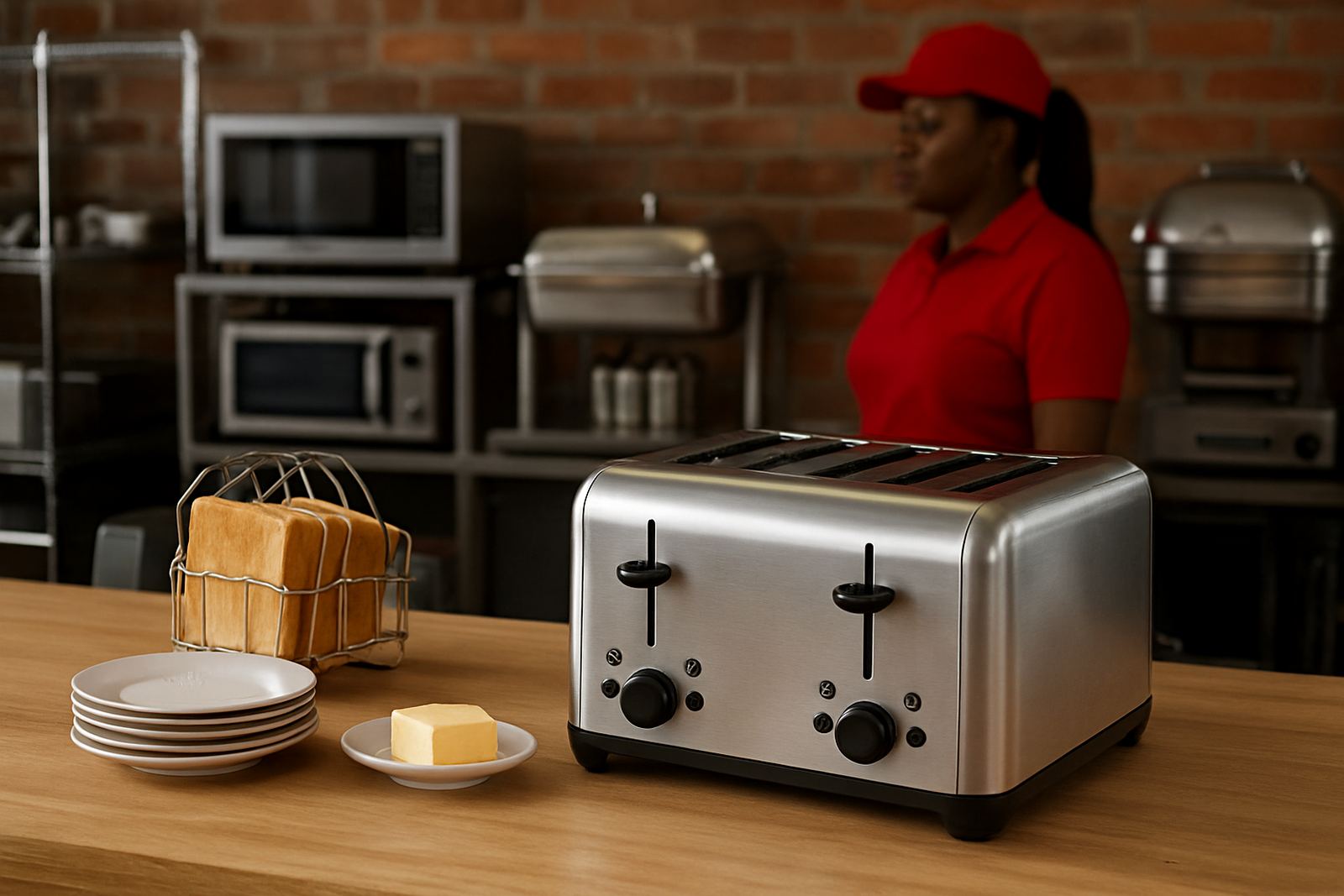
A four slice toaster is a countertop electric unit made for light commercial use. It is designed to brown bread, rolls and similar items in short cycles so staff can keep service moving during breakfast rushes, tea breaks and lunch prep. In many Pretoria and Gauteng kitchens it is the sort of machine that gets used from 06:00 to 10:00 and then again through the day, so the controls must be plain and the heating elements easy to monitor.
Most models use two slots with four slice capacity across one cycle, which helps when you need a steady flow rather than one loaf at a time. The body is usually stainless steel or a mixed metal housing, with a crumb tray underneath for quick cleaning. If your operation has load-shedding backup, check that the toaster fits your inverter or generator plan as it draws a fair amount of power for a short period.
Typical sizes, controls and output
Four slice toasters come in a few layouts, but the useful details are the slot size, heating control and footprint on the counter. A compact unit suits a narrow prep line, while a wider body gives better spacing for thicker slices and buns. The main control is usually a timer or browning dial, plus a cancel lever or eject function. Some units have independent slot banks, which helps when you only need two slices at a time and want to cut electricity use a bit.
- Power supply: 220 V to 240 V single phase electric
- Load: commonly 1.8 kW to 3.0 kW depending on model
- Slot width: about 28 mm to 35 mm for standard bread
- Footprint: from roughly 300 mm wide to 450 mm wide
- Body material: stainless steel or powder coated steel
- Controls: browning dial, lever lift and cancel function
In a smaller café or tuckshop, a lighter model is often enough. In a guest house or hotel breakfast room, it is worth choosing a stronger unit with better recovery between batches because operators tend to push them hard before 08:00.
Where a four slice toaster fits best
This type of toaster suits places that need straightforward service and a small counter footprint. It is not made for a full bakery line, but it works well where toast is part of the breakfast offer rather than the main product. We regularly see them used in Pretoria Central, Centurion and Randburg kitchens where a few extra seconds per batch can create a queue, so the right unit matters.
- Guest houses and boutique accommodation
- Cafés and coffee counters
- School and office canteens
- Staff kitchens and contract catering sites
- Small hotels and breakfast rooms
- Takeaway counters with toasties or breakfast rolls
For operators in coastal or humid areas, or even in kitchens with steam nearby, a stainless finish and good ventilation around the unit helps it last longer. If you are serving buttered toast, toasted sandwiches or rolls, set the toaster on a stable heat resistant surface and keep paper goods away from the hot side panels. It sounds basic but it prevents a lot of trouble.
Power, positioning and first installation
Four slice toasters are electric only, so there is no gas connection to plan for. The important part is making sure the outlet can handle the current and that the plug point is placed sensibly on the serving side of the kitchen. In many Gauteng sites the issue is not the toaster itself but the extension leads, overloaded sockets and too many small appliances on one circuit.
Allow space around the unit for airflow, especially at the rear and sides. Do not push it flush against a splashback if the cord outlet will sit under heat or steam. If you are putting the toaster into a breakfast counter or a new server, we can assist with site assessments, delivery and positioning, then check whether the kitchen layout needs a small rework before handover. That is useful where counters are tight or where staff need a better flow between the toaster, butter station and plate return.
For operations dealing with municipal inspections or fire safety checks, keep the area tidy and do not run cables across walkways. A simple appliance still needs proper placement. If the site has load-shedding backup, tell us what inverter or generator capacity is available so the correct toaster load can be matched to the rest of the kitchen, because not every system handles heating equipment comfortably.
Cleaning, maintenance and servicing support
Regular cleaning keeps the toaster working properly and helps avoid burnt crumbs and uneven browning. At the end of service, switch off the unit, allow it to cool and empty the crumb tray. Wipe the exterior with a damp cloth and mild detergent, then dry it before the next use. Do not hose it down or immerse any part in water, that causes unnecessary damage and may void warranty terms on new equipment.
For longer life, check the heating pattern every week. If one side browns faster than the other, or if slices need several cycles, the elements may be weakening. In a busy kitchen that kind of drift is easy to miss until breakfast service slows down. We offer preventive servicing, breakdown repairs and workshop refurbishment for equipment that is no longer performing as it should. Used units can often be brought back into better shape if the body and switches are still sound.
- Unplug before cleaning or moving the unit
- Keep the crumb tray clear of grease build-up
- Inspect cords, plugs and heat marks monthly
- Replace worn switches or elements before peak season
- Store away from heavy steam and wash-up spray
In Pretoria and surrounding areas, a planned service visit is often cheaper than waiting for a failure during a breakfast rush. It also gives you time to check if the toaster still suits the menu and the number of guests you are handling.
What to check before you order
Before placing an order, measure the counter space and think about how the toaster will be used in service. Some sites need a plain four slice unit, while others need a model with wider slots for artisanal bread or thicker rolls. If the machine will sit in a shared prep area, ask about the cord length, body heat and cleaning access so staff do not struggle every morning.
- Number of breakfast covers or daily servings
- Bread size and whether thicker slices are used
- Available power point and circuit capacity
- Counter width, depth and clearance above the unit
- Whether the site needs new or used equipment
- Need for installation, training or follow-up servicing
If you are replacing an old toaster, send photos of the existing unit and the kitchen layout with your quote request. That helps us match the right size and check whether a simple swap is possible or whether a small reconfiguration is needed. We work from Silverton, Pretoria and support kitchens across Pretoria Central, Centurion, Midrand, Kempton Park, Boksburg and Randburg, so we can quote properly and avoid the guesswork.
Key facts
| Capacity | Four slices per cycle, depending on bread size and slot layout |
|---|---|
| Power | 220 V to 240 V single phase electric |
| Typical load | 1.8 kW to 3.0 kW |
| Body | Stainless steel or powder coated steel |
| Controls | Browning dial, lever lift and cancel function |
| Use | Light commercial countertop breakfast service |