What an extractor canopy does above the cookline
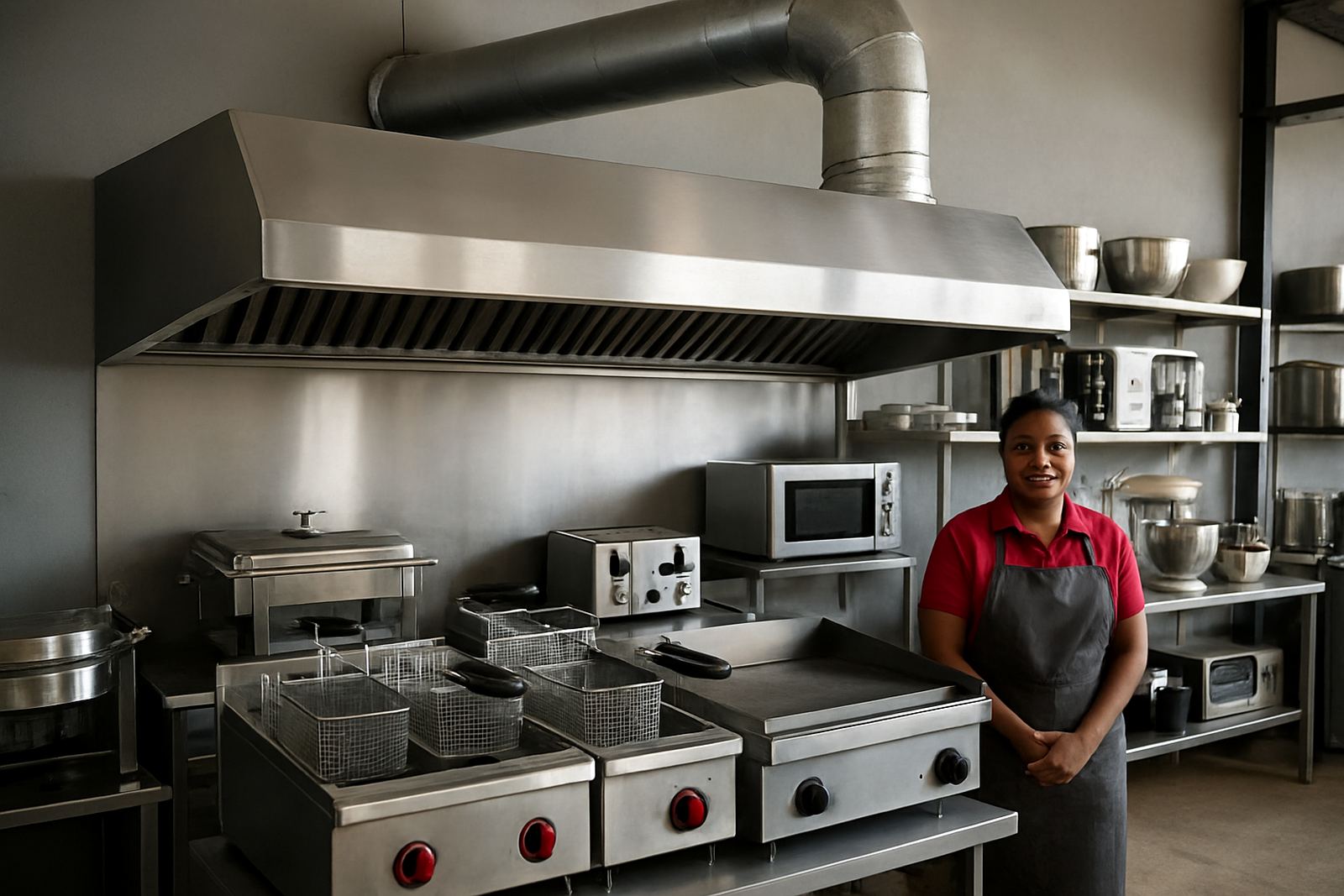
An extractor canopy is the hood fitted above fryers, griddles, ranges, ovens and chargrills to catch hot air, grease mist and steam before it spreads through the kitchen. In a busy Pretoria or Centurion kitchen that means less heat build-up around staff, cleaner walls and ceilings, and better control of odours in the prep and serving areas.
The canopy is usually matched with ducting and a fan system that moves the air outside or through a suitable treatment setup where required. For kitchens running during load-shedding on generator power, the canopy must be planned with the rest of the ventilation and cooking load so the kitchen still works properly when power changes, and gas appliances keep receiving enough make up air.
Sizes, build options and filters to ask for
Extractor canopies are normally made to suit the length of the cookline, with common widths starting around 1200 mm and going up in sections for longer runs of 1800 mm, 2400 mm, 3000 mm and more. Depth is usually sized to cover the front and back of the cooking equipment properly, while height and duct positions depend on the ceiling, roof structure and available service route.
- Wall type canopies for a line of equipment against a wall
- Island type canopies for cooking blocks in the middle of the kitchen
- Stainless steel construction for food areas and easier cleaning
- Baffle or mesh filters to catch grease before it enters the ducting
- Light fittings where the cookline needs better visibility
For coastal humidity or kitchens with heavy wash-down routines, stainless steel is often the better long term option. In used or budget projects, we can also look at refurbished units if the size and condition suit the job.
Where this canopy works best
This product suits any kitchen where heat and steam build up quickly. That includes takeaways in Pretoria Central, school kitchens in Boksburg, restaurant prep lines in Randburg, and production kitchens in Midrand or Kempton Park. It is especially important where multiple appliances run side by side and staff need clear working space over long shifts.
- Fry lines with deep fryers and chip fryers
- Grill areas with planchas or chargrills
- Pastry and prep kitchens with steam from kettles or cookers
- Hotel and canteen cooklines with frequent service rushes
- Kitchen reconfiguration projects where the old layout is being changed
If the kitchen opens into a public area, the canopy and extraction layout also help with odour control. That does not replace proper cleaning, but it does reduce smoke and grease drifting into seating or passage areas.
Installation, ducting and service power checks
Good installation matters as much as the canopy itself. The unit needs to be fixed securely, level and placed at the correct height above the equipment below, with enough clearance for fire safety and maintenance access. Ducting must be planned to suit the route through the building, roof or external wall, and the fan position must allow for proper air movement without unnecessary bends that restrict flow.
We also check what the kitchen is using for power and gas. If the cookline includes electric equipment, the canopy must work with the electrical plan, lighting and any interlocked controls. If gas appliances are fitted, the kitchen needs suitable ventilation and make up air so the burners perform correctly and staff are not working in stale hot air. On sites with municipal rules or landlord requirements, we can assess the space before ordering so the canopy fits the building layout and compliance needs.
Care, cleaning and preventive servicing
Extractor canopies need regular cleaning because grease builds up inside the filters, on the liner and in the ducting. When that happens airflow drops and the kitchen starts running hotter, noisier and less efficiently. A monthly or bi-monthly cleaning routine is common in high use kitchens, while lighter operations may manage on a different cycle depending on fry volume and service hours.
Afchain can service canopies as part of broader preventative maintenance for the kitchen. We check filter condition, fan performance, fixings, light fittings where fitted, and general wear on the hanging points and ducting joints. In workshop refurbishment work we also help with repairs on used equipment and can advise when a part is worth replacing instead of pushing it another few months.
What to check before you place an order
Before asking for a quote, measure the cookline and note what appliances will sit under the canopy. A fryer bank needs different coverage to a single oven or a mixed grill line, so the equipment list matters. It also helps to know the ceiling height, whether the canopy must run to a wall or island, and where the duct can exit.
- Cookline length in metres and the exact appliance list
- Wall mounted or island mounted layout
- Ceiling height and roof type
- Power supply and whether the site runs gas
- Preferred finish, stainless steel or other approved material
- Whether installation, delivery and positioning are required
If you are replacing an old unit, send a photo of the existing canopy and the duct route too. That usually speeds up the quote and helps us see what can stay in place and what needs changing, which saves time on site.
Key facts
| Product type | Extractor canopy for commercial kitchen ventilation |
|---|---|
| Typical sizes | 1200 mm, 1800 mm, 2400 mm, 3000 mm and custom lengths |
| Construction | Stainless steel canopy with grease filters |
| Mounting styles | Wall mounted and island mounted |
| Primary use | Heat, grease and steam capture above cooklines |
| Services available | Quotes, delivery, positioning, installation, servicing and repairs |