What a prep fridge does in a busy kitchen
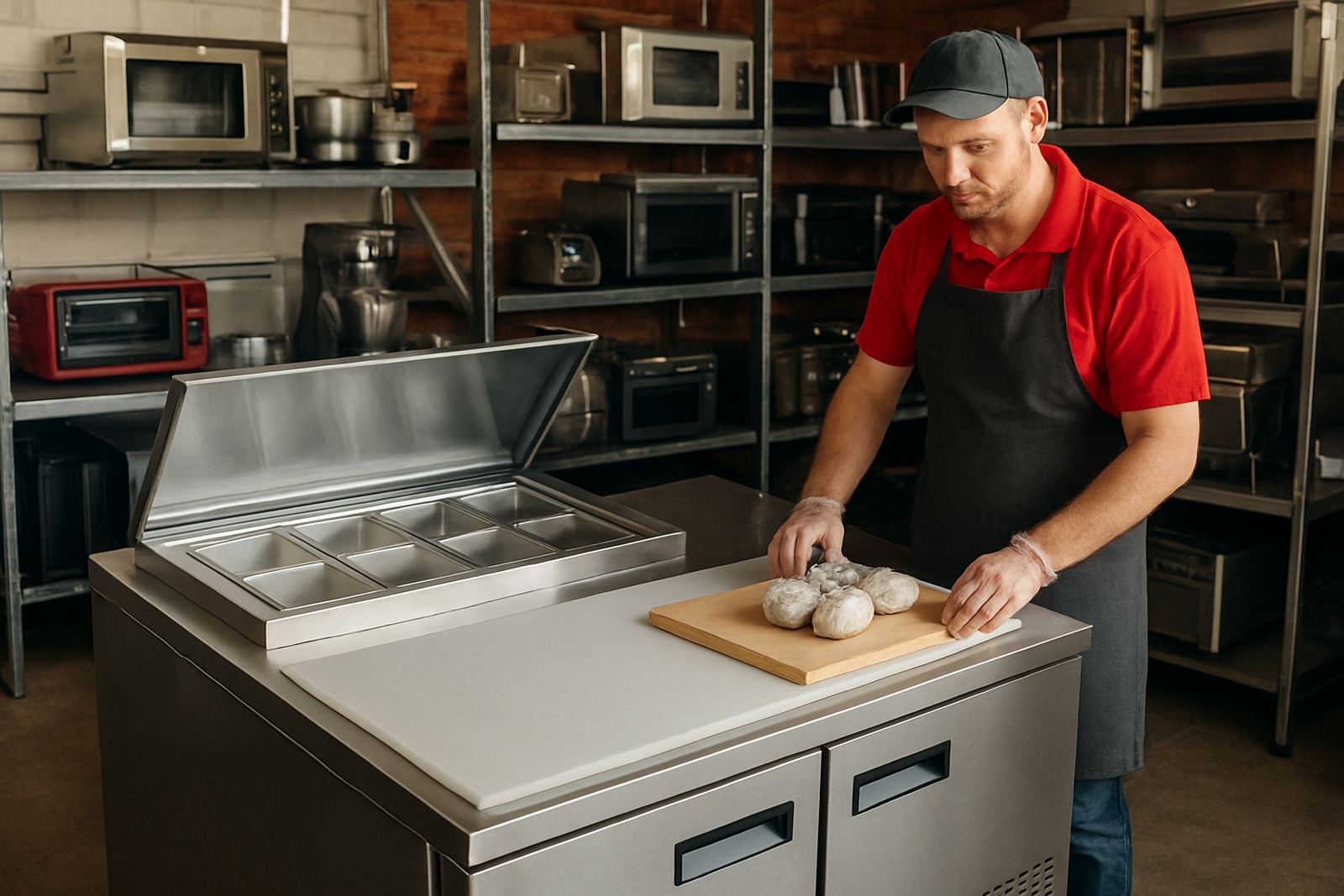
A prep fridge is built for service counters where staff need chilled ingredients close at hand. The top section holds pans for lettuce, tomato, cheese, sliced meats, sauces and similar items, while the lower cabinet stores extra stock or GN pans below. That means less walking back and forth, quicker order assembly and better control over food safety.
In a compact takeaway or sandwich bar, this unit can replace a separate undercounter fridge and loose worktable. In a larger canteen or cafeteria, it keeps the line moving during breakfast, lunch and school rushes. Most customers in Pretoria want something that can handle load shedding and hot afternoons, so correct sizing and ventilation matter from the start.
- Cold holding for prep ingredients and backup stock
- Flat stainless worktop for assembly and plating
- Easy access for staff on the service line
Common sizes and layout options
Prep fridges are usually supplied in one, two or three door formats, with pan tops arranged for either GN pans or smaller ingredient containers. A 900 mm unit is often chosen for tight kitchens, while 1200 mm and 1500 mm sizes suit higher output. Larger lines may use 1800 mm or more, especially where there are separate salad, sandwich and garnish stations.
Some models include a glass sneeze guard, while others are open top for quicker access. You can also choose drawer sections, stainless lids, or a simple flat top if you want to use the surface for packing and light prep. If the kitchen has a narrow pass, measure doors and turning spaces carefully, not just the final footprint.
- Typical widths: 900 mm, 1200 mm, 1500 mm, 1800 mm
- Pan top layouts for GN containers or split ingredient pans
- Options for doors, drawers, glass guards and solid lids
Where a prep fridge suits best
This product works well in sandwich shops, cafés, forecourt kitchens, school tuck shops, hotel breakfast rooms and quick service counters. It is also useful in canteens and contract catering where staff need to build meals quickly while keeping ingredients chilled. In coastal areas such as Boksburg and parts of the East Rand humidity can be an issue, so a unit with good door seals and sensible daily cleaning is worth the attention.
In Pretoria Central or Centurion, many operators use a prep fridge at the front counter and a separate cold room or upright fridge in the back. That setup reduces opening times and helps the line stay neat during peak periods. If your menu is simple, one prep fridge may be enough. If you offer salads, wraps and toasted items together, a larger line or two units side by side can work better.
- Sandwich and salad bars
- School and office canteens
- Hotels, guest houses and breakfast service
- Takeaway shops and fast casual kitchens
Power, heat and installation notes
Most prep fridges run on standard single-phase electricity, but the exact draw depends on size and compressor rating. Before ordering, check that the circuit can carry the load with some margin, especially if the kitchen already runs fryers, toasters and microwaves on the same supply. During load shedding, many operators connect the fridge to backup power for temperature control, though start-up surge must be checked.
Installation needs a level floor, enough rear and side clearance for air flow, and a position away from ovens, griddles and direct sunlight. If the unit stands in a hot kitchen, the compressor will work harder and temperatures may rise slower after restocking. A prep fridge should also sit where staff can load it without blocking the pass. Our team can do site assessments in Pretoria, Centurion, Midrand, Kempton Park, Boksburg and Randburg.
- Confirm single-phase supply, plug type and breaker size
- Allow ventilation space around the compressor
- Keep it away from heat sources and direct sun
- Check access for delivery and positioning before ordering
Care, servicing and daily checks
Good day-to-day care keeps the cabinet colder and the service life longer. Clean the pan top, seals and door handles every shift, and remove spills straight away so that moisture does not sit in the cabinet. The condenser area should be kept free of dust and grease, especially in kitchens that fry often. If a fan is blocked or a seal is damaged, the unit can lose temperature and use more power.
Preventive servicing helps catch small issues before they become breakdowns. That may include thermostat checks, gas or refrigerant leak checks, compressor inspection and seal replacement where needed. Used units should be tested before purchase, and it is worth asking for a service history if one is available. In our workshop, we also refurbish equipment for customers who want a sound unit without paying for new stock.
- Clean seals, pans and drip areas daily
- Do not overload the top with warm stock
- Book regular servicing before peak trading
What to check when ordering a prep fridge
Start with your menu and storage pattern. Count how many ingredients must stay on the top line, how many backup containers need to sit below, and whether staff work from the front or the back of the unit. Measure the available floor space, door widths, and route from the delivery point to the kitchen. If the site is on an upper floor or in a mall, confirm lift access and any municipal or landlord rules before the order goes in.
Also ask about the temperature range, pan configuration, shelf arrangement inside the cabinet and whether the controller is simple to read during a rush. If you are buying used equipment, check the seals, doors, castors, compressor noise and overall cleanliness. A proper quote should show what is included, such as delivery, positioning, installation, and any follow-up service work. That avoids surprises later on and makes the handover smoother.
- Working space and final measurements
- Temperature control and storage capacity
- New or used condition, with service history if available
- Delivery, installation and after-sales support
Key facts
| Product type | Salad and sandwich prep fridge |
|---|---|
| Typical widths | 900 mm, 1200 mm, 1500 mm, 1800 mm |
| Power supply | Usually single-phase electricity, check model rating |
| Construction | Stainless steel cabinet and worktop |
| Temperature use | Chilled ingredient holding for prep service |
| Common options | Pan top, glass guard, drawers, solid lid, doors |