What a used mixer gives your kitchen
A pre-owned mixer is built to take the repeat work that bakeries, coffee shops and prep kitchens deal with every day. It handles batches of dough, cake mix, icings, savoury fillings and other regular prep without tying up staff on hand mixing. For businesses watching spend, a used machine can free up cash for ovens, fridges or extraction, while still giving dependable mixing output.
Used mixers vary by bowl size, motor rating and the way the head or bowl moves. Some are light duty for small bakes, others are heavier floor models for higher volumes. We supply units that are suitable for daily use, provided they are matched to the job and checked before installation.
Sizes and options available
When you order a used mixer, the main choice is capacity. Smaller tabletop mixers are often suited to cafés, schools and takeaway kitchens. Larger bowl mixers suit bakeries, butcheries with prep rooms and busy production kitchens that need more than one batch before the lunch rush. A good match avoids overworking the motor and helps the mixer last longer.
- Tabletop mixers for compact prep areas and lower batch volumes
- Floor standing mixers for heavier dough and bigger daily output
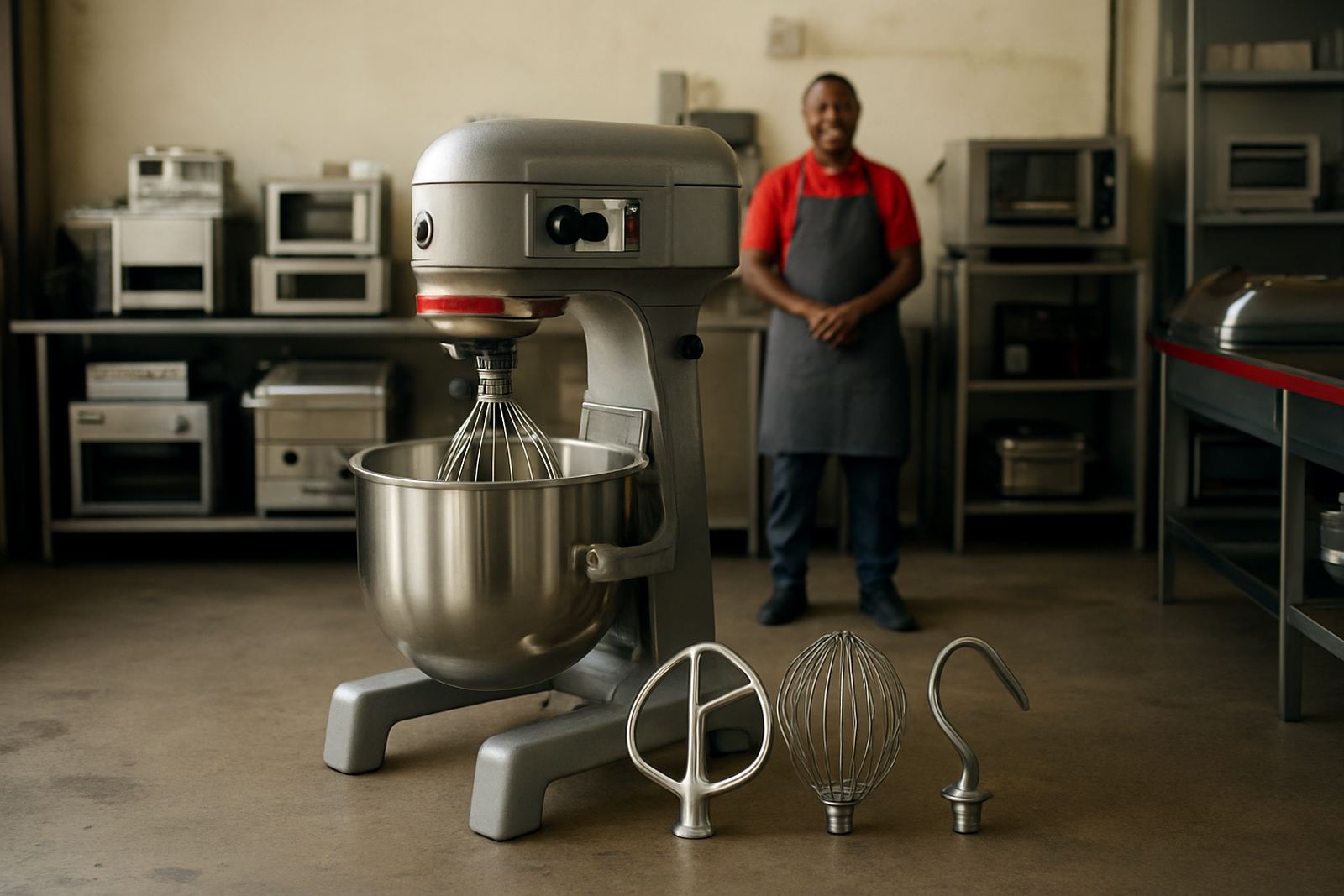
- Planetary style mixers for batter, cream, fillings and general mixing
- Units with guards, whisk, paddle and dough hook options where available
- Manual or variable speed control depending on the model
Typical used capacities we handle include 5 L, 10 L, 20 L and 30 L units, with larger commercial machines available subject to stock. If you need a machine for pastry work, bread dough or mixed prep, tell us the batch size and we will advise on the correct bowl size.
Where this mixer works best
This product suits bakeries, school kitchens, coffee shops, caterers, food trucks with prep space, and deli counters that make sauces or fillings in-house. It is also practical for businesses in Pretoria, Centurion, Midrand, Kempton Park, Boksburg and Randburg that need a cost-aware setup with local support close by.
Used mixers are especially useful where the kitchen already has ovens, fridges and holding equipment, but mixing needs to be sorted without a big capital outlay. In smaller premises, a compact mixer can fit into a corner of the prep room and still do daily work. In larger kitchens, a heavier machine can be placed near the dry goods store or pastry section for smoother workflow.
- Bakeries making dough, batter and icing daily
- Cafés producing scones, cakes and fillings in smaller batches
- Catering teams needing a back-up mixer for events
- Prep rooms in butcheries, delis and school kitchens
Installation, power and site checks
Most used mixers are installed on a level floor or sturdy counter, depending on the weight and size. During a site assessment we check the space, plug position and access for cleaning. If the unit is a larger floor model, we also look at lifting access, doorway width and where the bowl can be loaded safely.
Power needs vary by machine. Smaller mixers may run on standard single phase supply, while bigger units can need a dedicated circuit. In areas where load-shedding is a concern, it helps to plan how the mixer fits with backup power or generator use. If you are in a coastal town or a humid prep room, we also consider ventilation and corrosion risk, because moisture can affect switches and moving parts over time.
- Check the available power supply before ordering
- Confirm counter strength or floor space for the chosen model
- Plan for safe lifting, positioning and operator access
- Allow space for bowl removal, cleaning and ingredient loading
Care, servicing and workshop support
A used mixer lasts better when it is cleaned after every shift and serviced on a regular schedule. Wipe down the body, bowl and attachments, then check for loose guards, worn belts or unusual noise. If the mixer starts to labour, vibrate more than usual or leaves mix uneven, it needs attention before the fault spreads. A small issue can become a bigger repair if the machine keeps running under strain, so best not to leave it.
Afchain Catering Equipment offers preventive servicing, breakdown repairs and workshop refurbishment. We also assist with used equipment sourcing, so if your current mixer needs a major overhaul we can advise whether repair or replacement makes better financial sense. Our team in Silverton supports customers across Gauteng and can help with handover training for staff who will use the mixer day to day.
What to check before you place an order
Before you confirm a used mixer, make sure the capacity matches your batch size and that the attachments you need are included. Ask about the motor condition, gearbox noise, guard function and whether the bowl locks properly. If the machine is going into a busy prep room, it is worth checking how easy it is to clean around the base and under the bowl.
Also confirm the age of the unit, service history and whether any parts have been replaced. A mixer with a clean running sound and good finish may still need a proper check on bearings, belts and switches. We can quote from your requirements and advise on the best option for your kitchen, whether you need a basic unit or a machine for heavier daily production.
- Required bowl size and expected daily batch volume
- Single phase or three phase power at the site
- Included accessories such as whisk, paddle or dough hook
- Condition of safety guard, switches and drive components
- Delivery point and whether positioning is needed on site
Key facts
| Product type | Pre-owned commercial mixer |
|---|---|
| Common capacities | 5 L, 10 L, 20 L, 30 L and selected larger units |
| Typical use | Dough, batter, icing, fillings and prep room mixing |
| Power options | Single phase or three phase, subject to model |
| Installation | Counter or floor standing, depending on weight and size |
| Support | Quotes, servicing, repairs, refurbishment and delivery in Gauteng |