Built for steady batch cooking during busy service
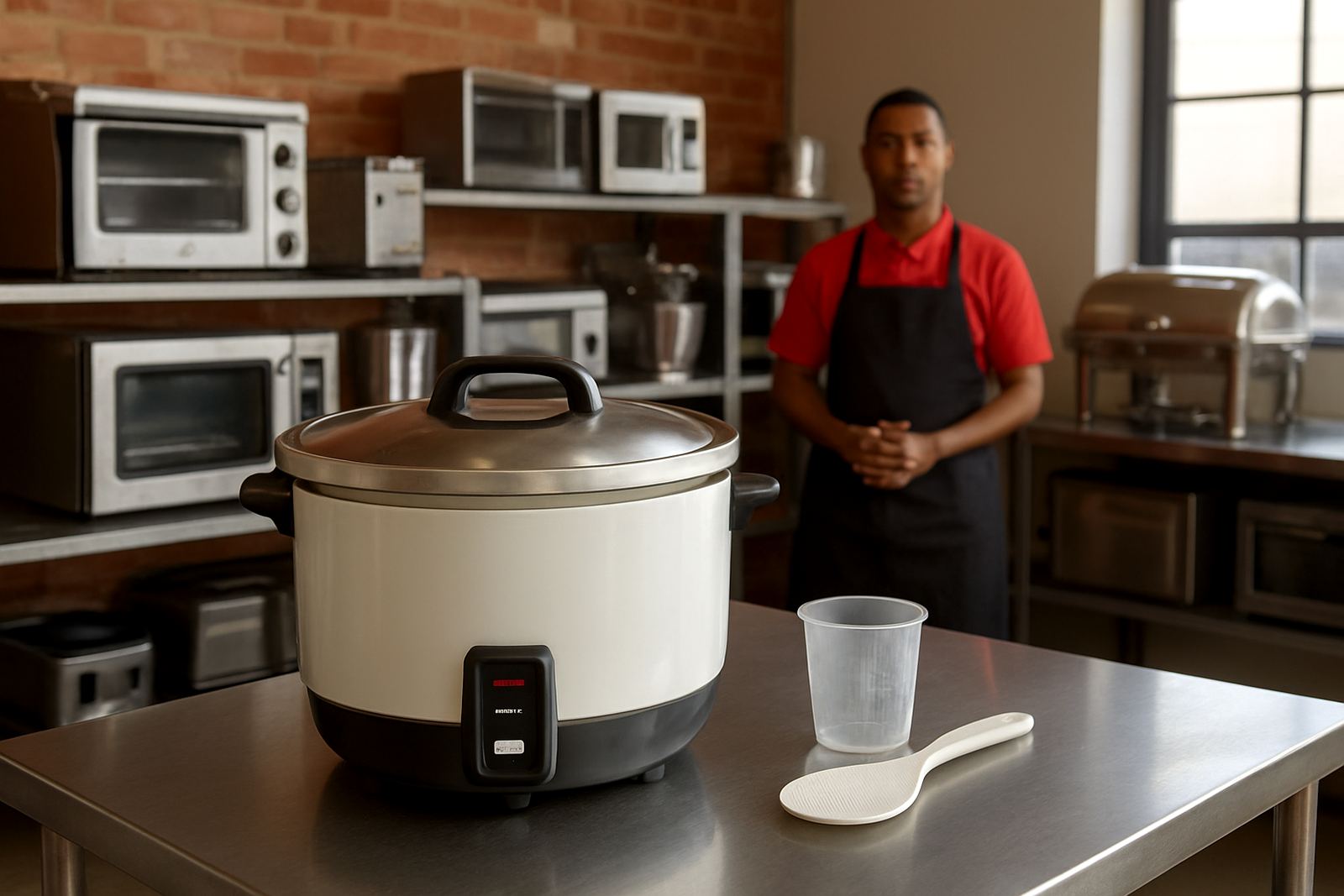
A commercial rice cooker is made to cook and hold bigger quantities than a domestic pot. It is used where rice must be ready through lunch rush, supper prep, or bulk plating for events. The unit gives more even heat than a stovetop pot, and once the cycle is done it switches to a holding function so the rice stays warm without drying out too fast.
For many kitchens in Pretoria and Gauteng, rice is not a side dish only. It forms part of daily sales in takeaways, school kitchens, staff canteens, home meal prep businesses and catering jobs. If your team is packing 30 to 200 meals at a time, a proper rice unit saves labour and helps keep portions consistent.
We supply equipment for new kitchens, replacement units and used stock when budget matters. If you need a quote for one outlet or a few branches, we can size the unit around your menu and peak covers.
Sizes and options to match your volume
Commercial rice cookers are usually selected by cooked capacity and the number of portions needed per batch. Smaller counter units can suit a café or office canteen, while larger units are better for fast food stores, institutions and function prep kitchens. In practice, people often choose by how many 250 ml portions they need in one sitting, plus a little extra for second helpings and wastage.
- Small: about 10 to 20 cups raw rice, suitable for light daily use
- Medium: about 20 to 30 cups raw rice, common in takeaways and canteens
- Large: 30 cups and above, better for catering prep and high turnover kitchens
- Holding function: keeps rice warm after cooking for service periods
- Lid and inner pot: removable for quicker cleaning and batch changes
Some kitchens also ask for units that can handle mixed grains or larger batches of samp or pilau-style dishes. That depends on the heating pattern and the pot coating, so it is worth checking before ordering.
Where a rice cooker works best in Gauteng kitchens
This equipment suits places where rice is served every day and the kitchen must keep moving. We often recommend it for takeaway shops in Pretoria Central, Centurion and Boksburg, as well as staff kitchens, school feeding sites, church kitchens, small caterers and food prep businesses in Midrand, Randburg and Kempton Park.
It is also useful where staff numbers are limited. Instead of watching a pot on the stove and stirring to prevent burning, the cook can measure, switch on, and move on to sauces, proteins or packing. That helps when load-shedding changes your timing and you have several items running at once.
- Takeaways selling rice meals, curries and stews
- Canteens serving fixed lunch portions
- Catering prep kitchens with bulk batch cooking
- School and training centre kitchens
- Hospitals, NGOs and staff feeding programmes
Power, space and installation checks before ordering
Most commercial rice cookers are plug-in electric units, so the first check is the available power point and how many other appliances are already on that circuit. In many kitchens a dedicated socket is best, especially where fryers, toasters and microwaves are also in use. If the kitchen already struggles with tripping during peak times, we can advise on placement and practical load sharing.
Measure the counter or preparation area before you order. Leave space for opening the lid, lifting the inner pot, and moving hot rice safely to a pass or hot holding point. Keep the unit away from sinks, splashing and direct steam from other equipment. In coastal or humid conditions, good ventilation helps protect switches and reduce corrosion over time.
If you are setting up a new kitchen or changing the line layout, Afchain can assist with site assessments, delivery and positioning, and kitchen reconfiguration. For some clients we also do handover training so the team knows how to measure, wash, cook and hold the rice properly from day one.
Care, cleaning and servicing that keep it dependable
Rice cookers last longer when they are cleaned after every service and not left with starch build-up around the pot, hinge and lid seal. Empty the unit after use, wash the inner pot carefully, and dry all contact areas before the next batch. Do not use sharp tools or metal scrubbers on coated surfaces because that shortens the life of the pot and can affect heat transfer.
For busy kitchens, preventive servicing is worth doing before the unit starts giving trouble. A technician can check the thermostat, indicator lights, wiring, lid alignment and plug condition. If the unit is used in a hot kitchen all day, those parts wear faster than people expect. Small faults like a loose cord or uneven heating can turn into bigger downtime if ignored.
- Clean after each shift to stop starch build-up
- Check the seal and hinge for wear
- Keep the base dry and off wet floors
- Book servicing before peak season or a major function run
What to confirm when you ask for a quote
When you request a quote, it helps to give your daily rice volume, the type of meals you sell, and whether you need one unit or several. If you are replacing old equipment, send the existing size, power details and a photo of the space. That makes it easier to match the right model and avoid buying something too small or too large.
You should also confirm whether you want new or used stock, delivery in Pretoria or the broader Gauteng area, and if installation is needed on site. If the kitchen is in a busy shopping area or a municipal building, it helps to know access times, lift access and any rules for offloading. For some sites, a short site assessment saves a lot of back-and-forth later.
Afchain Catering Equipment has been supporting the trade since 2011 from Silverton, Pretoria, with quotes, installation, servicing, workshop repairs and used equipment sourcing. For commercial rice cookers and related kitchen equipment, send your request to quotes@afchain.co.za and we can work from there.
Key facts
| Product type | Commercial electric rice cooker for bulk batch cooking and warm holding |
|---|---|
| Typical capacity | 10 to 30+ cups raw rice depending on model |
| Use case | Takeaways, canteens, catering prep, school and staff kitchens |
| Power | Usually 220 V to 240 V single-phase electric |
| Key parts | Main body, inner pot, lid, heating plate, thermostat, indicator lights |
| Services available | Supply, quotes, delivery, installation, servicing, repairs and used equipment sourcing |