What a potato peeler does in a busy kitchen
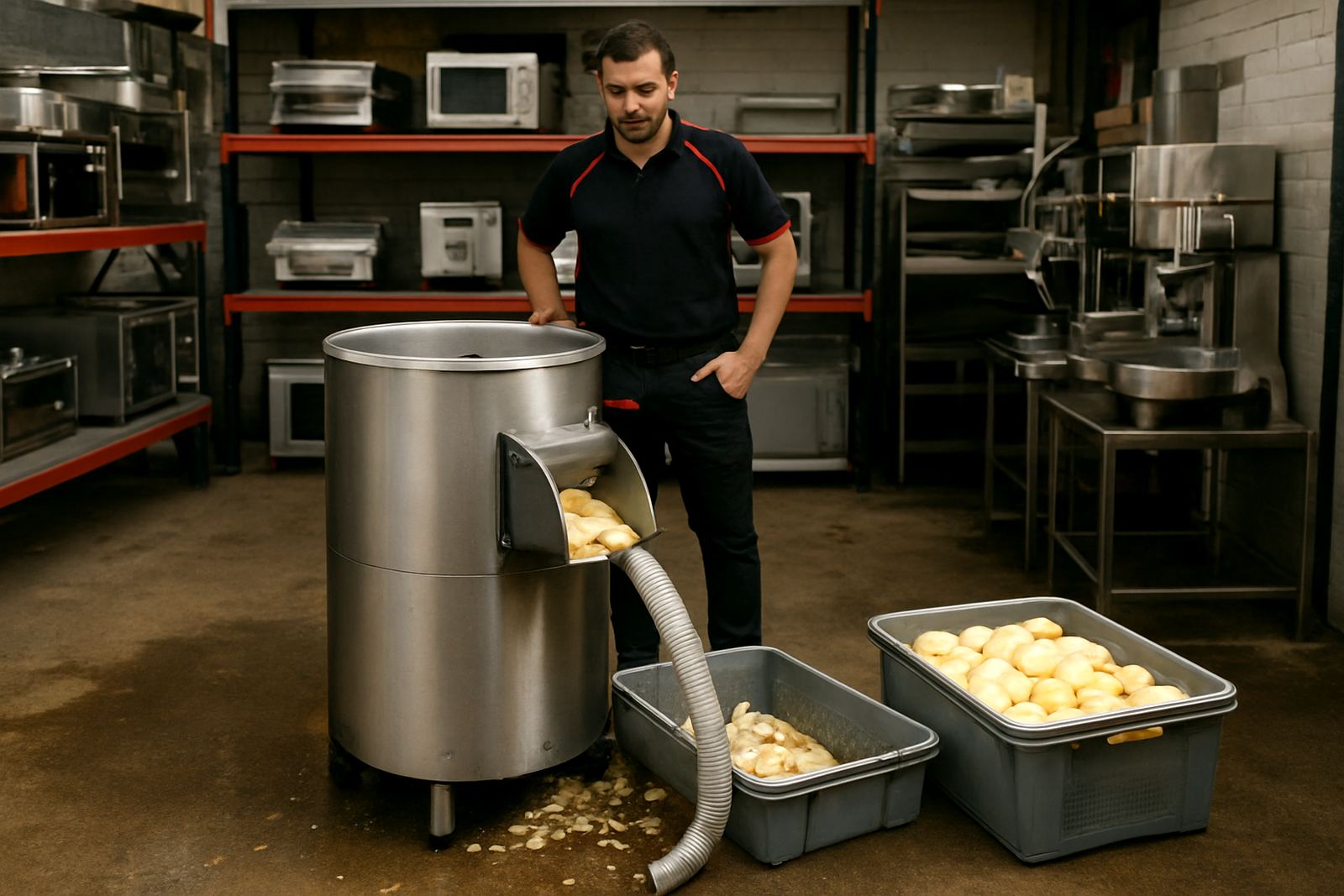
A potato peeler removes skins quickly and evenly, which cuts hand labour and keeps prep moving when orders are stacking up. It is a practical machine for schools, canteens, takeaway kitchens, hospitals, contract caterers and any food site that peels large volumes before service.
Most units use an abrasive peeling drum or disc that rubs the skins off while the potatoes turn inside the chamber. The result is faster prep and less waste than doing it by hand. If your kitchen handles loads early in the morning or before lunch rush, a peeler can make a clear difference to labour time and consistency.
We supply peelers for smaller catering counters as well as heavier duty floor standing units for higher throughput. If you already run fryers, chips prep and bulk cooking, a peeler often fits in as part of the same production line.
Size options and typical output ranges
Potato peelers are usually selected by batch size and the amount of product you need to process per hour. Smaller units suit compact kitchens and lower daily volumes, while larger machines are better for central kitchens, school feeding schemes and restaurants that prep from scratch.
- Small counter or floor units: about 5 kg to 10 kg batch size
- Medium units: about 10 kg to 15 kg batch size
- Larger units: about 20 kg or more per batch
- Typical cycle times: 2 to 4 minutes per batch, depending on potato size and skin condition
- Water supply is normally required for rinsing and waste removal
Choice also depends on your floor space and how the machine will be loaded. In a tight prep room, a compact unit with a nearby drain point can work better than a bigger peeler that needs more handling space around it. If your team is only peeling for service once or twice a day, a mid-size machine may be enough and save on power use.
Where a potato peeler suits best
These machines are a good fit wherever peeled potatoes are used in bulk and consistency matters. They are especially useful in places where labour is limited, or where one person needs to do prep while other cooking continues.
- School and college kitchens
- Hospital and care facility kitchens
- Canteens and staff feeding kitchens
- Takeaway shops and chip operations
- Restaurants doing fresh prep from raw produce
- Catering depots and event kitchens
In Pretoria, Centurion and Midrand, many kitchens use peelers to keep up with breakfast and lunch service, while in Gauteng industrial areas they often support contract catering where volume changes from day to day. If the kitchen is near the coast or in a humid area, stainless surfaces and proper drying after use matter even more to prevent wear.
Power, water and installation points to plan for
Before ordering, check the machine’s power requirement and where it will sit in relation to your water and drainage. Some peelers run on standard single phase supply, while others need three phase power for heavier daily use. Your electrical point must match the unit, otherwise you will end up with delays and extra work after delivery.
Water is needed for the peeling process and for flushing waste out after a batch. The floor should be level, easy to clean and close to a drain if possible. In many commercial kitchens the machine is placed near the vegetable prep area, but not so close to heat that the operator struggles with steam and traffic flow.
Afchain can assist with site assessments, delivery and positioning, and installation where required. We also help with kitchen reconfiguration when the new machine needs a better line of flow, which is common in older buildings and converted prep spaces.
- Confirm voltage and phase before ordering
- Check available floor space, including loading clearance
- Make sure there is a nearby water point and drain
- Plan for safe cable routing and easy cleaning around the base
Key facts
| Machine type | Potato peeler for bulk vegetable prep |
|---|---|
| Batch capacity | Approx. 5 kg to 20 kg+ per cycle, depending on model |
| Power | Single phase or three phase options, model dependent |
| Water requirement | Direct water connection recommended |
| Construction | Food-grade steel body with abrasive peeling chamber |
| Typical use | Canteens, kitchens, schools, hospitals and catering units |