Three Sink Unit for a Proper Cleaning Line
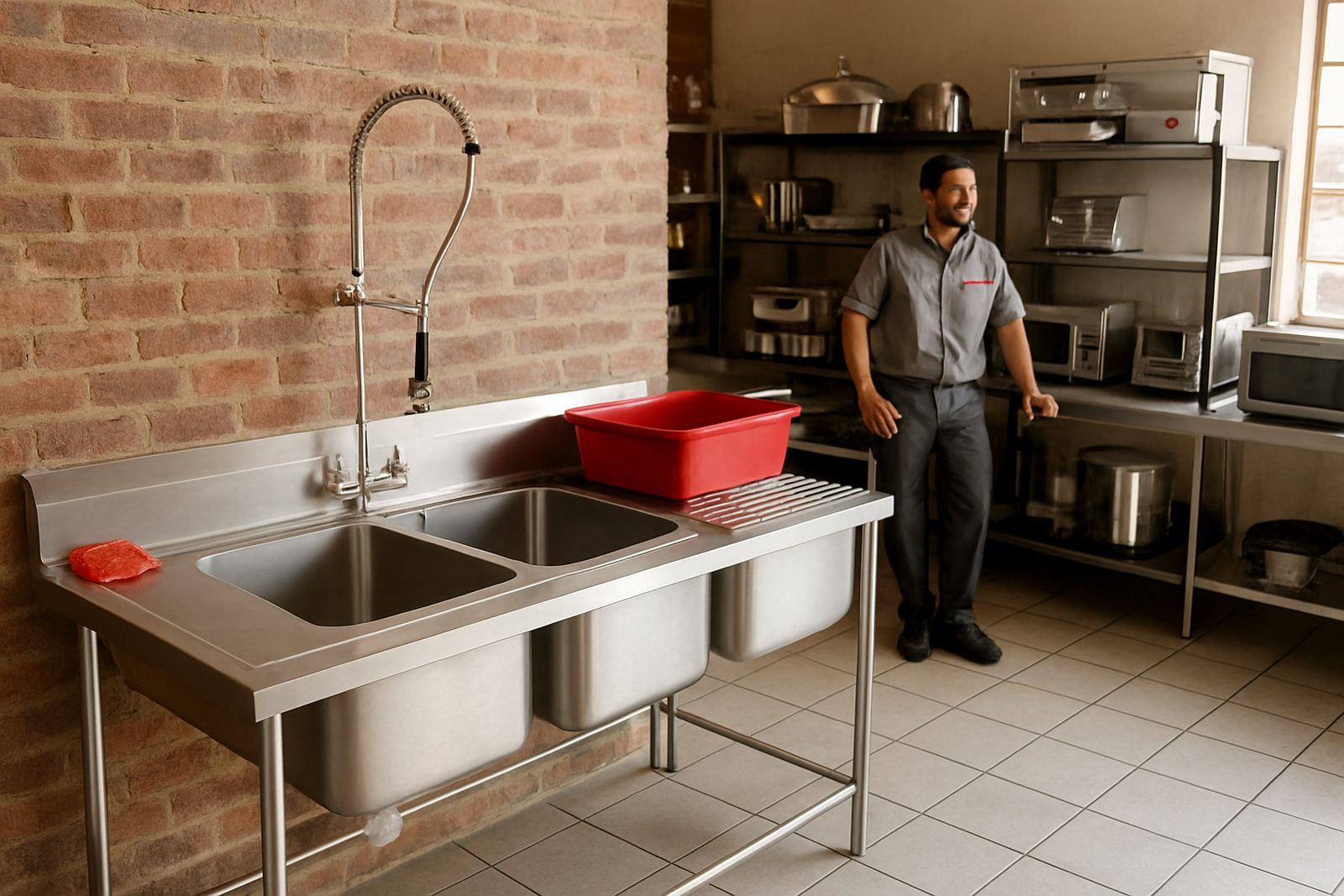
A three sink unit is set up for the standard clean process: first wash, then rinse, then sanitise. In practice, that means your staff can work in one direction without mixing dirty and clean items, which helps with hygiene control and keeps the potwash area moving. In Pretoria and Gauteng kitchens where lunch trade comes in hard, that simple flow saves time and reduces bottlenecks.
Most units are made in stainless steel with three separate bowls, a splashback at the rear, and a drainer on one or both sides depending on the layout. The sink bowls can be the same size or arranged with one larger wash bowl and two smaller rinse and sanitise bowls. For a site with limited space, a compact three sink unit can still fit neatly against a wall, while a bigger kitchen in Centurion or Midrand might use a longer unit with extra drain space.
For most businesses, the main point is not just having three bowls, but having the right working height, enough bowl depth, and easy access for staff. A unit that is too shallow or too low causes splashing and back strain. A unit that is too small can slow down the whole dishroom.
Sizes, Bowl Layouts and Practical Options
Three sink units are often specified by overall length, bowl size and whether the drainboards are included. A common unit can start around 1 500 mm long and go up to 2 400 mm or more, depending on how much prep and stacking space the kitchen needs. Bowl depth often sits around 250 mm to 300 mm, though heavier wash areas may need deeper bowls for pots and trays.
Options vary by site. Some kitchens prefer equal bowls across the full length, while others need a larger first bowl for greasy wash-up and two smaller bowls for rinse and sanitise. You can also ask for left-hand or right-hand drainboards, wall fixing points, adjustable feet, a rear upstand, or undershelves if the area needs extra storage. For some sites, a single drainer on one side is enough, but in a hotel or busy school kitchen it is worth allowing more drying space.
If you are replacing an older unit, check the tap position, waste outlet size and the space available for the traps and plumbing below the bowls. A nice-looking sink can still be a poor fit if the waste lines clash with existing pipes. We see this often in older buildings around Pretoria Central where the service lines were never laid out for today’s kitchen flow.
- Typical lengths: 1 500 mm, 1 800 mm, 2 100 mm, 2 400 mm
- Common bowl depth: 250 mm to 300 mm
- Options: drainboards, splashbacks, undershelves, adjustable feet, wall brackets
- Can be made to suit left to right or right to left movement
Where a Three Sink Unit Works Best
This unit suits kitchens that do their own washing up and need a controlled cleaning process. It is a practical fit for restaurants, school kitchens, canteens, takeaways, churches, lodges, hospitals, butcheries and bakery wash areas. In any place where items must be washed, rinsed and sanitised before reuse, the three sink format is the cleanest way to work.
It also helps where staff are working under pressure and need the process to be obvious. New workers pick it up quickly because each bowl has a clear purpose. That matters in kitchens with mixed shifts or in sites where the team changes often, especially around Gauteng where seasonal staff support and busy lunch service can make the back-of-house area hectic.
If the space is coastal or very humid, the stainless finish and correct cleaning routine matter even more. And in areas with hard water, regular descaling keeps the bowls and taps looking decent, not stained and tired after a few months.
- Restaurants and takeaways
- Schools, crèches and community kitchens
- Hotels, lodges and guest houses
- Butcheries, bakeries and food prep rooms
- Church halls and event venues
Installation, Plumbing and Site Requirements
A three sink unit does not need electrical power or gas, but it does need proper plumbing and a sensible install. The unit must sit level so water drains away correctly and staff do not stand with water pooling in the bowls. If the floor is uneven, adjustable feet or packers may be needed. Wall fixing can help prevent movement, especially where the unit is used all day.
The plumbing should allow for hot and cold water if your cleaning process requires it, plus correctly sized wastes and traps. We also check that the discharge route complies with local municipal requirements, especially where grease control or drainage limitations apply. In some sites, the wash area must connect to a grease trap or a controlled waste line, so it is better to check before the unit is ordered.
For delivery and positioning, plan the route from the loading point to the kitchen door. A 2.1 m or 2.4 m sink run can be awkward through narrow passages, lifts or tight service corridors. That is why site assessment matters before final confirmation. It avoids last minute cutting or moving equipment after everything has already arrived.
- No electrical load required
- Needs correct cold, hot and waste water connections
- Install on a level floor with enough clearance for traps and pipework
- Check access routes, doors and turning space before delivery
Care, Servicing and Long-Term Use
Stainless steel is easy to live with, but it still needs steady care. Empty waste strainers often, rinse soap residue away, and avoid leaving strong chemicals sitting in the bowls for long periods. If staff use scouring pads, make sure they work in the direction of the grain so the finish stays neater. On sites with heavy daily use, a quick end-of-shift wipe down helps prevent stains and build up around the taps and waste outlets.
Regular servicing is mostly about keeping the area functional. Loose taps, leaking wastes, damaged splashbacks and worn sealant should be fixed early before they become bigger jobs. In workshop refurb work, we often see older sinks that only need new fittings and proper resealing instead of full replacement. That can save time and money for kitchens that cannot stop operating for long.
If the unit is near a potwash line, hot equipment or a fryer station, allow enough space so steam and heat do not sit against the sink area. The steel will handle commercial use, but the surrounding sealants, plumbing clips and wall finishes also need attention. A little maintenance now avoids water damage later, which is always more expensive than it should be.
- Clean daily with non-abrasive detergent
- Check taps, wastes and seals every few weeks
- Replace damaged strainers and worn sealant promptly
- Keep harsh chemicals off the finish for long periods
What to Confirm Before You Order
Before ordering, confirm the overall length, bowl depth, drainboard layout and whether you need a splashback. Ask whether the unit is freestanding, wall mounted or meant to be fixed against a support wall. You should also confirm the tap hole positions, the waste size and whether the unit must include pre-drilled holes for the plumbing set-up already on site.
It also helps to check how the unit will be used on a busy day. If trays and pots are the main load, the first bowl may need extra depth. If glassware or smaller items are washed there, a standard three equal bowl layout may be better. For some kitchens, a three sink unit works best with an adjacent prep table or a drying rack nearby, so the full cleaning area should be planned as one working zone.
When you send through a request for a quote, include the kitchen measurements, delivery suburb and any photos of the wall or existing plumbing. That lets us check the fit properly and advise on servicing, positioning and any extras needed for the install. It is a simple step, but it cuts down on changes later, which everyone prefers.
- Overall length and bowl size
- Left or right drainboard preference
- Tap hole and waste outlet positions
- Wall fixing, undershelf or adjustable feet needs
- Site photos and access details for delivery
Key facts
| Product | Three sink unit |
|---|---|
| Use | Wash, rinse and sanitise cleaning flow |
| Material | Commercial stainless steel |
| Common lengths | 1 500 mm to 2 400 mm plus |
| Bowl depth | About 250 mm to 300 mm |
| Power or gas | Not required |