What a wall shelf does in a working kitchen
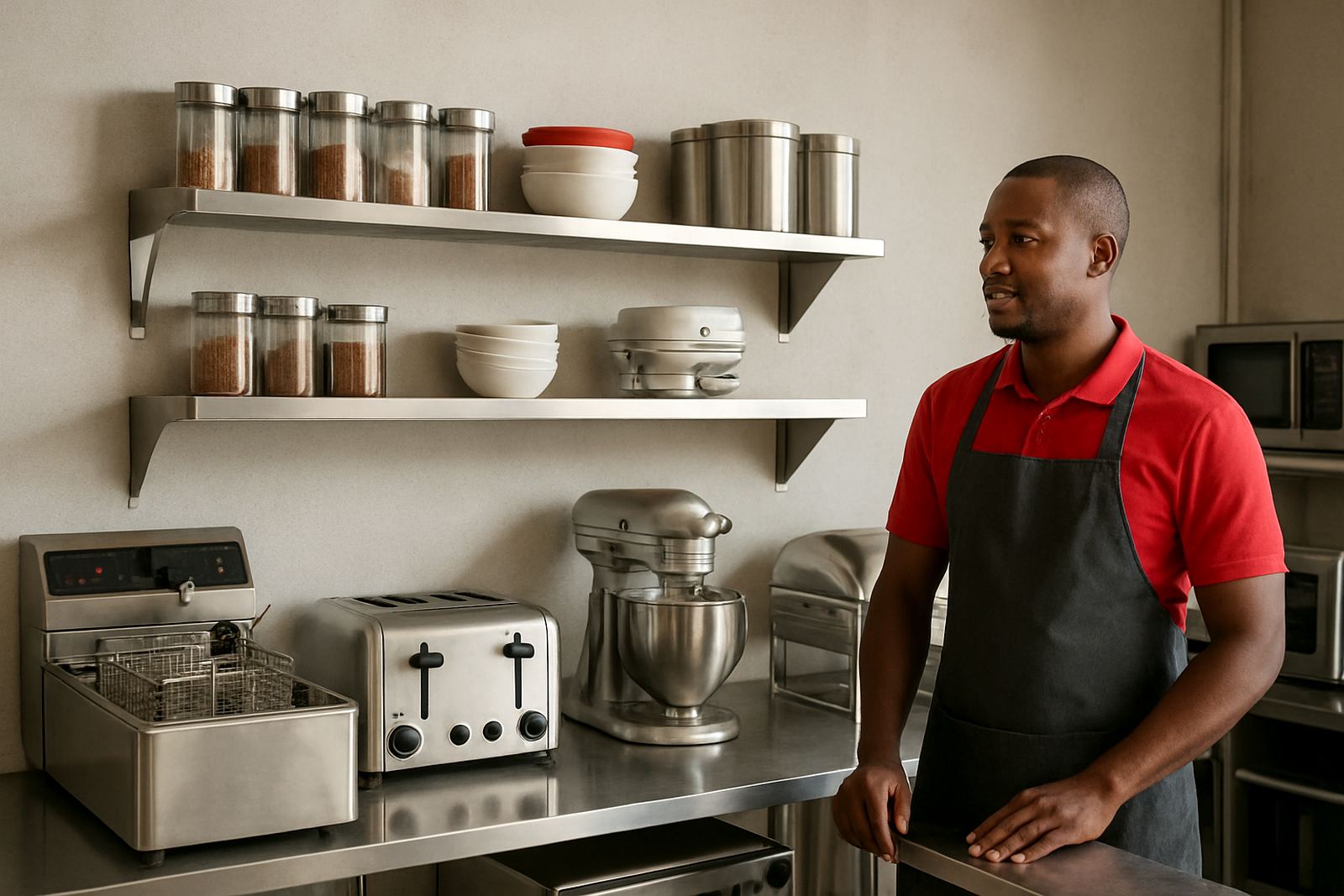
A wall shelf is overhead storage fixed to a solid wall so you can keep light to medium items off the floor and close to the point of use. In a catering kitchen it is often used for spice tubs, food-grade containers, takeaway packs, dry ingredients and cleaning stock that must be kept separate from raw food and the prep surface.
It is a practical fit for small kitchens where every metre counts. Instead of stacking boxes on counters or leaving items on fridge tops, a shelf gives you a clearer work area and better flow around fryers, microwaves, mixers and pass-through points. It keeps smaller items out of the way, and easy to reach.
For many sites in Pretoria, Centurion and Midrand, wall shelving also helps with cleaning control. When items are stored up off the counter, it becomes easier to wipe down prep areas and meet basic municipal and food safety expectations for tidy storage.
Sizes, load ratings and finish options
Wall shelves for catering use are usually supplied in stainless steel or powder-coated metal depending on the duty required. Stainless steel is the safer choice where there is regular washing, steam, coastal humidity on transfer jobs, or a chance of grease and water splashing from nearby equipment. Powder-coated shelving can work in dry stores or back rooms where the environment is lighter.
- Common lengths: 900 mm, 1200 mm, 1500 mm and 1800 mm
- Common depths: 300 mm, 350 mm and 450 mm
- Load capacity: depends on wall type and bracket spacing, do not guess
- Typical shelf height from floor: 1200 mm to 1800 mm above floor, depending on user reach
- Finish: brushed stainless steel, galvanised steel or coated metal
For heavier use, ask for a shelf with a front upturn or rear support lip. That helps stop tubs sliding off during a rush, especially where staff are moving quickly during breakfast service or lunch prep. If you are storing glass jars or stock containers, a stronger bracket layout is worth the extra cost.
Where a wall shelf suits best
This product suits dry stores, prep areas, sculleries, takeaway packing benches and kitchen back sections where you need quick access to small items. It is also useful in coffee points, canteens, tuck shops and staff kitchens where there is not enough cabinet space for everything.
- Above a prep table for containers and dry ingredients
- Next to a microwave station for plates, lids and napkins
- Over a sink area for detergents and cleaning cloths
- In a dry store for labelled stock baskets
- Behind a serving counter for backup disposables
For sites in Boksburg, Kempton Park and Randburg, a shelf can also help improve stock control. Smaller items are easier to count when they are stored in one visible line, rather than mixed into drawers and boxes. In a new fit-out or a kitchen reconfiguration, shelves are often one of the simplest ways to free up floor and counter space without changing the whole layout.
Installation and what the wall must handle
Installation depends on the wall type, bracket style and the load expected on the shelf. A solid brick or concrete wall is usually best. Plasterboard, lightweight partitions and old tiles need proper checking before fitting, because the fixing method must suit the base and not just the shelf itself. If the wall is weak, even a good shelf can fail under daily use.
For busy kitchens, we normally look at height, reach, traffic flow and nearby heat sources before fitting. A shelf should not sit where a pot lid can strike it, where steam will hit it all day, or where staff have to stretch above shoulder height to reach a daily item. In a food room with strict cleaning routines, position matters as much as the shelf size.
There is no power or gas connection needed for the shelf itself. But if it is being installed above heated equipment, near a toaster bank or above a service line, allow enough clearance so heat, steam and splatter do not damage stored stock. Where required, our team can assist with site assessments, delivery and positioning, and kitchen reconfiguration in Pretoria and surrounding areas.
Care, cleaning and servicing over time
Wall shelves need simple but regular care. Wipe them down with a suitable food-safe cleaner, dry them after washing, and check the brackets for movement or rust. In humid areas or kitchens with regular steam, standing moisture can mark some finishes and loosen fixings over time.
- Clean the shelf daily in food prep areas
- Check screws and brackets monthly
- Do not overload the shelf with heavy tins or bulk sacks
- Keep corrosive cleaners away from stainless surfaces for too long
- Replace damaged fixings before the shelf is used again
If you are already running fryers, mixers, microwaves or chafing dishes on the same site, it is a good idea to include shelving checks in the normal servicing schedule. That keeps the storage area tidy and reduces the chance of loose fittings or falling stock. If a shelf has bent brackets, send photos with your query and we can advise on repair or replacement, depending on condition.
What to check before you order
Before you request a quote, measure the wall space carefully and note what the shelf will carry. The right shelf depends on length, depth, fixing surface and the kind of stock you plan to place on it. A shelf for dry sachets is not the same as one holding 10 kg containers all day.
- Wall material: brick, concrete, tile, plasterboard or partition
- Required length and depth in millimetres
- Expected load and item size
- Whether you need one shelf or a full run
- Any nearby heat, steam or wash-down area
- Preferred finish: stainless, galvanised or coated
If you are fitting out a new kitchen, ask whether the shelf should line up with your prep bench, service counter or dry store racking. A few millimetres can make a difference when you are trying to keep labels visible and stock easy to rotate. For used equipment or mixed kitchen setups, we can also advise on matching the shelf with the rest of the work area so the layout makes sense on site.
Getting a quote and fitting it into your kitchen
Afchain Catering Equipment supplies catering gear from our Silverton base in Pretoria and works with customers across Pretoria Central, Centurion, Midrand, Kempton Park, Boksburg and Randburg. If you need a wall shelf with other kitchen items, we can quote the whole list together so delivery and positioning are easier to plan.
Send your measurements, a clear photo of the wall, and a short note on what you want to store. If the shelf is part of a larger upgrade, we can also assist with installation, preventive servicing and workshop refurbishment where needed. For many operators, that makes ordering simpler and helps avoid a shelf that is too shallow, too high or fixed in the wrong place.
Key facts
| Product type | Wall-mounted kitchen storage shelf |
|---|---|
| Material options | Stainless steel, galvanised steel or powder-coated metal |
| Common lengths | 900 mm, 1200 mm, 1500 mm, 1800 mm |
| Common depths | 300 mm, 350 mm, 450 mm |
| Mounting | Bracket-fixed to suitable brick, concrete or approved partition wall |
| Utilities required | None, no power or gas needed |