Start with the paper trail before you switch it on
Before you look at sockets, trays or thermostats, ask where the unit came from and why it is being sold. A fryer from a small café that closed is very different from one that was pushed out after repeated faults. Ask for the age of the equipment, any service records, and whether spare parts are still available locally.
In Pretoria and Gauteng, many kitchens buy used equipment to keep start-up costs under control, especially when they are opening in Silverton, Centurion, Midrand or Boksburg and need to fit out quickly. That can work well if you buy with your eyes open. If the seller cannot answer basic questions, or avoids showing the machine runnnig, treat that as a warning sign.
- Ask for the make, model and serial number if it is still visible.
- Find out whether the unit was used in a home kitchen or a busy trade kitchen.
- Check whether the seller can prove it was serviced, repaired or refurbished.
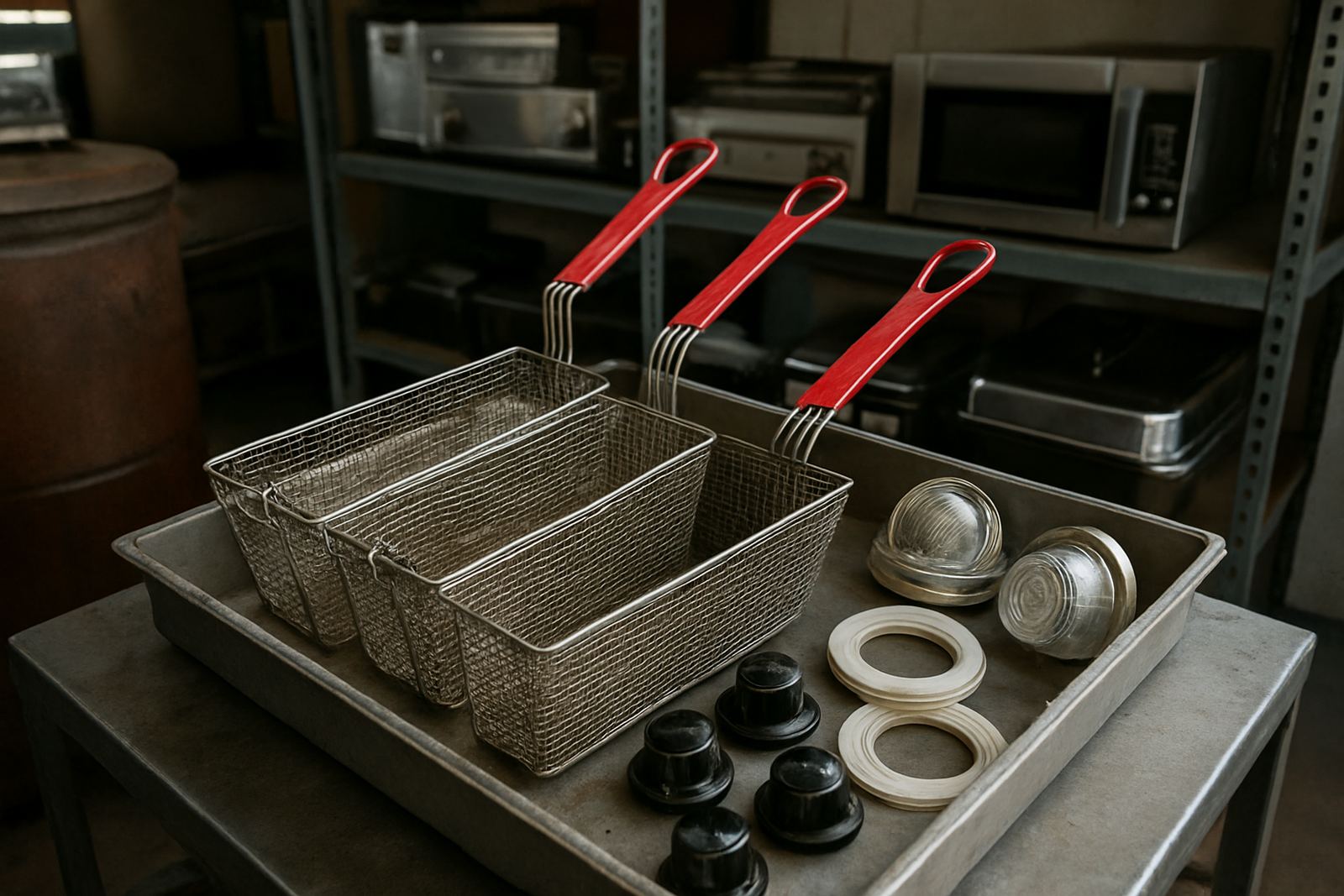
- Confirm what is included: trays, baskets, racks, knobs, doors, cords and plugs.
Check the body, frame and parts that take daily punishment
Look closely at the outside before you worry about the controls. Rust, swelling, cracked welds and bent frames often tell you more than a neat wipe-down. In coastal areas humidity can be hard on steel, and even in inland towns a unit that sat in a damp store room can corrode from the inside out.
Open doors and lift lids. Hinges should move properly, seals should sit flat, and handles should not wobble. On mixers, check the bowl lock, attachments and gear movement. On toasters, look for warped elements, damaged crumb trays and burnt wiring. With microwaves, inspect the door seal and hinge because those parts take strain every day.
- For fryers: check the oil tank for pitting, old grease build-up and leaks.
- For chafing dishes: look for dents, missing water pans and weak stands.
- For mixers: test the speed settings and listen for grinding or knocking.
- For toasters: inspect the element area for uneven heating or dark patches.
Test performance, heat and electrical condition
Never buy on appearance alone. Plug the machine in and let it warm up. A fryer should reach temperature without tripping the breaker, and the thermostat should respond in a sensible way. A toaster should heat evenly across the slots. A microwave should run quietly, with no rattling, sparks or strong burning smell. If a unit trips a breaker in a shop test, it may be worse once it is installed on a kitchen circuit that already carries fridges, extractors and warmers.
Ask the seller to show you the unit under load, not just switched on. If possible, test with water, bread, batter or another safe product so you can see how it handles real use. Uneven heat is often a sign of worn elements, bad contact points or a failing control board, and those repairs can cost more than the unit itself.
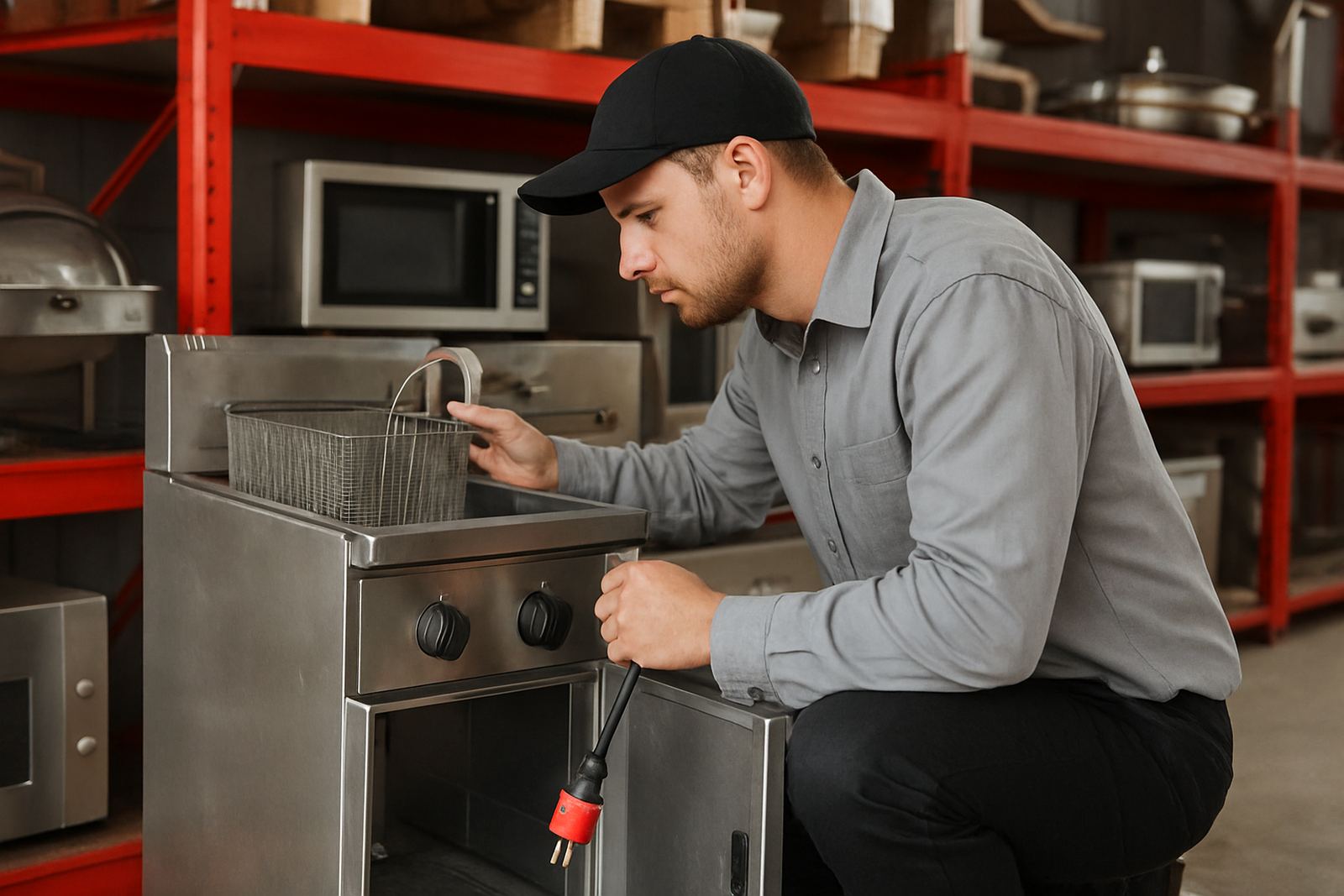
- Check the plug, flex and insulation for cuts or hardening.
- Look for heat marks around terminals, switches and control knobs.
- Listen for fan noise, pump noise or relay clicking that sounds irregular.
- Ask whether the unit has been tested after any recent repair.
Make sure it will fit your kitchen and your power supply
A good used unit is useless if it will not fit through the door, onto the counter or onto the right circuit. Measure the space where it will go, then measure the equipment itself with doors open, trays inserted and clearance for ventilation. This matters in older kitchens in Pretoria Central or Randburg where the layout was never designed for modern service speed.
Also check your electrical setup. Some equipment needs a standard plug, others need a dedicated line. If the kitchen already struggles during load-shedding, think about backup power too. Heavy equipment that restarts badly after an outage can waste product and slow down service. Municipal rules, fire safety and ventilation can also affect where you place hot equipment, so do not assume a used fryer or warmer can simply slot in anywhere.
- Measure width, depth and height, then add space for cleaning access.
- Check door clearance, stair access and whether the unit needs a trolley.
- Match the equipment load to the available circuit and backup supply.
- Confirm ventilation and extraction requirements before installation.
Look at the serviceability, not just the sale price
The cheapest unit on the floor is not always the cheapest one in the kitchen. A used machine becomes expensive if every small fault needs a special part or long downtime. Before you commit, ask how easy it will be to maintain, clean and repair. If the machine has a simple layout and common parts, it is usually a safer buy than a complicated unit with hard-to-find components.
At Afchain Catering Equipment in Silverton, Pretoria, we often see buyers compare two units that look similar, but one has a clean service history and the other has missing parts, tired controls and a motor on its last legs. The first one can be a good purchase, the second can sit in the workshop for weeks. That delay costs money every day, especially when the kitchen is already trading under pressure.
- Ask whether the unit can still be serviced locally.
- Check if the model uses standard, easy-to-source parts.
- Find out whether a basic clean and calibration is enough, or if major work is needed.
- Factor in transport, installation and any repair budget before you decide.
Use a local buying example to avoid an expensive mistake
Picture a small takeaway in Centurion looking for a second-hand fryer and mixer. The seller offers both at a good price, and both switch on in the showroom. On paper it sounds right. But the fryer has old oil staining around the seams, the basket handle is bent, and the mixer makes a scraping sound in third speed. That tells you the equipment has already had a hard life. If the fryer later leaks or the mixer loses power during the lunch rush, the saving disappears fast.
A better approach is to inspect, test and compare. If needed, ask for a site assessment so the equipment suits the kitchen layout, the electrical supply and the way the team works. For many Gauteng buyers, the right used unit is not the one with the lowest sticker price. It is the one that can take daily service, be maintained properly and still make sense six months later.
A simple checklist before you pay
Before you sign off on any used catering equipment, run through a final check while the machine is still in front of you. This last pass often catches the small faults people miss when they are keen to close the deal.
- Confirm the equipment is complete and all removable parts are present.
- Test the unit under working conditions, not just at switch-on.
- Inspect for rust, leaks, burnt wiring, damaged seals and uneven heating.
- Check size, power needs and installation requirements.
- Work out the repair cost before you agree to the sale.
- Only buy if the unit can be serviced and supported after delivery.
If you want a second opinion before you buy, Afchain Catering Equipment can help with quotes, sourcing, servicing and installation across Pretoria and Gauteng. That way you know whether the equipment suits the kitchen, not just the price tag.