Start with service volume, not the largest meal on the menu
Rice cooker portioning works best when you count the number of people you need to serve in one sitting. A school canteen in Pretoria Central, a church event in Centurion, and a takeaway counter in Boksburg may all sell rice, but the serving pattern is not the same. One kitchen may need a steady 40 to 60 portions at lunch, while another pushes 150 portions in under 30 minutes. That difference matters more than the recipe itself.
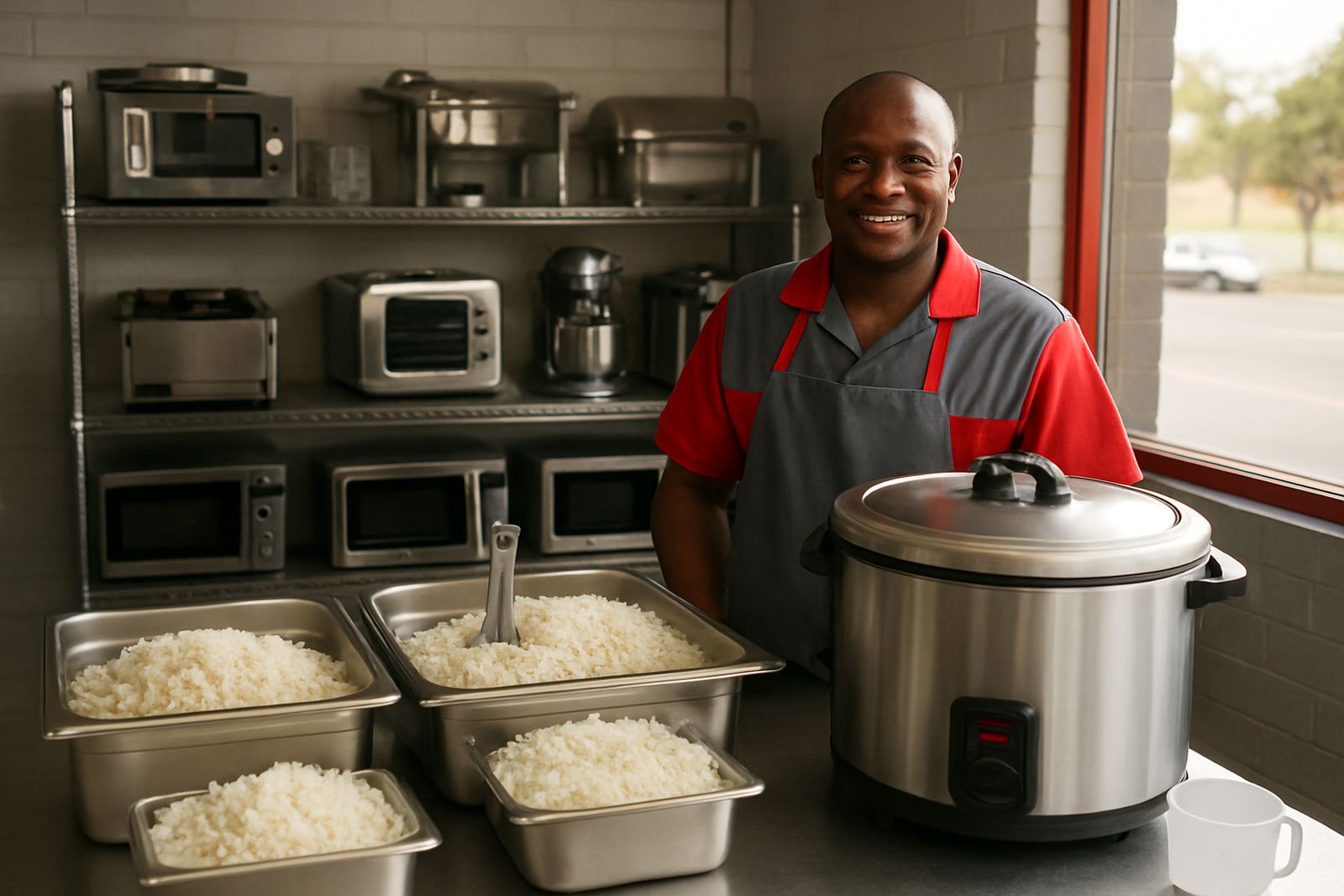
As a practical rule, work backwards from plated portions. If your standard serving is 180 ml cooked rice per plate, then 50 meals need about 9 litres cooked rice. That does not mean you buy a 9 litre cooker and stop there, because rice expands and most kitchens need a bit of headroom for a second tray or a late rush. It is better to size with a small buffer than to force a machine to sit full to the lid every service.
Many repeat batches happen because the cooker was chosen for a quiet day, not for a Friday lunch or a month end function. Once the line starts moving, nobody wants to wait 25 minutes for the next batch. That is when overproduction starts too, because the team makes extra just in case.
Know the difference between cooked portions and dry rice input
Portioning should always begin with dry rice, because that is what the machine actually processes. Different rice types absorb water differently, and the yield changes with rinsing, standing time and how much moisture you hold in the pot. In practical terms, 1 cup dry rice does not always become the same cooked volume every time, so kitchens should test their own standard method and write it down.
For most catering setups, it helps to track three numbers:
- Dry rice per batch in kilograms or cups
- Cooked yield per batch in litres or plate portions
- Average serving size per person, for example 150 ml, 180 ml or 200 ml
Once those numbers are fixed, ordering becomes much easier. A kitchen in Midrand serving staff lunches may discover that 5 kg dry rice covers a full service with a small reserve, while a function kitchen in Randburg may need 10 kg in one cycle and a second cooker on standby. Without that calculation, the operator only finds out too late, usually when the queue is already out the door.
Match cooker capacity to the way your kitchen actually moves
Not every site needs the same size unit. A small takeaway in Kempton Park may only need a compact cooker for short lunch peaks, while a hotel kitchen or community feeding programme in Pretoria South may need a larger pot that can support back to back service. Capacity should be matched to your peak hour, not your quietest hour.
When comparing sizes, consider the following:
- How many portions leave the pass in 15 minutes
- Whether rice is served once a day or through the whole shift
- How much counter or floor space you have near the prep area
- Whether the staff can lift a full inner pot safely
- Whether the unit must fit under extraction or beside another hot holding appliance
A bigger machine is not always the answer. If the team only serves 30 meals at a time, a very large cooker may leave you with burnt edges at the bottom and dry rice by the end of service. Too small and you get repeat batches, which means more labour and more chance of mistakes. The right size keeps the rhythm steady, and that matters on any busy Gauteng service line.
Use portion control to cut waste and protect profit
Rice is cheap compared with meat, but waste still adds up. If portions are not measured, the team may serve 20 ml extra on each plate and lose several kilograms by the end of the week. In a high-volume kitchen that becomes real money, especially where staff meals, school feeding or function catering are involved.
To keep portioning under control, set a standard scoop size and use the same one every time. Train the person on the pass to level the scoop, not heap it. If rice is plated with sauces or stews, agree on the rice first and then adjust the rest of the meal around that quantity. Small changes can have a big effect, and the savings show up quickly.
Good portion control also makes reordering easier. If your kitchen serves 120 meals per day at 180 ml each, the weekly rice requirement can be estimated with far less guesswork. That helps when you plan deliveries, manage cash flow and decide whether a used cooker or a newer unit makes more sense for the site.
Factor in holding time, service gaps and load-shedding
A rice cooker does more than cook. In many kitchens it also holds rice for a period before service starts, and that holding time affects texture. If the rice sits too long it can dry out at the top and compact at the bottom. If service is delayed because of load-shedding or a late delivery truck, the kitchen may need a different holding plan.
Coastal humidity can also change how rice behaves in storage and service, but even inland kitchens around Pretoria and Gauteng deal with moisture swings in summer. That is why it helps to keep lids closed, use the correct quantity of water and avoid opening the pot too often. Every lid lift releases heat and steam, and that can throw off the next portion.
Where power interruptions are common, some kitchens use the cooker as part of a wider plan that includes insulated holding and staggered service. The aim is simple: keep the rice hot enough for service without having to cook too often. That saves electricity and time, and it gives staff more control when the day gets busy.
A Pretoria example: one lunch service, two very different outcomes
A workplace canteen in Silverton once planned rice for a 90 person lunch service using a cooker that was really sized for about 50 portions. The result was predictable. The kitchen had to run two batches, staff had to wait, and the second batch went out later than the rest of the meal. By the time the serving line settled, a few plates had already been filled again and the total rice use was higher than expected.
After the kitchen reworked its portioning, the team set a fixed scoop, tested the cooked yield and moved to a cooker size that matched the lunch peak. The difference was immediate. Less standing around, fewer repeats and better consistency from first plate to last. The kitchen also reduced overproduction, because it could see exactly how much rice was needed before the rush began.
That is the real value of matching cooker size to service volume. It is not only about the machine. It is about the people serving, the speed of the queue and the amount of food that must hold its quality for the full shift.
What to check before you buy or replace a unit
Before you commit to a rice cooker, confirm what the kitchen actually needs day to day. A proper site assessment helps, especially where the layout is tight or the service runs in more than one phase. It is also worth checking whether the unit must fit beside fryers, microwaves, mixers or chafing dishes, since spacing and power access can change the final choice.
Ask these questions before you order:
- How many meals are served at peak time
- What portion size is standard for your plates
- How long rice must stay hot before service
- Whether staff need a smaller backup unit for rush periods
- Whether the kitchen has space for safe lifting and cleaning
If you already have equipment on site, a workshop check can also help. Sometimes the issue is not capacity but worn seals, poor heat retention or a heating fault that slows down every batch. In that case a repair or refurbishment may be better than buying too soon.