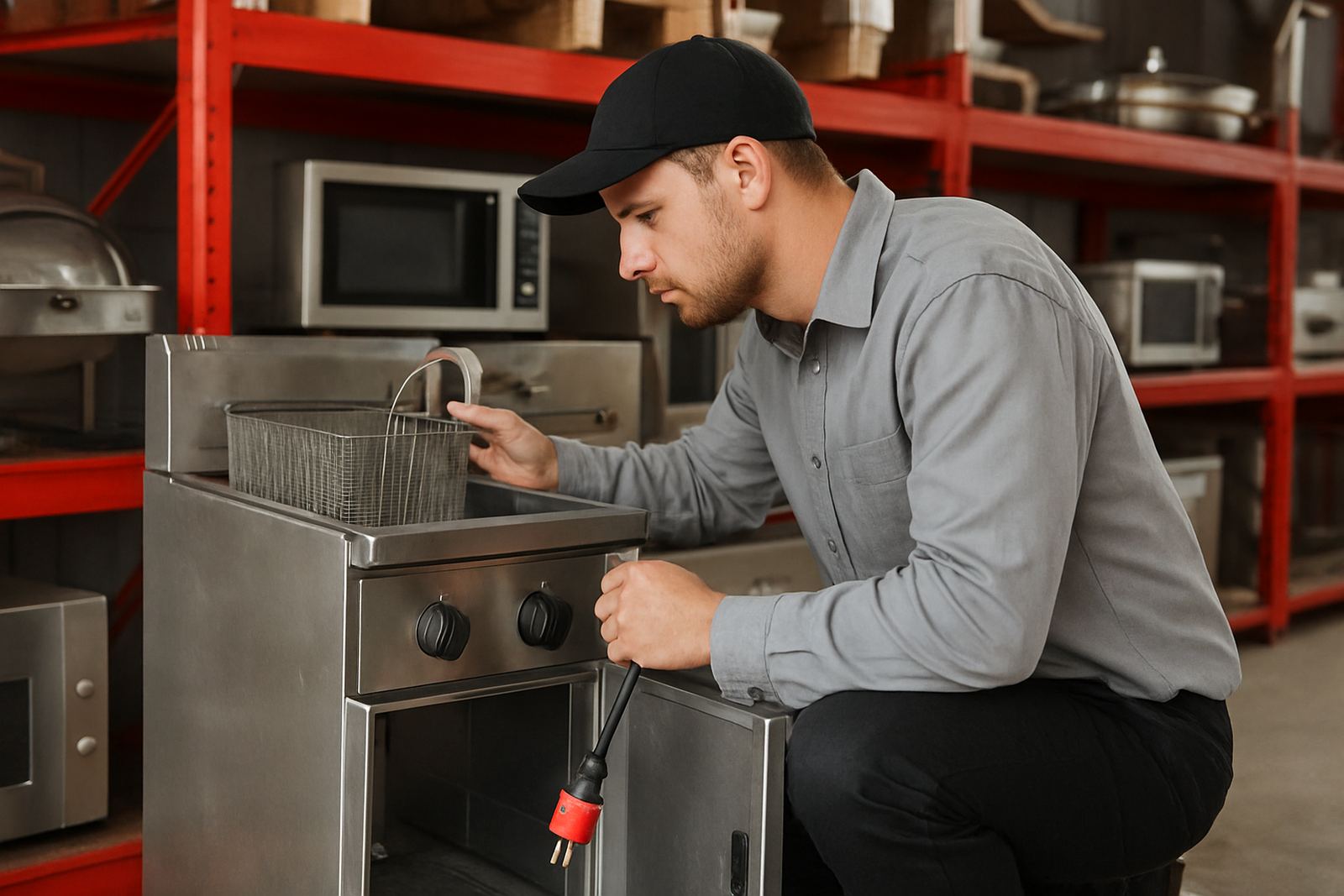
Start with the menu, not just the machine
The quickest quotes come from the actual food you need to produce. A fry station for chips, vetkoek and crumbed chicken has very different needs from a breakfast counter doing toasties, eggs and coffee service. Tell us what you sell, how many meals or portions you expect in a busy hour, and whether the kitchen will run all day or only for breakfast and lunch.
That context helps us size fryers, toasters, mixers, microwaves and chafing dishes properly. It also helps us advise on used equipment where it makes sense, especially for start-ups or second sites in Pretoria Central, Centurion or Boksburg where budget and turnaround time matter.
- What menu items will you prepare?
- How many covers, portions or trays per hour?
- Will the kitchen run peak periods only, or all day?
- Do you need new equipment, used equipment, or a mix of both?
Give us the room dimensions and power points
Size matters, and so does the shape of the room. A quote is far more accurate when we know the exact kitchen measurements, door widths, passage space and where the sinks, drains and plug points sit. Even a good fryer or mixer can become a problem if it blocks movement or sits too far from the right outlet.
In Gauteng many kitchens must work around existing tenants, shared premises and older services. If you can send a simple sketch with lengths in metres, ceiling height, door openings and the position of the DB board or gas connection, we can advise more cleanly. This is especially useful for sites in Randburg and Midrand where units often have tight loading access and limited prep space.
- Length and width of the room
- Door and passage sizes
- Power supply details, including single or three-phase where relevant
- Gas, water and drainage points
- Any fixed counters, walls or columns
Tell us about load-shedding, gas and backup plans
Power interruptions change the way a kitchen is planned. If your site runs through load-shedding, we need to know which equipment must keep working and which items can pause. Some operators in Pretoria and Kempton Park use a mix of electric and gas equipment so they can keep trading when supply drops, but that needs to be matched to the site layout and ventilation.
Let us know whether you already have backup power, gas cylinders or an approved gas room. For some premises the landlord or municipal rules will affect where equipment can be placed, what can be installed, and how extraction or safety clearances are handled. It saves time to sort that out before the quote is finalised, rather than after the order is placed.
- Will you need equipment to keep running during load-shedding?
- Do you use gas, electricity, or both?
- Is there an extractor, canopy or ventilation system already installed?
- Are there landlord or municipal restrictions on the site?
Used equipment is useful, but condition must be clear
Used equipment can be the right answer when the budget is tight or the kitchen is opening in stages. It works well for fryers, mixers, microwaves and some chafing dishes if the condition is known and the refurbs are done properly. But a used machine quote is only useful when we know what you will accept, what must be refurbished, and what must be replaced.
Please tell us if you are willing to take equipment with cosmetic wear, or if you need something that is ready for front-of-house use straight away. If a unit has been standing in storage, near the coast, or in a hot back room for months, that matters too. Rust, worn seals and tired heating elements are common issues, and they affect both price and turnaround. We see this often with operators expanding from Pretoria into Midrand, where they want to open quickly and can't afford surprises.
Service history helps us quote servicing and repairs properly
When you ask for preventive servicing or breakdown repairs, the equipment history is just as important as the fault itself. Tell us when the unit was last serviced, whether parts have been changed before, and if the machine has a recurring issue. A toaster that trips twice a week needs a different approach from one that only failed after a power surge.
If you have a workshop-refurbished item, mention what was done and when. This helps our team plan the right parts, tools and technician time. It also helps us decide whether the job can be handled on site, or whether the item should come in for workshop work in Silverton. Clear history means fewer repeat visits and a cleaner quote.
- Date of last service
- Any previous repairs or parts replacements
- Fault symptoms, noises, smells or error signs
- Whether the unit has been moved recently
Photos that save time on quotes and site assessments
A few honest photos can cut a long quoting process down to one call. Send images of the full kitchen, close-ups of the machine you want priced, the plug points, and any damaged or missing parts. If you need delivery and positioning, include the entrance, stairs, narrow turns and the exact spot where the equipment should land.
Good photos also help us judge whether the job needs a site assessment before we quote. For example, a canteen in Centurion may only need a straightforward supply and delivery, while a restaurant in Pretoria Central may need kitchen reconfiguration, installation and handover training all at once. If the space is cramped or the floor is uneven, that changes the plan proper.
- Front and side views of each item
- Data plate or model details if visible
- Fault areas, wear points or missing fittings
- Entrance routes and final placement area
A simple local example: a lunch kitchen in Silverton
Take a small lunch operation in Silverton that wants to move from takeaway-only service to a counter with hot meals. The owner might ask for a fryer, toaster, microwave and chafing dishes. If they also need used equipment, delivery, installation and a short handover for staff, we can build the quote properly in one go.
But first we need to know whether the kitchen is 3 metres by 4 metres or 5 metres by 7 metres, whether there is only one plug circuit, and whether the landlord allows wall-mounted items. With those details, our team can match the quote to the site, not guess. That is the difference between a useful number and a number that causes problems later.