Why bowl size changes the way your kitchen works
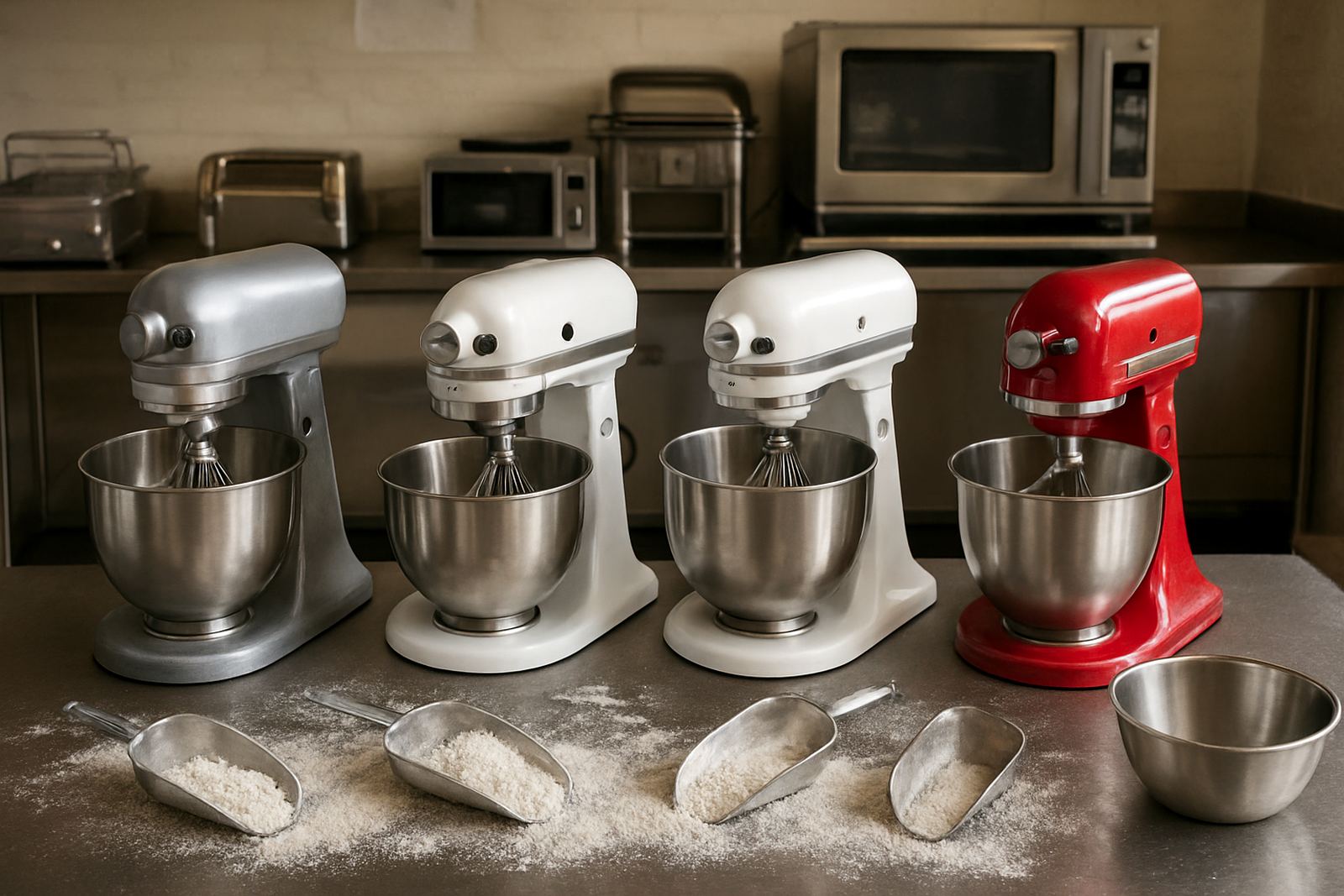
A mixer bowl is not only about how much product it can hold. It changes the whole rhythm of prep, from how long staff spend loading ingredients to how often they must scrape down, pause, or split a recipe into two runs. In a busy kitchen, that extra handling time can be the difference between keeping up with lunch service and falling behind.
Small bowls suit light batches and frequent changes, while larger bowls suit steady production with the same recipe repeated through the day. If your team makes dough, batter, filling and whipped mixtures in the same shift, the bowl size must suit the hardest job, not the easiest one. A machine that is too small is frustrating, but one that is far too large can also struggle with short batches and leave products uneven.
Match bowl capacity to batch style, not only litres
Two kitchens can buy the same mixer and get very different results. One may run single large dough batches, while the other does many small mixes for pastries, sauces and fillings. That is why capacity should always be read with batch style in mind.
- Large single batches: better for bakeries, commissary kitchens and caterers who repeat one recipe many times a day.
- Small frequent batches: better for restaurants, cafés and takeaways that need flexibility and fast turnarounds.
- Mixed production: if you do bread one hour and cake mix the next, you may need two mixer sizes or a mid-range bowl that handles both.
The bowl should also leave enough room for movement. Overfilling makes dough climb the hook or paddle, and underfilling can mean the attachment does not engage properly. In other words, the size on paper is only part of the answer, you still need usable working space.
Practical bowl sizes and where they fit
For most commercial kitchens, bowl capacity is easier to understand when you link it to output. As a general guide, smaller bowls work for light service, while larger bowls suit production kitchens with regular demand. The exact capacity depends on the mixer type, the attachment and what you are mixing.
- Small bowls: useful for sauces, cake batter, icing and light fillings.
- Medium bowls: a good fit for mixed menu kitchens, school kitchens and smaller bakeries.
- Large bowls: suited to bakery production, canteen work and bulk prep for catering jobs.
It helps to think in menu terms. If you make 40 rolls for breakfast, then 12 litres of sauce for lunch, then a batch of muffin mix later in the day, your bowl needs to handle the biggest task without wasting too much space on the smaller ones. A supplier who asks about your daily volumes is doing the right thing, because this affects motor load, mixing time and how much staff effort is needed.
What Pretoria and Gauteng kitchens should watch for
In Pretoria, Centurion, Midrand and the greater Gauteng area, kitchens often work under pressure from load-shedding, heat and tight service times. Bowl size becomes even more important when you have to plan around power cuts or run generators. If your batches are too small, you may waste the power window on repeated loading and unloading. If they are too large, you may not finish the mix before power changes.
At a school kitchen in Silverton, for example, the team may need one mixer for daily dough prep and another for sauces and puddings. A single oversized bowl can be awkward for the smaller batches, while a unit that is too small forces extra mixing rounds and slows down lunch service. That is where site assessments help, because the room, counter height and workflow all matter too. A mixer is only useful if it fits the space and the working order.
Signals that your current mixer is the wrong size
Many kitchens live with the wrong bowl size for too long. The signs are usually clear once you know what to look for.
- You keep splitting normal recipes into two or three batches.
- Staff spend too much time scraping sides and moving product.
- Mixtures are uneven, especially at the bottom of the bowl.
- The mixer seems to labour or vibrate when the bowl is full.
- You avoid certain products because the machine cannot handle them properly.
If this sounds familiar, the issue may be capacity, speed range, attachment choice or all three. In some cases the answer is a different mixer size, while in others a serviced machine with the right bowl and tooling will solve the problem. Used equipment can also make sense if the budget is tight, provided the bowl condition, bearings and safety guard are checked properly.
Why servicing matters as much as capacity
Even the correct bowl size will not perform well if the mixer is worn or badly maintained. A machine with tired gears, loose fittings or a damaged bowl can struggle with the same load that used to be easy. That is why preventive servicing matters, especially where kitchens run every day and cannot afford surprise breakdowns.
Before buying, ask about the mixer’s history, the condition of the bowl and the availability of spares or workshop support. If you already own the machine, keep an eye on unusual noise, heat build-up and poor mixing results. Those are often early signs that service is due. A quick check now is cheaper than a full stop during service, and it also protects the product quality your customers expect.
The simplest way to choose the right bowl
Start with your biggest regular batch, then work backwards. Write down what you mix most often, how many times a day you repeat it, and whether the recipe needs a gentle fold or a heavy knead. After that, measure your floor space, electrical supply and whether the mixer will sit near prep, washing or packing areas.
If you are choosing for a new kitchen or reconfiguring an existing one, ask for a proper quote and site assessment. That gives you a clearer picture of bowl capacity, installation needs and delivery positioning. For operations in Pretoria Central, Randburg, Boksburg or Kempton Park, this also helps avoid buying a machine that looks right on paper but does not suit your real batch pattern.
The best mixer is not the biggest one. It is the one that matches your product, your pace and your staff’s daily routine. Get that match right and the machine earns its place from day one.