Start Every Shift With a Quick Fryer Check
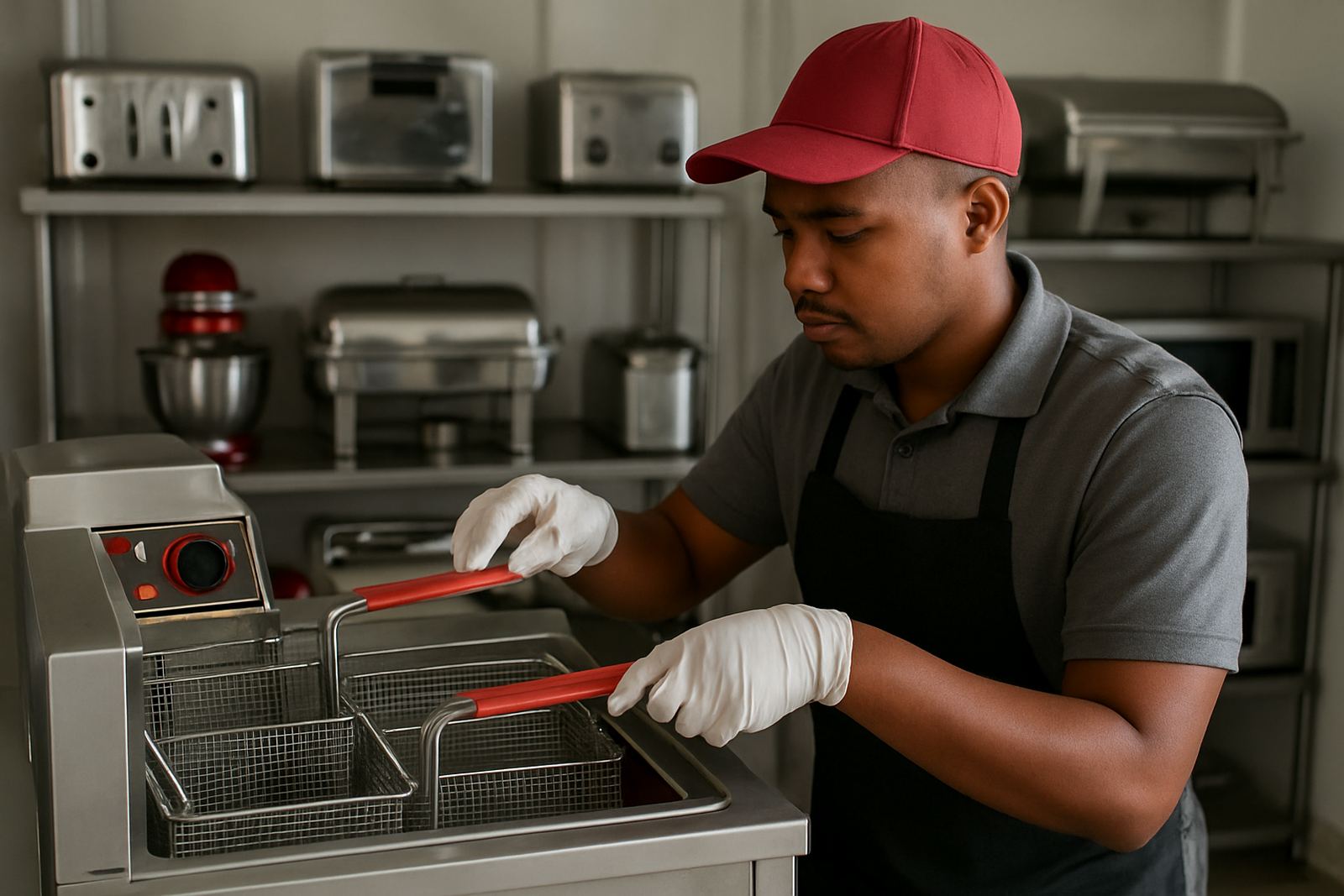
Before the lunch rush, look at the fryer the same way you would look at a gas bottle, meter box or switchboard. Check the power cable, plug, basket handles, thermostat controls and drain valve for wear, loose fittings or oil build-up. If the fryer sits near a wall or under an extraction hood, make sure there is enough space for heat to move away and for staff to work without brushing against hot metal.
Oil level matters as much as the machine itself. Too little oil can overheat the element, while too much can overflow when baskets go in. In kitchens with long service hours, a short check at opening and again before peak trade can prevent a lot of trouble later on.
Keep Oil Clean and at the Right Level
Old oil behaves badly. It smokes sooner, spits harder and can change the taste of food. Skim out crumbs during the day and strain or change oil on a set schedule, not only when it looks dark. In Gauteng, where many kitchens run through power cuts and generator changeovers, oil that has already been stressed will break down faster if temperatures swing too much.
- Do not top up burnt oil and expect better results.
- Use only dry baskets and dry food where possible, especially chips and crumbed items.
- Leave space at the top of the vat so oil can expand without spilling.
- Label the oil change date and keep a simple log for the shift team.
If staff share one fryer across breakfast and supper service, a clean routine keeps the unit safer and the food more consistent. It also helps the workshop team spot a fault early if a heating cycle starts to change.
Lower Food Slowly and Stand Back
The most common burns happen at the basket, not deep inside the fryer. Lower food slowly so oil does not surge up and splash over the rim. Stand slightly to the side, not directly over the vat, and use baskets with sound handles and intact hooks. If the basket is overloaded, split the batch. It takes a little longer, but it keeps the oil calmer and the kitchen safer.
Staff should never drop frozen food straight into hot oil without checking for ice build-up. Ice and water turn to steam fast, and that is where splatter starts. In a small takeaway kitchen in Centurion, one tray of wet chips can cause a spill across the floor in seconds. A dry tray and steady hand prevent that kind of mess.
Use Clear Rules for Cleaning and Draining
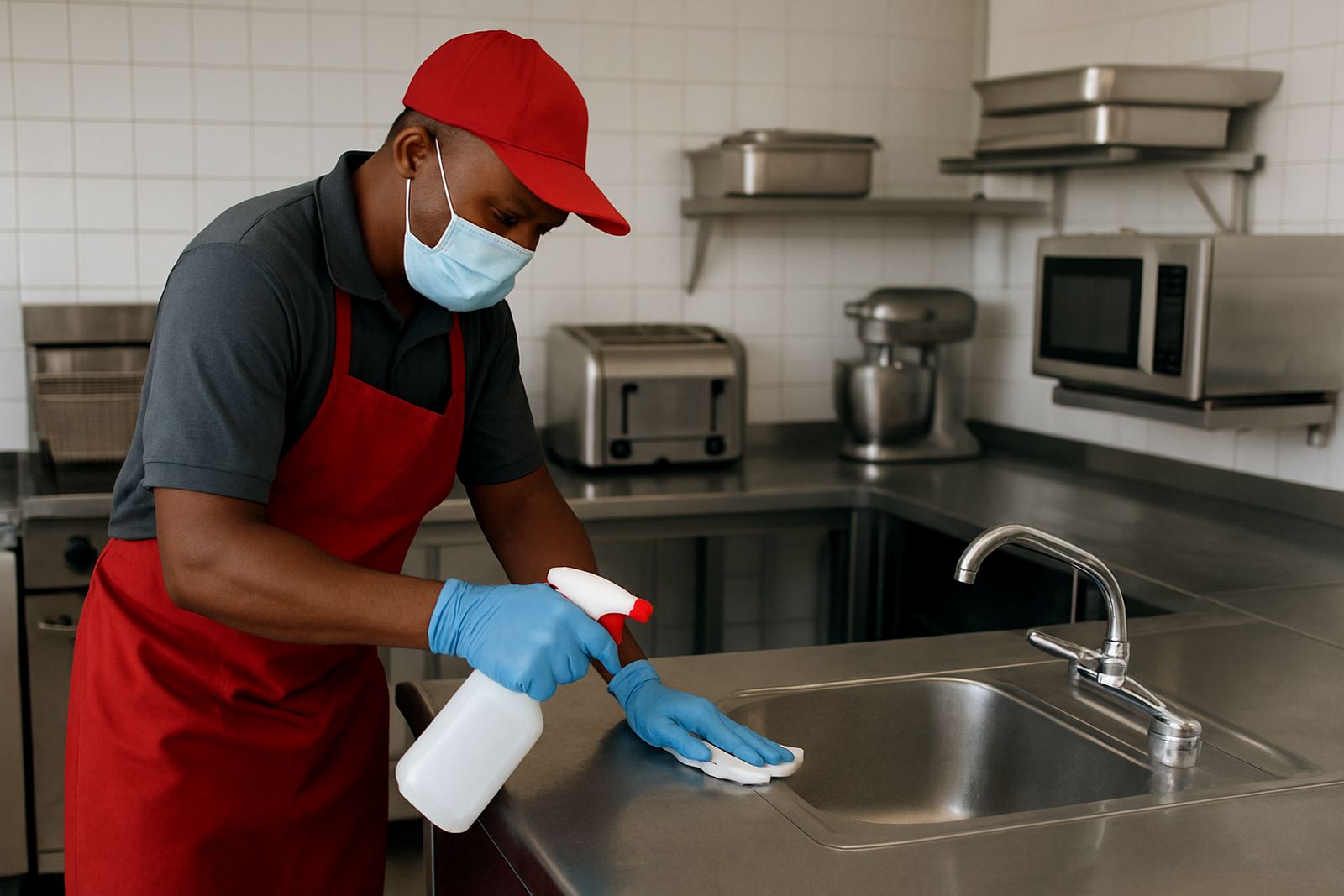
Cleaning should happen when the fryer has cooled enough to handle safely, but not so late that oil has turned sticky. Switch off and isolate the unit first, then follow the correct drain procedure. Never carry hot oil in open pots or through narrow passageways where someone can bump into you. Use a proper container with a lid and make sure the path is clear before moving it.
- Let the oil cool to a safe working temperature before draining.
- Wear heat resistant gloves and closed shoes.
- Keep mops, cloths and cardboard away from hot oil and heating parts.
- Clean crumbs from the vat before refilling so they do not burn on and affect flavour.
For shops in Pretoria Central or Boksburg where space is tight, route planning matters. A safe cleaning flow saves time and stops staff from carrying hot oil past customers, tills or other cooking lines.
Watch for Early Warning Signs of Trouble
A fryer often gives warning before it fails. Long heat-up times, uneven cooking, unusual smells, tripped breakers or a control light that behaves strangely are all signs that the unit needs attention. Do not keep resetting a machine that trips again and again, because repeated faults can damage wiring and create a fire risk.
Preventive servicing helps more than most kitchens expect. A technician can check thermostats, wiring, elements, seals and the condition of the vat before a small issue turns into a full breakdown. In places like Randburg or Midrand where a busy canteen cannot afford to close at lunch, that kind of check can save a day of lost trade.
Train Staff So Safety Stays Consistent
Safety works best when every person uses the fryer the same way. New staff should be shown where the isolator is, how to lower baskets, where the fire blanket sits and what to do if oil starts smoking. It helps to keep a short instruction sheet near the fryer, especially in kitchens with shift work or weekend staff.
A handover should include basic points such as oil level, last cleaning time and any fault messages. If the team knows who to call for servicing, quotes or a site assessment, they can act before a small problem becomes a shutdown. That is useful in school kitchens, takeaways and tuck shops alike, and it keeps service moving when orders build up.
When to Call for Repair or Reconfiguration
If the fryer is leaking, drawing too much power, overheating or sitting awkwardly in the line, do not keep working around it. A proper repair may be all that is needed, or the kitchen layout may need a small reconfiguration so staff can move safely between prep, frying and plating. In older kitchens, especially where equipment was added over time, poor positioning can be the real hazard.
Used equipment can also be a sensible option if it is inspected and serviced properly before installation. For kitchens in Silverton, Pretoria Central and Centurion, a checked second-hand fryer can do the job well, as long as the oil system, controls and wiring are sound.
Good fryer safety is mostly about habits. Small checks, calm handling and regular servicing keep burns, spills and downtime down, and they make the kitchen easier to run on busy days.