Start with clean oil and the right fill level
The first way to extend fryer oil life is to begin properly. If the fryer is dirty, if old crumbs are left in the tank, or if the oil is filled above the correct mark, the oil starts working harder from the first service. A fryer that is overfilled also spits more and heats unevenly, which shortens oil life and creates more mess around the unit.
Check the tank before every top-up. Remove loose debris, wipe the outside areas, and make sure the basket hooks, drain points and controls are free of sticky build-up. In kitchens with a lot of starch products, like chips and coated snacks, even a small amount of burnt crumb can darken fresh oil quickly. That means your new oil is carrying old contamination before service has even started.
- Fill only to the maker’s marked oil line.
- Skim crumbs during service, not only at closing time.
- Drain and clean the tank after heavy use, then refill with fresh oil.
Hold frying temperatures steady
Heat is the biggest factor in how long oil lasts. If the thermostat is set too high, oil breaks down faster and starts smoking earlier. If the heat is too low, food absorbs more oil and comes out greasy. A steady frying temperature gives better colour and helps the oil stay usable for longer, especially during lunch rushes.
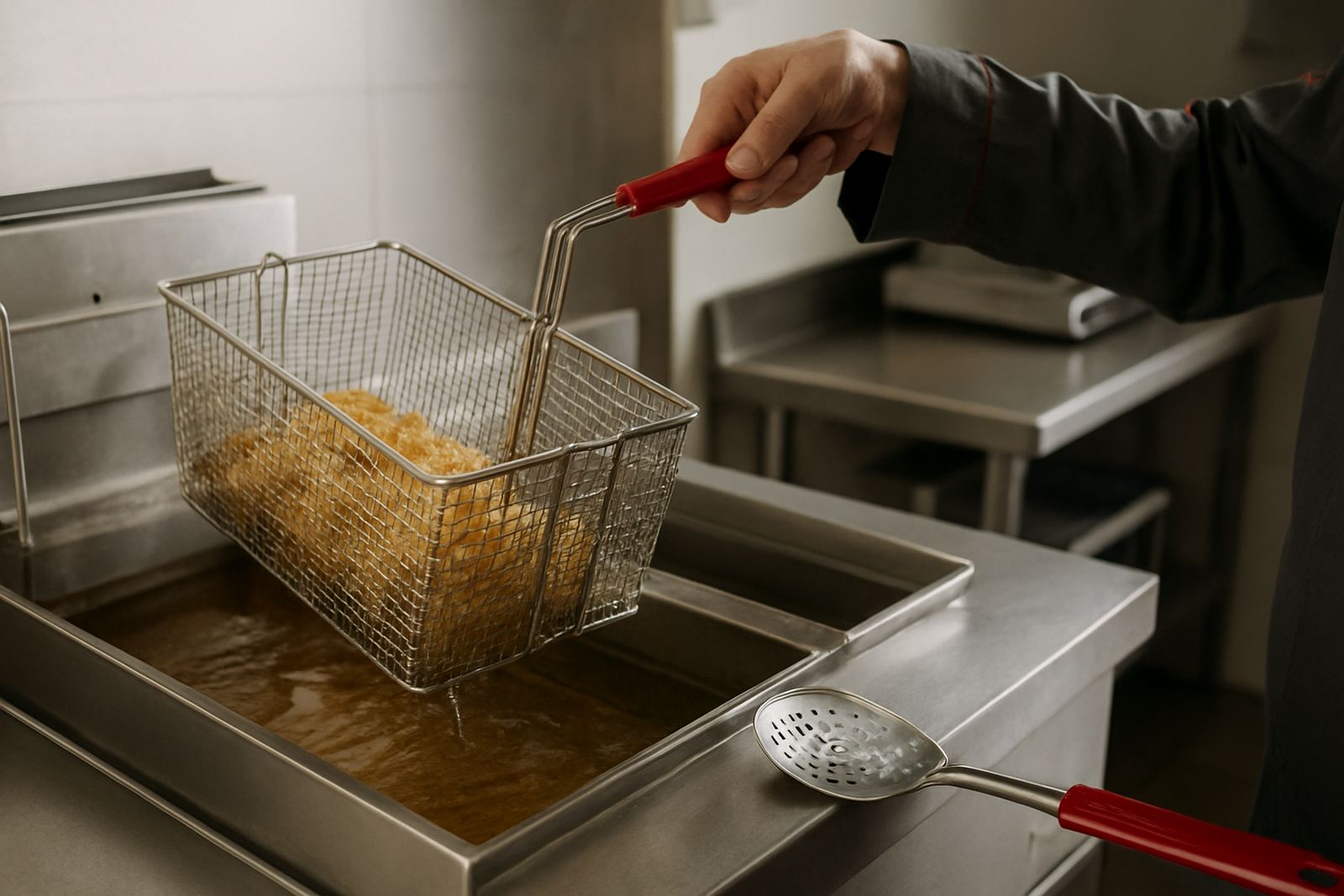
In many Pretoria and Centurion kitchens, the fryer is switched on early and left to cycle all day. That is normal, but it must be controlled properly. Do not keep raising the temperature when service gets busy. Let the fryer recover between batches, and avoid dropping in too much cold product at once. When the basket is overloaded, the oil cools sharply then overheats again and that cycle shortens its life.
If your thermostat seems inaccurate, have it checked. A fryer that runs 15 to 20 degrees hotter than it should can burn through oil very fast and create a strong smell in the kitchen, which is not ideal in enclosed spaces or shopping centre food courts.
Filter often, not only when the oil looks dark
Waiting until oil is black is too late. By that stage the oil has already carried a lot of food particles, moisture and burnt bits that affect flavour. Regular filtration removes the small solids that speed up breakdown. It also helps the fryer recover faster between batches.
For kitchens doing breakfast, lunch and supper trade, filtering once during the day can make a noticeable difference. If you are frying crumbed items, dough products or marinades with sugar, filter more often because these deposits caramelise quickly. A simple routine can save a lot of money over a month, and it keeps the oil looking cleaner for customers who can see into open kitchens.
- Filter after peak periods when crumb build-up is heaviest.
- Allow the oil to cool to a safe handling temperature first.
- Check and clean the filter media so it is not blocked.
- Use a separate container for filtered oil and label it by date.
Watch moisture, crumbs and marinades
Water is one of the fastest ways to shorten fryer oil life. Frozen product dropped in too quickly, wet batter, or food that has not drained properly all add moisture to the oil. When that happens, the oil foams more, splatters more and degrades quicker. This is a common issue in takeaways that work with frozen chips and pre-marinated chicken.
Train staff to shake off excess ice, drain product properly and never place wet utensils into the fryer. A little care here makes a difference. If staff are tipping in food with a lot of wet seasoning, the oil can go off before the end of the week. In humid coastal conditions the problem is worse, but even in Pretoria kitchens, steam from nearby prep areas can affect open fryers.
Also keep an eye on breadcrumbs and flour dust. These small particles burn fast and give the oil a bitter taste. Once the oil starts carrying that flavour, it can change the taste of every item you fry in it.
Keep the fryer and basket area maintained
A fryer that is not serviced properly uses more oil than it should. Faulty elements, weak thermostats and poor gas or electrical performance all affect the oil temperature and consistency. If the unit has cold spots, the food cooks unevenly and stays in the oil longer. That extra time means more oil absorption and more wear on the oil itself.
Basket condition matters too. Bent baskets, broken handles and poor draining can hold oil on the food as it comes out of the fryer. That means more product loss and less control over portion cost. In a busy kitchen the difference might look small each day, but over a few weeks it shows up on the till and in the waste bin.
Regular preventive servicing helps catch these issues early. If the fryer is tripping, overheating or taking too long to recover, the oil is usually telling you there is a deeper fault. Do not keep pushing the unit through service without checking it.
Set a simple kitchen rule for oil changes
Every kitchen should have a clear rule for when oil is changed. Do not leave this to guesswork. Some teams change by colour, others by smell, foam, smoking point or a fixed service schedule. The best rule is one staff can follow under pressure, even during a rush. If the oil smells sharp, looks very dark, or leaves a burnt taste on the food, it is time.
A practical checklist works well in small and medium operations around Gauteng:
- Record the date the oil was changed.
- Log how many frying hours the oil has had.
- Check the oil daily for smell, colour and foam.
- Assign one person per shift to sign off the fryer check.
This kind of control keeps the kitchen consistent. It also helps when training new staff, because they know exactly what to look for instead of asking every supervisor differently.
A Pretoria takeaway example that saves money
A takeaway in Pretoria Central that fries chips, vetkoek and crumbed snacks was changing oil far too often. The team assumed the fryer itself was the problem, but after a site assessment the main issues were simple: baskets were overfilled, the oil was not filtered during service, and the fryer temperature was being set too high during lunch rushes.
After the staff were trained to fry in smaller batches, skim crumbs regularly and keep the temperature steady, the oil lasted longer and the food came out more consistent. The kitchen also reduced smoke around the counter, which made the working area more comfortable for staff. It was not a fancy fix, just better habits and proper servicing where needed. That is often enough to make a real difference.
If your fryer oil is turning quickly or your team is struggling to keep it clean, it is worth reviewing both the operating routine and the condition of the equipment. A good fryer should help you control costs, not add extra waste.