Why prep fridge layout changes service speed
A prep fridge is more than cold storage, it is part of the line. When ingredients are grouped by menu section and used in the same order every shift, staff spend less time opening doors and searching for pans. That matters during lunch rush in a Pretoria CBD takeaway or a Centurion café where orders stack up quickly.
The aim is simple: short door-open times, clear stock rotation and less cross handling. If the most used items sit at hand height and rarely used stock stays lower down, the team moves faster and the cabinet holds temperature better. That helps in summer heat, and it also helps when load-shedding means the kitchen needs to keep every minute of cooling under control.
Start with one rule, keep every ingredient in the same place every day. Once staff know the set position for burger toppings, salad items or sandwich fills, they stop guessing. The kitchen feels calmer and the cold chain becomes easier to manage.
Build the fridge around the menu, not the trays
Many kitchens fill a prep fridge from the outside in, using whichever pan fits. A better method is to map the menu first. Put high-turn items at the front row and group ingredients by station, for example breakfast, salads, grills or takeaway assembly. That way one cook can work a section without reaching across another section and causing spillages.
Use the most practical container sizes for the job. Deep pans are fine for bulk items, but shallow pans are easier for fast-moving ingredients that must be topped up often. In a busy sandwich shop in Midrand, for example, a shallow tray of sliced tomato and lettuce may serve better than a deep container that gets disturbed all day.
- Place top-sellers closest to the prep area
- Separate raw and ready-to-eat ingredients clearly
- Keep sauces and wet items in spill-safe containers
- Label every pan with item name and date
- Use one shelf or section for backup stock
When the fridge follows the menu, staff waste less motion. That small change can cut seconds off each order, and over a full shift it adds up.
Set a temperature routine that staff can follow
Organisation is only useful if the fridge stays cold enough. Keep the cabinet packed correctly, not overfilled. Air must move around the pans, so leave space between trays and do not block the return vent. If food is stacked too high or pushed against the back wall, the top layer can sit too warm while the lower layer freezes at the edges.
For most prep fridges, the target is to hold chilled food at safe temperatures through service, with doors opened as briefly as possible. A simple probe check at opening, mid-shift and close-down gives the team a clear routine. If the reading starts drifting, sort the cause early instead of waiting for product loss.
- Check door seals for gaps, dirt and damage
- Keep condenser areas clear of dust and grease
- Defrost and clean as part of the weekly close-down
- Move warm stock out of the fridge before restocking
- Record temperatures in a log every shift
In coastal areas with higher humidity, moisture can build up faster on doors and gaskets. That means more regular wiping, and a quick service check if the unit starts sweating or struggling to recover after peak use.
Use stock rotation that works under pressure
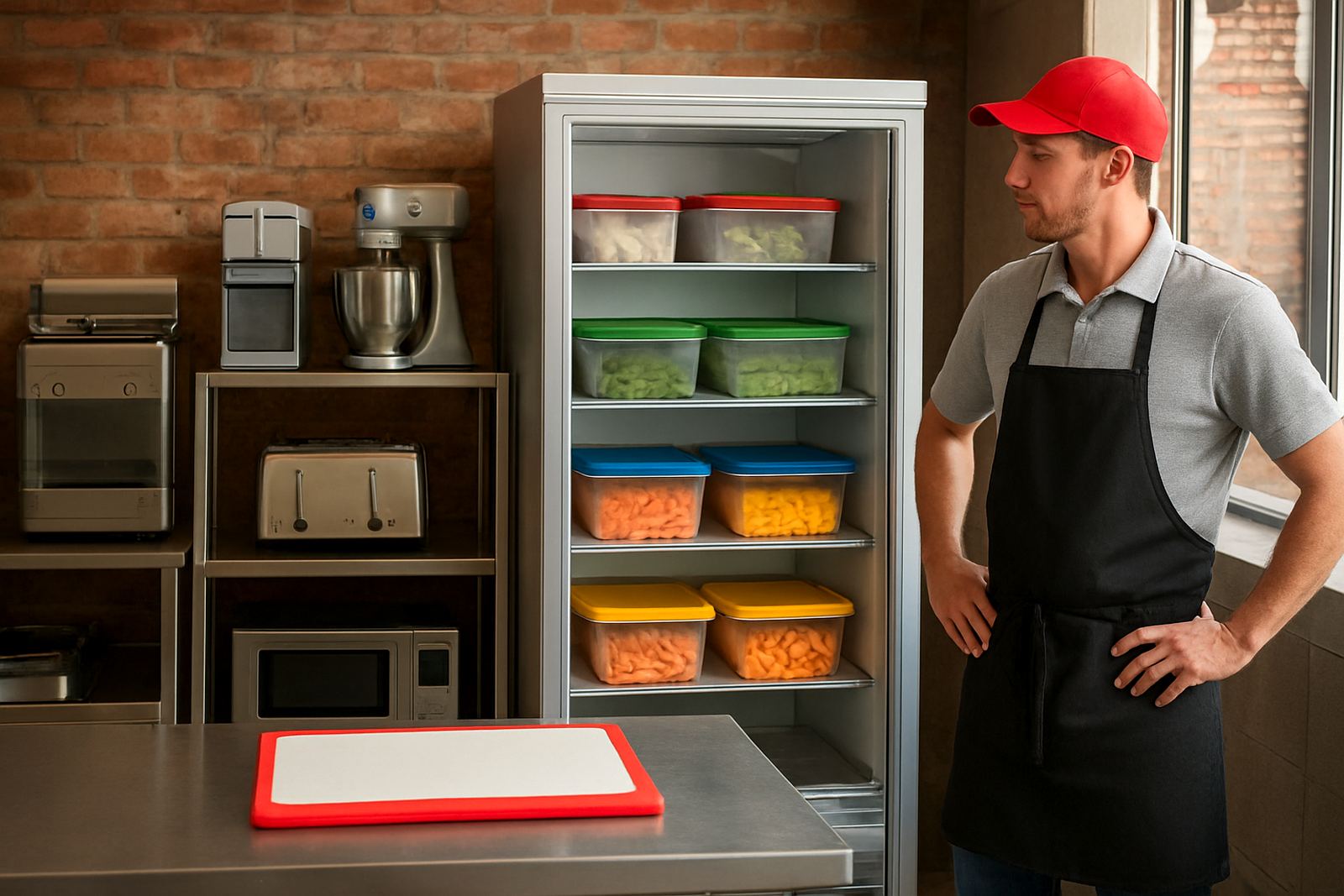
First in, first out only works when the system is easy to see. Date labels should face forward and older stock must stay in front of new stock. If the team cannot tell which tray was loaded first, the fridge is not organised well enough.
Use colour coded labels if the kitchen handles many items. Keep one colour for opening day, another for discard day, and a separate mark for allergen-sensitive or special-order items. This is especially useful in larger premises around Pretoria Central or Boksburg where different people may restock the unit during the same day.
At the end of each shift, one person should do a quick face-up check. Old stock moves forward, low pans are topped up, and anything close to expiry is flagged for use the next day. It sounds basic, but it prevents good ingredients from being buried at the back and forgotten.
Avoid the layout mistakes that slow kitchens down
Several common mistakes cause more trouble than most owners expect. The first is mixing too many menu groups in one compartment. When breakfast items, salad produce and sauce tubs all sit together, staff crowd the same door. The second is overloading the fridge so the lids do not close properly. A unit that cannot close cleanly will struggle to hold temperature, and the compressor works harder.
Another issue is using the fridge as a storage cupboard for anything that fits. Dry goods, cartons and cleaning chemicals should stay out of chilled food space. That leaves room for the items that actually need cold storage, and it keeps the interior easier to clean.
- Do not block fan outlets with trays or containers
- Do not store hot product straight into the fridge
- Do not mix raw meat above ready-to-eat food
- Do not leave cracked containers that drip onto other stock
- Do not let staff invent new tray positions every shift
Once a fridge drifts into bad habits, the problem spreads through the whole kitchen. The fix is usually not a new unit, it is a better system and a proper reset of the layout.
A Pretoria example from a busy prep line
A small food business in Silverton serving offices and schools had one prep fridge for sandwich filling, sauces and salad items. Staff kept swapping trays around depending on who was on shift, so the same ingredients were being moved three or four times a day. The result was slow service, wet labels and a lot of wasted stock.
After the fridge was reset, the team used one side for sandwich fillings, one shelf for salad produce and one lower section for back-up stock. High use items moved to the front, labels were standardised and the closing check became part of handover. Service speed improved because nobody had to ask where things were kept, and there was less spoilage at the end of the week.
That is the real value of good prep fridge organisation, it makes the work day easier. The fridge stops being a problem area and starts supporting the pace of the kitchen.
When to service or reconfigure the fridge
If a prep fridge is always overcrowded, icing up, or taking too long to recover after doors open, the issue may be layout, servicing, or both. Door seals, thermostats, fans and compressor performance all affect how well the unit handles a busy shift. In some cases a small reconfiguration inside the kitchen is enough. In others the fridge needs preventive servicing or a workshop check.
For kitchens in Pretoria, Centurion, Midrand and nearby areas, it helps to review the fridge before peak season. A site assessment can show whether the current unit suits the menu, if the doors open in the right direction, and whether the prep line needs a better flow. Sometimes a used unit can be sourced for a back-up line or overflow area, which is useful when the main kitchen is under pressure.
Good organisation is not fancy. It is a clear habit, a clean fridge and a layout that matches the way the kitchen actually works.