Start with the delivery route, not the product
When a fryer or mixer is still sitting in the shop, it is easy to focus on price and specs only. The delivery route matters just as much. A unit that fits on paper can still get stuck at a gate, under a stair landing or around a tight corner in a Pretoria kitchen.
For catering equipment, access problems usually show up at the last minute. That means extra labour, a second trip, or in some cases a crane lift or manual carry that was never planned. Before you confirm a delivery, walk the full route from the vehicle drop point to the final position and note anything that narrows the path.
If you are buying for a busy canteen, restaurant, church kitchen or school feeding project, this check should happen before payment is finalised. It saves time, protects the equipment and helps the service team plan the right people and tools.
Measure the openings that matter on delivery day
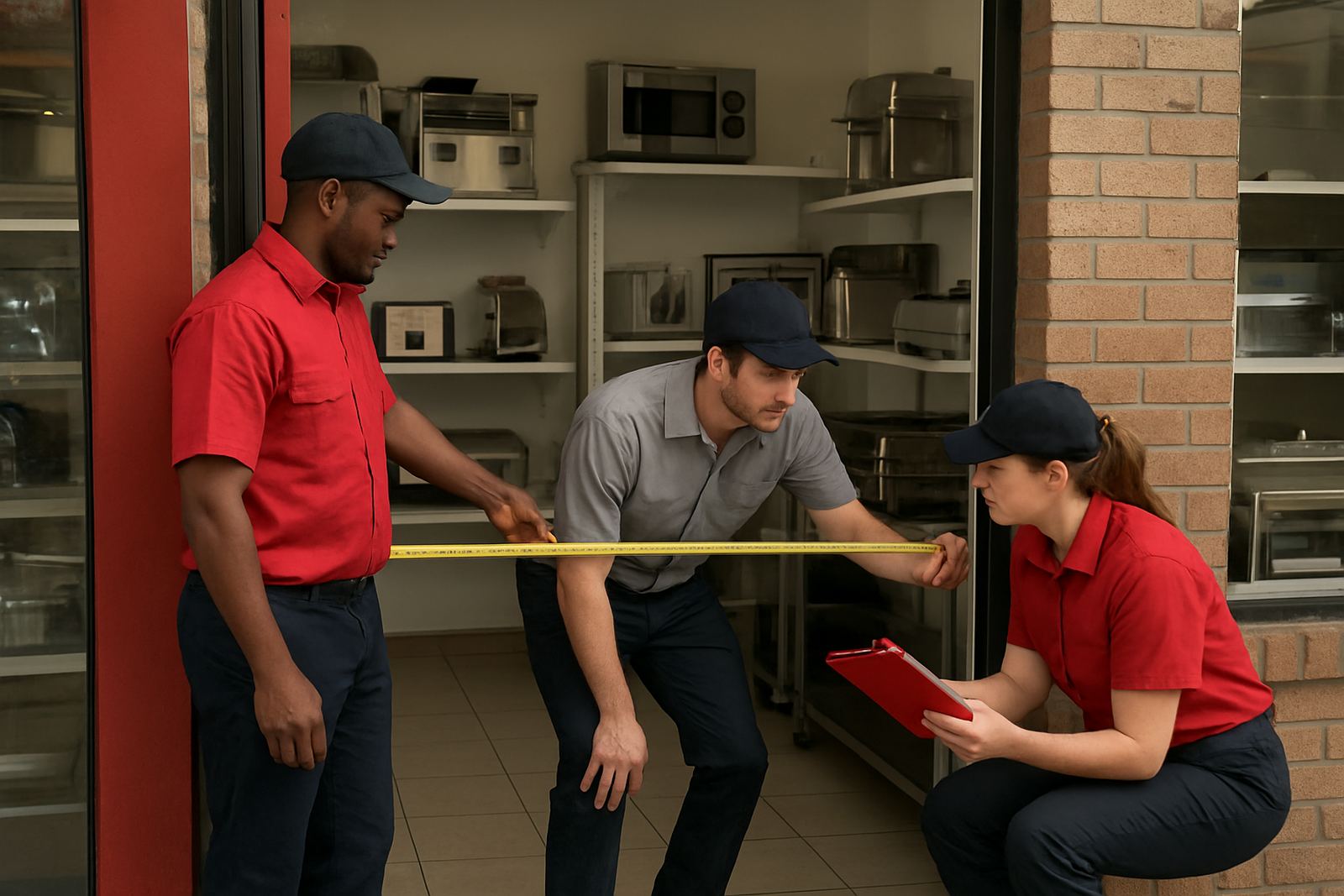
Do not rely on a quick visual guess. Use a tape measure and write down each opening in millimetres. The smallest point on the route is what decides whether the job goes ahead in one trip or becomes a problem.
- Door width and height, including any fire door closers or handles that reduce clearance
- Passage width at the narrowest point, especially where walls or counters stick out
- Stair width, step height and headroom on landings
- Gate opening, driveway access and turning space for the delivery vehicle
- Lift size if the building has one, including door opening and internal cabin space
Also check the equipment size with packaging, not just the bare machine. Crates, bubble wrap and pallet boards add a few centimetres and that can be enough to cause trouble. On some jobs a mixer that is 700 mm wide on its own becomes much wider once it is boxed.
Think about weight, not only width
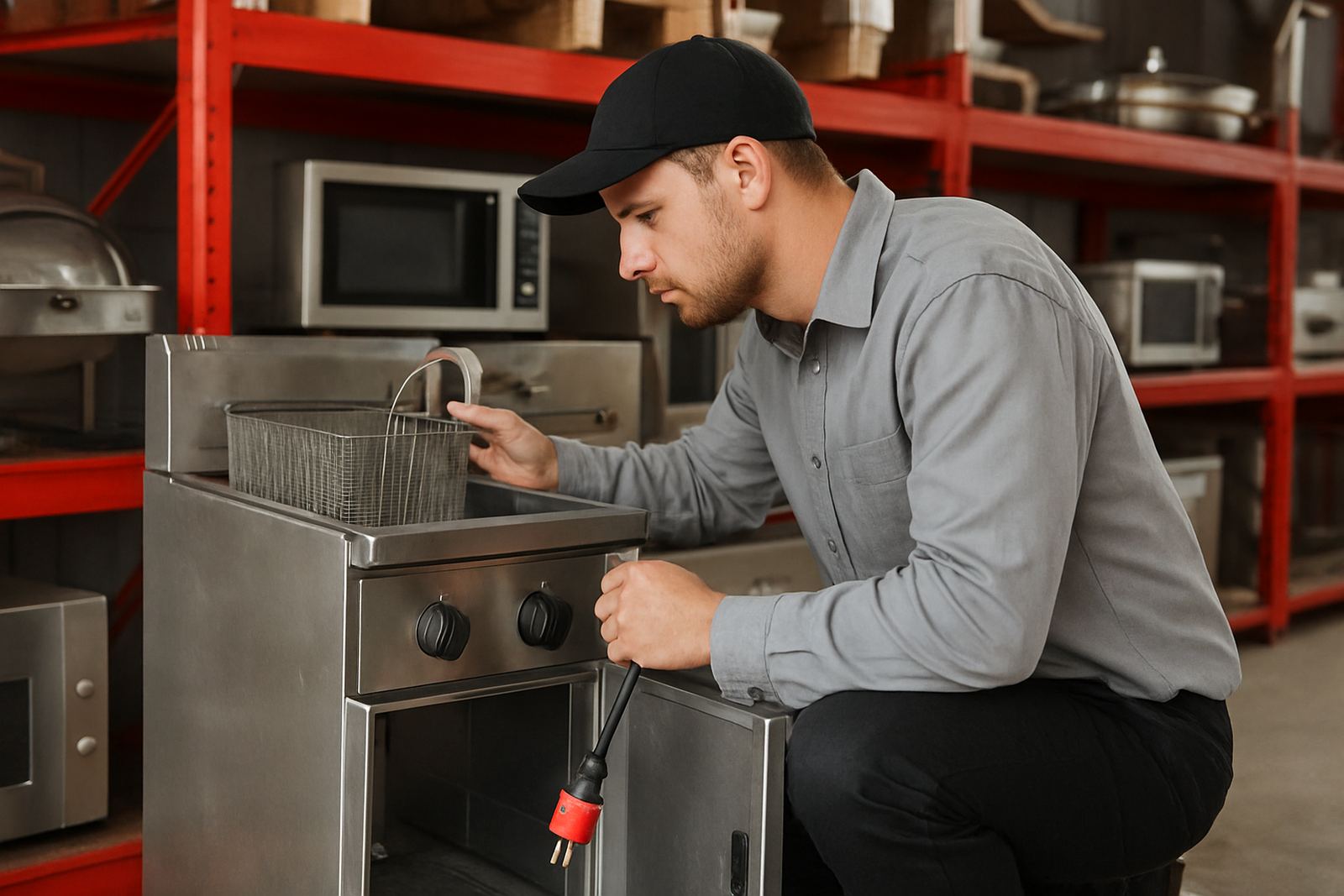
Access planning is not only about whether the equipment can fit through a gap. Heavy items like commercial fryers, microwaves, dishwashers and mixer units need enough support on floors, ramps and stairs. Old staircases in the inner city can flex more than expected, especially in older buildings with repeated alterations.
Check the floor finish too. Smooth tiles, wet concrete, loose paving and polished steps all make moving trolleys harder. In coastal humidity, metal trolleys and frames can also pick up corrosion faster if they are left outside while the team waits for access. That is why delivery timing and a clear path are so important.
If the route includes a slope, ask how the load will be controlled. Two people may carry a light toaster or chafing dish, but a full-size fryer or a large mixer may need a dolly, straps and extra hands. Planning this early keeps the team safe and the equipment intact.
Use a simple access check before you confirm the quote
A good quote is easier to prepare when the site details are clear. If you are sending an enquiry to quotes@afchain.co.za, include the equipment list and the access notes together. That gives the sales and service team enough information to advise on positioning, delivery order and installation needs.
- Send the exact model type or equipment category
- Share the site address and floor level
- State whether there is a ramp, stairs or lift
- Tell us if the kitchen is inside a mall, school, clinic or office park
- Provide gate access times and any security sign-in process
For Pretoria Central, Centurion and Midrand sites, delivery timing often has to work around traffic and access control. A short note about peak hours or municipal restrictions helps avoid waiting time and missed handovers.
A Pretoria example that saves time on site
One common case is a small food outlet in Pretoria Central upgrading from basic catering gear to a heavier fryer and a larger holding unit. The owner measures the front door but forgets the narrow passage behind the counter. On delivery day, the equipment reaches the kitchen door and stops there. The turning space is too tight by only a few centimetres.
That kind of delay can usually be avoided with one site assessment. If the route had been checked earlier, the team could have planned a different entry point, removed a counter panel or changed the order of installation. A few minutes on site before delivery is far cheaper than paying a crew to wait while the kitchen is cleared.
In Gauteng, where business spaces are often fitted into older buildings or split units, this is more common than people think. The lesson is simple: measure first, then schedule the truck.
Plan for positioning, setup and handover after the drop-off
Delivery is only one part of the job. Once the equipment is inside, it still needs to be positioned, levelled and connected correctly. If the route to the final spot is difficult, the service team should know before the truck leaves Silverton, not after it is already on the road.
Afchain can help with delivery and positioning, installation, preventive servicing and handover training. That is useful when the kitchen is being reconfigured, or when used equipment needs to be placed in a new layout. It also matters for breakdown repairs and workshop refurbishment because the same access issues can affect future service visits.
Good access planning keeps the work moving. It also makes it easier to protect walls, tiles, doors and equipment finish. A small scratch on a cabinet may not stop service, but it becomes an avoidable cost.
Before delivery day, make sure the route is clear, the measurements are written down and the site contact knows when the vehicle is arriving. That simple preparation helps the installation run smoothly and keeps the kitchen ready for trade.