Start with the breakfast traffic, not the table count
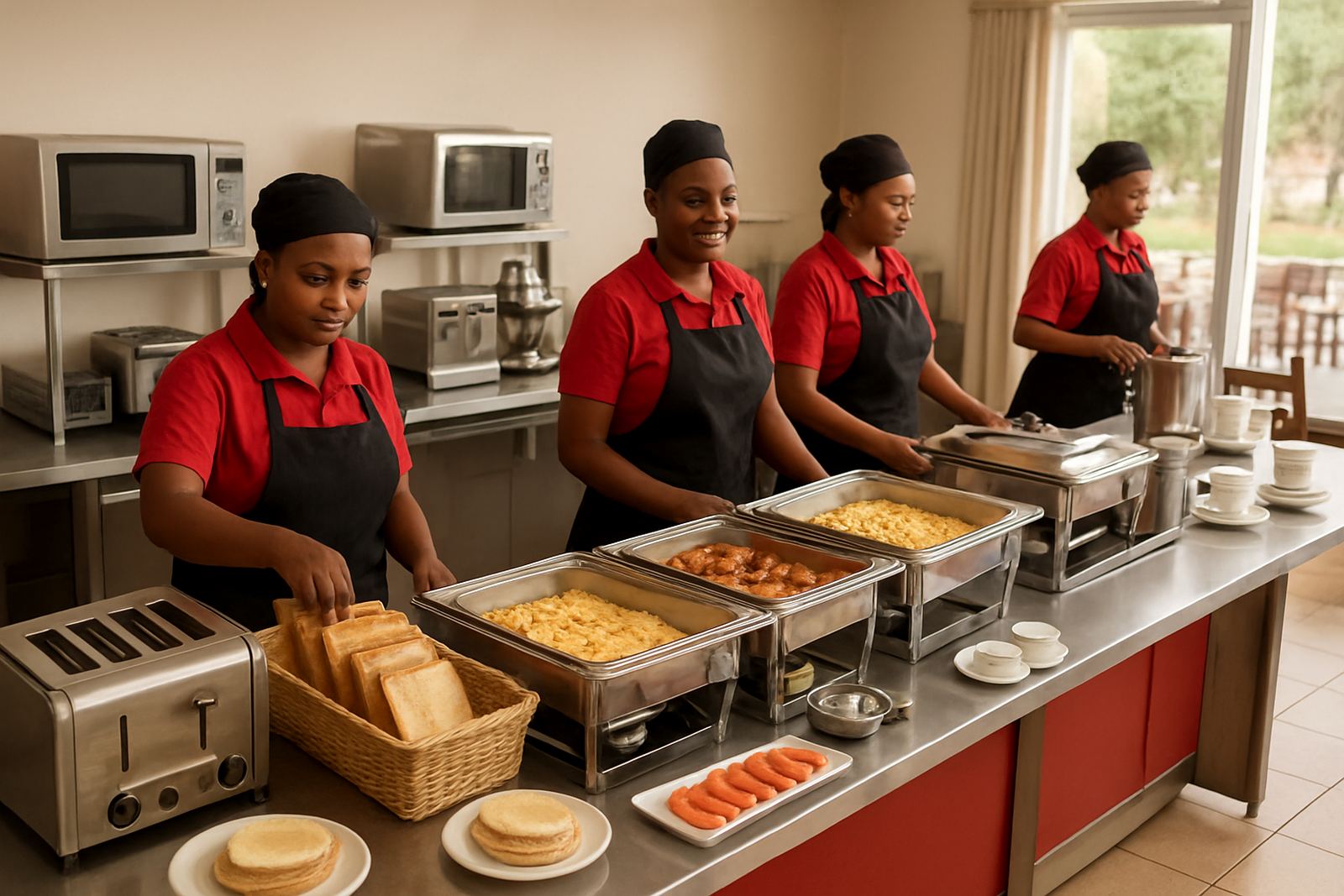
When a breakfast area gets busy, the layout matters more than how many items are on the menu. Guests usually move in the same order every morning: plates first, then bread and hot items, then tea, coffee and juice. If those stations sit too close together, the queue grows fast and staff spend the first hour trying to untangle it.
For a small guest house in Pretoria Central or a 30 seat canteen in Centurion, the simplest fix is to separate the first grab point from the hot drink point. Give people one clear entry and one clear exit. If the toaster is next to the beverage urn, you will get a pile up while people wait for bread to pop and someone else tries to pour coffee. That is where congestion starts.
We usually advise owners to watch the room during the busiest 20 minutes and note where people stop moving. It is often not the food that is the issue, it is the turn in the room. A corner, a narrow gap near a wall, or a server table that sticks out too far can slow the whole line. Small changes, like moving one table 600 mm back, can make a real difference.
Place the toaster where bread can move without blocking hot drinks
The toaster is one of the biggest causes of queue friction because people linger while bread cooks and then step back into the path of others. The best position is usually slightly off the main line, with a side reach for sliced bread and spreads. That keeps the waiting guest from standing in the middle of the route to tea and coffee.
In a breakfast buffet layout, the toaster should have enough surrounding space for safe handling and for crumbs to be cleared during service. If it is pushed against a wall, people end up leaning across hot surfaces and staff have less room to work. In humid areas like parts of Gauteng after rain, bread can also take a little longer to crisp properly, so the station needs easy access and good airflow.
- Leave at least 900 mm clear in front of the toaster station.
- Keep bread racks and spreads beside, not behind, the toaster.
- Put a small waste bin close enough for crusts and packaging.
- Avoid placing the toaster where guests must turn sharply after serving themselves.
For larger operations, a double toaster can help, but only if the feed and collection space is planned properly. If not, the extra unit just creates more traffic in the same spot.
Keep beverage service away from the heaviest food movement
Tea, coffee and juice should be easy to reach without forcing guests to pass back through the food line. In many Pretoria breakfast rooms, the beverage station is the busiest point because it serves almost everyone. If hot water, coffee and milk are all squeezed into one corner, people wait longer and spill more.
A better approach is to place the beverage station at the end of the buffet or on a separate wall. That allows guests to collect breakfast, move on, and then stop for drinks without blocking those behind them. It also helps staff monitor milk levels, sugar, cups and stirrers more easily. When the station is too close to a doorway, guests arriving late end up crossing in front of the flow and that makes the whole room feel cramped.
For serviced properties, we often suggest testing the route with three or four staff walking through as if they were guests. If two people cannot pass comfortably without turning sideways, the layout needs adjusting. That test costs nothing and shows problems before breakfast starts the next morning.
- Place milk, sugar and teaspoons in a straight line, not scattered across the counter.
- Use separate points for hot drinks and cold juice if space allows.
- Keep cups stacked where guests can reach them without leaning over urns.
- Allow room for staff to refill without pushing into the guest path.
Use hot holding and chafing dishes to protect food quality
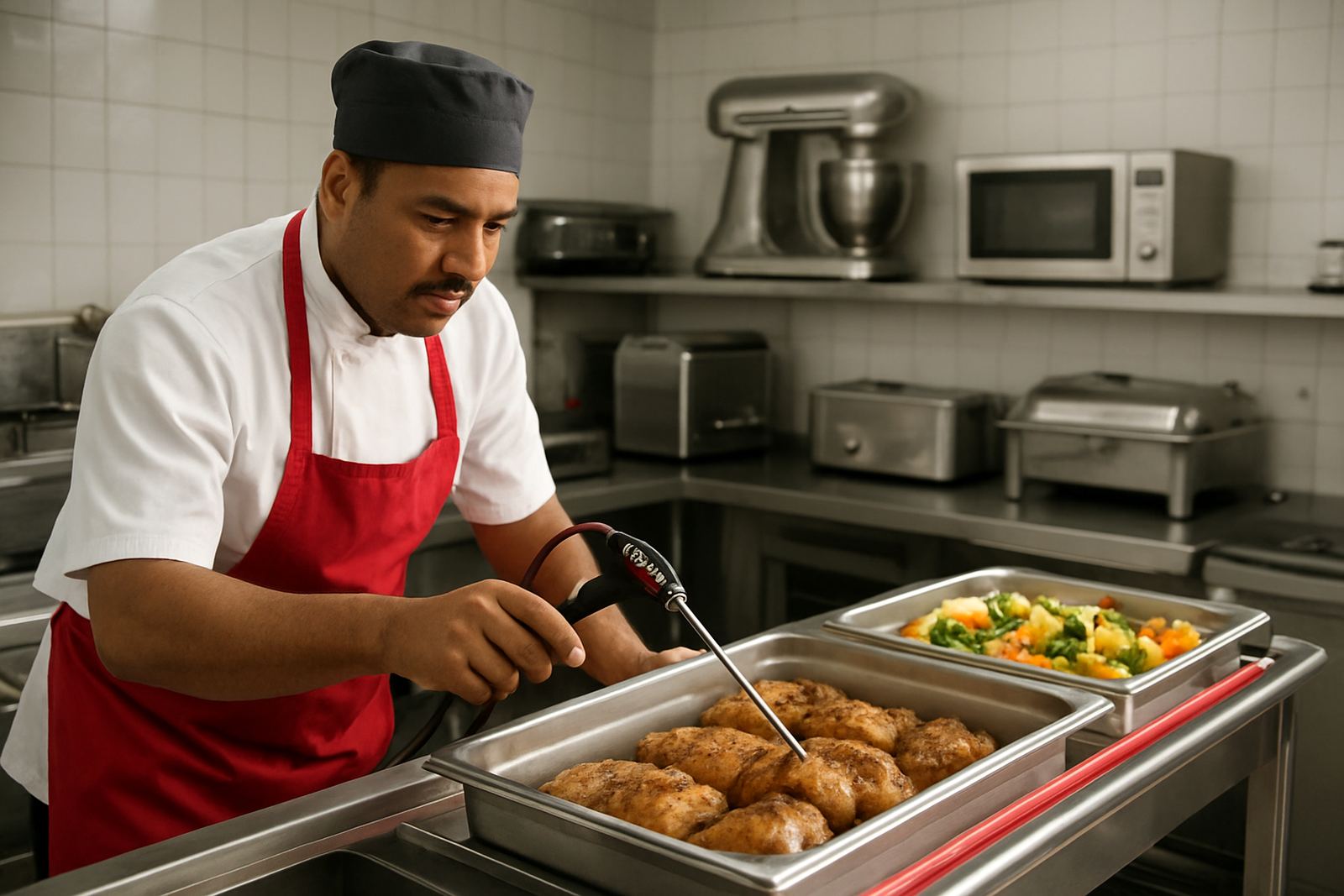
Breakfast food does not stay appealing for long if it is set too early or too tightly together. Eggs, wors, baked beans and mushrooms all need steady holding temperatures, and chafing dishes help when they are sized and positioned correctly. If the lids cannot open fully, or if one dish blocks another, service becomes awkward and heat loss increases.
In a buffet layout, hot items should be close enough for easy service but not so tight that one guest blocks access to the next pan. A good rule is to leave enough elbow room for serving utensils and a plate in the same space. That may sound simple, but it is often missed in older dining rooms where a few extra dishes are added over time and the whole counter gets crowded.
Load-shedding also needs planning. Where the room relies on electric hot holding or microwaves for quick top-ups, the layout should make it easy to move to backup power or alternate service points. It is better to know where the extension points and cable routes go before the lights dip, not after guests have started queuing. Our team in Silverton sees this often when kitchens are reconfigured after service issues.
Build clear movement for staff restocking and cleaning
A breakfast buffet is not only for guests. Staff must be able to refill trays, wipe spills and remove empty platters without weaving through the line. If they have to squeeze between the toaster and the coffee station, they will slow the service and increase the risk of burns or breakages. The layout should give them a back route or at least one clean access point.
Think about where dirty plates will go as well. Many operators focus on what the guest sees and forget the return path. A separate clearance point helps keep the buffet area neat and cuts the chance of cross traffic. It also makes it easier to keep the floor clean, which matters in municipal inspections and in buildings with shared dining spaces.
- Keep a clear path for staff carrying top-up trays.
- Place cleaning cloths and sanitiser at the edge of the service area.
- Set a waste point where guests cannot knock it over.
- Use non-slip floor mats where spills are likely.
Good servicing also matters here. Toasters, mixers and microwaves used in breakfast prep should be checked regularly so a small fault does not interrupt service at 07:00. A planned service visit is cheaper than losing a morning service because one unit fails under pressure.
Match the layout to the venue size and the local crowd
A breakfast buffet in a Centurion business lodge is not the same as a school hostel in Midrand or a small hotel near Kempton Park. The number of guests, the age group and the speed of turnover all affect the layout. Business travellers often want quick movement and fewer stations. Families may need wider gaps, simpler signage and lower counters for easy access.
In older dining rooms, the answer is not always a full rebuild. Sometimes it is just a better sequence. Put plates first, hot breakfast next, bread and toaster to one side, then drinks at the end. If the room allows, add a second small beverage point away from the main line. That spreads the load and keeps the first station from clogging up.
For operators looking at used equipment to improve an existing buffet, the key is to choose pieces that fit the actual room and not the ideal drawing. We often help customers in Pretoria Central, Randburg and Boksburg with quotes, site assessments and kitchen reconfiguration so the equipment matches the space. A good layout should feel ordinary to the guest, because they move through it without thinking.