Why mixing errors show up in the finished loaf
Mixing is where flour, water, fat, yeast and salt start working together, so small mistakes at this stage carry through the whole production run. If the dough is overworked, under-mixed or too warm, the bakery pays later in poor oven spring, split crusts, short shelf life and uneven slice size.
In a busy Gauteng bakery, timing matters as much as recipe. A dough that is 3 to 5 degrees too warm after mixing can proof faster than planned, which throws off oven loading and tray turnover. That is where production slips, especially when staff are trying to keep up with breakfast orders and lunch rolls at the same time.
Using one speed for every dough type
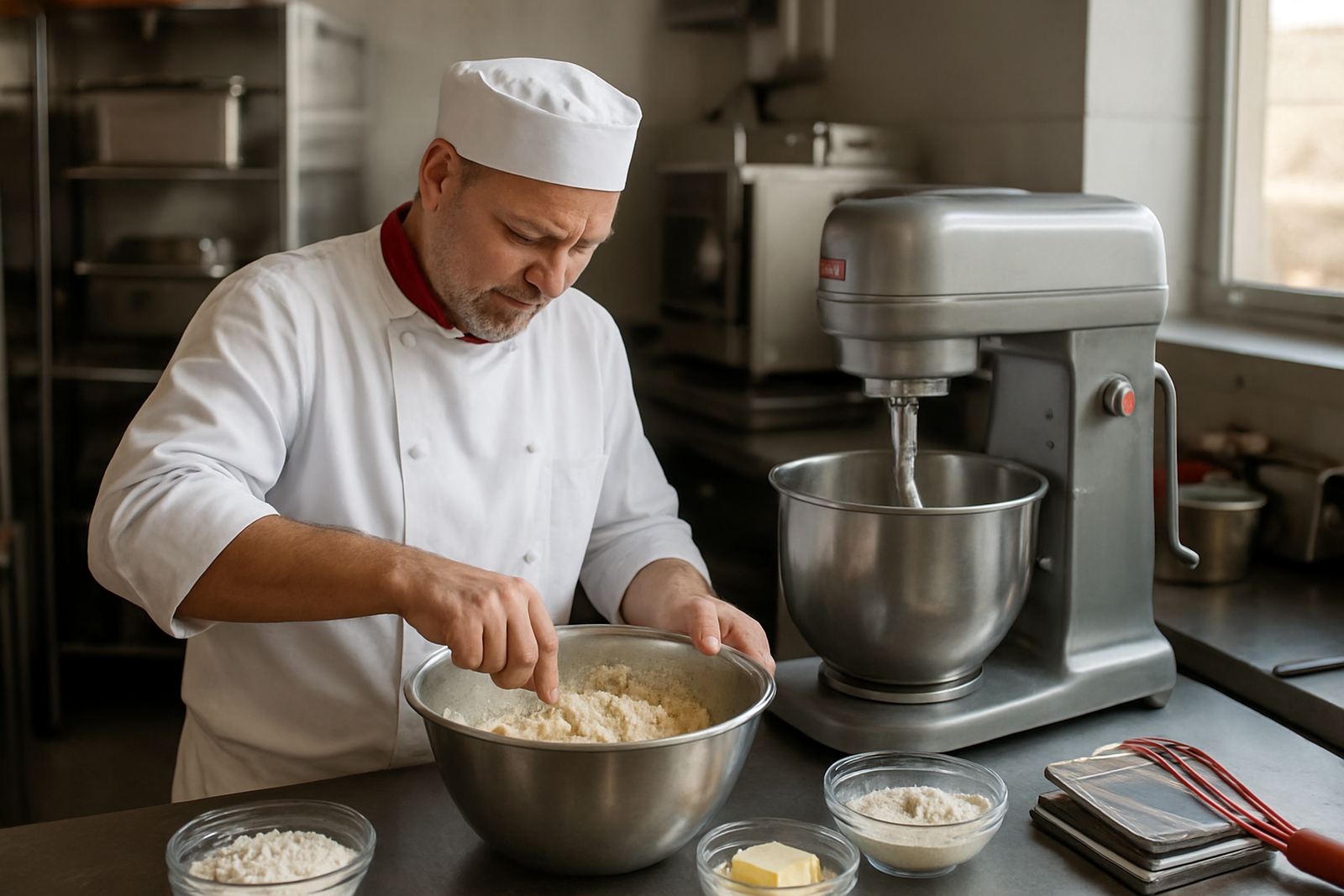
Many kitchens run every batch the same way, but bread dough, sweet dough and high-hydration dough all need different treatment. A hard lean dough may need a stronger first mix, while enriched dough can break down if you push it too long. The mixer should be set for the product, not for convenience.
- Start slow so flour hydrates evenly before you build speed.
- Watch dough temperature, not just the clock.
- Stop when the dough cleans the bowl and feels elastic, not when the timer ends.
- Check if the batch size matches the mixer bowl and hook size.
If a bakery is mixing 25 kg batches in equipment meant for 10 kg, the motor works harder and the dough develops unevenly. That can also shorten the life of the machine, which means more breakdowns and more downtime.
Ignoring water temperature and dough heat
Water temperature is one of the easiest controls to get wrong. In summer, cold rooms may still produce warm dough if the flour is stored near the oven or if the mixer runs too long. In winter, chilled water can slow fermentation so much that the first proof runs late and the oven sits waiting.
A practical rule is to check finished dough temperature after every batch, especially when the weather changes. Pretoria mornings in July are not the same as a humid afternoon in Midrand, and a mixer that seems fine on one day can make the next batch behave differently. A small change of 2 degrees can be enough to upset the schedule.
Adding ingredients in the wrong order
The order of ingredients matters more than many teams think. Salt too early can slow yeast, fat too soon can block water from absorbing properly, and too much flour added at the end can create dry pockets that only show up after proving. That gives you uneven crumb and patchy rise.
- Add most of the water first, then flour and yeast, then salt and fat once the dough starts to come together.
- Keep seed, fruit and inclusions for the final stage to avoid tearing the dough.
- Use the same measuring method every time, not a mix of scoops and eye judgement.
When one baker follows the recipe and another goes by feel, the product changes from shift to shift. Consistency starts with a clear mix order that everyone follows.
Overloading mixers and underestimating batch size
A mixer that is filled too high cannot work the dough properly, and it can also strain the gearbox, bowl lift or safety switch. The dough may look mixed on top while the bottom stays dry. In used equipment workshops, this is one of the most common reasons for recurring faults, because the machine is being asked to do more than it should.
For smaller bakeries in areas like Centurion or Kempton Park, a better plan is often to split production into two smaller batches and keep the machine within its rating. That gives a more even mix and steadier proof times, so the oven plan holds. It is slower on paper, but it usually saves time in the real day.
A Pretoria example: when the morning shift fell behind
A bakery in Pretoria Central was running two doughs from one mixer before 05:00, one for buns and one for white loaves. The team kept adding a few extra minutes because the dough looked rough at the start, but the final temperature kept climbing. By 08:00, the loaves were over-proofed, the rolls spread on the tray and the staff had to rework part of the batch.
Once the team changed the sequence, checked batch weight and used a simple temperature log, the dough became steadier and the oven line moved on time. No fancy fix was needed, just better control and a proper service check on the mixer bowl and attachments. The manager said the biggest change was not the product, it was the timing.
- Log batch weight, mix time and dough temperature for each run.
- Check mixer condition if the dough starts climbing the hook or slapping the bowl too hard.
- Train new staff on the same routine before peak season starts.
What to check before the next bake
Before the next shift starts, look at the mixer, the recipe and the work routine together. A good bakery mix depends on clean equipment, correct batch size and staff who know when to stop the machine. If a mixer is starting slowly, vibrating or leaving residue in the bowl, it needs attention before it becomes a stoppage during production.
For bakeries across Pretoria, Randburg and Boksburg, keeping mixing under control protects both product quality and delivery timing. The simplest gains often come from service, setup and training, not from changing the recipe. Get the basics right and the dough usually tells you the rest.