What student residences need from kitchen equipment
A residence kitchen works differently to a normal guesthouse or staff canteen. You have breakfast peaks, lunch carry-overs, supper rushes and a lot of people using the same equipment in a short space of time. That means the equipment must warm up fast, clean down easily and keep working even when the power dips or the load shifts during the day.
For residences in Pretoria, Centurion, Midrand, Kempton Park, Boksburg and Randburg, the usual brief is simple: feed many students, keep queues moving and avoid equipment that needs special handling every hour. Stainless finishes, strong hinges, removable trays and controls that staff can check at a glance all help, especially where the kitchen team changes or works in shifts.
At Afchain we handle quotes, site assessments, delivery and positioning, installation, servicing and later repairs. That matters because residence kitchens often grow in stages. One term you may start with a small servery, then add another line, a warmer or a prep station after enrolment numbers rise.
Typical equipment set for a residence kitchen
The right setup depends on whether the residence only serves breakfast and supper, or runs full meal cycles. A common package includes hot holding, cooking, reheating and a few prep units that can take daily use. Used equipment can work well too, provided the unit has been checked, tested and is still practical for the space.
- Deep fryers for chips, vetkoek and quick service items
- Toasters for breakfast service and bulk bread lines
- Mixers for batter, dough and general prep
- Microwaves for reheating and late meal prep
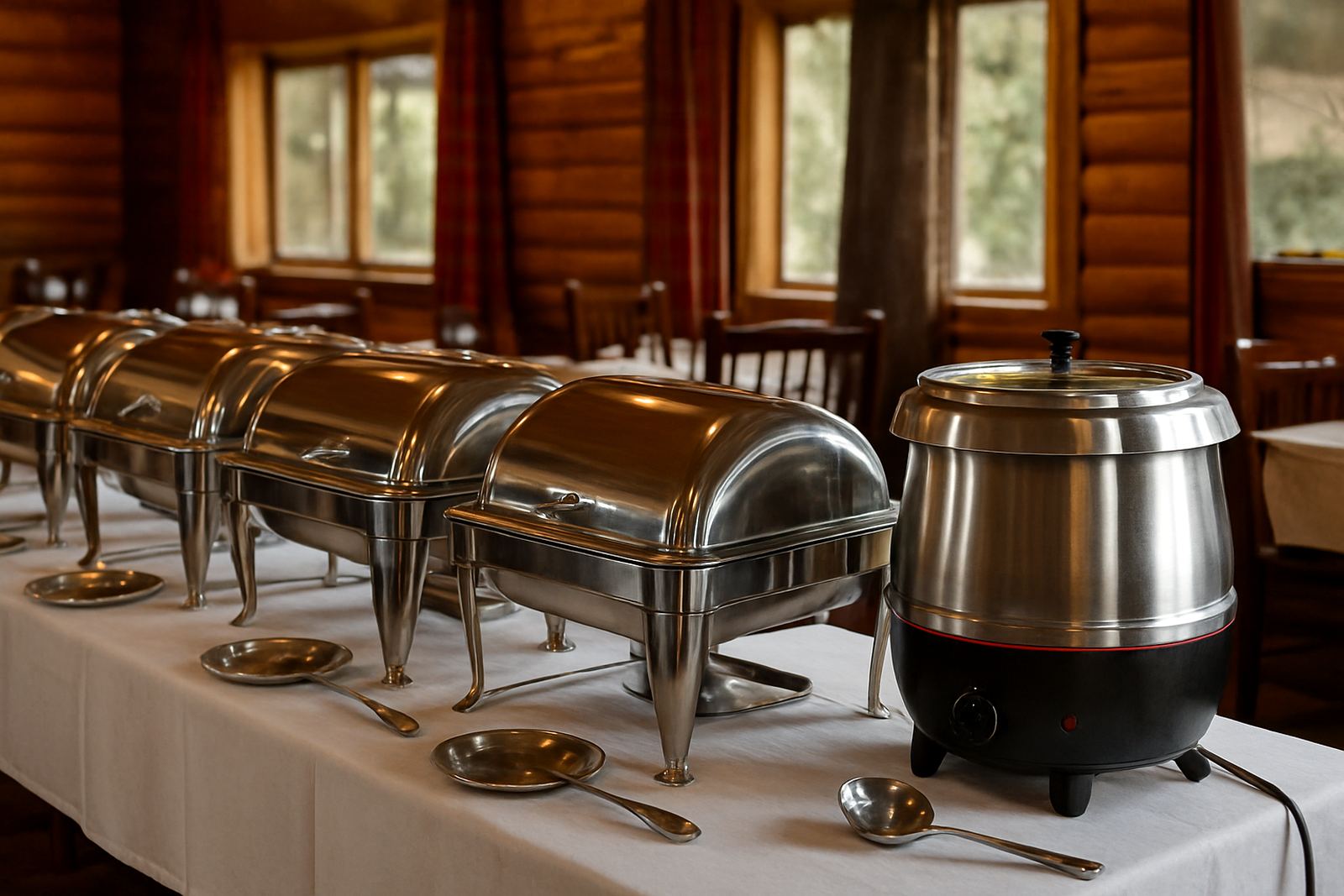
- Chafing dishes for serving and short-term hot holding
- Fridges, freezers and heated holding gear where the menu needs it
For many residences, two smaller fryers are more useful than one large unit because they let the team separate products and keep service moving. The same applies to microwaves: a few well placed units are better than one overworked machine, and that usually reduces queues at peak time.
Planning the layout so mealtimes run smoothly
In student housing, the layout can save or waste a lot of time. If the hot line, prep area and wash-up point are too far apart, staff end up walking in circles and food service slows down. A clear flow is better: receive, store, prep, cook, hold, serve, return and wash.
We often advise residence managers to measure the usable wall length, door swing, ceiling height and the route for delivery before ordering anything. In some older buildings in Pretoria Central or older campus housing, the door opening is the real limit, not the kitchen floor area. It is also worth checking plugs, gas points if used, drainage and where water splashes can hit sockets or controls. Coastal humidity is less of a problem in Gauteng than in Durban, but moisture from dishwashing can still damage cheap fittings over time.
For shared kitchens, it helps to keep the hot equipment on one side and the cold or prep items on the other. That makes supervision easier and reduces crowding. If the residence has limited staff, choose equipment with simple controls, easy access for cleaning and parts that can be removed without tools, otherwise maintenance becomes a headache.
Common mistakes in residence kitchens
The biggest mistake is buying for the brochure instead of the actual meal count. A unit that looks fine for 40 students can struggle badly when 120 arrive at once. Another error is mixing household items with commercial equipment. Home-grade gear may cost less upfront, but it often fails faster under daily use and repeated heating cycles.
- Underestimating peak service times, especially breakfast
- Buying too few holding units, which causes cold food and long queues
- Ignoring cleaning access around fryers and warmers
- Not planning for power use during load-shedding
- Skipping site assessments and then finding the equipment does not fit
We also see kitchens where the team buys everything at once, but forgets the little items like trays, racks, serving tongs and training on correct use. Those details sound small, yet they affect service every day. A residence kitchen must be practical first, not fancy.
Budget ranges in Rand for student residences
Budgets vary a lot depending on student numbers, whether the kitchen is new or existing, and if you choose new or used equipment. For a basic residence serving a small group, a starter setup can begin around R25 000 to R60 000 if you focus on core cooking and reheating items. A mid-sized residence often lands between R60 000 and R180 000 once you add more holding, prep and serving gear.
For larger residences, or where the kitchen needs proper fit-out, delivery, installation and a mix of new and used equipment, budgets can move from R180 000 to R350 000 and beyond. The important thing is to spend where the pressure is highest: cooking capacity, hot holding and reliable serving points. If the kitchen must cope with many students at once, saving money on the wrong item usually costs more later in repairs and lost service time.
We can quote on single items too, so a residence can upgrade in phases. That approach works well for institutions that need to spread spend across terms or wait for budget approval from management. It also helps when an old unit is still usable but needs servicing, not replacement.
Servicing, repairs and workshop support in Gauteng
Residence kitchens depend on uptime. When a fryer fails on a Monday morning or a toaster stops during breakfast, the queue builds fast and complaints follow. That is why regular servicing matters. Preventive checks can pick up worn elements, loose wiring, failing thermostats and general wear before a term gets disrupted. It is cheaper to service on schedule than to replace equipment after a breakdown, simples.
Afchain supports servicing, breakdown repairs, workshop refurbishment and kitchen reconfiguration from Silverton, Pretoria. We work across Pretoria Central, Centurion, Midrand, Kempton Park, Boksburg and Randburg, with delivery and positioning where needed. If a residence is moving, expanding or changing its meal pattern, we can help rework the layout so the equipment suits the new flow.
For quotes, site assessments or questions about used equipment for student residences, email quotes@afchain.co.za. The best quote starts with the real room, real meal counts and the actual hours of use, not guesses.