What a lodge buffet has to handle from sunrise to supper
A lodge buffet is not just a serving point, it is part of the kitchen workflow. Breakfast can start before sunrise, lunch may be plated in waves for day visitors, and dinner often needs to stay neat and presentable for longer periods because guests arrive at different times. In practice that means the equipment must hold temperature, manage moisture, and still look tidy in a dining room that may be open to dust, humidity or a cool Highveld evening.
For lodges around Pretoria, Centurion and further out towards game areas, the first planning question is usually power and service volume. If there is load-shedding backup, the buffet line should be set up so the key hot holding items draw what the site can carry. If the dining room serves 20 guests some mornings and 80 on busy weekends, the layout should not be built only for the small days. We plan for the busy turn, then keep the footprint practical for daily use.
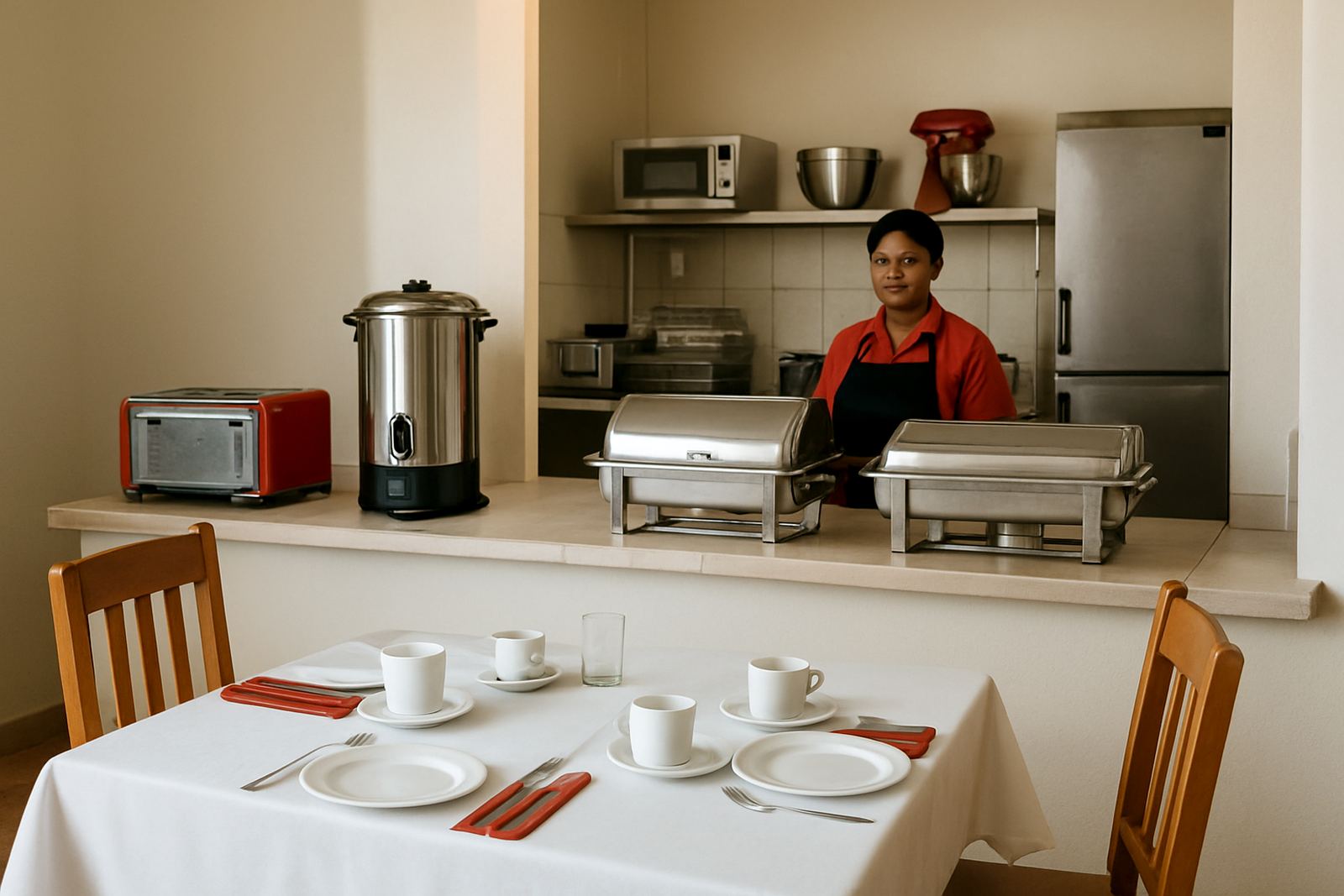
Typical buffet and holding equipment for lodge dining rooms
A good lodge setup normally mixes hot holding, cold presentation and simple service pieces. The exact mix depends on whether the kitchen does full cooked breakfasts, plated lunches or a dinner buffet with soup, starch, vegetables and proteins. In many cases the best starting point is equipment that is easy to clean and quick to reset between services.
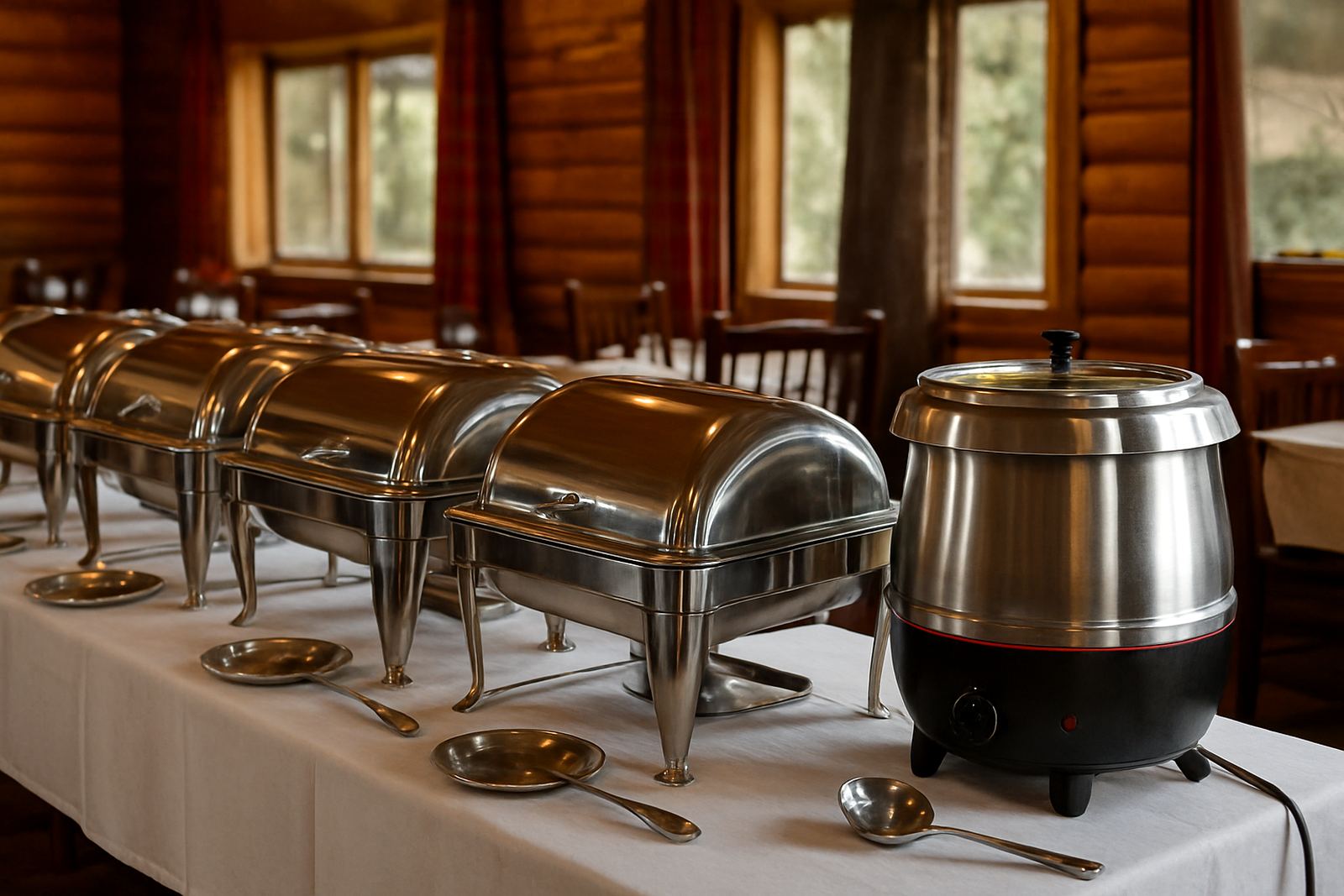
- Chafing dishes for eggs, bacon, sausages, vetkoek fillings, rice and vegetables
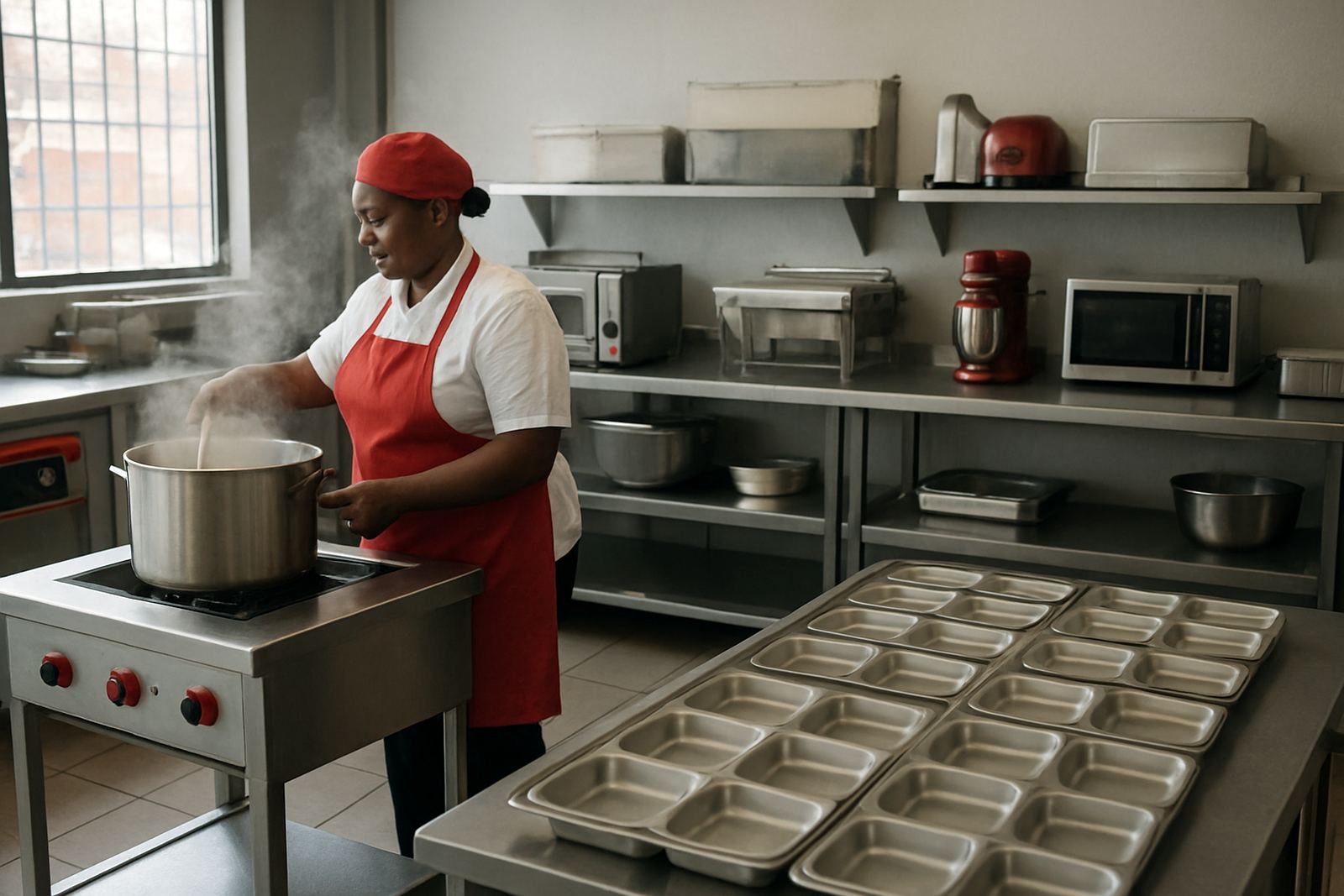
- Heated bain marie units for back-up holding in the kitchen or serving area
- Cold display trays and lidded containers for yoghurt, fruit, juices and salads
- Toasters and sandwich grills for breakfast stations and quick service points
- Microwaves for timing fixes and small top-ups before service
- Counter mixers and prep equipment where breakfast baking or batter work is done on site
- Serving trolleys and tableware storage for faster reset between meal periods
If the lodge is remote, used equipment can make sense for back-of-house support items, while the main front-of-house buffet should still be chosen for appearance and easy cleaning. Coastal humidity can be hard on cheaper metal fittings and loose lids, so material choice matters, especially if the property is near moisture heavy areas or the kitchen runs daily.
How to plan the buffet layout so guests move easily
Good buffet planning starts with the guest flow. The line should usually move in one direction, with plates at the front, cold starters first, then hot dishes, then condiments and cutlery at the end. If guests are turning back and crossing paths, service slows down and the staff end up fixing traffic instead of food.
For lodge dining rooms, we often look at the spacing between the buffet and the nearest wall, service door or coffee station. A narrow gap becomes a bottleneck when two guests reach for the same tray. A wider aisle helps waiters top up dishes without disrupting the line. If the room is irregular, the buffet can be split into two shorter stations rather than one long run. That works well for breakfast where one side handles savoury items and the other handles cereals, fruit and drinks.
Power points, water access and cleaning routes must be checked before equipment is ordered. A beautiful serving area that sits too far from the socket or has no easy cleaning path will cause daily frustration. At site assessments in Pretoria Central, Centurion and Midrand, we often measure the exact table lengths and confirm where cable runs or trolley movement will happen, so the setup matches the room not just the catalogue.
Common mistakes we see in lodge buffet setups
One common mistake is buying too many small pieces and not enough holding space. That creates a buffet that looks full at the start of service but cannot keep pace once guests start arriving. Another is choosing equipment that is too deep for the counter, which leaves staff stretching over hot pans or squeezing around corners.
Other problems show up when the menu changes but the equipment does not. A lodge that adds soup and a bread station needs different heat control to a breakfast-only line. A place that hosts functions may also need extra cold holding and backup trays for plated items. We also see some kitchens forget about cleaning, so the setup has awkward gaps where crumbs and grease collect. That is a small issue on day one and a big issue after a month.
- Buying only for a full house, not for daily guest numbers
- Using equipment that is too small for the busiest sitting
- Ignoring cable positions and load-shedding backup capacity
- Placing hot holding too close to the guest entrance
- Not allowing room for top-ups and dish rotation
Budget ranges for lodge buffet and holding equipment
Budget depends on size, finish and how much of the setup is new or used. A small breakfast station for a guesthouse or private lodge can start from about R12 000 to R35 000 if it is mainly a few holding items, serving trays and small appliances. A more complete buffet line for a medium lodge can sit between R45 000 and R120 000 once hot holding, cold presentation and prep support are included. Larger properties with dedicated dining rooms, back-up units and installation work can run from R150 000 upwards.
Used equipment can reduce the entry cost, especially for secondary service points, staff areas or backup pieces. That said, it is important to check heating elements, thermostats, hinges and trays before buying. A cheap unit that needs repairs and replacement parts can cost more in the end. We quote for the equipment only, or for supply with delivery and positioning, and can also include servicing if the lodge wants regular maintenance rather than a once-off sale. The quote is based on your menu, guest count and the actual space available.
Servicing, repairs and backup for busy lodge operations
Lodge service does not always happen on weekdays only, and kitchens near Pretoria or out on the Gauteng edge still need support when a unit stops heating on a Friday afternoon. That is why preventive servicing matters. Heating plates, plugs, thermostats and moving parts should be checked before peak weekends and before holiday periods. If a chafing dish frame is bent or a toaster is not heating evenly, it is better to repair it before the next full booking.
Afchain Catering Equipment handles breakdown repairs, workshop refurbishment and installation work from Silverton, Pretoria. We also assist with handover training so staff know how to position the buffet, manage temperature, and clean the units without damaging fittings. For lodges in Pretoria Central, Centurion, Midrand, Kempton Park, Boksburg and Randburg, we can assess the setup, recommend the right mix, and give a clear quote with practical options. If the kitchen is being reconfigured, we can help plan the new flow so breakfast, lunch and dinner service all fit the same space.