Shift Kitchens Need Consistent Output, Not Fancy Extras
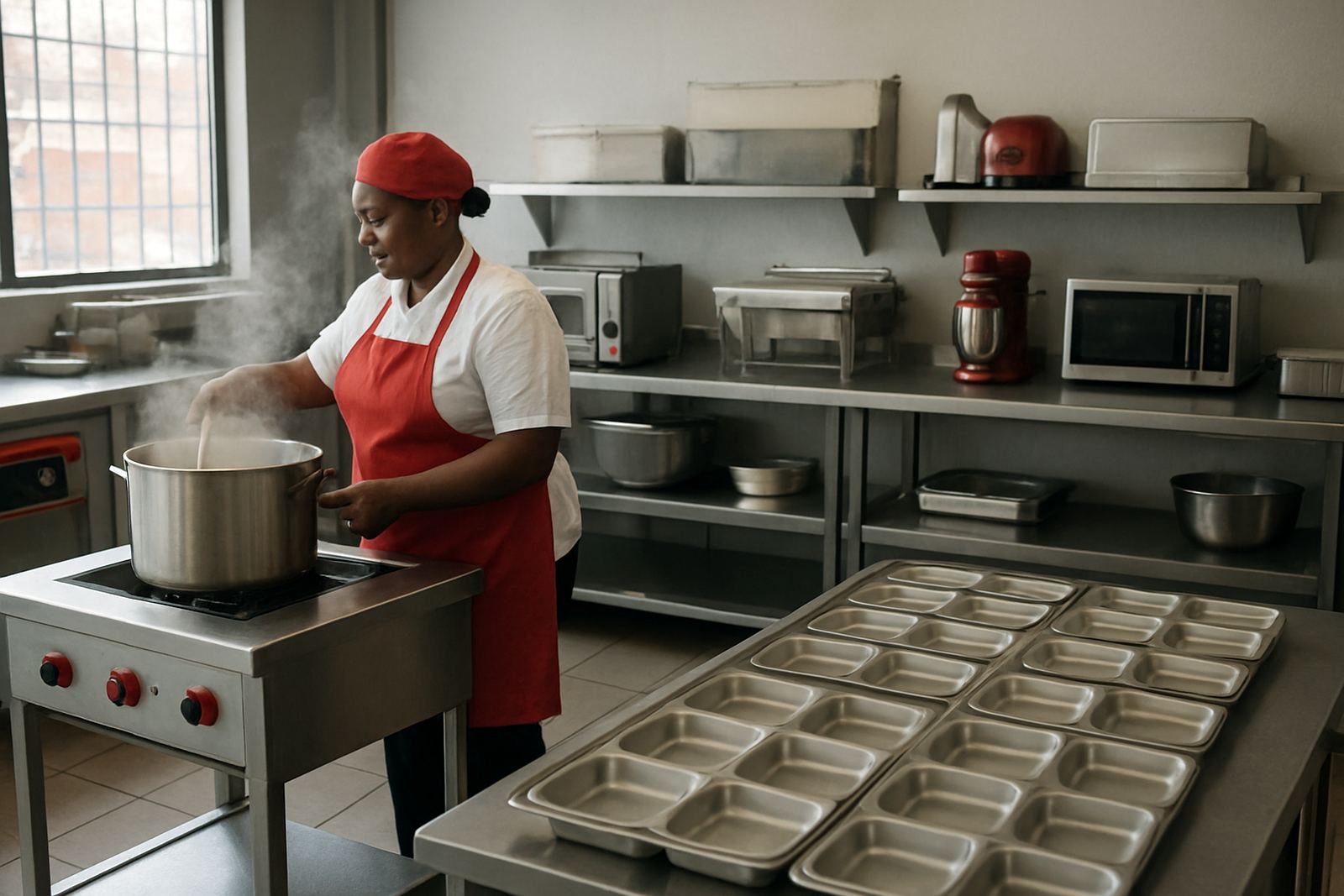
A factory canteen works best when the kitchen is set up around volume, speed and easy cleaning. The menu may look simple, but the pressure is constant: 120 breakfasts before 06:30, a lunch rush at midday, then tea snacks and batch cooking again for the next shift. In Pretoria, Midrand, Kempton Park and Boksburg, many sites also have to deal with load-shedding and water pressure changes, so the equipment choice matters just as much as the layout.
For this type of kitchen, we usually start with a site assessment and a practical list of what must be cooked, heated, held and washed each day. That keeps the spend under control and avoids buying appliances that sit idle or cannot keep up. We also look at whether the kitchen must serve in one direction only, or whether staff and trolleys need to cross paths during peak times.
Typical Equipment For Bulk Service Canteens
A factory canteen usually needs a mix of hot preparation, holding and quick service equipment. The right set depends on whether meals are plated, packed into take-away containers, or served from a counter. Used equipment can work well too, if the unit has been checked, repaired and matched to your electricity supply and daily load.
- Heavy-duty fryers for chips, vetkoek, chicken portions and snack items
- Commercial toasters and grills for breakfasts and quick sandwich runs
- Mixers for dough, batter, sauces and bulk prep
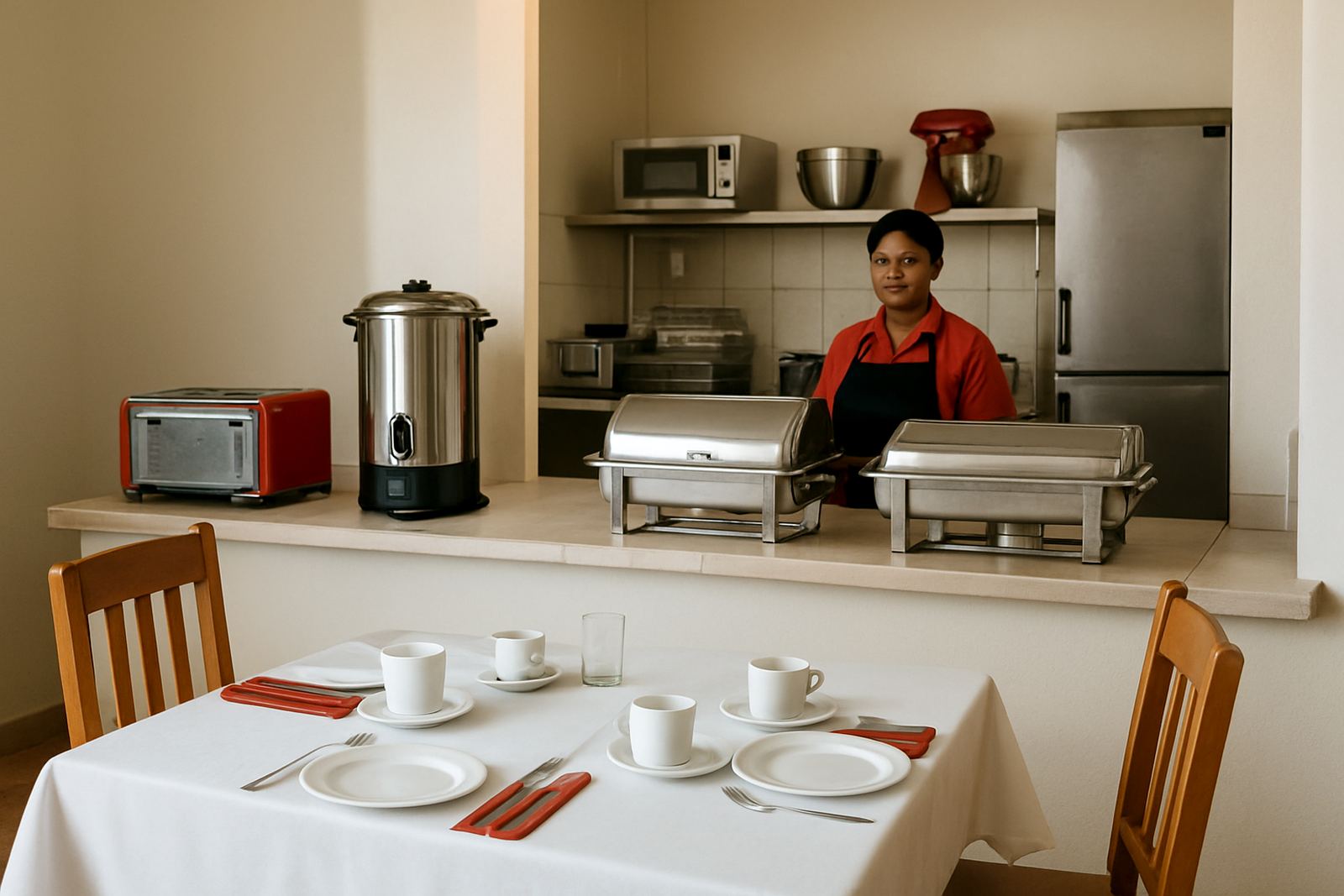
- Microwaves for fast reheating and staff meal holding points
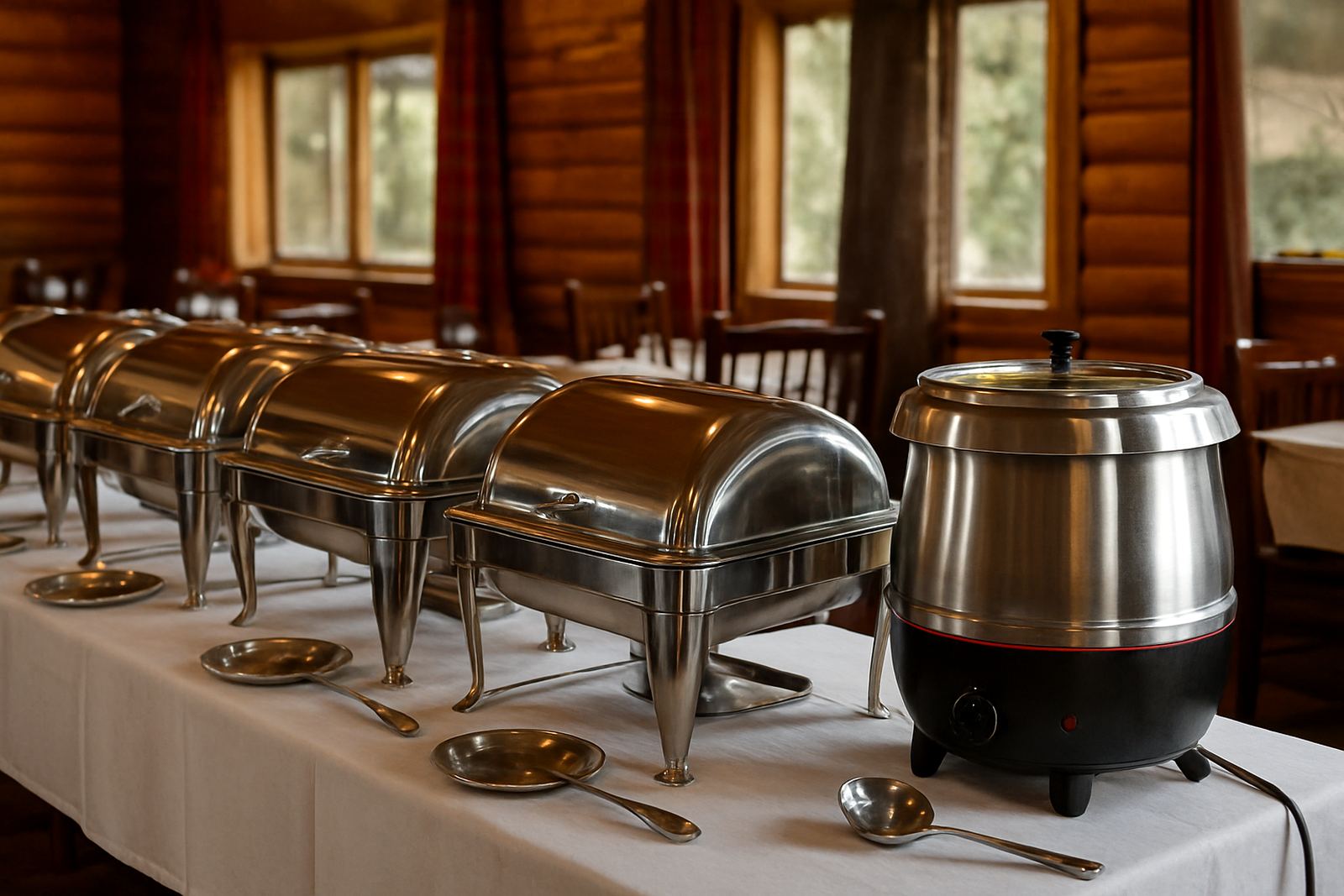
- Chafing dishes and hot holding units for service counters
- Prep tables, sinks and shelving for clean workflow
- Extraction and ventilation where frying or grilling is done indoors
If the factory has a small footprint, we will often recommend multi-use equipment rather than a long list of single-purpose units. That saves floor space and makes cleaning easier at the end of a shift.
Layout Planning That Handles Peak Meal Times
The layout should reduce bottlenecks. One common mistake is placing cooking gear too close to the serving point, then leaving no room for plating, packing or handover. Another is pushing wash-up too far from the prep area, which causes staff to walk back and forth with dirty trays and pot lids. In a busy canteen, every extra metre costs time.
We normally plan the flow in this order: receiving and dry storage, cold storage, prep, cooking, hot holding, serving, then wash-up. If a site has an existing kitchen, we can reconfigure the space instead of starting over. That often works well in older factory buildings around Silverton, Randburg and Centurion where the original kitchen was much smaller than the current headcount.
- Keep raw and cooked food zones apart
- Allow clear access for delivery trolleys and gas bottle changes where used
- Leave service aisles wide enough for two staff to pass safely
- Place hot holding within quick reach of the serving line
- Plan for power points that can handle the full load without tripping
Budget Ranges For Factory Canteen Setups
Budgets vary a lot depending on whether you are fitting a small shift kitchen or a full canteen for a large plant. A basic working setup with a few key units and essential preparation gear can start around R45,000 to R90,000. A mid-range kitchen with stronger cooking capacity, hot holding, washing and better service flow often sits between R120,000 and R280,000.
For larger factory canteens, especially where multiple shifts, packed meals or full plated service are involved, the spend can move from R300,000 upward. Used equipment can reduce the outlay, but only if the items are tested and suitable for the site. It is usually cheaper to buy the right size once than to replace undersized equipment after three months.
We quote for new and used equipment, installation, positioning and servicing, so the numbers you see are tied to the actual kitchen plan. That helps avoid surprises once the unit arrives on site.
Common Mistakes That Slow The Kitchen Down
Many factory canteens run into trouble because the kitchen was copied from a restaurant layout, which is not the same thing at all. A canteen serving a shift change needs storage, holding and speed. It does not need a fine dining prep style setup with too much movement between stations.
Other common issues include undersized fryers, weak power supply planning, poor ventilation, and no backup plan for breakdowns or load-shedding. In humid areas and in kitchens near open wash areas, equipment also needs proper care to reduce corrosion and early wear. A missing service hatch or a badly placed sink can slow the whole line, even if the appliances themselves are good.
- Buying too little holding capacity for the meal rush
- Not checking voltage and phase requirements before ordering
- Leaving no space for cleaning around hot equipment
- Skipping preventative servicing until something fails
- Using old equipment that has not been refurbished properly
Quotes, Servicing And Site Support Across Gauteng
Afchain Catering Equipment works from Silverton, Pretoria and supports factory sites across Pretoria Central, Centurion, Midrand, Kempton Park, Boksburg and Randburg. Our team handles equipment quotes, site assessments, delivery and positioning, installation, preventive servicing, breakdown repairs, workshop refurbishment, used equipment sourcing, handover training and kitchen reconfiguration.
For factory canteens, the best result usually comes from a practical first visit. We look at the meal volumes, the available floor area, power supply, water points and the daily cleaning routine. Then we match the equipment to the way your staff actually work, not the other way round. If you need a quick quote, send the site details and the list of meals through to quotes@afchain.co.za.
The aim is simple: a kitchen that keeps moving when the shift changes and the line gets busy, with less downtime and fewer last-minute callouts.