What a takeaway kitchen must do every hour of the day
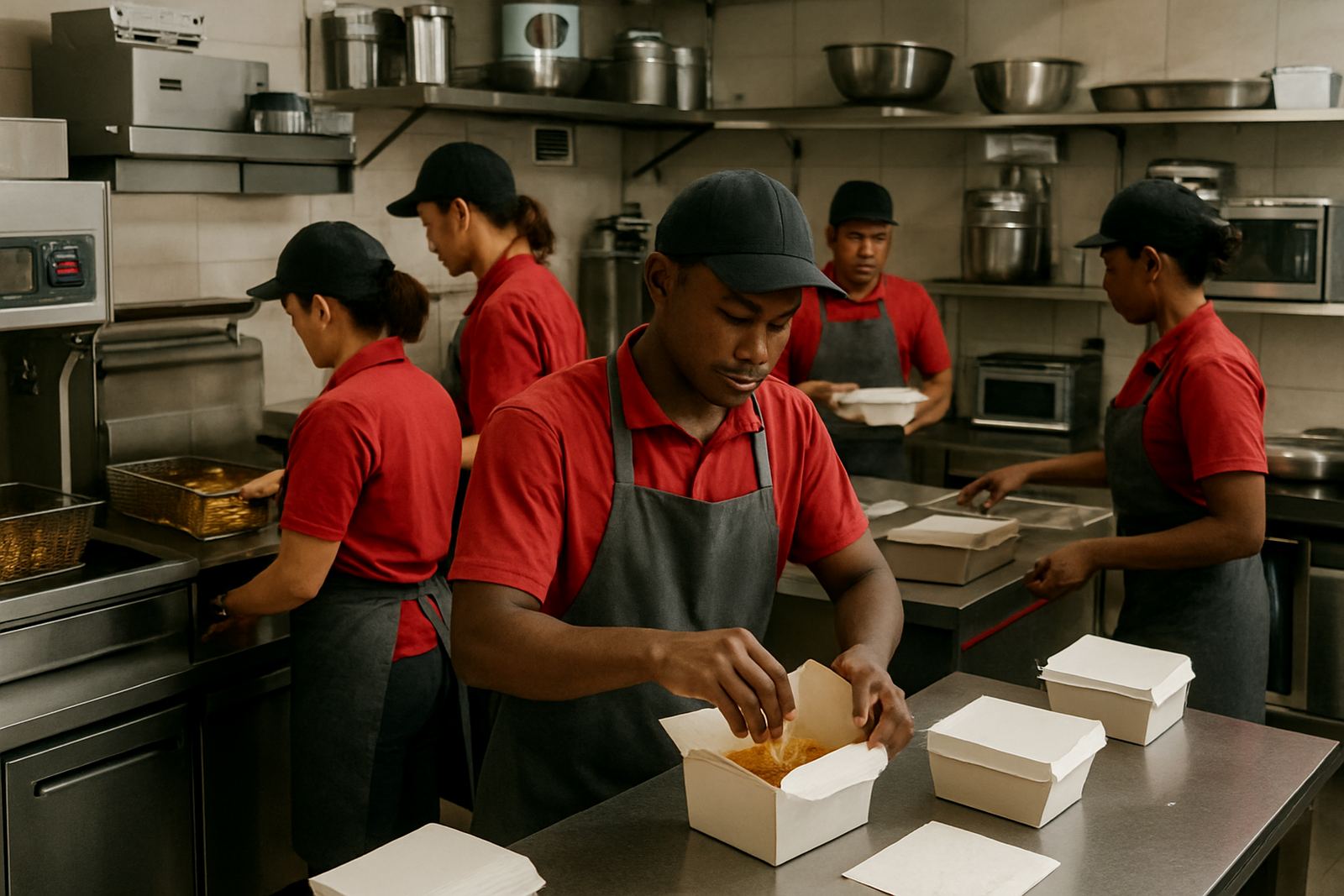
A takeaway kitchen has one job, get food out fast without the team bumping into each other or waiting on the same counter. In Pretoria, Centurion and Midrand we often see small shops trying to do too much in too little space, then the fryer sits too far from the packing point and the hot box is blocking the pass. That slows service and raises the risk of spills and burns.
The right layout starts with the menu. If chips, burgers, toasties and chicken pieces are the main sellers, the equipment must sit in a short line from raw prep to cook to holding to handover. For a shop that serves lunch rush and evening traffic, the goal is not just capacity but repeatable flow. A simple plan saves staff steps and keeps the counter cleaner too.
Typical equipment set for a fast takeaway line
Most takeaway kitchens need a mix of cooking, holding and prep machines that can work through load-shedding and busy weekends. We supply new and used equipment, so the set can be matched to your turnover and the size of the premises. For some sites in Boksburg or Kempton Park, a smaller starter line makes more sense than buying oversized units that sit half empty.
- Deep fryers for chips, chicken portions and snack items
- Toasters and contact grills for quick sandwich and toastie orders
- Mixers for sauces, batter and dough work
- Microwaves for reheat and finish work during rush periods
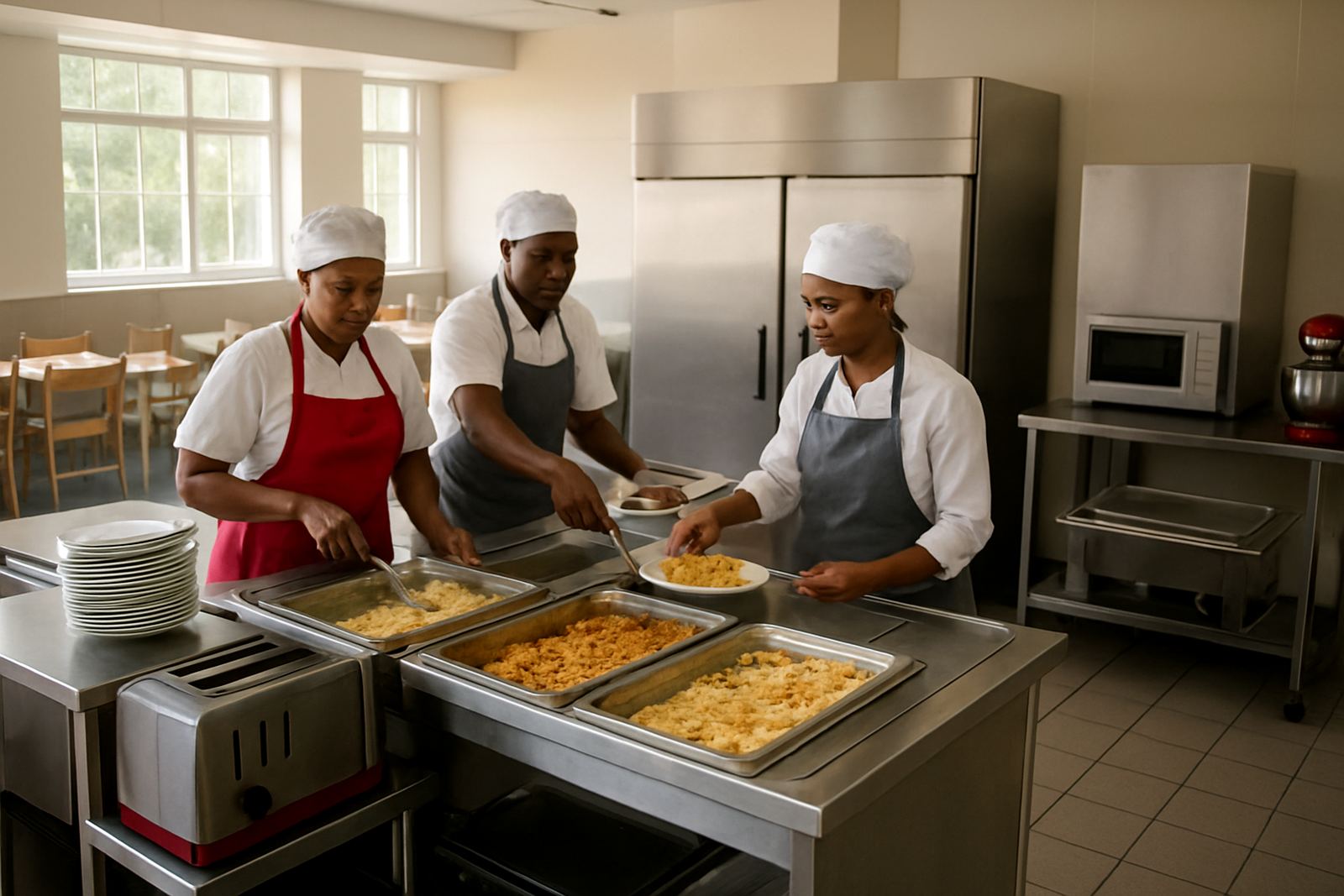
- Chafing dishes and hot holding gear for cooked items that must stay ready
- Stainless prep tables, sinks and storage for clean work flow
Where the menu includes a little more volume, we also look at extraction, surge protection and backup planning. A kettle point or small appliance can trip a weak circuit, so the full load needs checking before the kitchen starts trading.
How to plan the layout so the team does less walking
Good takeaway planning is about line order. Raw prep should sit closest to washing and cold storage, frying should sit under proper extraction, and the packing point must be near the handover window. If the cashier has to step around a hot fryer to reach containers, the setup is wrong. In Silverton and Pretoria Central we often see narrow shops where the wall space is enough but the circulation is not, so the counter depth has to be measured properly.
A site assessment helps to check door widths, power points, gas if used, drainage and delivery access. If the unit is in a small centre, the landlord may have rules on extraction outlets, grease handling and noise after trading hours. In some cases the kitchen can be improved just by moving one sink, changing the counter run or repositioning the fryer, and that costs far less than a full strip out.
- Keep the fry station separate from the packing area
- Leave a clear path for trays, tubs and paper bags
- Use wall space for shelves instead of crowding the floor
- Plan for one person to clean while another keeps orders moving
- Allow room for servicing so panels and elements can be reached
Common mistakes that slow service and waste money
The first mistake is buying equipment by price only. A cheap machine that overheats, trips or rusts near the coast will cost more in repairs and downtime. The second mistake is using equipment that is too large for the actual trade. A six burner plan in a shop that sells mainly toasties and chips just eats power and floor space. The third mistake is leaving no room for maintenance, which means every service becomes a full shutdown.
Another issue is poor ventilation. Frying without proper extraction creates heat, smells and greasy build up on walls and fittings. We also see kitchens with no clear place for used oil, cleaning chemicals or spare baskets. That makes the space messy and slows the team, sometimes by a lot. If the business is in a humid area or close to the coast, mild steel surfaces and open storage can start looking tired much faster than expected.
Budget ranges for takeaway kitchen setups in Rand
Budgets depend on whether the kitchen is a start-up, an upgrade or a full rebuild. A small takeaway counter with basic cooking and holding equipment can start from about R25 000 to R60 000 if a mix of used and new items is chosen. A better fitted line for steady daily trade often sits between R65 000 and R150 000. Larger sites with more than one fryer, stronger prep capacity and proper installation can move beyond R180 000.
The best value often comes from balancing new and used equipment. Used units can be ideal for a second fryer, a hot holding cabinet or a prep table, provided the condition is checked and the kitchen plan still works. We also help with quotes, sourcing and servicing, so the customer can see what is needed now and what can wait for later. That way you are not overbuying in month one and then struggling with a gap when sales pick up.
Our support from quote to handover training
Afchain Catering Equipment works with takeaway operators across Pretoria, Centurion, Midrand, Kempton Park, Boksburg and Randburg from our Silverton base. Our team handles equipment quotes, site assessments, delivery and positioning, installation, preventive servicing, breakdown repairs, workshop refurbishment, used equipment sourcing, handover training and kitchen reconfiguration. If you need to rebuild an older site, we can also look at what should be kept, moved or replaced.
Mpho Sekgobela leads the business with the sales, quotes and workshop teams working together so the kitchen plan is practical from the start. When a client is opening near a taxi route, school traffic or a busy road, timing and access matter just as much as the equipment list. We keep the discussion grounded in daily use, not just the catalogue, and we will tell you if the layout needs another look before you spend.
For fast service kitchens, the right setup is the one that lets the crew fry, hold and pack without crossing paths. Get that right and the shop runs easier, even on a busy Friday night.