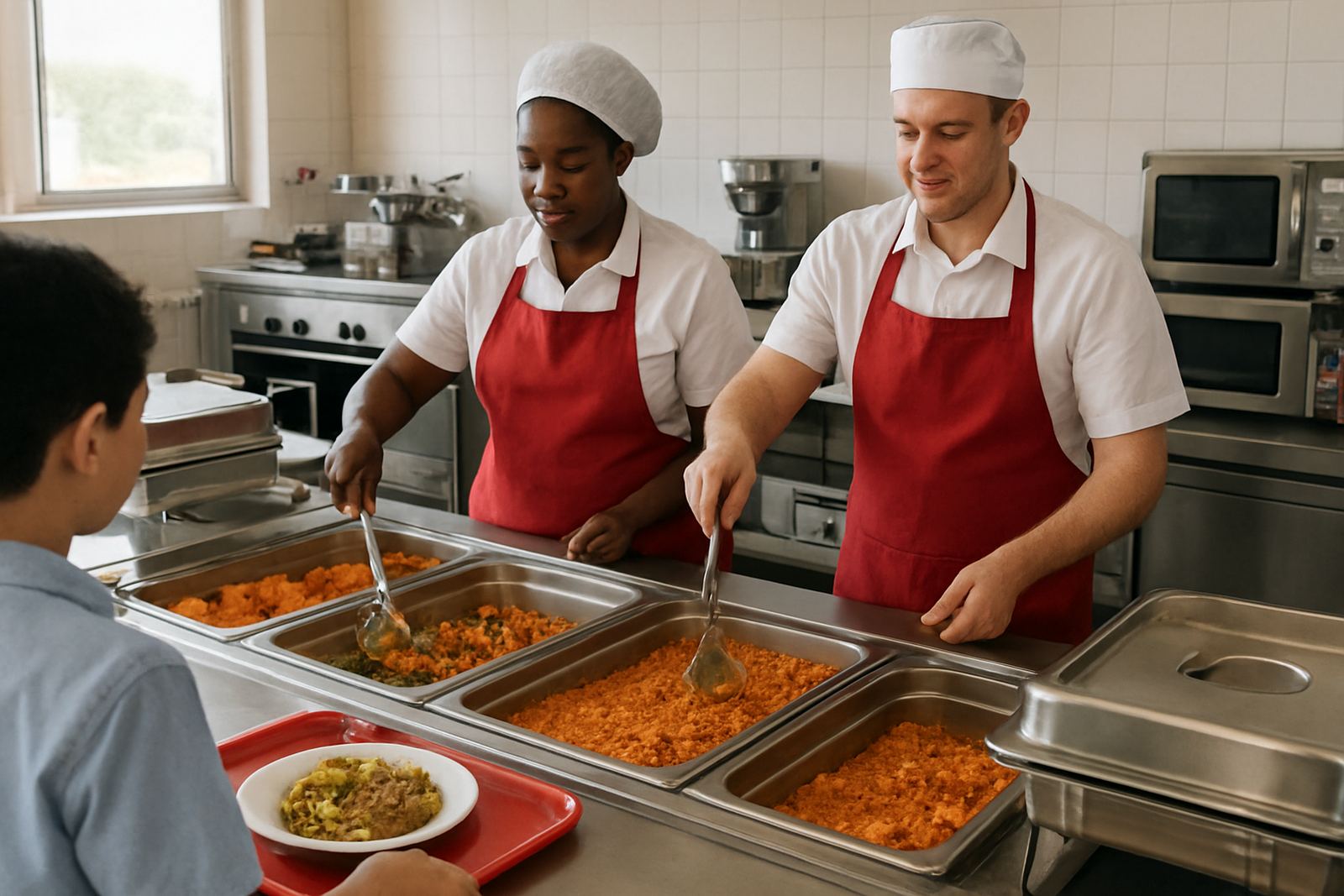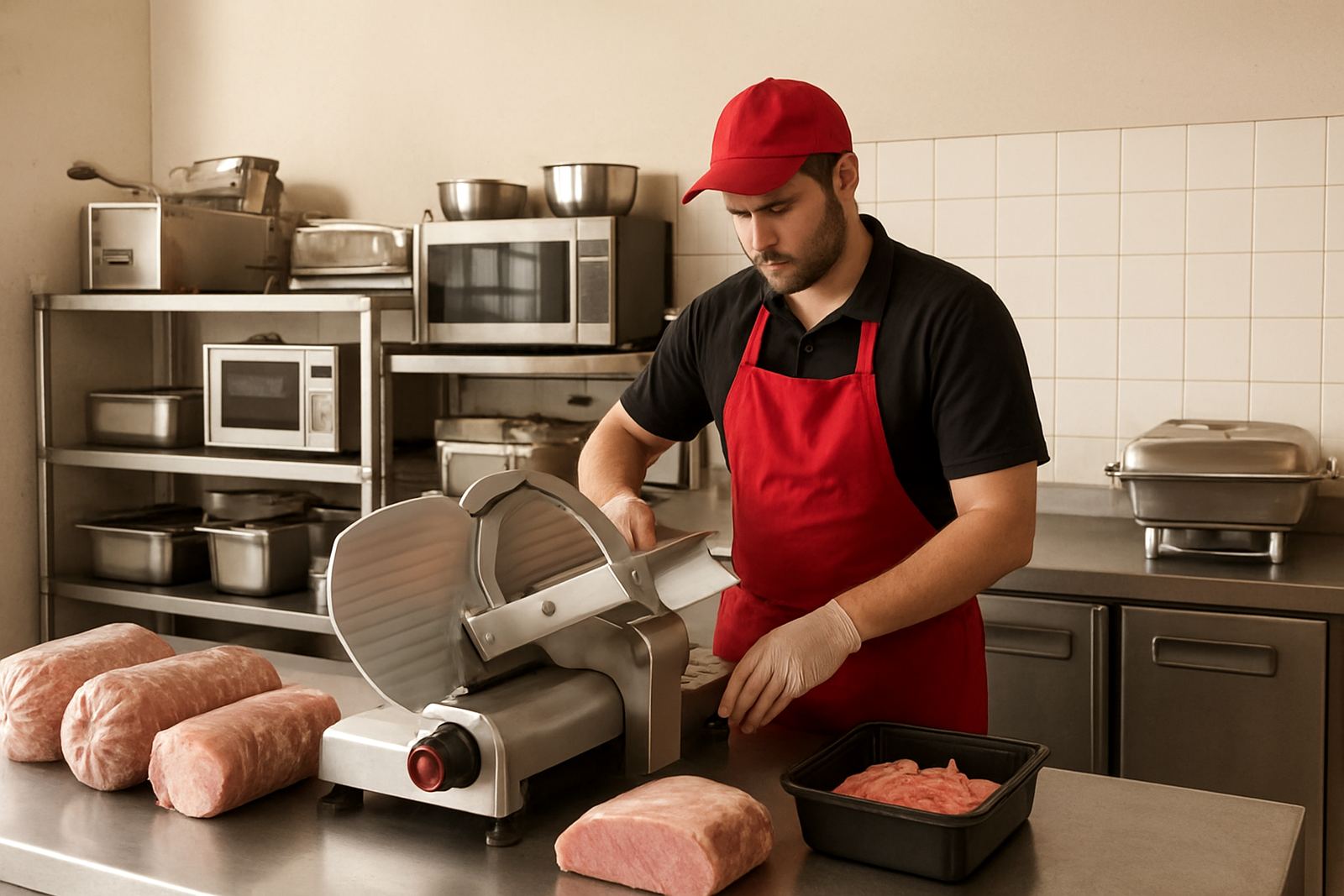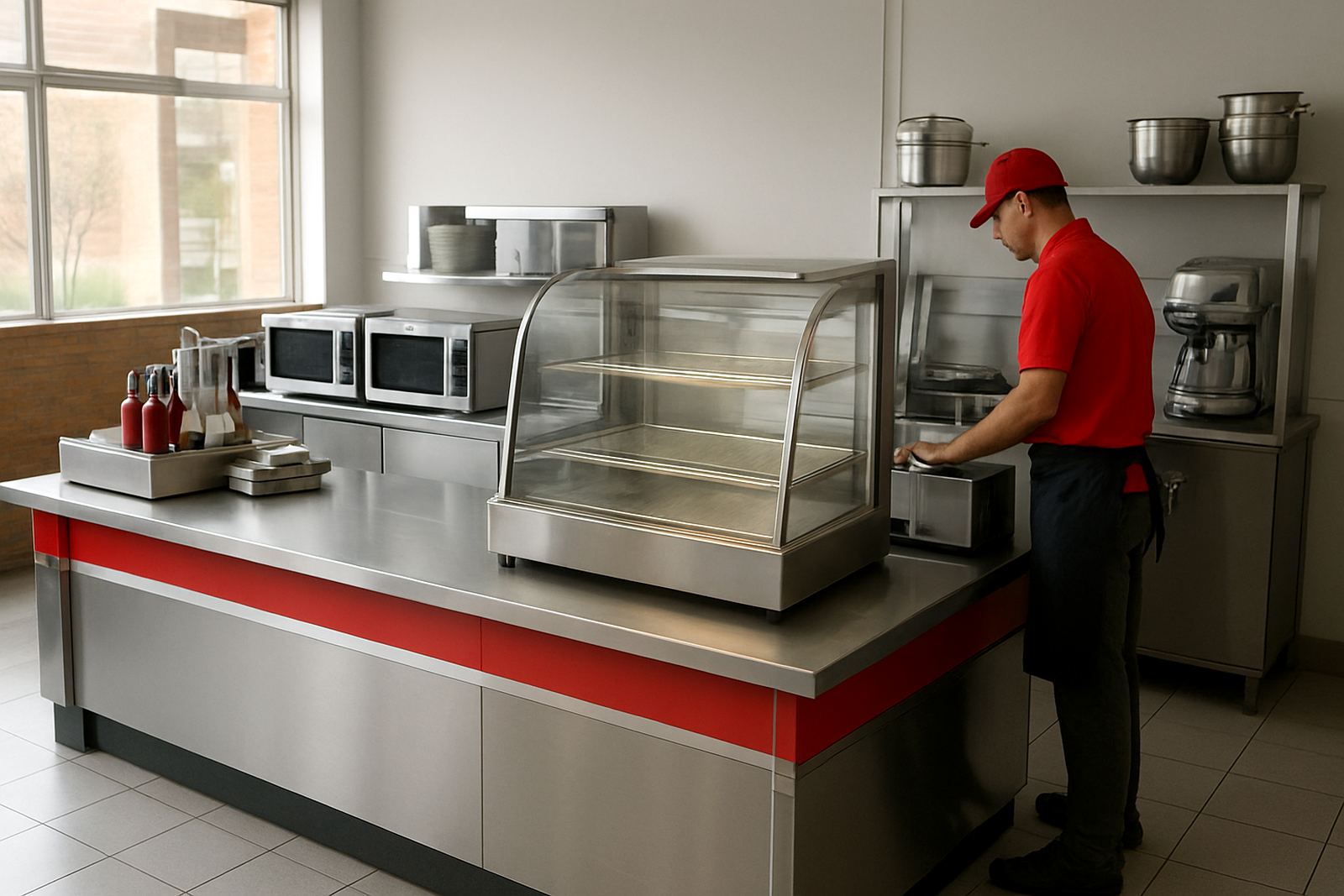
Breakfast, lunch and tea service in one room
An office cafeteria works best when the flow is simple. Staff need to collect hot drinks, toast, cooked items and plated lunch quickly, then move out again before the next group arrives. In Pretoria and Gauteng, that also means equipment must handle power interruptions, high use through the day, and hot kitchen conditions in summer.
For a smaller office, one compact serving line may be enough. Larger sites in Centurion, Midrand or Kempton Park often need a separate hot holding area, a drinks point and a back-of-house prep corner. The aim is not to fill every wall. It is to keep movement clear and cut waiting time at peak hours.
We work from Silverton, Pretoria and supply office cafeterias for businesses that want quotes, site assessments and proper positioning before anything is bought. That helps avoid equipment being squeezed into a corner where staff cant pass one another.
Typical equipment set for a workplace canteen
The right mix depends on how many people eat on site, whether food is cooked daily, and how much is brought in ready to serve. A basic office cafeteria usually needs a small set of reliable items rather than large restaurant gear.
- Commercial fryers for chips, vetkoek and quick breakfast items
- Toasters for bread, rolls and toasted sandwiches
- Mixers for batter, spreads and light prep work
- Microwaves for reheating plated meals and snack items
- Chafing dishes for hot holding during lunch service
- Used equipment where budget needs to stretch further
In many offices, a combination of new and used equipment gives the best value. We also look at whether a unit is suitable for a busy staff canteen or only for lighter tea service, because some items wear out fast if they are undersized. A microwave that looks fine in a small break room may not last in a 120 person lunch line.
Planning the layout so queues move properly
Good layout matters as much as the equipment itself. A cafeteria should have a clear entry, a serving point, a hot holding section and a payment or collection point if needed. If the room is too tight, staff end up crossing paths and food service slows down. That gets worse when there is load-shedding and everyone comes in at once after the power returns.
We usually advise clients to leave enough space for doors to open fully, hot appliances to breathe, and cleaning to happen without moving half the room. On coastal sites there may be extra humidity, but even inland in Pretoria dust and grease build up quickly, so access for servicing is important.
- Keep microwaves and toasters away from wet sinks and wash areas
- Allow space for staff to queue without blocking the fridge or prep table
- Put fryers and hot holding units near extraction and away from paper goods
- Plan power points before the final fit out, not after the counters are fixed
Common mistakes we see in office food areas
One common mistake is buying too much equipment for the room size. Another is choosing domestic items for a workplace that serves dozens of people every day. Domestic units often fail early, and then the canteen is down when staff are on lunch. That creates avoidable frustration for everyone.
Another issue is skipping a site assessment. Without checking the space, power supply and existing counter heights, equipment can arrive and then need moving or resizing. We also see offices forget about servicing access. If a fryer or mixer has to be lifted over a fixed counter for every repair, the setup becomes hard to maintain.
In older buildings around Pretoria Central and Randburg, electrical supply and ventilation should be checked before buying larger cooking equipment. It is better to confirm this upfront than to discover later that the space is not suitable.
Budget ranges for office cafeterias in Rand
Budgets vary depending on whether the site is being fitted out from scratch or adding to an existing canteen. A small tea and breakfast point with toasters, a microwave and a few serving items can start at around R8 000 to R25 000, depending on new or used equipment.
A mid size office cafeteria with fryers, multiple microwaves, chafing dishes and better prep support may fall between R25 000 and R85 000. Larger workplace food areas, or sites needing delivery, positioning, installation and workshop refurbishment, can go beyond that once counters, electrical work and servicing are included.
We quote to the actual site, because two offices with the same headcount can have very different needs. One may serve a light breakfast and tea only, while another cooks lunch daily for shift teams. That changes the equipment list and the cost quite a bit.
Support from quote to handover training
Afchain Catering Equipment handles equipment quotes, site assessments, delivery and positioning, installation, preventive servicing, breakdown repairs and workshop refurbishment. We also source used equipment when the budget needs to be kept sensible, and we can help with kitchen reconfiguration if the current layout is causing bottlenecks.
For office cafeterias, handover training matters. Staff need to know safe use, cleaning steps and what to do if a unit stops working during service. Sibusiso Dlamini coordinates service work, while Kagiso Molefe handles installations and workshop support. Nadia Petersen assists with quotes and procurement, and Annelie van Wyk supports sales for Pretoria, Centurion, Midrand, Kempton Park, Boksburg and Randburg.
If your workplace is planning a new breakfast point, lunch counter or tea station, send the room size, staff numbers and photos to quotes@afchain.co.za. We will work from there and keep the setup practical, not overdone.