Busy break-times need equipment that keeps up
A school canteen is not a small café. It works around bells, short queues and a rush of learners who want toasties, hot chips, pies, vetkoek, coffee and cold drinks in a narrow window. The setup must cope with repeated use from early morning right through lunch, and it has to be safe for staff working in a tight space. In Pretoria and Gauteng, we often see canteens in old buildings, mobile units and tuckshop areas that need better flow before term starts.
The right plan starts with what sells fastest. If your school mostly serves toasties and snacks, a heavy fryer line may be wasted. If you run a larger secondary school with 800 to 1 500 learners, then extra holding, quicker toasting and proper prep space matter more than fancy finishes. The aim is simple: move food, keep it clean, and keep learners moving without bottlenecks.
- Match the equipment to peak break-time demand, not just the menu on paper.
- Allow for safe movement behind the counter so staff do not bump into hot surfaces.
- Choose surfaces and fittings that wipe down quickly after spills, crumbs and oil.
Typical canteen equipment for school trade
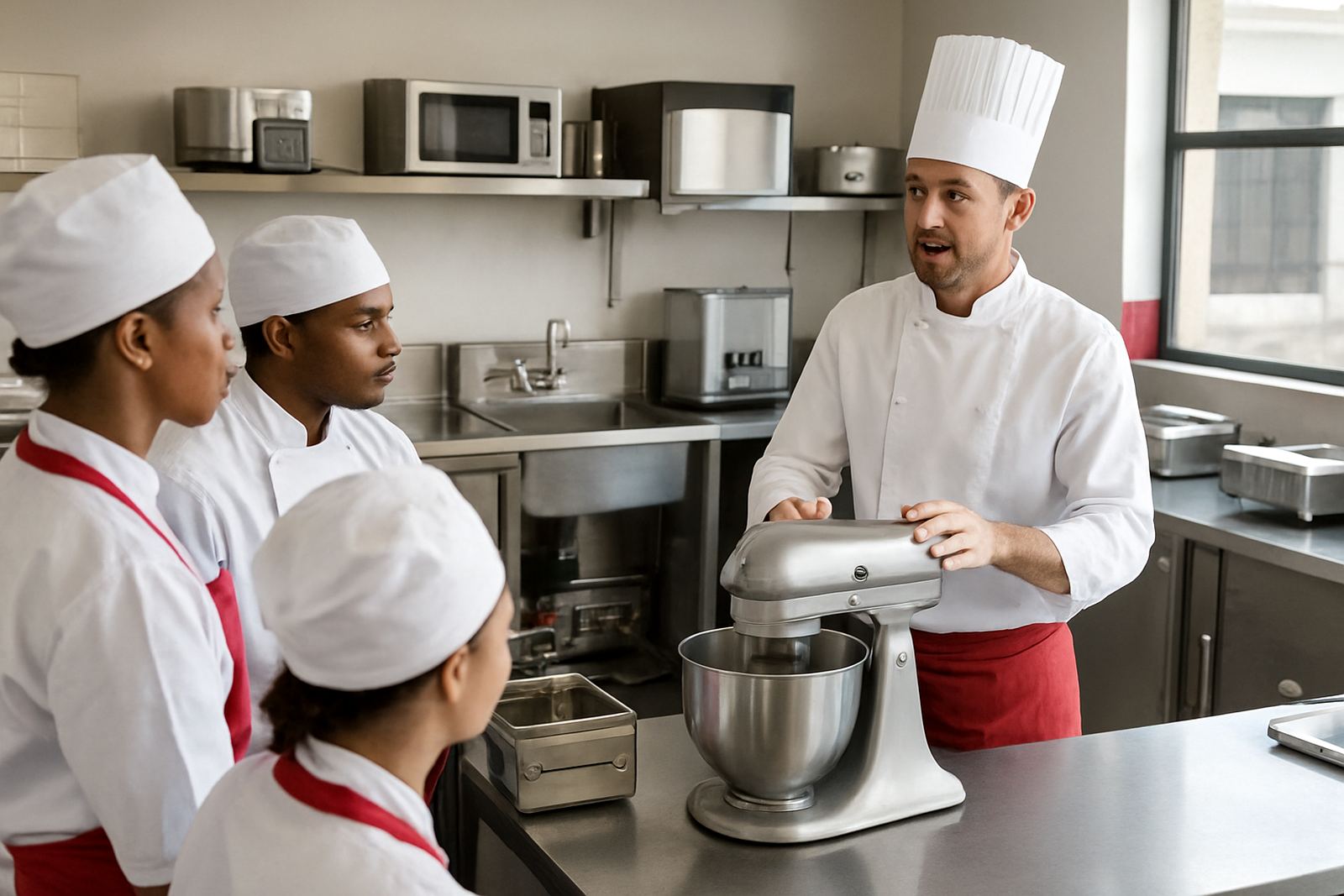
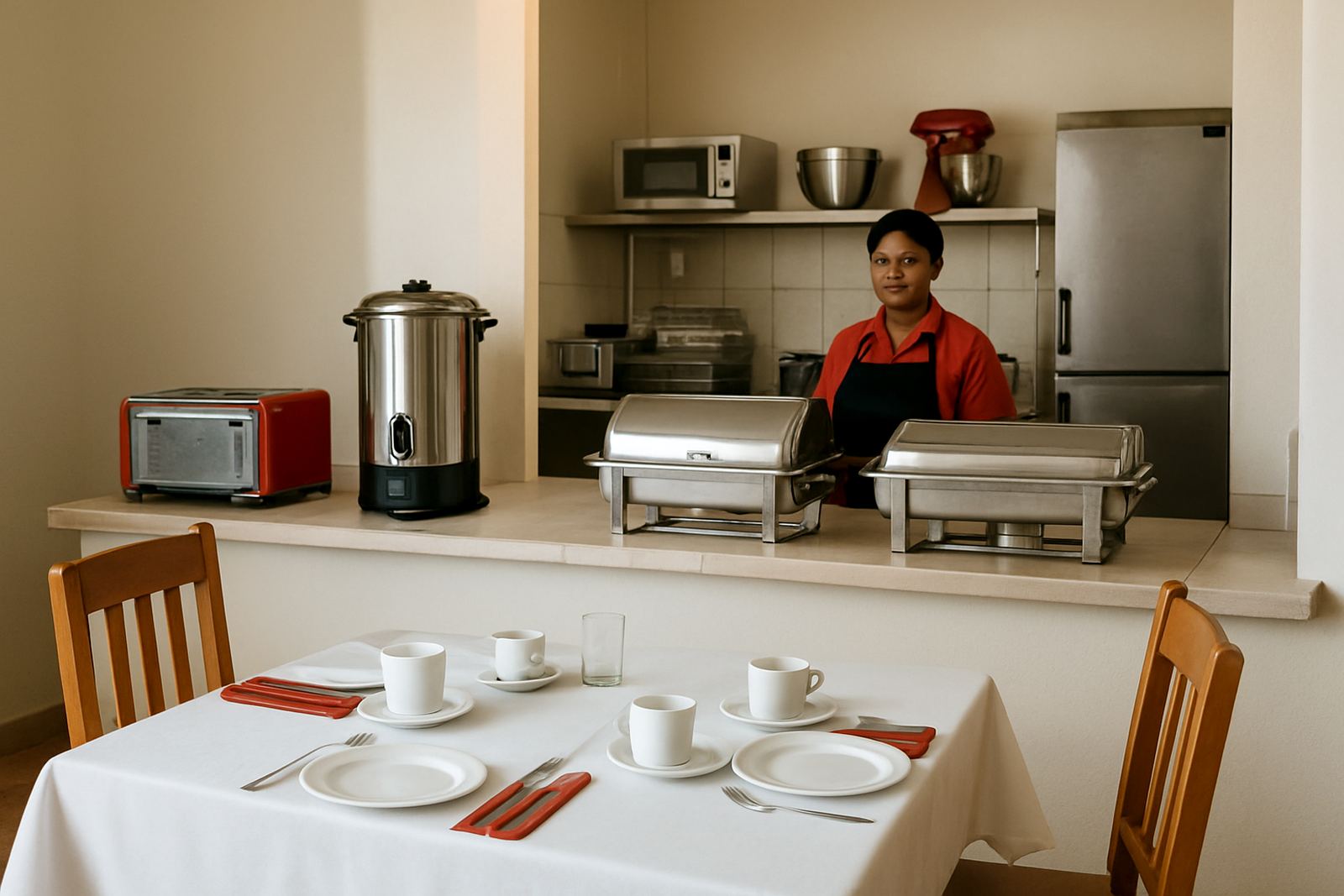
A school canteen usually works best with a compact, mixed line of equipment rather than one big machine. For many sites, a two or three basket fryer, a few toasters, a microwave, a mixer for batter or filling, and a chafing dish for hot holding covers the basics. Where there is more demand, a second fryer or extra hot holding station can help during first and second break. In some schools, used equipment is a practical way to open or upgrade at lower cost, provided it is checked and serviced properly.
We also look at the power supply early. A fryer and toaster bank can draw enough load to trip an undersized circuit, especially when a microwave and warmer are running at the same time. During load-shedding, schools need to know what will still work on backup power and what should stay off. If the canteen is in a coastal or humid area, stainless parts and proper ventilation become even more important, because rust can start quicker than people expect.
- Fryers for chips, samoosas, pies and vetkoek portions.
- Toasters or sandwich grills for quick school favourites.
- Microwaves for heating pies, meals and pre-packed items.
- Mixers for batter, fillings and small prep jobs.
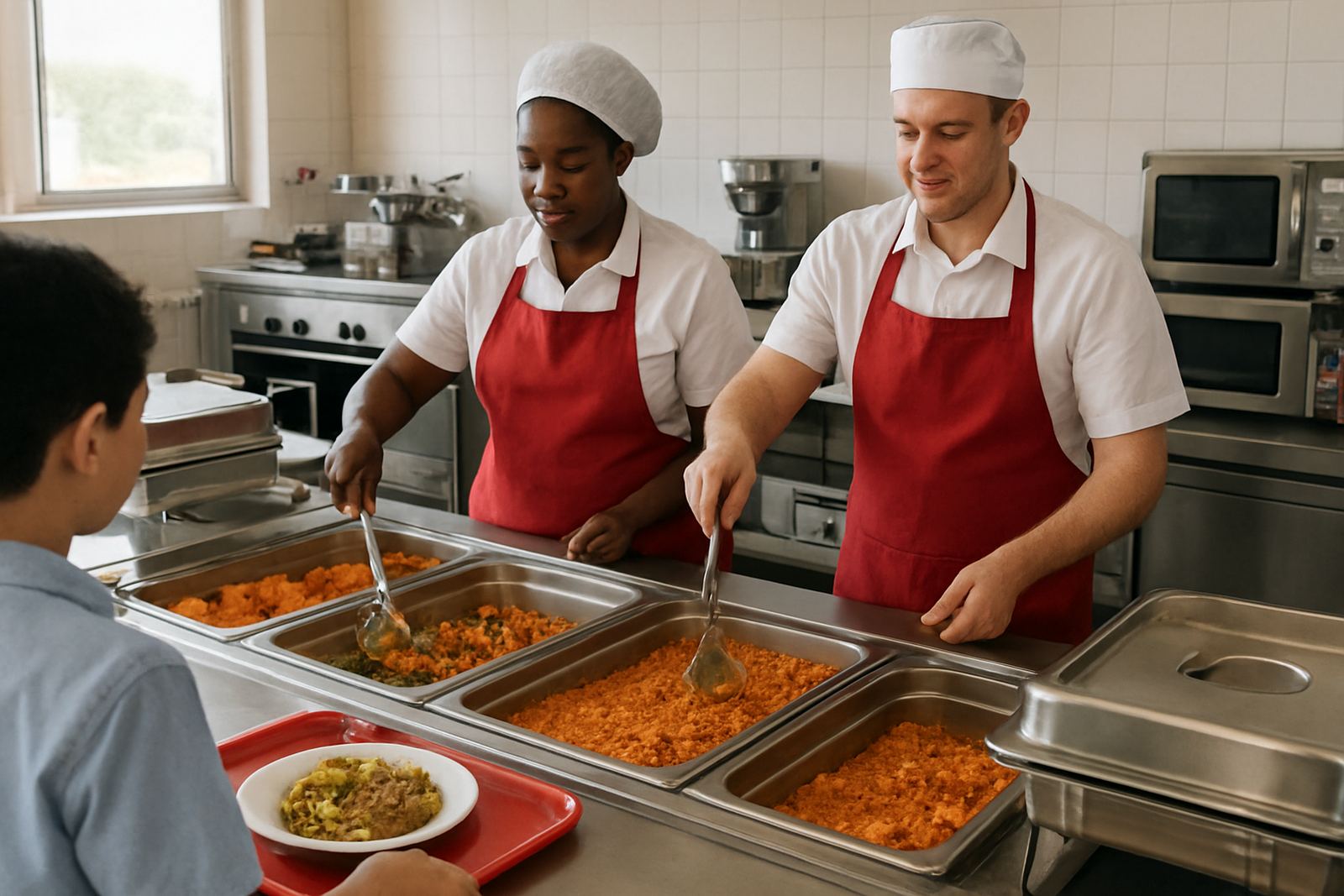
- Chafing dishes for hot holding during rush periods.
Layout planning that saves time and avoids bottlenecks
A good school canteen layout should let one person receive orders, another prepare food and a third handle payment or packing without crossing paths all the time. The counter opening must be wide enough for service, but not so open that learners crowd the hot side. At Silverton we often find that a small change in counter position or equipment order makes the space work far better, even without a full rebuild.
For new fit-outs, we normally advise a clean line from raw prep to hot holding to serving. Put the fryer where extraction and fire safety can be managed, and keep water away from electrical points. Leave enough bench depth for trays, bread, packaging and a chopping area. If the school expects large foot traffic, consider a separate collection point so paid orders do not mix with fresh orders. It sounds simple, but it cuts waiting time a lot.
- Keep hot equipment away from learner access and bag drop points.
- Allow space for cleaning under and behind each unit.
- Plan power points before the equipment arrives, not after.
- Use storage for packaging, sauces and cleaning materials close to the counter.
Common mistakes schools make with canteens
One common mistake is buying equipment by price only. Cheap machines can work in the short term, but if they fail during the first busy month, the school loses trade and pays twice. Another mistake is over-ordering large items that do not fit the room properly. A canteen that is too crowded becomes difficult to clean and unsafe to work in. We have also seen schools ignore servicing until a fryer or toaster stops working, then the queue becomes a problem by ten o'clock.
Cleaning is another area that gets overlooked. Learner food areas produce crumbs, oil and spills every day, so equipment should be easy to wipe, with removable trays where possible. If the school has a municipal inspection or internal safety review, a tidy, well laid out canteen makes life easier. Minor things like cable management, splash control and a proper handwash point can save many headaches. People often under-estimate the effect of one bad cable run or a tight corner.
Budget ranges for school canteen setups in Rand
Budgets depend on learner numbers, menu choice and whether the school is starting from scratch or replacing part of an old setup. As a guide, a small tuckshop setup can begin around R25 000 to R45 000 if it uses basic, practical equipment and some used items. A medium canteen with better hot food capacity, extra prep space and a few new units often sits between R60 000 and R120 000. Larger school kitchens, or canteens that need electrical upgrades, servicing and positioning, can run from R150 000 upwards.
It is usually wiser to quote in stages. First confirm the core items, then add delivery, installation, positioning and training. If there is an old fryer or toaster bank that can be refurbished in our workshop, that may save a school a fair amount. We also help with breakdown repairs and preventive servicing, which is useful when a term starts and there is no time for delays. In some cases, a staged budget means the school can start trading sooner and expand later, rather than waiting months for one large once-off spend.
- Entry-level tuckshop: R25 000 to R45 000.
- Mid-size canteen: R60 000 to R120 000.
- Full kitchen or upgraded site: R150 000 and up.
Quotes, servicing and support for Gauteng schools
Afchain Catering Equipment works from Silverton, Pretoria and supports schools in Pretoria Central, Centurion, Midrand, Kempton Park, Boksburg and Randburg. We provide equipment quotes, site assessments, delivery and positioning, installation, preventive servicing, breakdown repairs, workshop refurbishment, used equipment sourcing, handover training and kitchen reconfiguration. School canteens need practical support, not sales talk, so we keep the process direct and clear.
If you are planning a new canteen, upgrading before the term starts, or sorting out a tired tuckshop that keeps tripping power or slowing service, send your list through and we will price it properly. We work with the space as it is, the budget you have and the food you actually sell. For school operations, that often matters more than buying the biggest unit on the market. Quotes can be requested at quotes@afchain.co.za.