How a butchery deli usually works from prep to display
A butchery deli is busiest when the back room, prep bench and front display all move in step. In Pretoria, Centurion and Midrand the usual pressure points are early-morning prep, midday customer peaks, and enough cold storage to handle stock when load-shedding or warm weather puts extra strain on the day. The right set-up keeps product moving without staff crossing paths too often.
Most clients start with a simple flow: receiving and weighing, trimming and slicing, chilled holding, display, then packing and dispatch. If the room is laid out badly, staff waste time walking around counters and opening cold storage every few minutes. That affects product temperature and makes the team work harder than they need to.
We often find that butchery delis in Gauteng are squeezed into older shops or converted spaces, so the best result comes from planning around the real floor size, not just the wish list. A clear route from back room to counter helps with hygiene, stock rotation and easier cleaning at closing time.
Typical equipment set for slicing, holding and service
The equipment list depends on the menu and the amount of meat, cheese and prepared items handled each day. A small deli may only need the basics, while a high-volume site in Boksburg or Randburg may need two prep points and separate storage for raw and ready-to-sell stock.
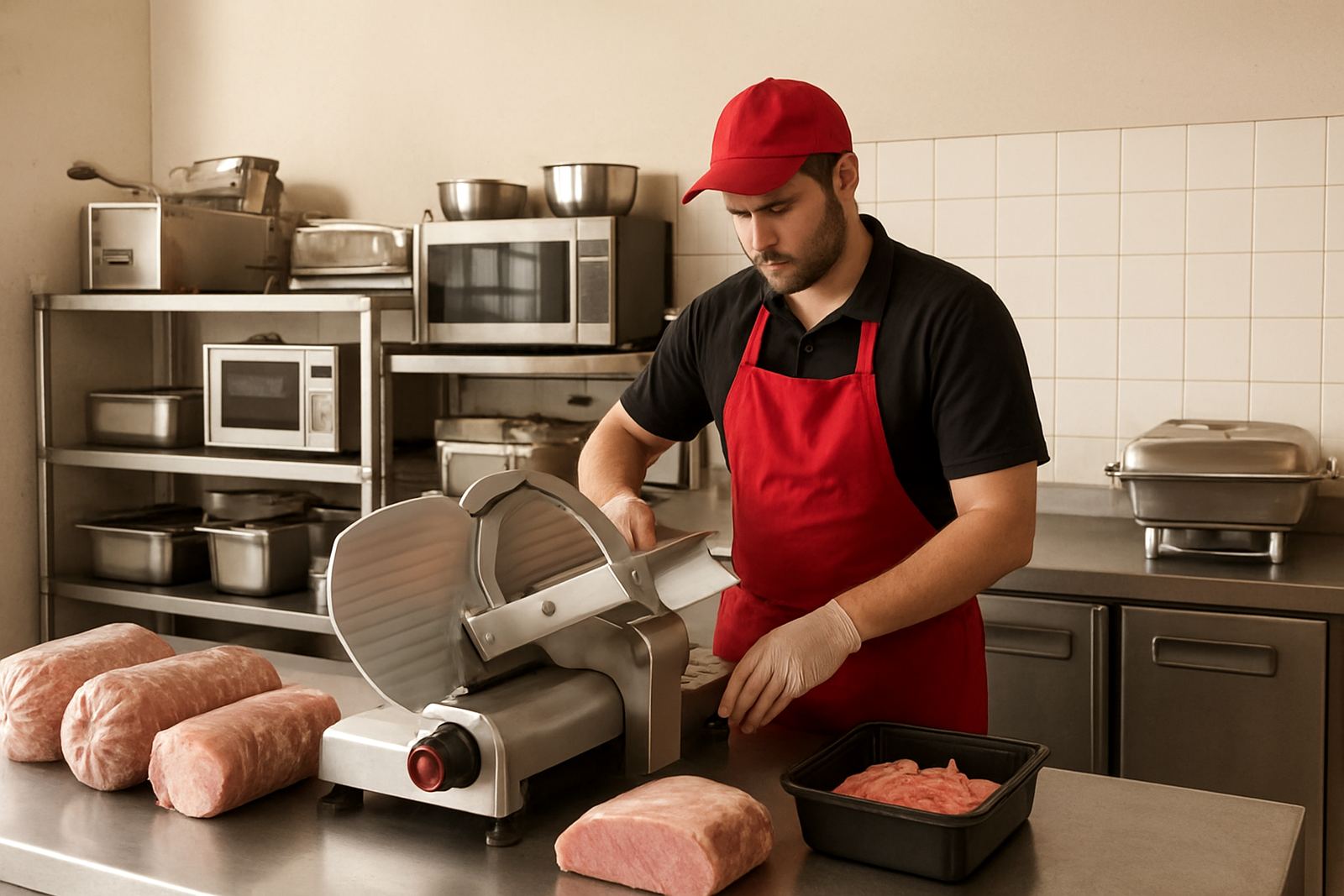
- Meat slicers for cold cuts, ham and portion control
- Upright fridges and under-counter cold storage for back-room stock
- Display cabinets for front-of-house chilled items
- Worktables and stainless prep benches for cutting and packing
- Scales for portioning and price control
- Vacuum packing or wrapping support where product life needs to be extended
- Microwaves or warming support for cooked deli items, if offered
- Chafing dishes for hot service lines in mixed deli counters
Used equipment can be a sensible starting point when a new deli is opening on a tighter budget. The main thing is to check that motors, seals, blades, fans and thermostats are still sound. A cheap second-hand fridge that cycles poorly can cost more in product loss than a good unit costs upfront, and that is something many owners only learn after a month or two.
Layout advice for better movement and less spoilage
Good layout saves time every single day. Start by placing the cold room or main refrigerator close to the prep bench, but not so close that staff block each other when lifting crates and trays. The display unit should sit where customers can see the range clearly, while the packing point needs enough counter space for labels, bags and cash handling. If the shop is narrow, plan a one-way flow if possible.
In Pretoria Central and around industrial areas, municipal compliance and hygiene controls matter, especially where food handling meets public access. Leave enough space for cleaning under and behind equipment, and keep cords and plugs out of wet floor zones. If floors are uneven, have the equipment positioned and levelled properly so doors close well and drain pans sit as they should. Small details like that save a lot of grief later.
Ventilation also matters. Slicing and prep areas should not be trapped in hot air, especially in summer or where the room has glass frontage. If the deli is inside a bigger supermarket or a convenience store, ask how the airflow works after hours too. Poor airflow can push up running times on fridges and make operators think a unit is faulty when the room is simply too hot.
Common mistakes we see in Gauteng deli set-ups
One of the biggest mistakes is buying too many display items before the back room is sorted. A neat counter means little if there is nowhere to store the stock properly or if slicers are too small for the daily volume. Another common problem is choosing domestic-grade equipment for a commercial workload. It might run for a while, then struggle once the deli gets busier.
- Placing fridges too close to ovens or hot holding units
- Buying display space before checking stock turnover
- Using one small slicer for both prep and service during rush periods
- Ignoring spare parts and service access when the unit is installed
- Skipping staff training on cleaning, blade care and safe operation
We also see sites where the owners never planned for power interruptions. In load-shedding areas, you need to think about how long product can stay safe, whether doors stay closed during outages, and which equipment should be on backup supply first. A deli that loses temperature twice in a week quickly sees the loss on the balance sheet.
Budget ranges for a new or upgraded butchery deli
Budgets can vary a lot depending on whether you are fitting out a small counter in Centurion or upgrading a busy deli in Kempton Park. A basic starter set, using a mix of new and used equipment, can begin around R45 000 to R90 000. That would usually cover a slicer, a prep bench, a small fridge and one display unit, depending on condition and spec.
A more complete deli set-up with better chilled display, stronger storage and proper back-room workflow often sits between R120 000 and R280 000. Larger sites, or those needing multiple fridges, hot holding, packing support and reconfiguration of the room, can go higher. The real cost depends on size, stock range and whether installation or workshop refurb work is needed.
It is worth spending properly on the items that protect product first. A better fridge, a dependable slicer and a display unit that holds temperature well usually pay for themselves faster than fancy extras. We help clients compare quotes so they can see where the money is going and where it is safe to save a little.
What Afchain supplies from Silverton to the east and north of Gauteng
Afchain Catering Equipment has been working from Pretoria since 2011, with quotes, servicing and practical support for food businesses across Gauteng. Our team handles site assessments, delivery and positioning, installation, preventative servicing, breakdown repairs and workshop refurbishment. For deli work, that means we can help with the full path from first quote to handover.
We assist clients in Pretoria Central, Centurion, Midrand, Kempton Park, Boksburg and Randburg, with used equipment sourcing when the budget calls for it. Mpho Sekgobela oversees the business, while the team includes sales, quotes, servicing, installation and workshop support so the job does not stall between one step and the next. If your butchery deli needs a better flow, a replacement unit or a proper refresh, send the sizes and photos through to quotes@afchain.co.za and we can work from there.