Kempton Park office cafeteria brief
The client was an office park cafeteria in Kempton Park serving weekday lunches to staff from several tenants. The existing layout had a bottleneck between prep and service, and the hot foods section could not hold temperature evenly through the rush from 11:30 to 13:00. The team wanted a cleaner work flow, less walking back and forth, and enough capacity for a steady lunch run without crowding the pass.
We started with a site assessment and measured the available floor space, power points and wash-up access. The kitchen sat in a tight internal area with limited natural ventilation, so heat build-up and grease control mattered. The client also needed equipment that would fit the building rules for noise, drain use and delivery times, since tenant access in Kempton Park is often restricted to early morning windows.
- Town: Kempton Park, Gauteng
- Client type: office cafeteria serving weekday lunch service
- Main aim: faster service and better hot holding
- Constraint: tight prep space with fixed power and access limits
What we supplied and why it suited the space
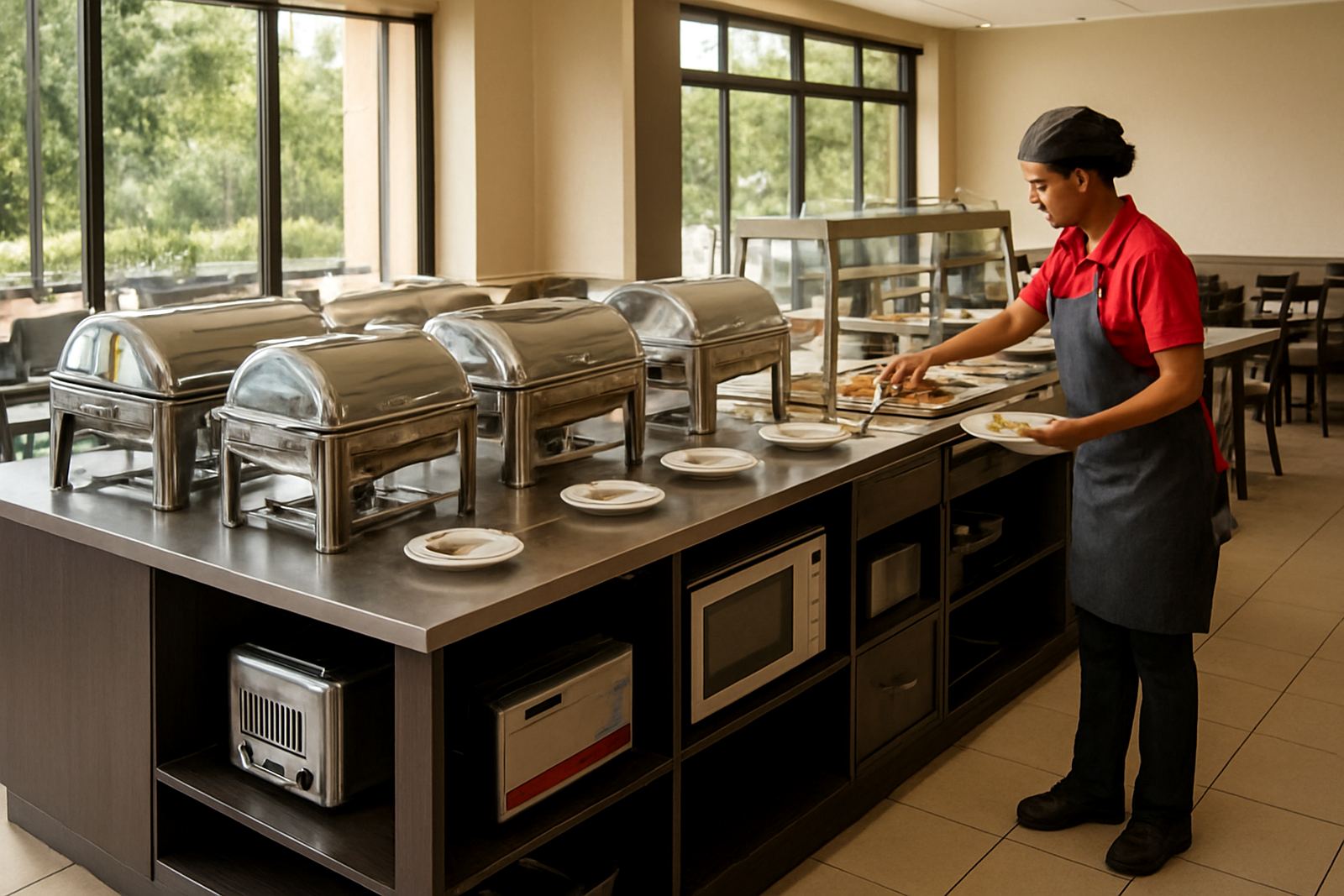
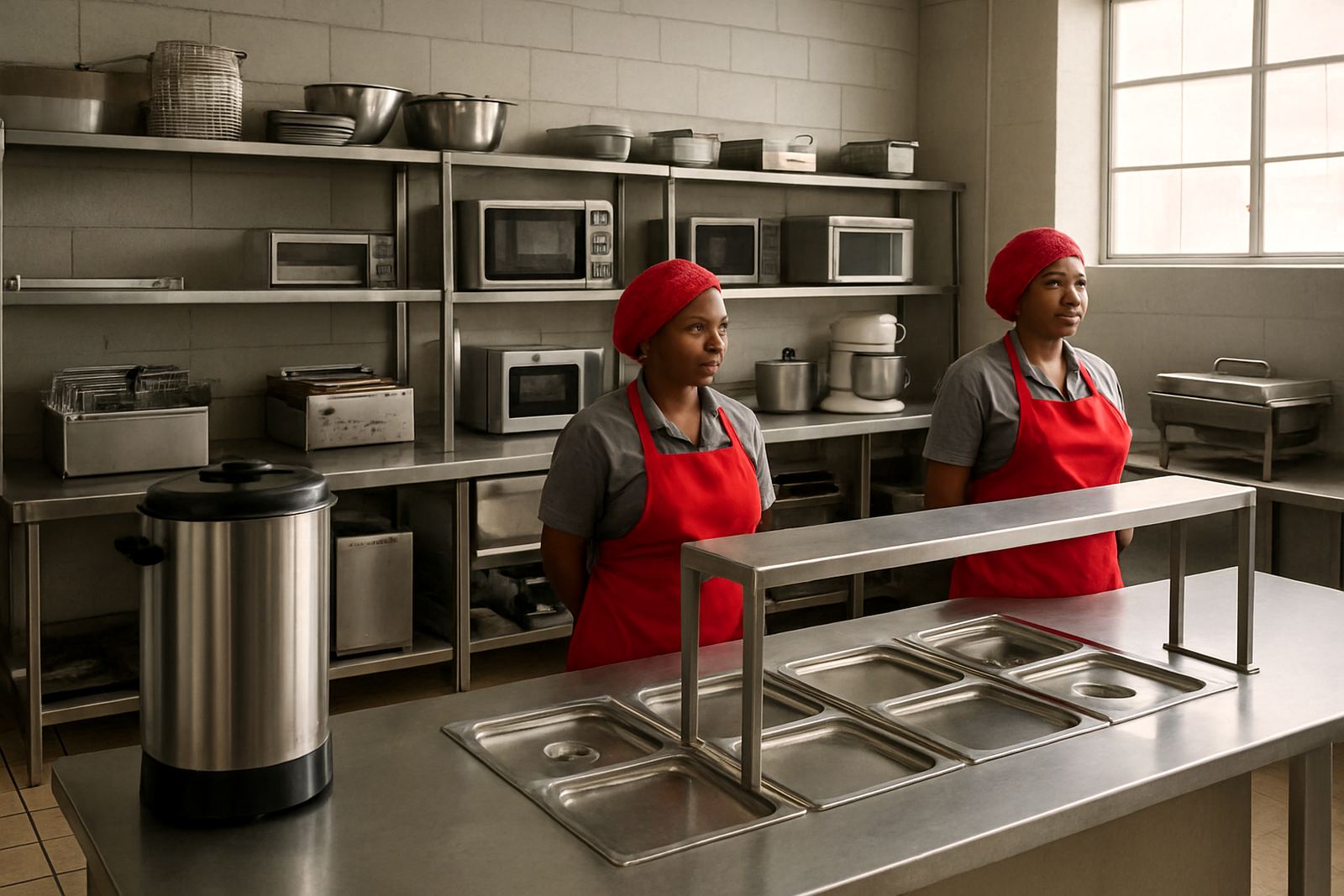
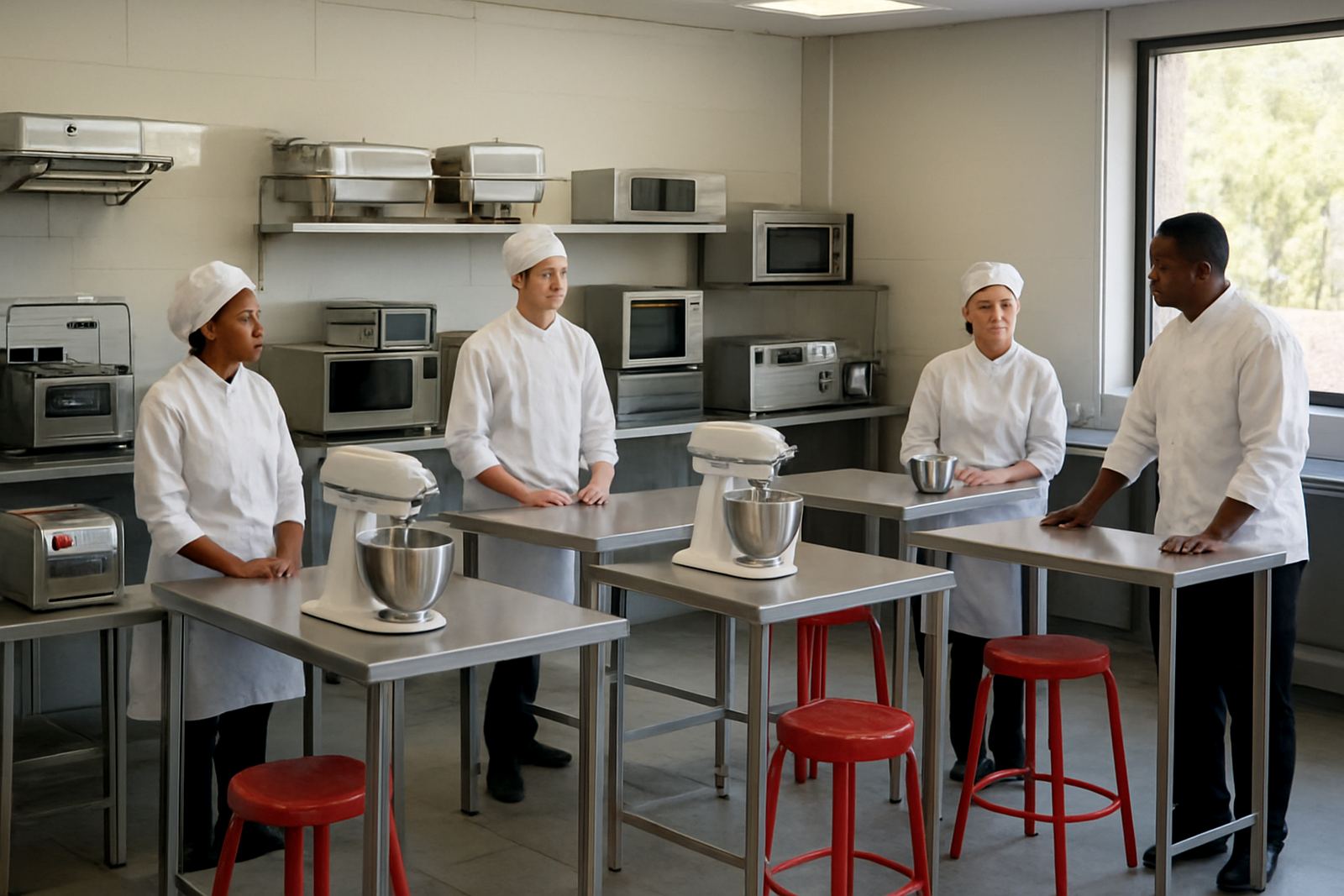
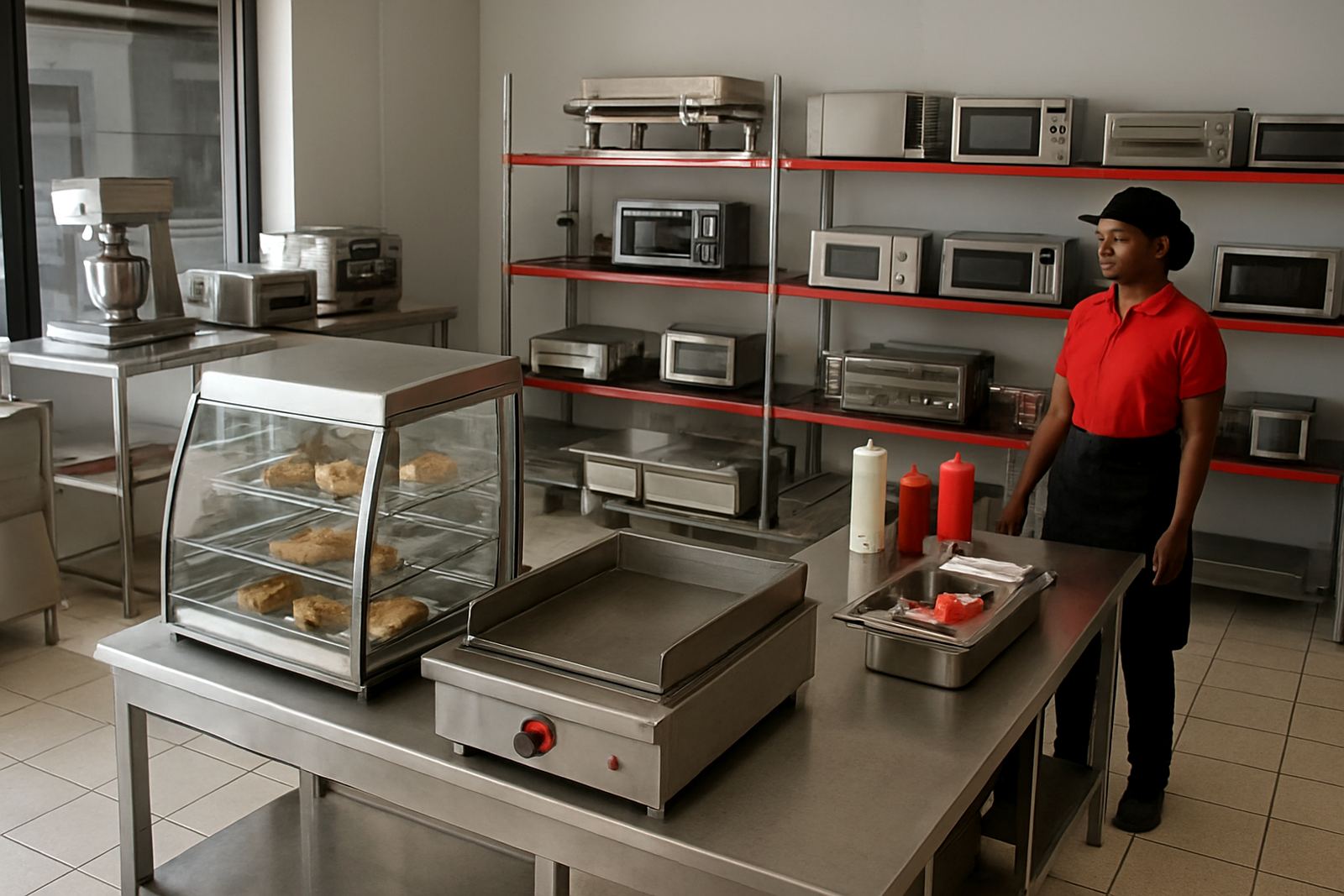
For this project we supplied a practical mix of new and used equipment so the client could stay within budget without giving up on service speed. The main items were a commercial fryer, a two slice toaster for breakfast and snack lines, a compact mixer for prep, a microwave for rapid plate warming, and chafing dishes for the hot holding line. We also sourced a used undercounter unit for cold storage support and checked the condition in our workshop before delivery.
The fryer was selected for quick recovery between batches and easier oil management during lunch peaks. The toaster had a sturdy heating cycle for repeated use, while the mixer gave the prep team a better way to handle sauces, batters and bulk lunch items before service. The microwave was positioned near the pass for final heating and the chafing dishes were arranged to keep dishes at service temperature without overcrowding the counter. In a small cafeteria, every metre matters and this setup kept the line moving.
- Fryer: commercial countertop model sized for single operator use
- Toaster: high cycle unit for repeated breakfast and snack use
- Mixer: compact prep mixer for sauces, batters and light dough work
- Microwave: quick reheat unit for service support
- Chafing dishes: stainless steel hot holding for plated meals and buffet style service
Layout changes that improved the lunch flow
We did not only drop in equipment, we changed the working sequence. Kagiso Molefe handled the installation and positioning so the hot line, prep point and finishing station sat in a more direct path. That reduced cross traffic and made it easier for two staff members to work at once without bumping into each other. The service counter was also adjusted so plated meals could move from holding to handover in one turn.
Part of the reconfiguration included practical details like keeping hot appliances away from splash zones, leaving safe clearance for airflow and making sure cleaning access was not blocked. Sibusiso Dlamini reviewed the service side and checked that the items could be isolated for maintenance without shutting the whole cafeteria down. For the client, this meant less downtime and fewer small problems turning into big ones.
- Direct prep to service route for quicker plating
- Clear hot and cold zones to support cleaner work habits
- Safe clearance around heated equipment for airflow
- Simple access for daily wiping and end of shift cleaning
Timeline from quote to handover
The project ran over three weeks from first quote to handover. In week one, Nadia Petersen prepared the quote and compared new and used options so the client could choose where to spend and where to save. In week two, Sibusiso and Annelie confirmed the final equipment list and planned the delivery around the building access window. In week three, Kagiso completed positioning, connection checks and basic training for the cafeteria staff.
We kept the process practical because office cafeterias cannot afford long interruptions. The delivery had to be timed around tenant movement and security, and the installation had to be finished before the next lunch cycle. Mpho Sekgobela oversaw the job and made sure the project stayed aligned with the client’s service targets and maintenance expectations.
- Week 1: site assessment, quotation and equipment selection
- Week 2: procurement, used equipment sourcing and logistics planning
- Week 3: delivery, positioning, installation and handover training
What changed after the upgrade
After the new layout went in, the cafeteria could hold hot food more steadily through the lunch rush and the prep team had better access to equipment at the right stage of service. Staff reported fewer delays at the pass and cleaner movement between prep, holding and plate-up. The office manager also noted that the morning setup took less time, which mattered on days with early meetings and short lunch breaks.
The biggest gain was consistency. Food went out in a more controlled way, there was less standing around waiting on one item, and the team had a clearer division of jobs. On a site like this, that makes a real difference because lunch service is short and the pace changes quickly. We also left the client with servicing guidance for cleaning, inspection and oil management so the equipment stays in good shape through daily use and the odd power interruption.
For a Kempton Park business serving office staff, that kind of improvement is not just about more equipment. It is about making the kitchen work with the building, the schedule and the people using it every day.
What we would do again on a similar site
If we were doing a similar cafeteria in Centurion, Midrand or Boksburg, we would follow the same approach: assess the space first, match the kit to the real lunch load, and keep the layout simple enough for fast cleaning. A used unit can save money if it is properly checked, but it needs workshop attention before it is put into service. We would also plan for load-shedding from the start, because a lunch line that depends on one stage of heating can stall quickly when the power goes off.
For this kind of office cafeteria, we would keep the same priorities again: hot holding that stays even, prep access that does not block the pass, and equipment that is easy to service later. The job showed that a careful mix of sourcing, installation and training can give a small kitchen a much better service rhythm without a full rebuild.
- Do the site assessment before ordering anything
- Use a mix of new and checked used equipment where budget matters
- Leave enough room for cleaning and maintenance
- Plan a backup approach for load-shedding and service interruptions
Key facts
| Project | Kempton Park cafeteria upgrade for office lunch service |
|---|---|
| Location | Kempton Park, Gauteng |
| Timeline | 3 weeks from quote to handover |
| Main equipment | Fryer, toaster, mixer, microwave, chafing dishes, used support unit |
| Services | Quote, site assessment, delivery, installation, training and servicing |
| Outcome | Faster lunch flow, better hot holding and simpler prep access |