Industrial canteen brief for a Silverton site
The client was a mid-sized industrial business in Silverton with a steady flow of workshop staff, drivers and office personnel needing quick meals before shifts and at lunch. They did not want a full restaurant setup, only a practical canteen that could produce toasted breakfasts, hot lunch items and warm holding for plated food. The space had a tight footprint and a basic service counter, so every item had to earn its place.
The main ask was to keep preparation time down while still giving the catering team enough capacity for peak periods. In practical terms that meant equipment for frying, toasting, warming and reheating, plus a layout that would keep people moving one way and avoid crowding near the serving point. The client also needed equipment that was easy to wipe down, suited to dusty industrial conditions and not too sensitive to power interruptions.
- Site: Silverton, Pretoria
- Use: staff breakfast and lunch service
- Kitchen type: compact industrial canteen
- Service pressure points: early morning rush and midday peak
What stood in the way on site
The space had old floor finishes, limited wall points and a mixed electrical layout, so we had to plan around existing supply points and keep cable runs tidy. There was also the normal Pretoria industrial challenge of dust coming in from outside and heat build-up around the cooking line. The client asked for equipment that could be serviced locally and kept running through load-shedding without creating a mess of temporary fixes.
Water and drainage were another consideration. The wash-up area was close to the cooking line, so we made sure the working arrangement kept grease splash away from food prep surfaces. The canteen also needed a setup that would pass practical internal safety checks, with clear working space behind hot equipment and enough room for staff to move trays and utensils without knocking into each other. We ended up reworking the sequence a bit, which saved time later.
- Limited electrical points
- Dust and heat from the workshop side
- Need for easy cleaning and safe clearances
- Power interruption planning for meal service
Equipment supplied and fitted for daily service
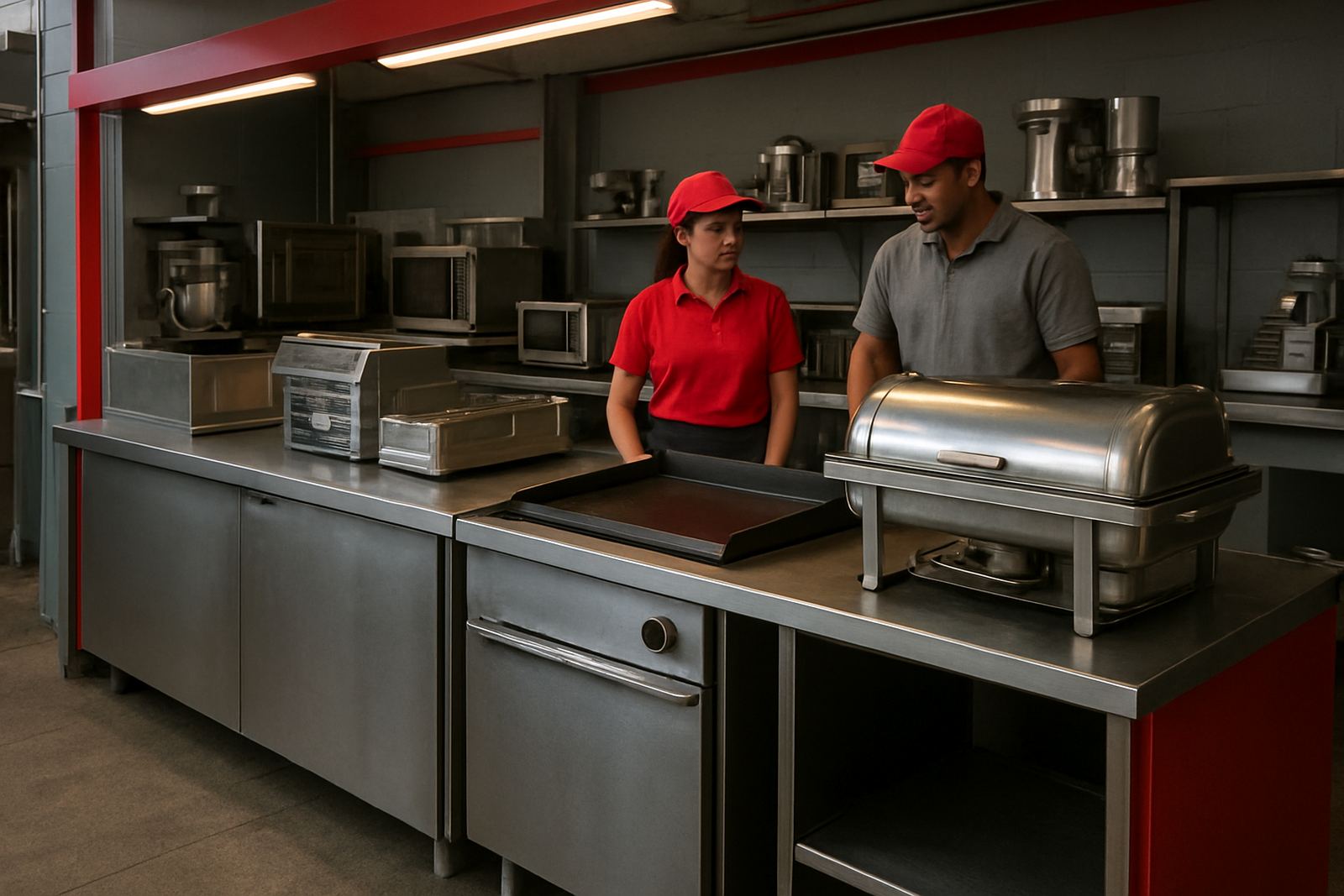
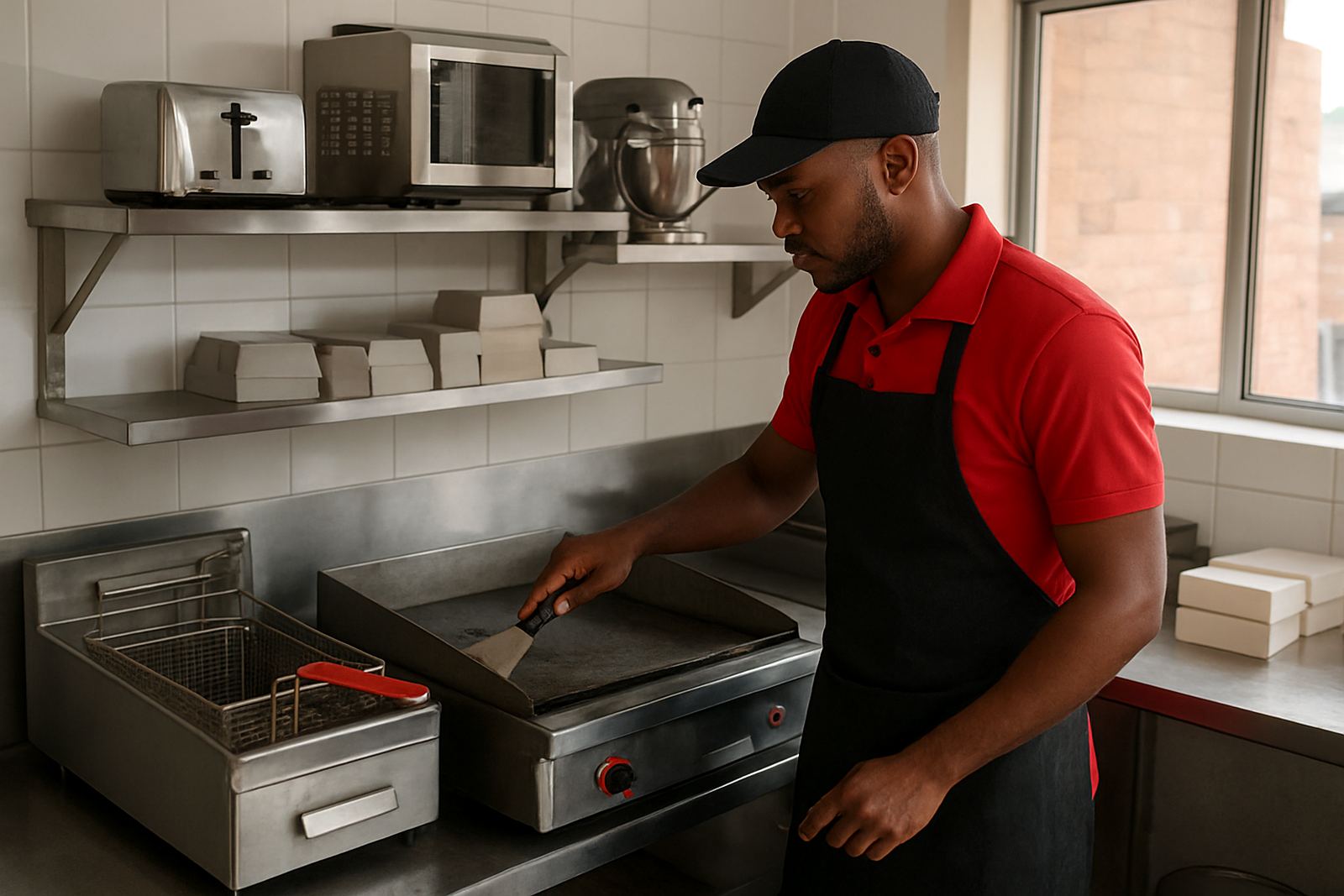
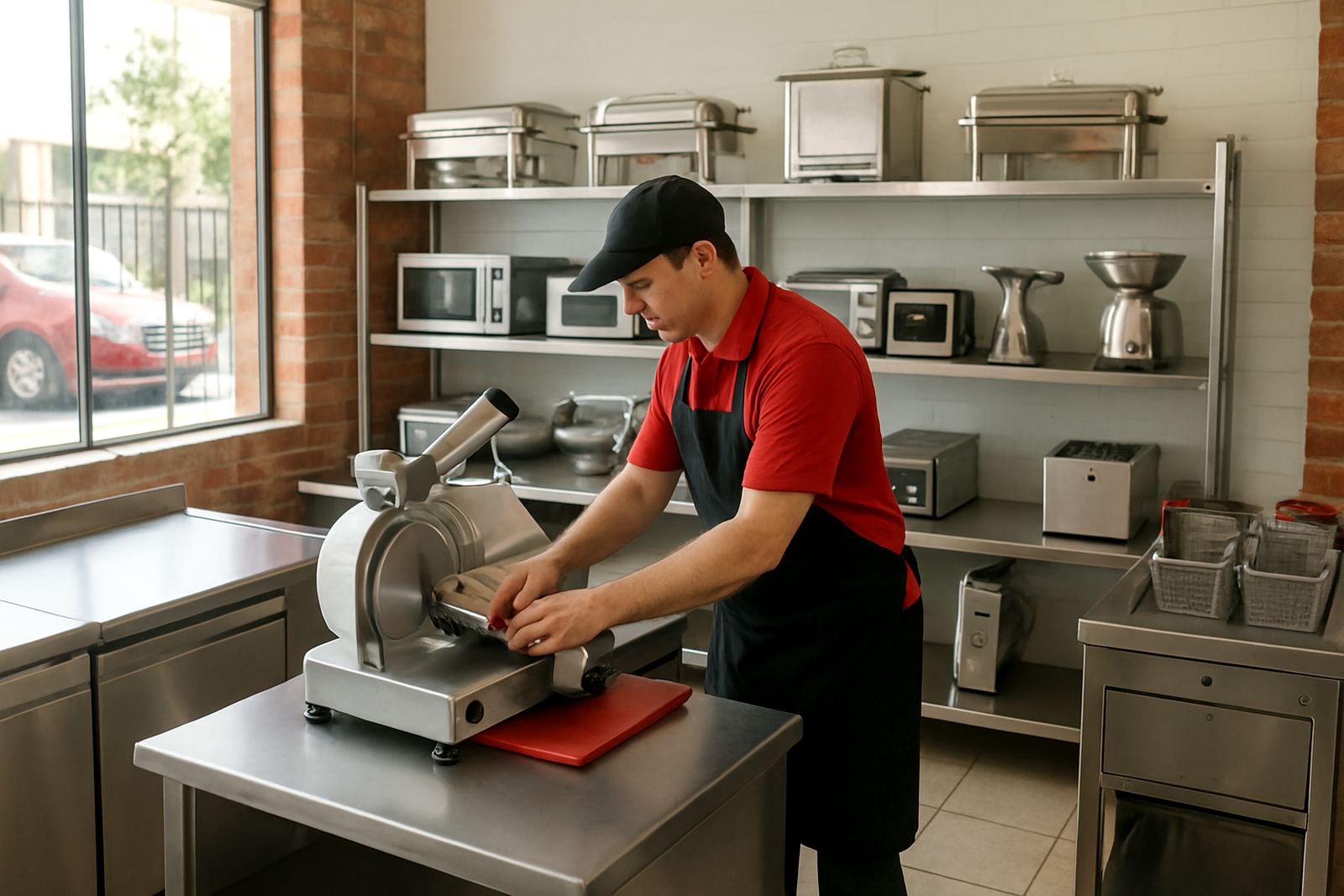
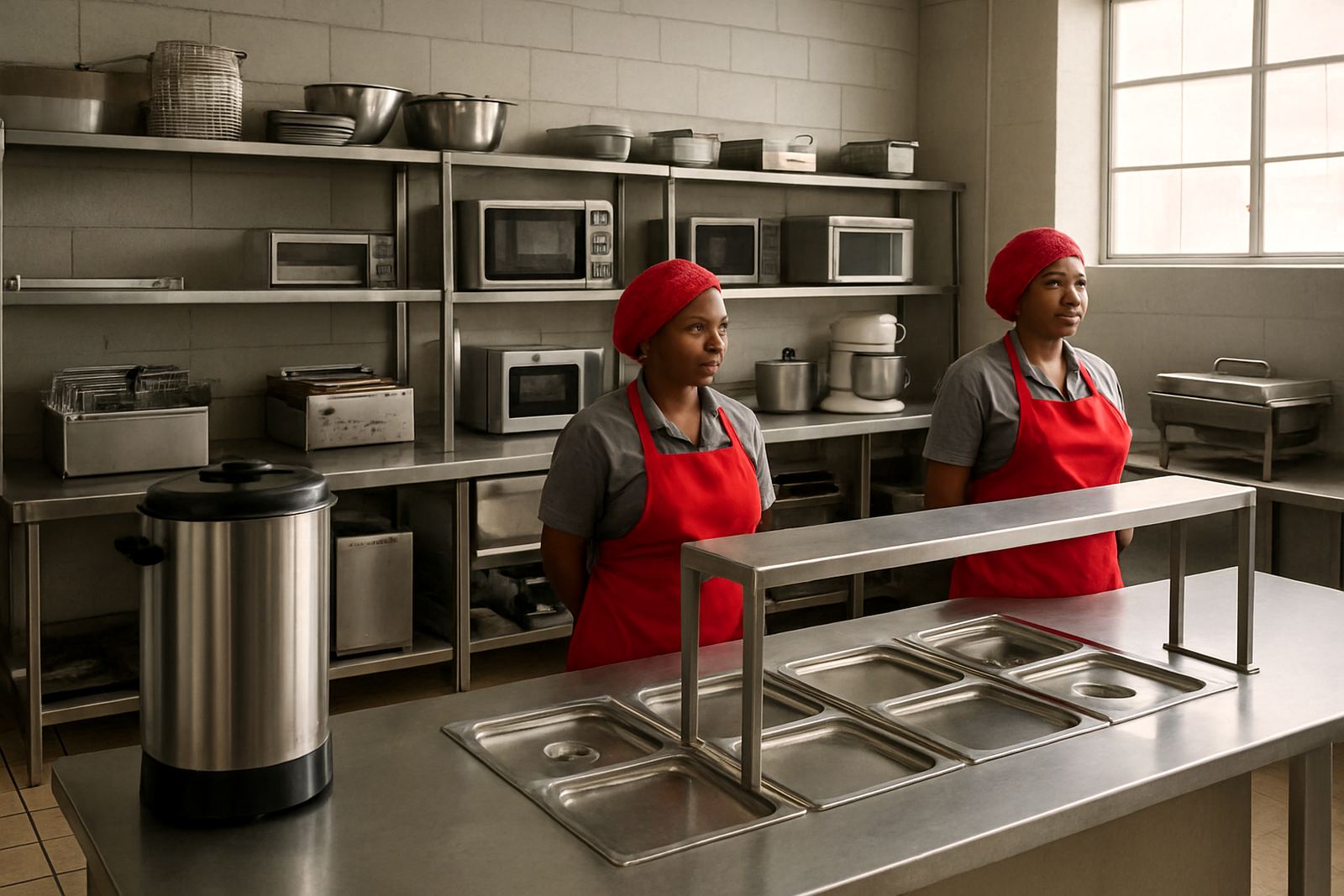
We supplied a mix of new and used equipment, selected to keep the budget sensible while still giving the canteen reliable service. The main items included commercial fryers, a two-slice toaster set for breakfast rushes, a medium-duty mixer for batter and prep work, microwaves for quick reheating, and chafing dishes for hot holding on the counter. Where possible, we matched sizes to the available counter space so the team could work without shuffling appliances around.
Used equipment was carefully sourced and checked in our workshop before delivery. That helped reduce upfront spend and allowed the client to put more budget into the correct layout and small finishing items. We also made sure the cooking line could be cleaned with standard degreasers and that all units were placed with enough spacing for heat dissipation. The client wanted things straightforward, not fancy, and that suited the site well.
- Commercial fryers sized for lunchtime volume
- Toasters positioned for breakfast output
- Microwaves for plated meal reheating
- Chafing dishes for hot service on the counter
- Used equipment checked, cleaned and serviced before fitment
Installation, training and handover in two weeks
The project ran over two weeks from quote approval to handover. In week one we confirmed the layout, checked site measurements and finalised the equipment list with the client. Our team then prepared the used items in the workshop, tested heating elements and carried out basic service checks before dispatch. In week two we delivered, positioned and installed the equipment, then set up the serving line and did a working handover with the canteen staff.
Training covered daily cleaning, safe switching on and off, grease management, simple fault checks and what to do if a unit trips during a busy service. We kept the handover practical and short because the client needed the canteen operational quickly. Mpho Sekgobela oversaw the project, with Annelie van Wyk handling the quote detail, Sibusiso Dlamini arranging service checks and Kagiso Molefe on positioning and installation. That kept the process orderly from start to finish.
- Week 1: site check, quote finalisation, workshop prep
- Week 2: delivery, installation, testing and handover
- On-site training for canteen staff
Results after the first service week
By the end of the first week in use, the client had a steadier breakfast rush and a smoother lunch queue. Staff could get toasted items out faster, keep hot food available and reheat meals without holding up the serving line. Because the equipment was spaced properly, the kitchen stayed easier to clean after each service and the team spent less time moving items around to create working room.
The client also reported fewer interruptions from small faults because the equipment had been checked and serviced before delivery. That matters in an industrial area where a canteen cannot stop every time there is a bit of power fluctuation or a busy morning. The setup was not overdone, but it matched the actual demand on site and gave the kitchen manager more control over the day. That is what the brief asked for, and it held up well.
- Faster breakfast output
- Better lunch flow at peak time
- Cleaner working area after service
- Less downtime from avoidable faults
What we would do again on a similar site
We would use the same approach on another Silverton or Pretoria industrial canteen: start with a tight site measure, keep the equipment list practical, and balance new units with checked used stock where the budget allows. For a staff canteen, the right answer is usually not more equipment, it is the right equipment in the right order. That makes cleaning easier and keeps staff working without bumping into each other.
We would also repeat the early training on cleaning, reset procedures and basic fault reporting. In our experience, canteen teams work better when they know exactly who to call and what to check first. A bit of structure goes a long way, especially when meals have to come out on time. For sites in Pretoria, Centurion, Midrand or Boksburg, we would also allow for backup planning around load-shedding from day one.
- Keep the line short and practical
- Use serviced used equipment where suitable
- Plan for cleaning and maintenance access
- Build in load-shedding awareness from the start
Key facts
| Project | Silverton Workshop Canteen |
|---|---|
| Location | Silverton, Pretoria |
| Client type | Industrial staff canteen |
| Timeline | 2 weeks |
| Main equipment | Fryers, toasters, mixers, microwaves, chafing dishes |
| Service scope | Quotes, sourcing, installation, training and servicing |