Client brief for a busy Randburg teaching kitchen
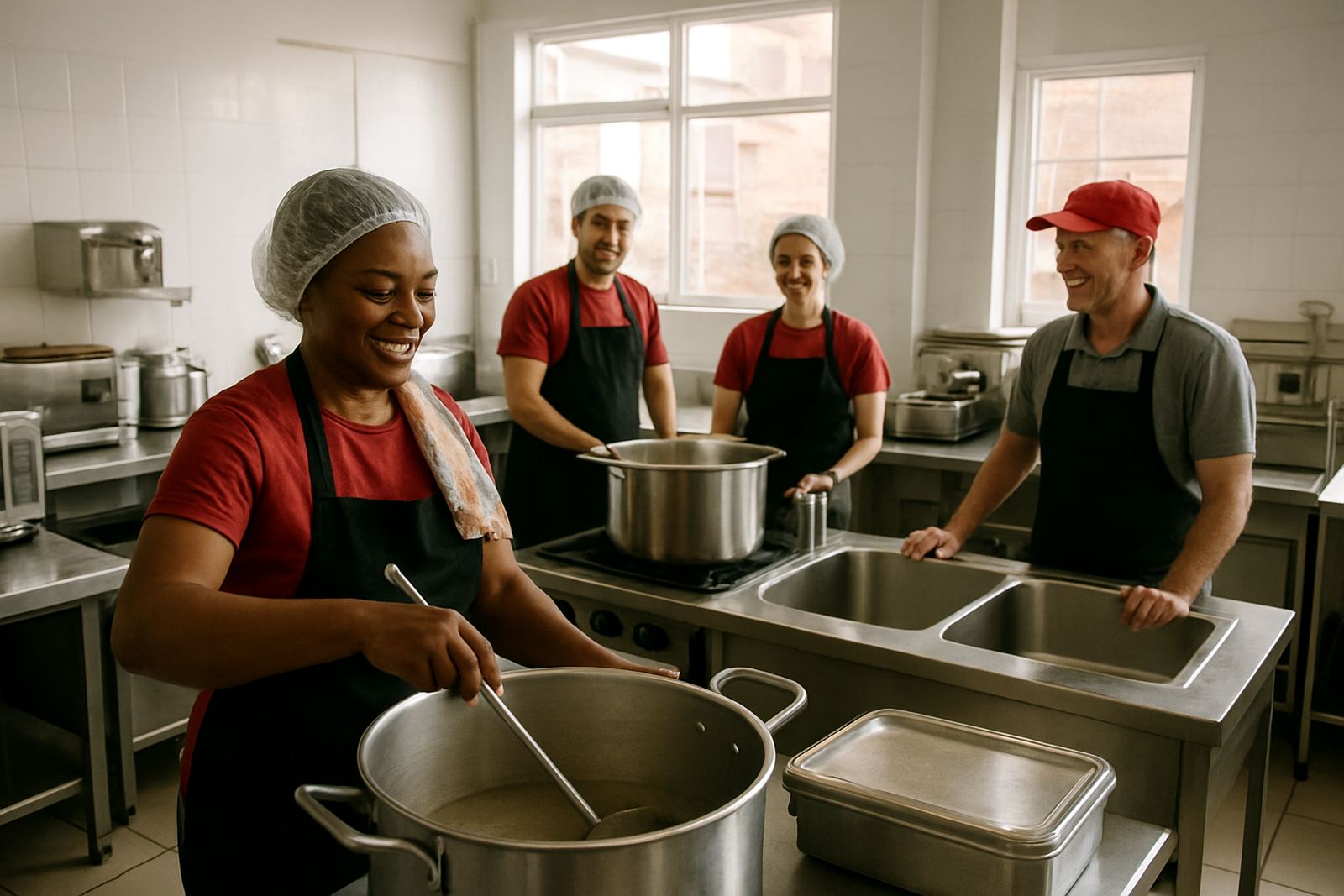
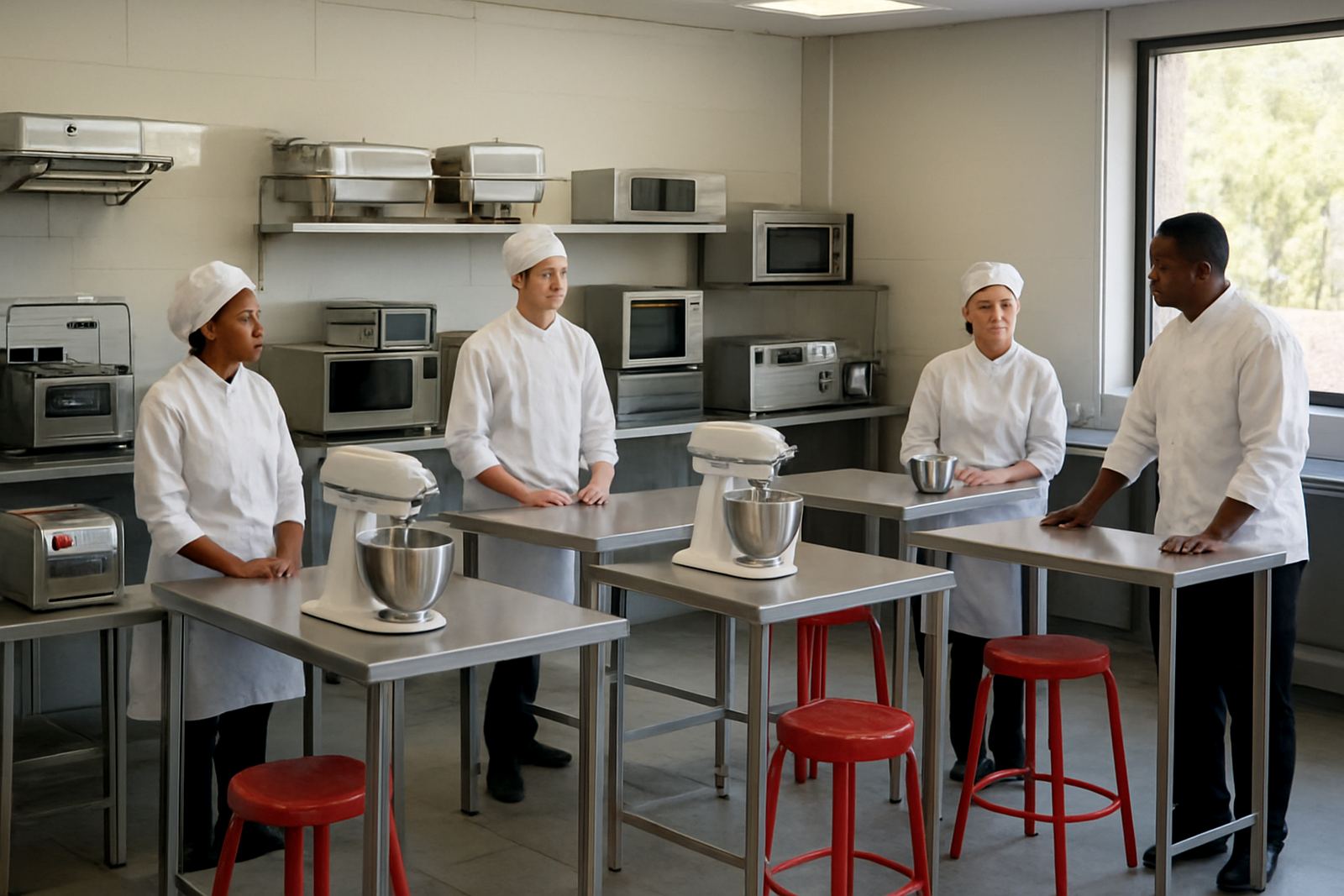
The client needed a teaching kitchen that could take a full class at once, with clear work zones for prep, cooking, cleaning and demonstration. The space had to suit trainees moving between stations without crowding, while still being easy to keep clean after every session.
The building is in Randburg, where water pressure, power interruptions and municipal layout rules all affect how a kitchen is set up. We worked to a practical brief: create a room that feels organised, keeps staff safe, and supports daily classes with enough outlets, drainage and heat control for repeated use.
This was not a restaurant line kitchen. It was a training environment, so the finish had to be tidy and durable but also easy to maintain. The client wanted a layout that could be used for short courses, product demos and internal kitchen training, all in one room.
What had to be solved on site
The main constraint was space. The kitchen needed multiple stations without blocking circulation, and the team had to leave enough room for an instructor to move between groups. We also had to allow for safe cable runs and utility points without turning the floor into a hazard.
Power planning mattered too. In Gauteng, load-shedding and voltage dips can interrupt teaching if equipment is not grouped properly. We spaced the appliances so each station could be isolated, and we allowed for quick restart after an outage. The layout also considered extractor positions, working clearances and easy access for service later on.
Humidity and regular washdown were part of the picture as well. Randburg is not coastal, but a teaching kitchen still gets a lot of steam and surface moisture, so we specified finishes that hold up well under daily cleaning. Stainless surfaces and properly sealed joints were used where they matter most.
- Space planned for multiple student stations
- Electrical points grouped for safer switching and reset
- Clear circulation lines for instructors and learners
- Surface choices suited to repeated cleaning and steam
Equipment and fittings supplied
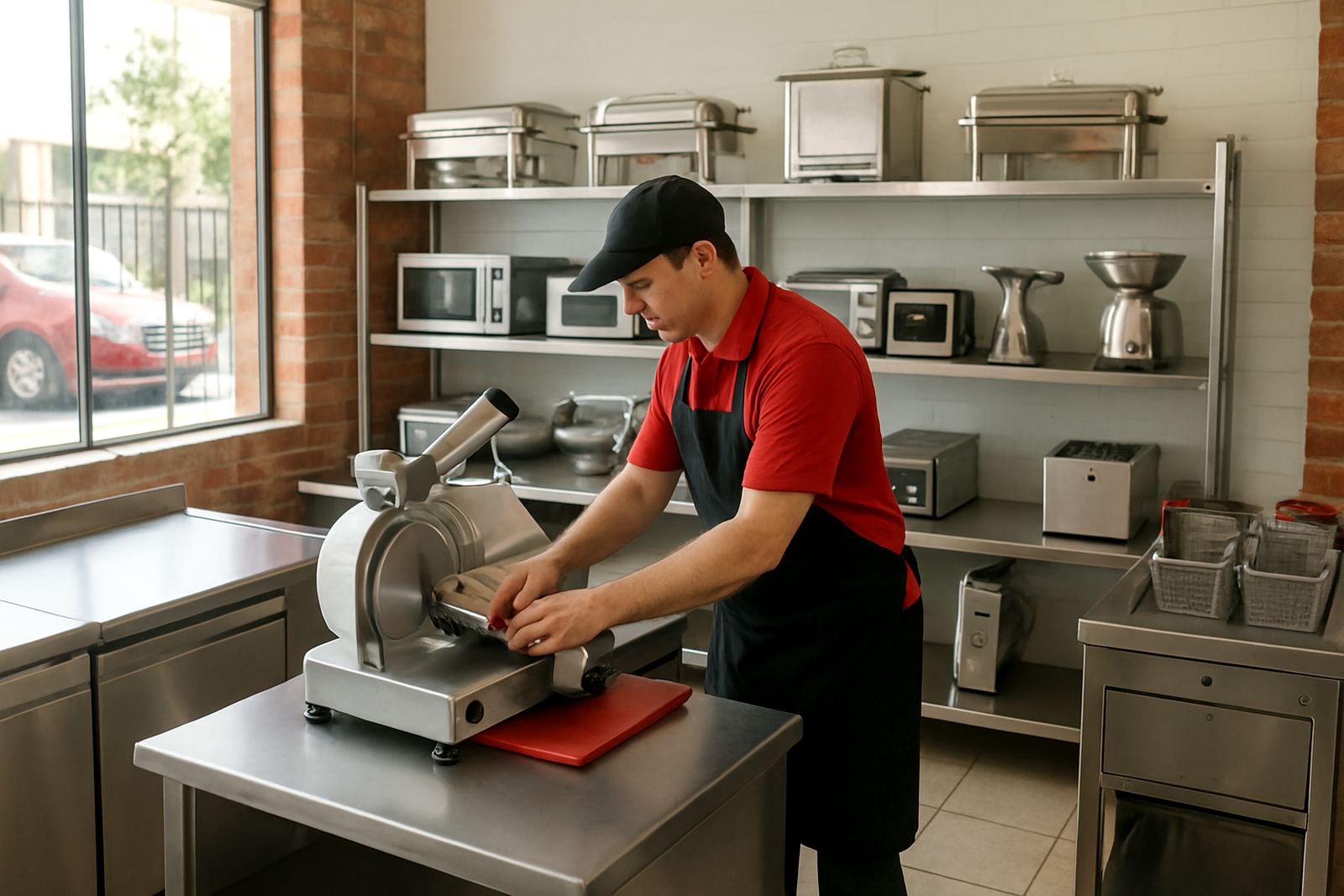
We supplied and positioned prep benches, cooking equipment and utility fittings to give the kitchen a proper training flow. The layout included worktop space for ingredient prep, hot equipment for practical demonstrations, and supporting points for washing and storage. Where the client needed flexibility, we used equipment that can be moved for different class formats.
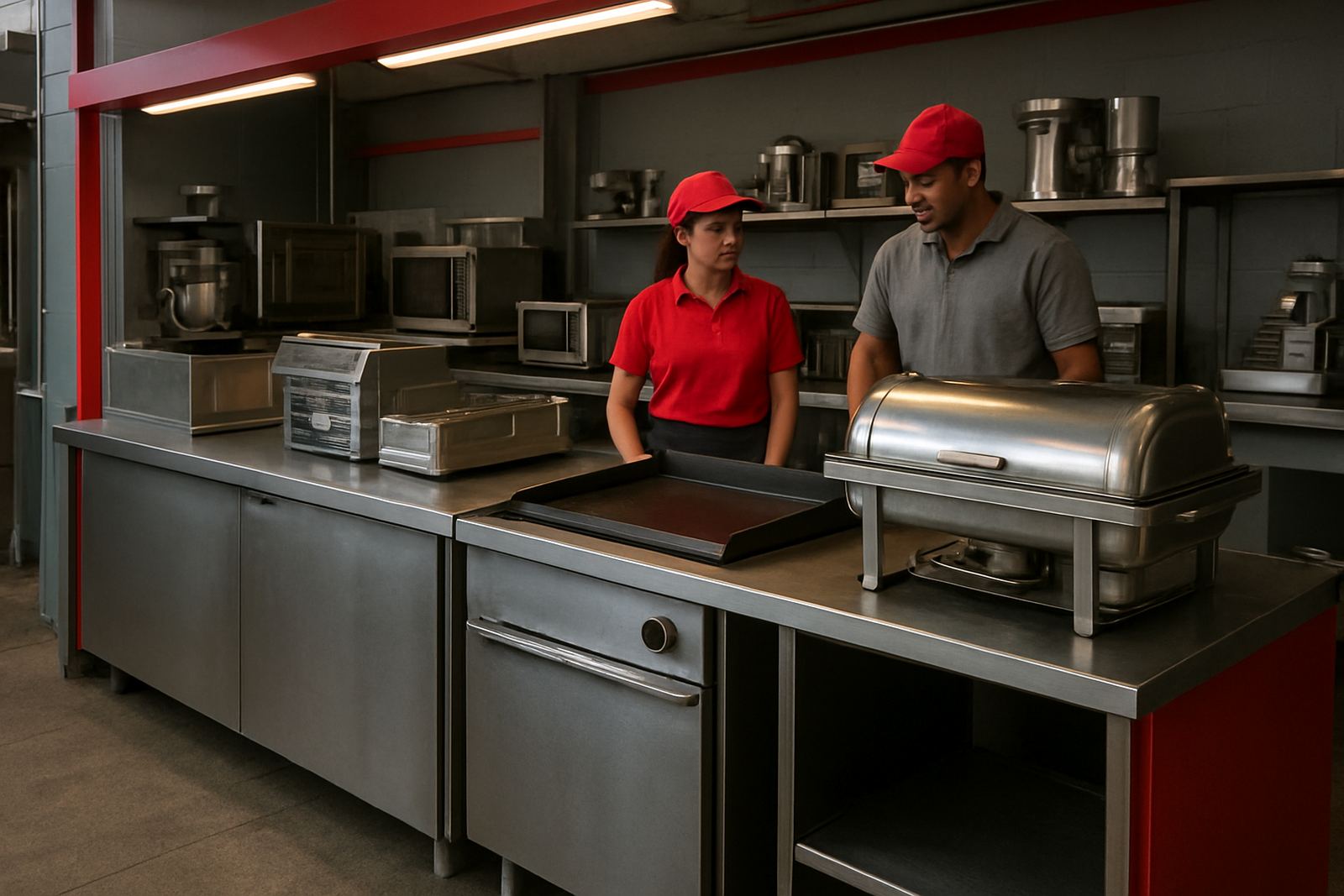
The supply package included commercial fryers, toaster units, mixers, microwaves and chafing dishes for demonstration and holding tasks. We also handled used equipment sourcing for items that gave good value without compromising the training standard. Each item was checked for condition, fit and serviceability before being placed into the final layout.
- Prep benches with stainless working tops
- Commercial fryers for hot kitchen training
- Toaster units and mixers for bakery and breakfast modules
- Microwaves and chafing dishes for general catering practice
- Utility points positioned for quick class changeovers
Installation, positioning and handover
Our installation team handled delivery, positioning and final setup on site. We coordinated access into the Randburg premises, then placed each unit according to the agreed workflow. That included aligning benches to the room, checking working heights, and making sure staff could clean behind and under the equipment where needed.
We then connected and tested the utility points, checked that switches and outlets were correctly matched to the loads, and confirmed that the room could be handed over in working order. The final step was handover training, which covered safe switching, daily checks, cleaning routines and basic fault reporting. A training kitchen works best when the staff know how to reset it quickly after a lesson, not just how to use it the first time.
Our workshop team also prepared a few items in advance so the on-site work stayed within the agreed timeline. That kept the install moving and reduced downtime for the client. There was a bit of pressure on the final day because the client wanted the room ready for first intake, but the sequence held and the handover stayed on track.
Timeline and project coordination
The Randburg project ran over four weeks from final sign-off to handover. Week one covered site assessment, measurements and equipment confirmation. Week two dealt with sourcing, workshop checks and any refurbishment needed on used units. Week three was delivery planning and prep work. Week four covered installation, positioning, testing and training.
Because the kitchen would be used for repeated classes, we paid attention to small details that often get missed in hurry-up fit outs. That included the direction of door swings, bench spacing near hot appliances, and where learners would stand while waiting for an instructor. In a training setting, a small spacing error can slow every class after it.
- Week 1: site assessment and layout sign-off
- Week 2: sourcing and equipment checks
- Week 3: workshop prep and delivery planning
- Week 4: installation, commissioning and training
Results and what we would repeat
The completed kitchen now supports practical training with clear work zones, enough prep area and dependable equipment for daily use. The client got a room that feels ordered rather than cramped, and one that can be cleaned and reset between groups without a long delay. That matters when classes run back to back.
For us, the best result was the balance between teaching flow and service access. If we were to do the same project again, we would keep the same approach: confirm the class size first, map the movement paths second, and only then lock in the equipment list. That sequence saves money and avoids last minute changes. It also makes it easier to maintain the kitchen later, which is always a fairer test than the handover day.
Afchain continues to support kitchen clients across Pretoria and Gauteng with quotes, servicing, installation and repairs. Whether the job is a training room in Randburg, a canteen in Centurion or a small service kitchen in Boksburg, the principle stays the same: fit the equipment to the work and make it practical to run every day.
Key facts
| Project type | Multi-station teaching kitchen |
|---|---|
| Town | Randburg, Gauteng |
| Completion time | 4 weeks |
| Key equipment | Fryers, toasters, mixers, microwaves, chafing dishes |
| Support work | Delivery, positioning, installation, handover training |
| Special notes | Prep benches and utility points arranged for class flow |