Start with the food you are serving
Before you compare lids and stands, list the dishes that will sit in the line. A breakfast function needs smaller pans for eggs, bacon and wors, while a lunch buffet may need larger capacity for rice, stews and veg. If you are serving for two hours or more, choose a setup that holds temperature steadily and allows quick top ups.
Think about whether the food is saucy, dry, or best kept with a little steam. Heavier dishes do well in deeper pans, while sliced meat and side dishes are easier to portion in shallower pans. For school events, church functions and corporate lunches in Pretoria or Midrand, the aim is simple access and steady heat, not fancy extras that slow service.
- Breakfast items: smaller pans, easy lift lids
- Main meals: deeper pans for stews, curry, rice and veg
- Light service: compact units for limited counter space
- Long service: units that allow safe refilling without removing the whole set
Match the size to your guest count
Guest numbers drive the size of the chafing dish set. A small function for 20 to 40 people can work with fewer units, while a company lunch or wedding reception may need a full buffet line with enough spacing for serving staff to move between trays. Do not guess. Count the dishes, the expected portions, and the time each dish must stay on display.
In tight kitchens, especially in Centurion offices or smaller venues around Pretoria Central, compact rectangular units often fit better than round options. In larger halls, a matching line gives better flow and a neater look. Leave space for serving spoons, tongs and safe hand movement, because crowded buffet tables lead to spills and delays.
- Small events: 1 to 3 units, depending on menu
- Medium events: enough units for each hot dish, with one spare if possible
- Large functions: plan the table layout first, then size the dishes
- Back of house: check if the pans stack for storage
Choose fuel type that suits the venue
Fuel choice affects cost, heat control and setup time. Gel or liquid fuel suits mobile catering and venues without plug points, while electric warming works well where sockets are available and the load on the line is managed properly. In Gauteng, power interruptions can affect service, so some operators keep fuel options on hand as backup for events and site catering.
For indoor use, ventilation matters. Always check venue rules, fire precautions and the table surface before setting up. On polished wooden tops or laminate counters, use heat resistant stands and make sure the base sits level. If the venue is near the coast, humidity is less of a concern in Pretoria, but cleaned metal still needs to be dried properly to avoid staining and dull marks.
- Fuel options for mobile catering and functions without power
- Electric warming for controlled indoor service
- Backup planning for load-shedding or supply interruptions
- Safe placement away from curtains, loose cloths and walkways
Pick the right presentation style for the room
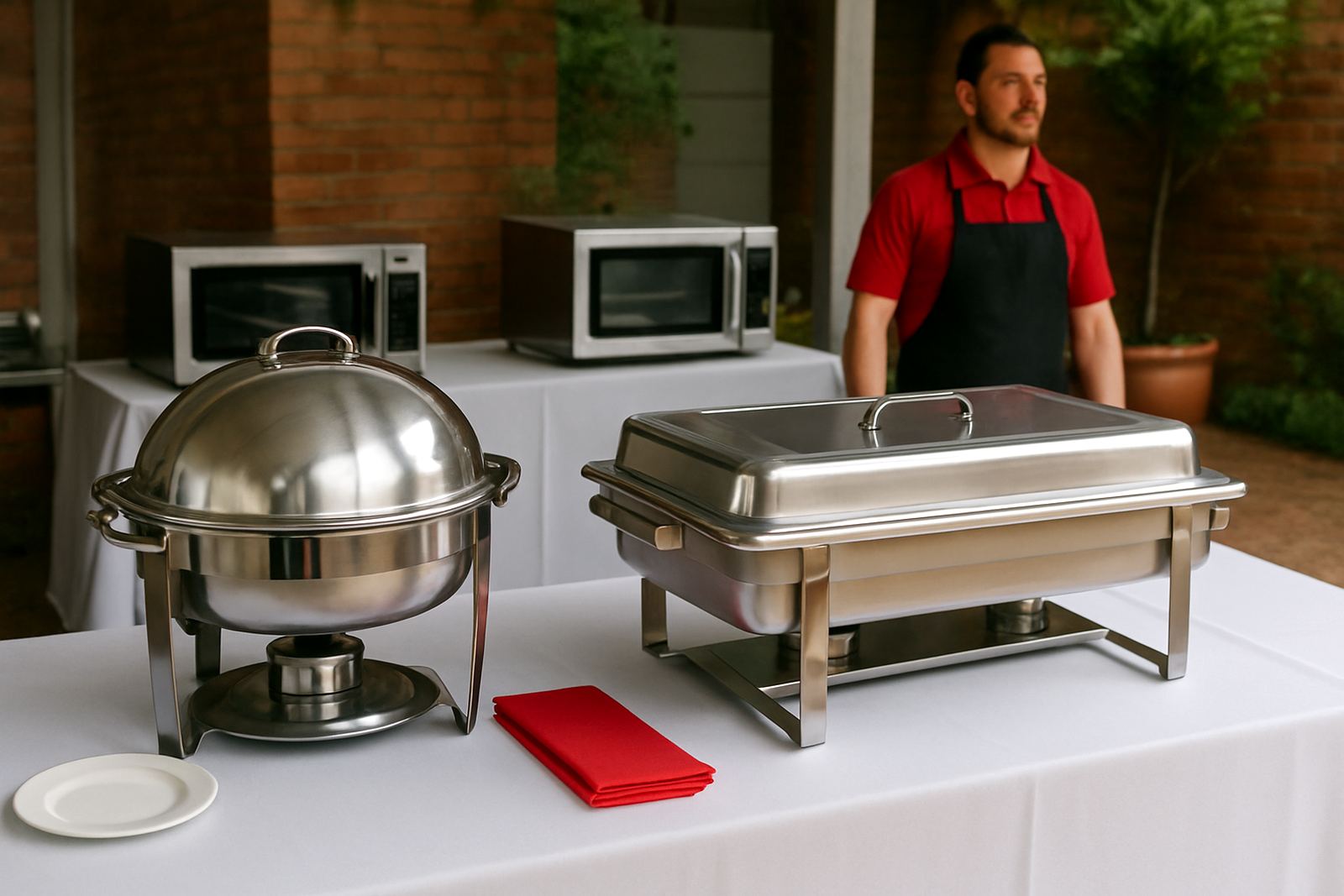
Chafing dishes are not only about heat. They also shape how the buffet looks and how guests move. A polished finish works well for weddings, formal launches and hotel functions, while a simpler look may suit staff canteens, sports clubs or school events. The lid style also matters. Lift off lids are practical, while roll top lids can help with quicker self-service and cleaner lines.
Match the style to the room and the level of service. If your team will plate food for guests, choose units that are easy to open and refill. If the buffet is self-service, select lids and handles that guests can use without crowding the table. A neat line with clear spacing often looks better than too many mixed pieces, and it also makes cleaning faster after the event.
- Formal functions: matched finish and clean lines
- Self-service buffets: easy opening and stable lids
- High traffic events: durable handles and easy access
- Front of house: units that keep the buffet looking tidy from first serving to last
Use this buying checklist before you order
A simple checklist saves money and avoids returns. Measure the serving table, note the power supply if you want electric units, and confirm the dishes you will serve most often. If you already have pans or inserts, check that the new frame and lids fit properly. Ask for a quote that includes delivery, positioning and any servicing you may need later.
If you are replacing older equipment, look at the condition of the burner holders, hinges, handles and tray supports. Used units can be a good option when they are complete and straight, but bent frames and damaged lids cause problems in daily use. For kitchens in Boksburg, Randburg and Kempton Park, it is worth checking how easy the units are to transport between prep area and serving point.
- Measure table length and serving space
- Confirm power access or fuel plan
- Check pan sizes and lid fit
- Inspect handles, hinges and tray supports
- Ask about servicing and spare parts availability
Practical care that keeps the set working
Good care extends the life of the equipment and keeps the finish presentable. Wash after use, dry the parts fully and store lids carefully so they do not bend. Burners, trays and inserts should be cleaned before food dries on. If a unit is used often, book preventive servicing before busy periods, especially when your calendar fills up for year end functions, school events and conference catering.
Training helps too. Your team should know how to light, fill, open and close each unit without touching hot surfaces. They must also know what to do if a burner fails, a lid sticks or a tray slips. A quick handover after installation can prevent damaged equipment and lost service time, and it keeps the buffet line safer for staff and guests alike.
- Clean and dry all parts after every use
- Store lids and trays so they do not warp
- Book servicing before peak function seasons
- Train staff on safe handling and refilling