Start With What You Mix Most Days
Before you compare machines, write down your daily load. A small coffee shop in Centurion that mixes muffin batter and cream needs a different mixer from a bakery in Pretoria Central kneading dough for dozens of rolls before 6 am. Mixers are not one-size-fits all, and choosing too small a unit usually causes more wear, more downtime and slower service.
For light food prep, a smaller tabletop mixer can be enough. For heavier work, especially where dough is mixed in batches, a floor-standing model often makes better sense. Think about how often the mixer runs, who will use it and whether you need it to cope with load-shedding start-ups, heat in a kitchen and long service hours.
- List your main products: batter, icing, dough, mince mixtures or sauces.
- Estimate how many batches you mix per day.
- Check whether the mixer will run on single-phase or three-phase power.
- Measure the space where it will sit, including clearance for lifting bowls and cleaning.
Choose Bowl Size By Batch, Not Guesswork
Bowl size is one of the first decisions to get right. Too small and you keep stopping to refill. Too large and small batches do not mix properly, especially with batter. As a guide, bowl capacity should match your normal batch, not the biggest batch you ever make on a busy Saturday.
If you are making cake batter, sauces or light fillings, smaller bowls are easier to control. For bread dough, bulk icing or commercial catering, a larger bowl gives better handling and less spillage. Remember that dough behaves differently from batter. Dough needs stronger mixing and more space for gluten development, while batter needs even blending without overworking.
- Small batches and light prep: choose a compact bowl for better control.
- Medium production kitchens: choose a bowl that handles your standard batch with room to spare.
- High-volume kitchens and bakeries: choose a larger bowl and stronger motor.
- If you often switch from light to heavy mixes, ask about the safe working range for both.
Attachments That Save Time In The Kitchen
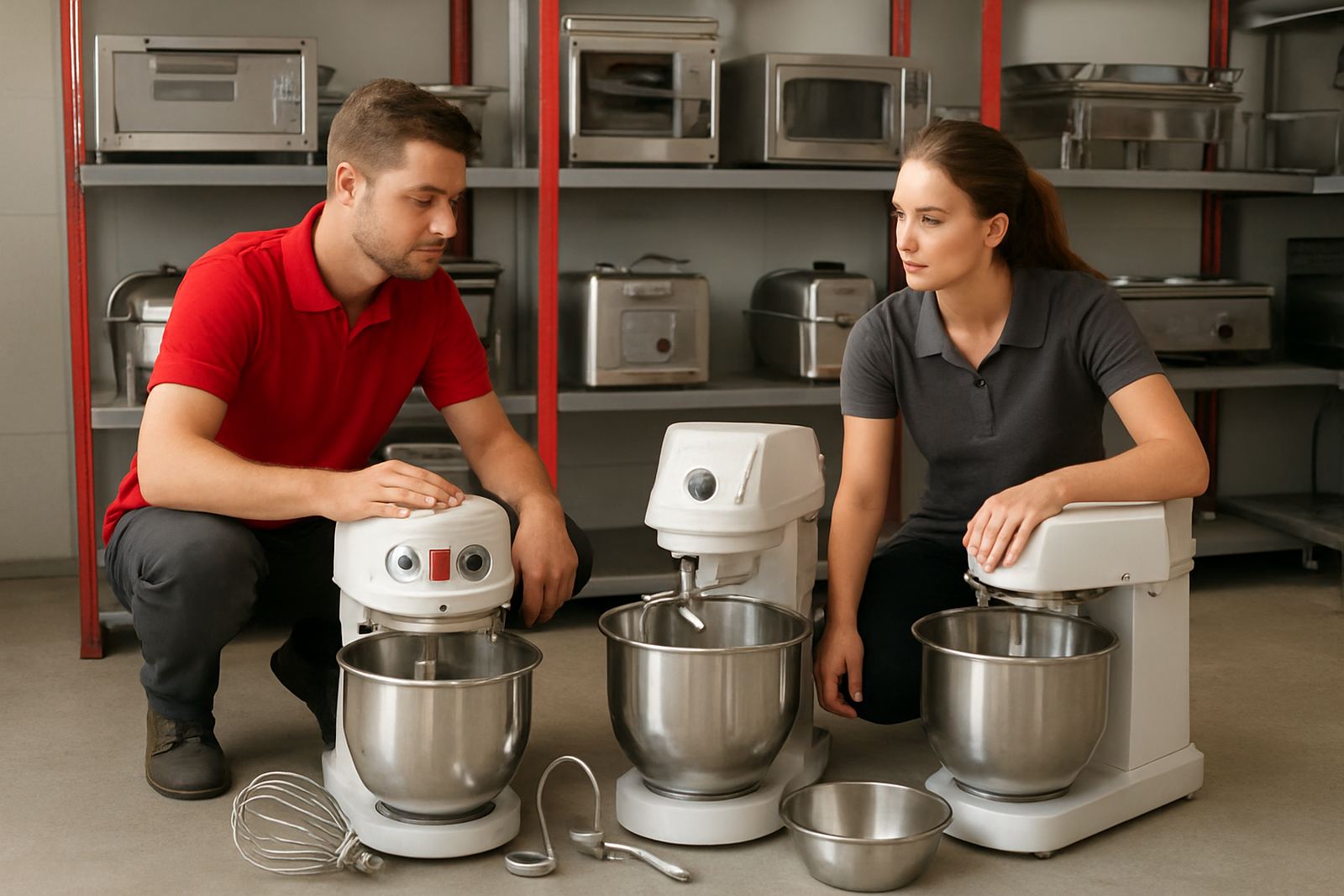
The right attachment does more than save labour, it protects the mixer and improves consistency. A whisk is useful for aeration, a beater suits batters and creams, and a dough hook is made for kneading. Some kitchens also need specialised tools for thicker mixtures, depending on the product range.
When a mixer is used only with the wrong attachment, the result is uneven mixing and unnecessary strain on the motor. In Gauteng kitchens where staff work fast and turnover can be high, clear labelling and simple training help avoid mistakes. If the unit will be shared between different stations, choose attachments that are easy to fit, remove and clean.
- Whisk: for eggs, cream and airy mixtures.
- Beater: for cakes, fillings and medium-weight mixes.
- Dough hook: for bread dough and heavier kneading work.
- Ask whether spare attachments are easy to source for future servicing.
Dough Work Versus Batter Work
Dough is dense and needs torque, steady power and a bowl that can handle resistance. Batter is lighter, but it still needs consistency or you get lumps and uneven baking. If your kitchen does both, the mixer must be rated for the heavier job first. A machine that handles cake mix nicely may still struggle with bread dough, especially in cold weather or when flour quality changes.
For dough, look for a stronger drive system and a mixer that can cope with longer mixing cycles. For batter, smooth speed control matters more. This is important for bakeries, schools, hotels and function venues across Pretoria, Midrand and Boksburg where product consistency matters every day.
- Dough work: prioritise power, stability and heat management.
- Batter work: prioritise speed control and a smooth finish.
- Mixed use: choose the unit based on the hardest product you make.
- Check whether the mixer can handle repetitive batches without overheating.
What To Check Before You Buy
Before you commit, inspect the practical details. A mixer can look fine on paper but still be awkward in a working kitchen. Check the body condition, safety guards, bowl fit, controls and noise level. If you are buying used equipment, ask for a proper demonstration and make sure the machine starts cleanly, changes speed correctly and does not shake on the floor.
Servicing history matters too. A mixer that has been maintained will usually last longer and cost less over time. In coastal or humid conditions, corrosion and worn switches can become a real issue, so inspect the frame, wiring and moving parts carefully. If your site has strict health inspections, make sure cleaning around the mixer will be easy.
- Check the motor sound and listen for grinding or strain.
- Inspect guards, switches and bowl-lift action.
- Look for signs of rust, oil leaks or damaged cables.
- Confirm whether parts and servicing support are available locally.
A Simple Selection Checklist For Your Team
Use a short checklist before you ask for a quote. It helps the sales team match the mixer to your kitchen instead of guessing. At Afchain Catering Equipment, this is the kind of information that helps us advise on quotes, installation and servicing for Pretoria and Gauteng sites.
If you are planning a new kitchen or replacing an older unit, include any future changes too. Maybe you are adding more baking, moving to larger batches or reconfiguring the prep area. A mixer choice made today should still work after the next menu change.
- What products will the mixer handle most often?
- What is your normal batch size?
- Do you need a tabletop unit or a floor model?
- Will the machine run during load-shedding on your current power setup?
- Do you need delivery, positioning, installation or handover training?
Once those points are clear, the choice gets much easier. You end up with a mixer that fits the kitchen, the staff and the way you actually work, not just a spec sheet.