Start With How the Microwave Will Be Used
Before you compare prices, look at the job the microwave must do. A unit for staff tea room use is very different from one used to reheat plated meals, soften butter, finish sauces, or thaw portions during service. If the microwave will run often through the day, you need a commercial model with proper cooling and stronger internal parts. If it will be used only a few times an hour, a lighter unit may be enough.
Think about the flow in your kitchen too. If the microwave sits near the pass, the scullery, or a prep bench, the person using it should not have to cross traffic with hot food. In small kitchens around Pretoria Central, Centurion or Randburg, this matters just as much as wattage. The wrong position slows the team down and increases spills.
- Will it heat one plate at a time or several portions through the day?
- Will staff use it for frozen items, sauces, or just reheating?
- Will it sit in a hot area near fryers or ovens?
- Do you need a unit for front of house or back of house use?
Duty Cycle Matters More Than a Low Price
Duty cycle tells you how long a microwave can work before it needs a rest. A domestic-style unit may cope with short bursts, but it will struggle in a commercial kitchen where people keep opening the door and running it repeatedly. In a busy canteen or takeaway, that leads to overheating, longer cook times, and breakdowns. In Pretoria heat, and especially where ventilation is poor, that risk goes up.
When comparing units, ask how many cycles a day the microwave is expected to handle and whether the cavity is built for repeated use. A machine that saves you money today can cost more in repairs and downtime next month. If you run on generators or face load-shedding, also ask how the unit behaves when power returns after an outage. Good servicing and correct installation help a lot here, but the first choice still has to match the workload.
- Light use: office tea room, small guesthouse, low volume prep
- Medium use: café, deli, school kitchen, small takeaway
- Heavy use: busy restaurant, hotel kitchen, hospital or institution
Choose the Right Cavity Size and Wattage
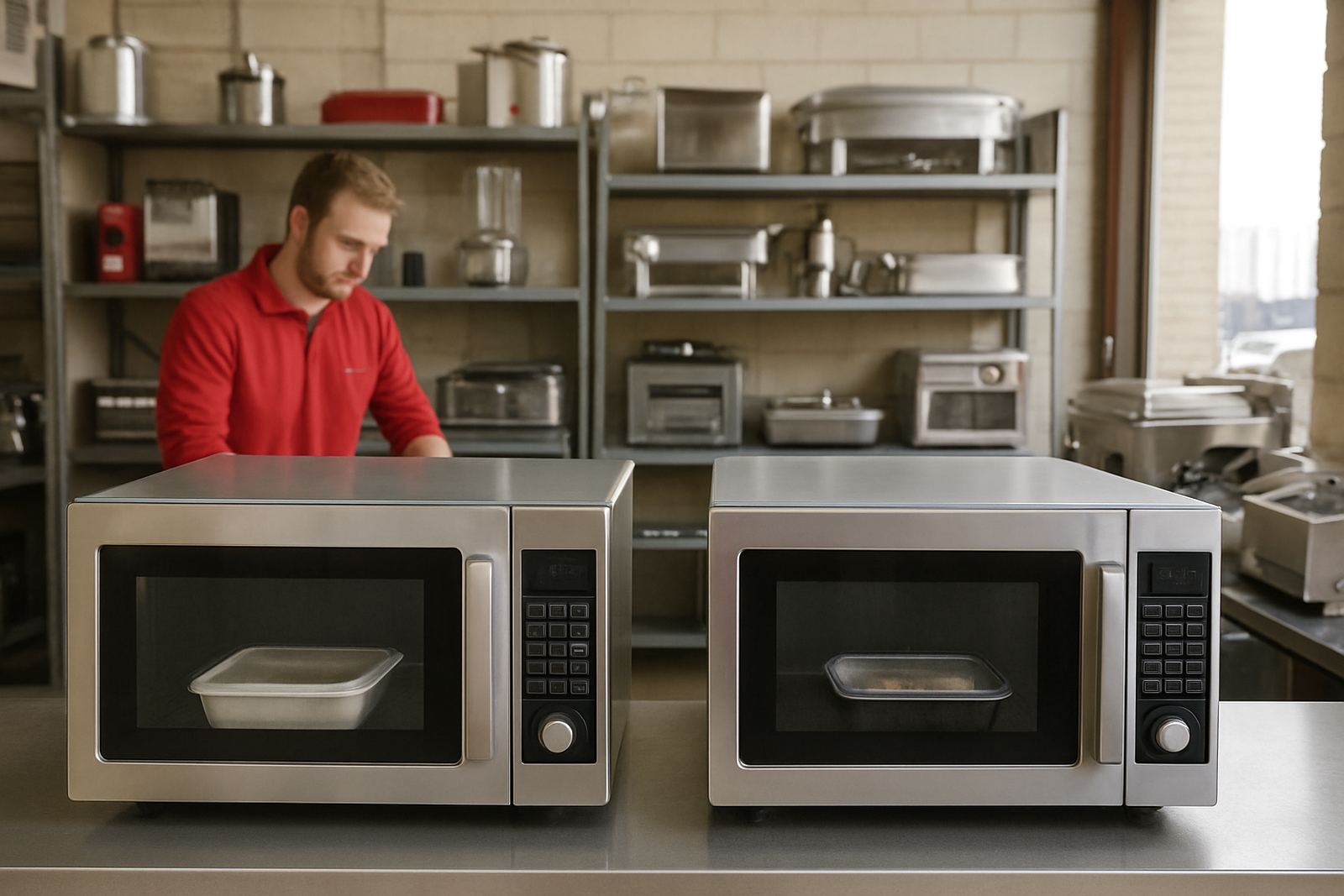
Cavity size affects what you can fit inside, and wattage affects how quickly it heats. A larger cavity is useful for wider plates, trays, and bulk reheating, but it also needs enough power to heat food evenly. If the cavity is too small, staff force plates in sideways and spill food. If it is too big for the task, you waste space on the counter and sometimes energy too.
For many kitchens, the right choice sits between compact and medium size, but the exact answer depends on the plate size you use. Measure your biggest plate or takeaway container first. Then check the internal cavity dimensions and the door opening. If your team uses deep bowls or pans, make sure they can go in and out without touching the sides. A microwave that is easy to load is faster in practice, not just on paper.
- Check the plate width you use most often
- Measure the cavity height for deep containers
- Confirm the door opening for quick loading
- Match wattage to your serving speed
Match the Microwave to Your Kitchen Workflow
The best microwave is the one that fits the way your staff work. In a small kitchen, a countertop unit near the prep area may be enough. In a larger operation, you might need two units so one person can heat while another plates food. That reduces bottlenecks during the lunch rush. For businesses in Kempton Park or Boksburg with higher daily volume, a planned layout matters more than squeezing in the cheapest option.
Also consider who will use the machine. If several staff members share it, simple controls are better than complicated settings. If you need repeat portions, look for programmable functions. If cleaning is a concern, a smooth cavity and easy wipe down surfaces save time. The wrong control panel causes slow service and more mistakes, which is why we always ask how the kitchen actually works before quoting.
- Place the microwave close to the prep or serving point
- Avoid tight corners where steam builds up
- Keep it away from water splashes and heavy heat sources
- Use clear labels for staff if more than one setting is needed
Check the Build for Local Conditions
In Gauteng kitchens, conditions are not always gentle. Dust, fluctuating power, and hot rooms affect how long equipment lasts. If the microwave will be used near the coast later on, corrosion becomes a bigger concern, but even inland kitchens need to think about ventilation and regular cleaning. A stronger outer casing, solid hinges, and an easy to service control area all help.
Ask whether the unit can be supported with preventive servicing. That includes checking door seals, internal cleanliness, fan performance, and electrical condition. If a microwave is hard to service, it often gets neglected until it fails. We also recommend checking your electrical point before installation, because a weak socket or overworked circuit can shorten the life of the unit. It sounds small, but these details matter.
- Inspect door seals and hinges regularly
- Keep vents clear from grease and dust
- Use a dedicated socket where possible
- Schedule servicing before busy seasons
Ask for a Quote With the Right Details
When you ask for a quote, give as much practical detail as you can. The more accurate the information, the better the recommendation. Include the type of kitchen, the expected daily use, the plate sizes, and whether you need delivery, positioning, or installation. If you are replacing an old unit, send the model details and explain what went wrong. That helps us advise whether repair, refurbishment, or replacement is the better route.
Afchain Catering Equipment has been working from Silverton, Pretoria since 2011, supplying catering equipment across Pretoria Central, Centurion, Midrand, Kempton Park, Boksburg and Randburg. We handle quotes, site assessments, delivery and positioning, installation, preventive servicing, breakdown repairs, workshop refurbishment, used equipment sourcing, handover training, and kitchen reconfiguration. For a microwave, we look at duty cycle, cavity size, workflow and power supply so the unit suits the job, not just the budget.
- Send your kitchen type and daily volume
- List the size of plates or containers used
- Say whether you need new, used, or refurbished equipment
- Ask for servicing support after installation