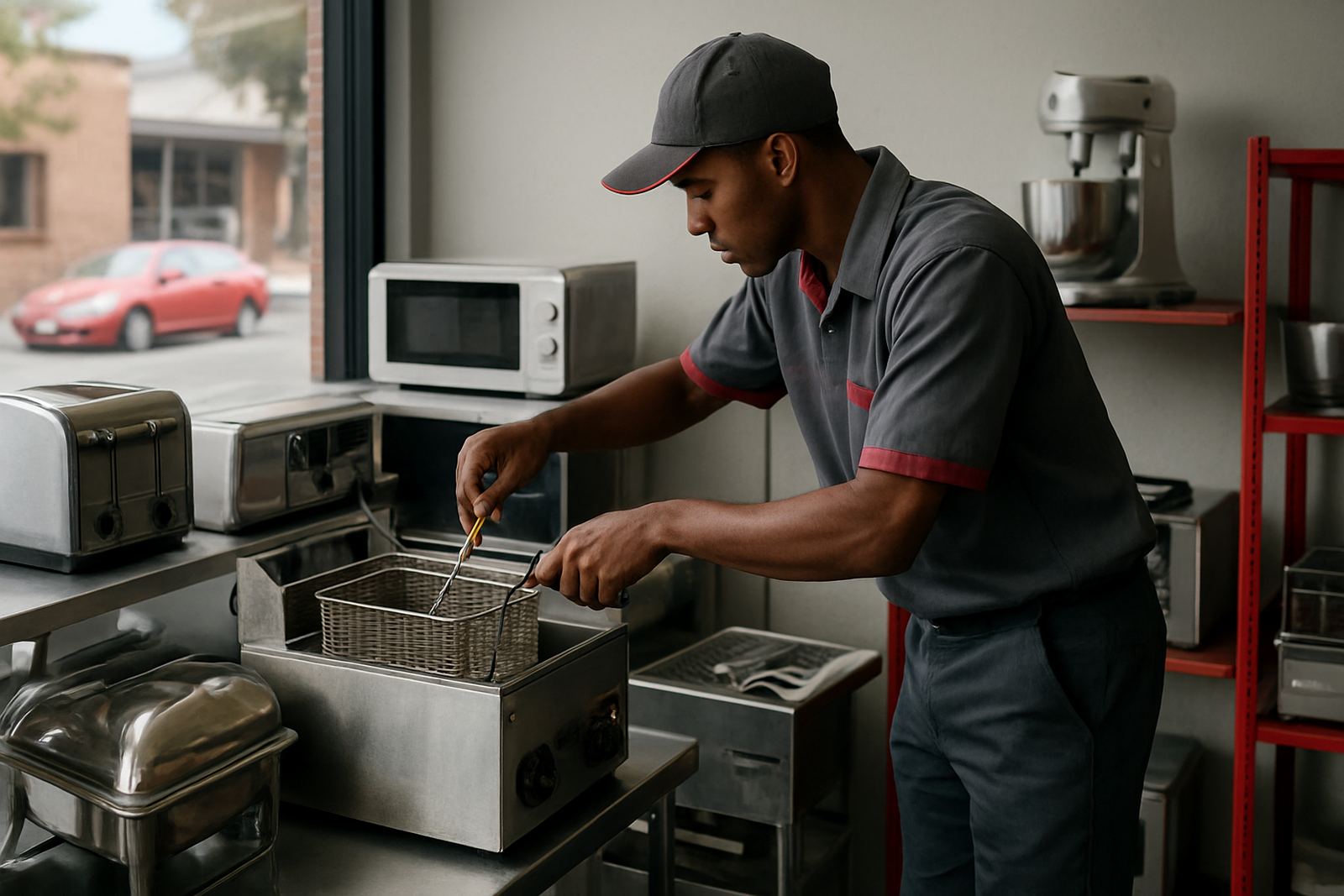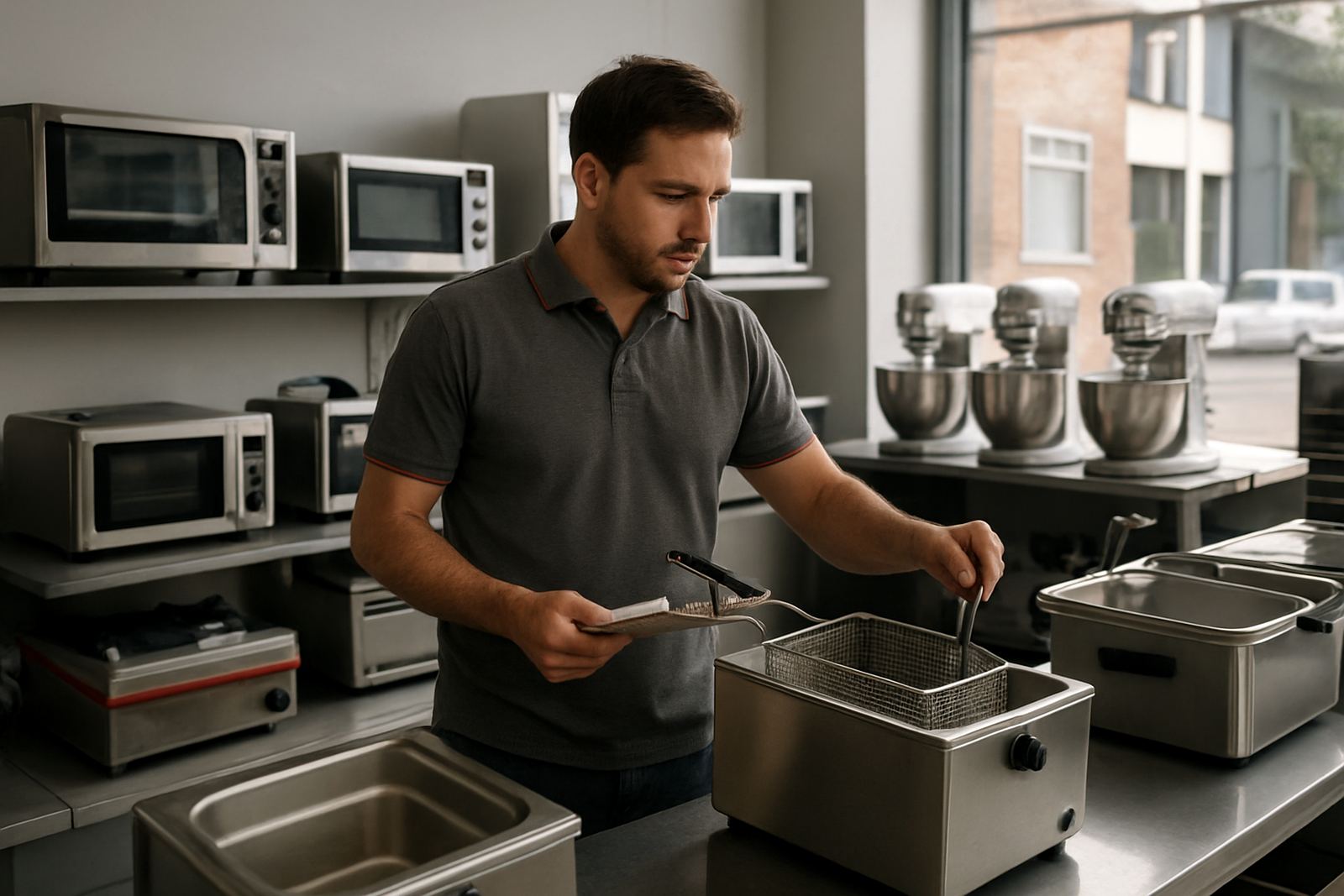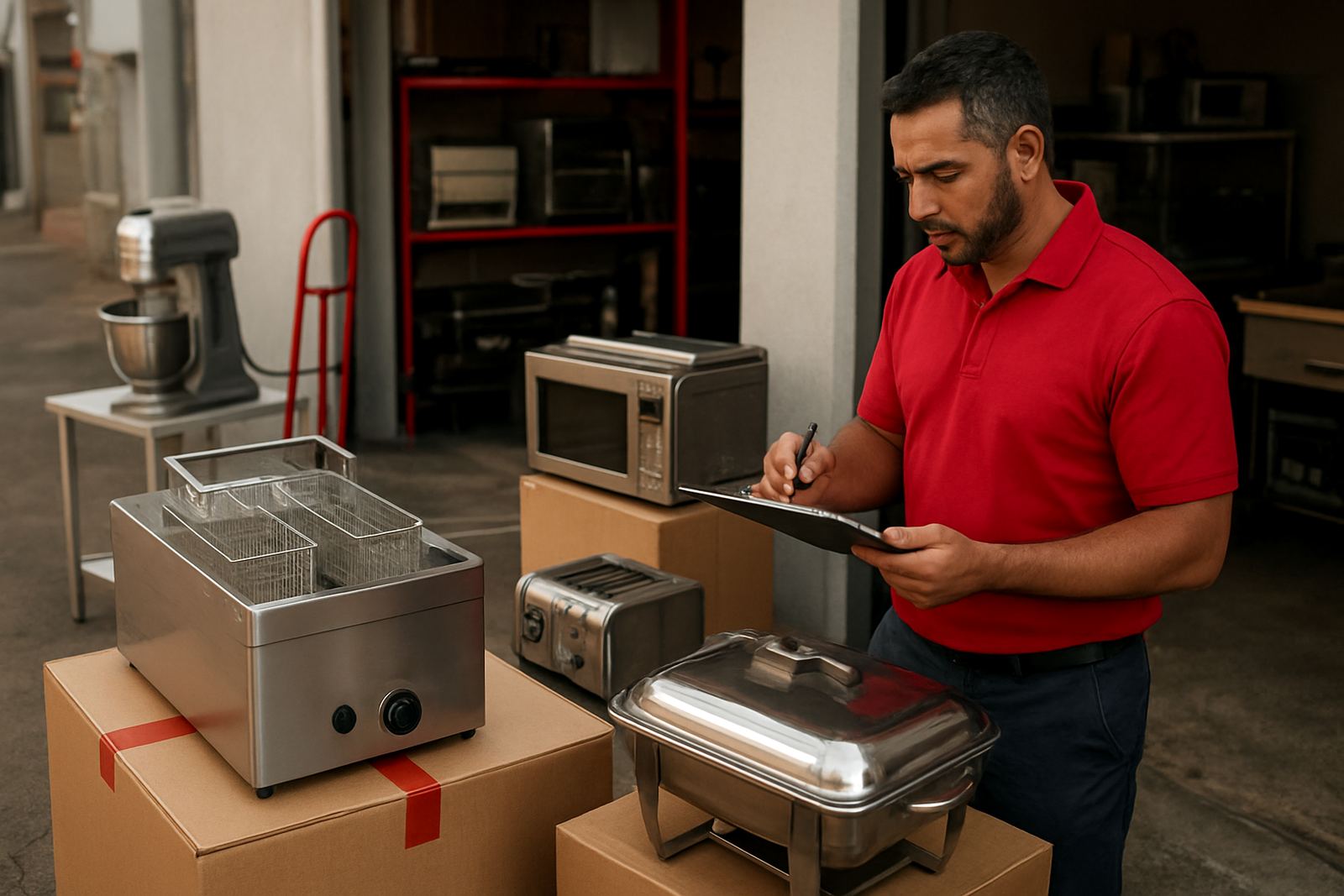
1. Confirm the delivery window and site contact
Before the truck leaves Silverton, make sure the delivery time is confirmed and someone on site knows the order details. For larger fryers, mixers, microwaves, chafing dishes or used equipment, there should be one person who can receive the goods and sign off the delivery note. If your kitchen is in Pretoria Central, Centurion, Midrand, Kempton Park, Boksburg or Randburg, allow for traffic, basement access and security checks at the gate.
- Keep the site contact phone on at all times.
- Share the exact delivery address, including unit number or loading bay.
- Make sure the person signing knows what was ordered and what must be checked.
If the site has loading restrictions, tell us early. A quick note about height limits, access cards or time windows can prevent delays.
2. Clear the route from gate to kitchen
Equipment often gets damaged when the path into the kitchen is too tight, wet or full of obstacles. Measure doors, passageways and lifts before delivery, especially where units must move through a storeroom, back corridor or service lift. If the route includes stairs or a narrow turning point, say so upfront so the team can bring the right help and handling gear.
- Remove boxes, crates, loose stock and cleaning trolleys from the route.
- Check that doors open fully and are not blocked by racks or bins.
- Protect polished floors, tiles and counters from scratches and water.
In some older Pretoria buildings the lift is too small for certain items, so a little planning is better than trying to force a fit on delivery day. That can save a lot of stress, and a broken corner too.
3. Make sure power, water and drainage are ready
Many catering appliances cannot simply be plugged into any point. Fryers, toasters, microwaves and mixers may need specific power points, correct breakers or a dedicated circuit. If the unit uses water, drainage or extraction, these must be ready before the equipment is placed in position. Load shedding also matters, because some kitchens need backup power planning before handover.
- Check that the right sockets are installed and tested.
- Confirm water supply, isolation valves and drainage points are in place.
- Make sure gas, if applicable, is connected only by a qualified person.
Where equipment is going near the coast or into a humid kitchen, leave enough space for airflow and servicing. Moisture can shorten the life of electrical parts if the installation is squeezed into a corner with no ventilation.
4. Prepare the receiving area and unpacking space
Once the delivery reaches the site, there needs to be a clear area where the items can be checked, unpacked and moved safely. This is especially important for used equipment or items that must be positioned straight into a working kitchen. A clean receiving space also helps if the delivery includes crates, protective wrap or accessories that must be counted before the driver leaves.
Set aside enough room for the goods to stand flat while you inspect them. If possible, keep the area close to the final installation point, but away from cooking heat, grease and foot traffic. That way the team can unpack without blocking staff or customers.
- Have a dry area ready for cartons, packaging and pallets.
- Keep a cloth, knife and basic tools nearby for unpacking.
- Check for visible damage before moving the equipment again.
5. Check the order against the delivery note
When the equipment arrives, compare each item with the delivery note and your quote. Check model names, quantities, accessories and any special fittings. If there is a fryer basket missing or an item was ordered with trays, racks or lids, note it immediately. Small issues are easiest to sort out while the driver is still on site.
Do a quick visual inspection for dents, cracked glass, loose hinges or missing knobs. For used equipment, this step matters even more because condition should be checked carefully before the unit is accepted. It helps to take photos at once if there is any concern.
- Tick off every item as it comes off the truck.
- Record any damage or shortages on the paperwork.
- Keep the signed copy for your records and warranty file.
6. Plan positioning, training and first use
Some equipment is ready to go straight after delivery, while other items need positioning, testing or handover training first. Make sure the kitchen team knows where each unit will stand and who is responsible for daily cleaning, switching off and basic checks. If the site layout is changing, it is better to finalise the positions before the truck departs so the equipment is not shifted twice.
Our team can assist with delivery and positioning, installation, servicing and handover training where needed. That is useful for kitchens in busy parts of Gauteng where time is tight and staff changes happen quickly. A clear handover keeps the equipment working properly from day one.
- Assign one staff member to learn basic operation and cleaning.
- Keep the user manuals or instructions in one place.
- Note the service contact details for future breakdowns or servicing.
7. Before the truck arrives in Gauteng, do a final walk-through
The last check is simple: walk the full route from the gate to the final position and look for anything that could slow the delivery. Check lighting, security access, wet floors, parked vehicles and temporary barriers. If your site is in a busy area like Centurion or Midrand, make sure the entry point is not shared with peak foot traffic or morning deliveries.
If anything has changed since the order was confirmed, tell us before the truck leaves. A small update can prevent a long wait, especially when equipment is heavy or the site is in a multi-storey building. Better to sort that out early than try to improvise on the pavement.
For questions, quotes or delivery planning, email quotes@afchain.co.za. We work with catering businesses across Pretoria and Gauteng, from new kitchens to workshop refurbishments and used equipment sourcing.