Start every shift with a quick safety check
Before the first order comes in, walk through each unit and look for loose plugs, damaged cords, missing parts, unusual smells, or signs of grease build-up. In Pretoria and across Gauteng, many kitchens run long hours so these checks matter, especially after power cuts or cleaning the previous night.
For gas and electric equipment, make sure the area around the unit is clear and dry. A fryer standing in a wet spot or a toaster packed too close to a wall can cause avoidable damage. If a machine sounds different, heats unevenly or trips the supply, stop using it and report it straight away.
- Check plug tops, switches and indicator lights before start-up.
- Confirm trays, baskets, lids and removable parts are in place.
- Keep wall sockets and extension leads off the floor where possible.
- Do not use equipment that smells burnt or overheats quickly.
Daily cleaning keeps food-safe equipment in better condition
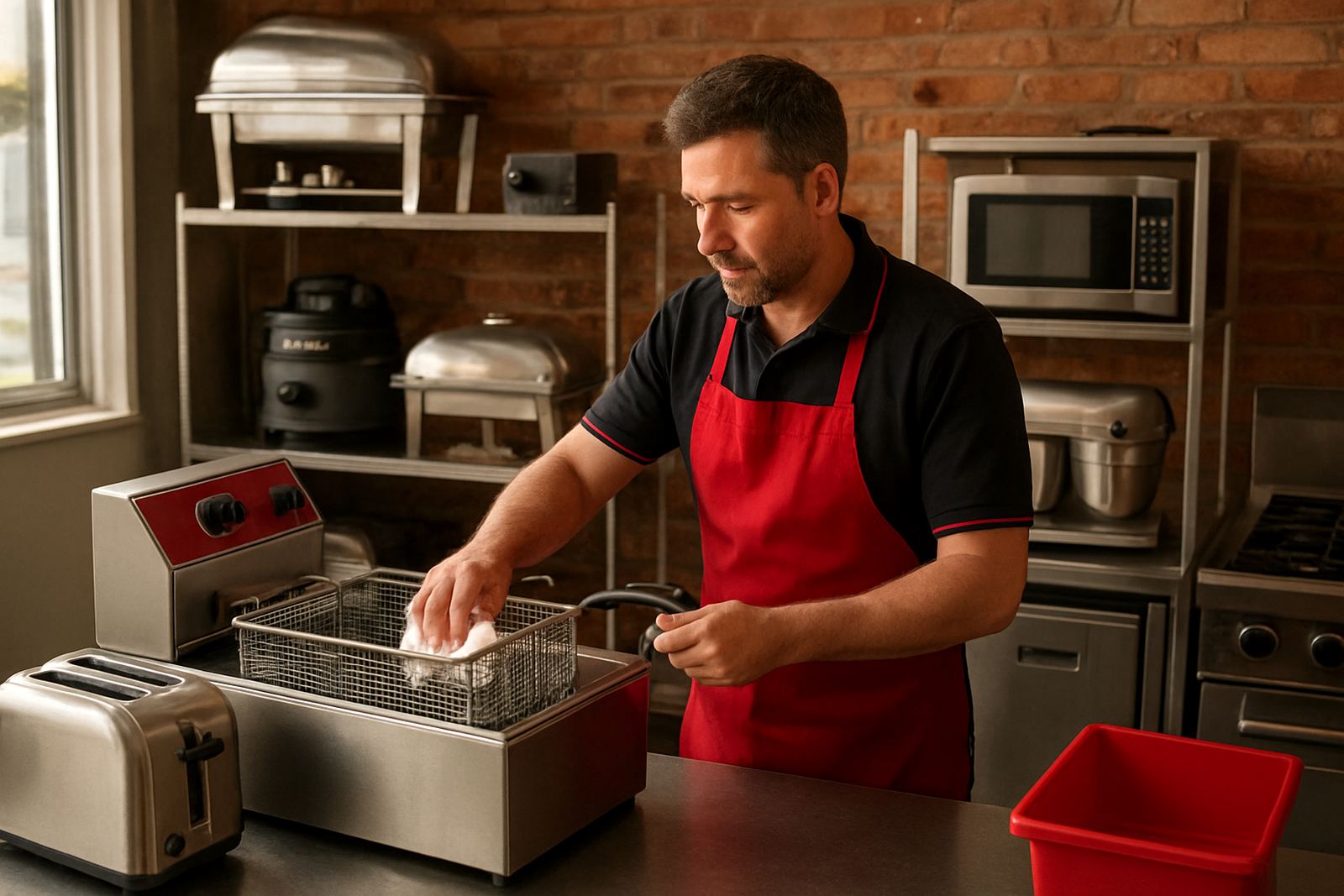
Most kitchen damage starts with grease, flour, sugar and steam left behind after trading. Wipe down outer surfaces daily with a damp cloth and a mild cleaner. Avoid soaking control panels or spraying liquid directly into vents, switches, or motor housings.
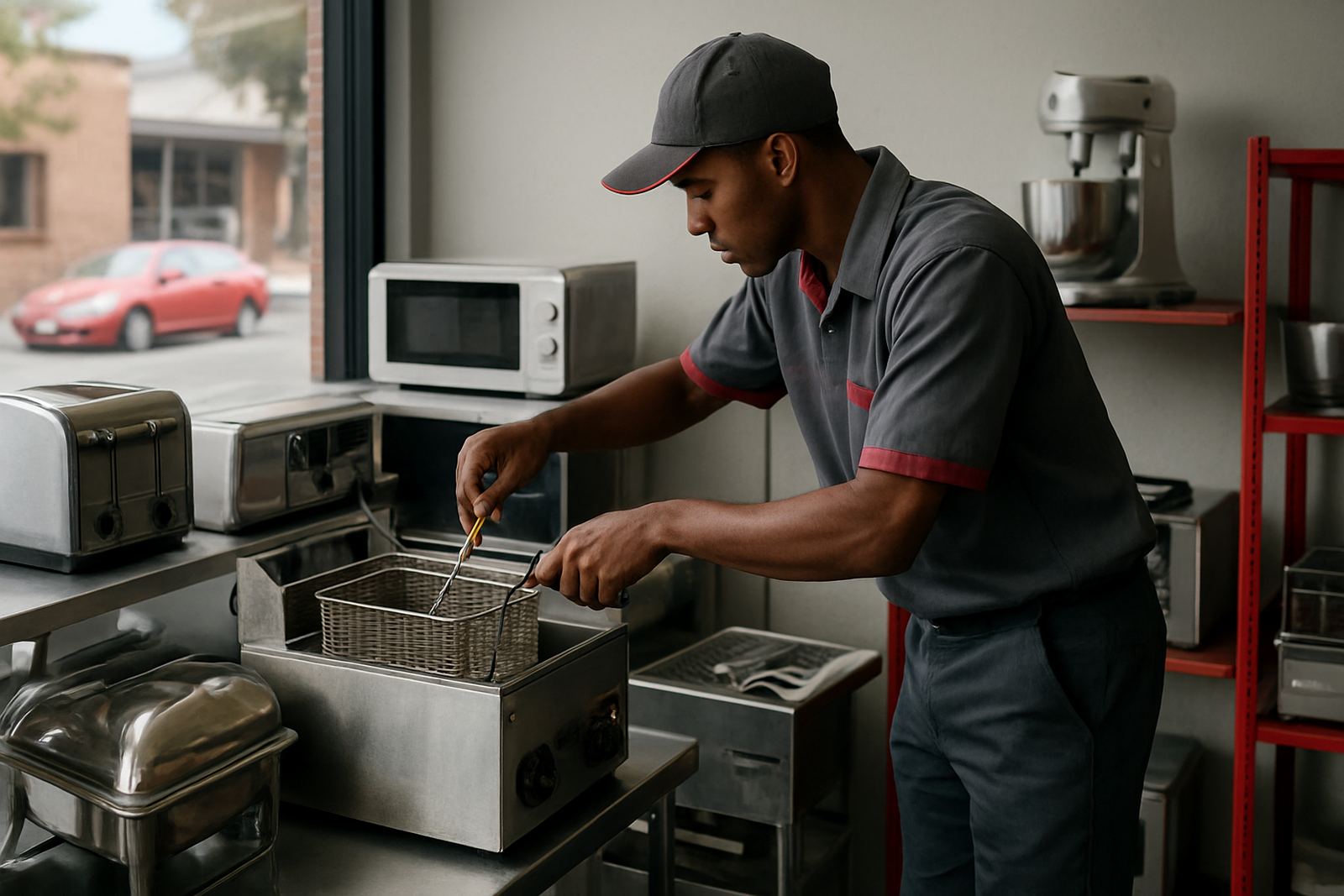
For fryers, drain oil only when it has cooled properly and filter it if your kitchen reuses oil. Scrape food bits from the tank and clean baskets, lids and surrounding splash areas. For toasters and microwaves, remove crumbs and spills before they bake on. Chafing dishes should be washed, dried and stored with the fuel holders or heating parts kept clean and dry.
- Use soft cloths or non-abrasive pads on stainless steel.
- Dry all surfaces fully after washing to reduce spotting and rust.
- Empty crumb trays, drip trays and waste containers every day.
- Never hose down electrical equipment.
What to do with fryers, toasters, mixers and microwaves
Different machines need different care. Fryers need regular oil management and basket checks. Toasters need crumb removal and even heating tests. Mixers need bowl, beater and guard cleaning after every use, plus a check that the attachment fittings are not loose. Microwaves need a clean cavity, intact door seals and a working turntable if fitted.
If you use used equipment in your kitchen, inspect it a bit more often. Older machines can work well, but they need firmer routine care, especially where seals, bearings and switches are concerned. In coastal humidity or in warm back rooms, rust and corrosion can creep in quicker than expected.
- Test heat-up times so you spot a weak element or failing thermostat early.
- Listen for grinding, scraping or rattling on moving parts.
- Keep lids, guards and doors closing properly.
- Replace worn parts before they damage the main unit.
Power cuts, voltage dips and load-shedding precautions
Load-shedding and unstable supply can shorten the life of many kitchen units. When power goes off, switch equipment off at the socket where practical, then isolate sensitive machines before supply returns. This helps reduce surge damage when power comes back on. If your kitchen uses a generator or inverter, make sure the load is matched correctly and the cabling is safe.
After power is restored, do a short test run before going back to full service. Check that mixers start smoothly, microwaves heat normally, and fryer thermostats recover properly. If a unit keeps tripping or struggles to restart, it may need servicing rather than another reset.
Do not keep pressing a reset button on a machine that is clearly failing. That can turn a small fault into a bigger repair.
When a unit needs servicing rather than more cleaning
Cleaning will not fix worn parts, bad wiring or tired heating elements. If your fryer takes too long to heat, your toaster browns unevenly, or your mixer labours under normal load, the machine may need servicing. The same applies when a microwave has a faulty door latch, sparking inside the cavity, or a burnt smell that does not go away after cleaning.
Our workshop and service team in Silverton, Pretoria can inspect the unit, assess the fault and advise whether it is worth repairing or replacing. This is often the best route for kitchens in Pretoria Central, Centurion, Midrand, Kempton Park, Boksburg and Randburg that cannot afford long downtime.
- Book servicing when output drops, not after total failure.
- Keep a simple fault log with dates and symptoms.
- Ask for a quote before approving major repairs.
- Use handover training for new staff after repairs or reconfiguration.
Storage, movement and end-of-shift care
At the end of the day, switch equipment off, unplug where needed, and let hot units cool before cleaning or moving them. Never drag a heavy appliance across a tiled floor, as that can damage legs, wiring and flooring. Use two people for larger units and keep the path clear of mats, pots and loose packaging.
Store removable parts neatly so they do not go missing between shifts. If the kitchen is being refitted or reconfigured, ask for proper positioning first. A machine placed too close to a hot surface or too far from power and water points becomes harder to manage and quicker to wear out.
Good care is not complicated, it just needs routine. A few minutes at the start and end of each shift can save a lot of time later.