What a meat slicer does in a working kitchen
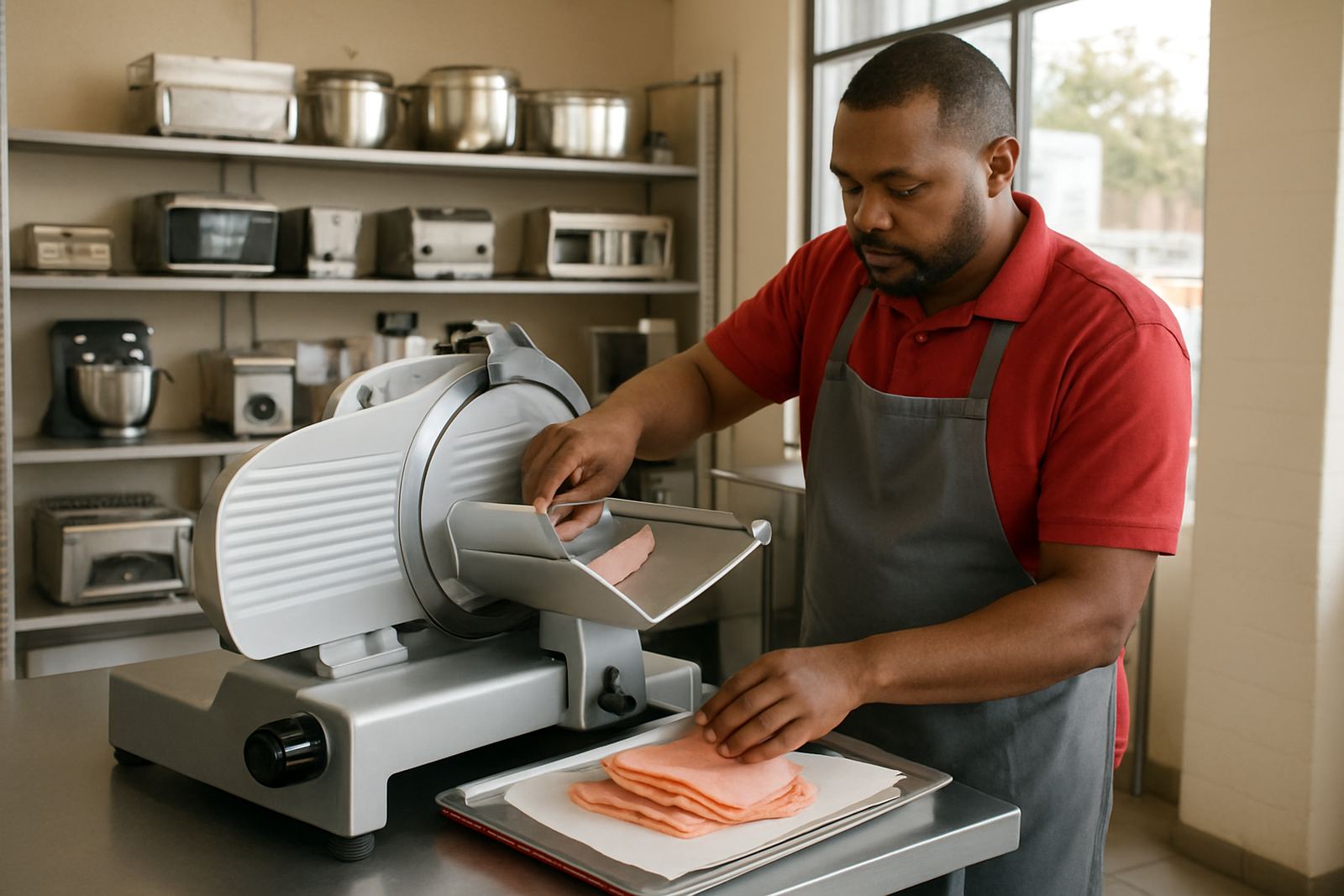
A meat slicer gives you steady slice thickness for cold meats, biltong, cooked meats, ham, bacon, cheese and similar prep items. In a deli, café, butcher counter or small restaurant, it helps staff move faster and keeps portions consistent, which matters when product costs are tight.
For operators around Pretoria, Centurion, Midrand and Boksburg, a slicer is often added where hand cutting is slowing down service or where the kitchen wants better control over stock. It is also useful in catering setups that portion meat for platters, rolls and canapés. The machine is a bench unit, so it fits onto a stainless steel prep table or counter with enough working space around the blade guard and carriage.
- Even slices for deli service and plating
- Less product waste compared with hand cutting
- Useful for front counter, prep room or catering kitchen use
- Helps with controlled portions and quicker service
Sizes and model choices to match your output
Meat slicers are usually chosen by blade size, motor size and how much product you need to cut per day. Smaller models suit light to medium use, while larger units are better for high turnover counters and butcher prep. A common slice machine has a blade around 220 mm to 350 mm, with a carriage big enough for standard deli logs and cheese blocks.
If you cut only a few trays a day, a compact model keeps the footprint smaller and is easier to move for cleaning. If you run a busy kitchen or retail counter, a heavier body and stronger motor will cope better with continuous use. For coastal areas and humid stores, a stainless or coated finish is worth considering because it holds up better to moisture, provided cleaning is done properly.
- Blade sizes commonly range from 220 mm to 350 mm
- Manual carriage feed for controlled slicing
- Thickness adjustment for paper-thin to thicker portions
- Tabletop footprint suitable for prep counters
We can quote on new equipment or source used units where the budget must stretch further. Used equipment should always be checked for blade wear, carriage play and motor noise before purchase, otherwise you may end up paying for repairs straight away.
Where a slicer fits best in Pretoria and Gauteng operations
This machine suits deli counters, school and hospital kitchens, butcheries, guesthouses, bottle stores with food prep, takeaway shops and catering stores. In Pretoria Central or Randburg, it may sit close to the serving area for quick customer orders. In a production kitchen in Silverton, Midrand or Kempton Park, it may be used in the prep zone with other bench equipment.
A slicer is useful where you need consistent portions for sandwiches, meat platters, breakfast service or bulk prep for events. It can also help reduce the strain on staff if there is frequent slicing through the day. For operations with limited floor space, a bench model is often easier to fit in than larger floor standing gear.
- Deli counters and retail food shops
- Hotel, lodge and guesthouse kitchens
- Catering prep rooms and production kitchens
- Butcheries and foodservice counters
Power, placement and installation checks before ordering
Most bench meat slicers run on standard single phase electricity, so they are easier to install than heated cooking equipment. Still, the plug point should be close, properly earthed and positioned so cables do not cross wet cleaning areas. If the kitchen has frequent load-shedding, you should confirm whether the machine will be used on backup power or only when mains supply is available.
Placement matters. The unit must sit level on a solid surface, with enough space for the carriage movement and safe loading of product. Do not push it too close to a wall or other equipment, because staff need room for cleaning and safe operation. If the slicer is going into a new prep line or kitchen reconfiguration, we can assist with site assessments and positioning so the workflow makes sense.
- Single phase power is common on bench slicers
- Needs a level, stable stainless or food-safe work surface
- Allow space for carriage travel and cleaning access
- Keep clear of sinks, splash zones and traffic paths
Cleaning, blade care and servicing that keeps it working
Clean the slicer after every shift or whenever product changes from meat to cheese. Food residue should not be left on the blade, carriage or guard, especially in warm kitchens where buildup happens quickly. In busy sites, a quick wipe is not enough. The machine needs proper wash down and drying, otherwise corrosion and sticky movement can start to show.
Plan regular servicing for blade sharpness, bearings, drive components and safety checks. A dull blade puts more strain on the motor and gives rough cuts, which is not ideal for presentation or portion control. If the slicer is used near the coast or in a humid store room, moisture control is important too. Keep it dry overnight and store it in a clean area, not under dripping pipes or open windows.
- Clean after each use or at the end of each shift
- Check blade sharpness and carriage movement regularly
- Inspect guards, knobs and safety switches
- Book preventive servicing before faults interrupt trade
What to check when you ask for a quote
When ordering, tell us what products you slice, how many portions you do per day and whether the machine will be used in a deli, kitchen or butchery. That helps us suggest the right size and type, rather than sending a machine that is too small or too heavy for the job. If you want a new unit, used equipment, or a repair on an existing slicer, we can quote accordingly.
Please also mention the space available, the power point location, and whether delivery needs to go to Pretoria Central, Centurion, Midrand, Kempton Park, Boksburg or Randburg. If the machine will need installation, staff handover training, or positioning on site, include that in the request. The more detail we get, the easier it is to price the job properly and avoid back-and-forth later.
- Daily output and product types
- Available counter size and power supply
- New or used equipment preference
- Delivery, installation and training needs
Key facts
| Product type | Bench meat slicer for deli meats, cheese and portion control |
|---|---|
| Typical blade size | 220 mm to 350 mm depending on model |
| Power supply | Single phase electricity on most bench units |
| Construction | Metal body with guarded blade and sliding carriage |
| Use case | Deli counters, kitchens, butcheries and catering prep |
| Service options | Quotes, installation, repairs, servicing and sourcing |