What a vegetable prep machine does in a working kitchen
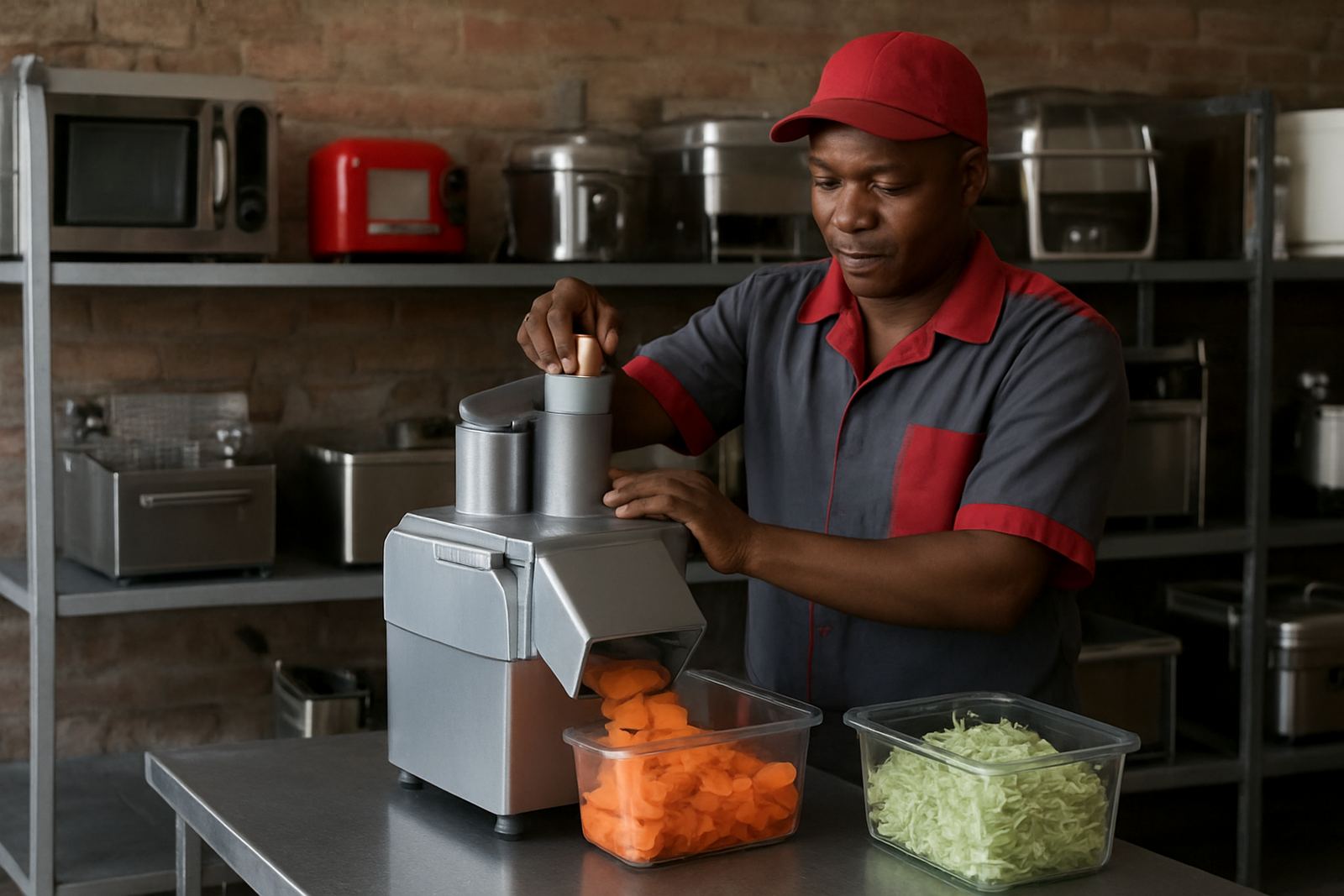
A vegetable prep machine is a countertop food prep unit used to process onions, carrots, cabbage, beetroot, cucumbers and similar produce into even slices, shreds or grated finishes. In a service kitchen, that means less hand cutting, less strain on staff and better control over portion size. For restaurants and contract caterers in Pretoria, Centurion and Midrand, it also helps keep prep moving when orders build up before lunch or supper.
Most units use interchangeable discs or cutters so one machine can handle more than one task. A staff member can switch from slicing tomatoes for salads to grating cheese or shredding slaw vegetables without changing the whole workstation. That flexibility is useful when cold rooms are busy and the prep team has to work around load-shedding, generator changeovers or early deliveries.
The machine is normally fitted on a stable counter near the wash-up area or main prep table. It should sit where staff can feed produce safely and where cut ingredients can be moved straight into pans, GN trays or cold storage. In smaller kitchens, especially in converted houses or tight retail spaces, the right position saves time every shift.
Sizes and cutter options for different menu volumes
Vegetable prep machines come in compact and medium-duty sizes. A smaller unit suits cafés, school kitchens and sandwich bars that prepare 10 to 30 kg of vegetables a day. A larger machine is better for banquet kitchens, hospital kitchens and takeaway outlets that process higher volumes. If the kitchen runs a lunch rush and supper prep from the same station, it is worth matching the motor size to the heaviest daily load, not only the quiet periods.
Cutting options vary by machine, but the common setup includes slicing discs, grating discs, shredding discs and julienne-style cutters. Some kitchens also need a dicing arrangement for uniform cubes. The best choice depends on the menu. For example, a shawarma kitchen may want fine slicers and shred options, while a school kitchen may need thick slicing and grating more than anything else.
- Compact body for counters with limited space
- Standard feed chute for regular produce
- Wide feed chute for larger carrots, cabbage and beetroot
- Interchangeable discs for slicing, grating and shredding
- Left or right hand feed layouts on selected units
If you are replacing an older unit, check whether the new machine fits your current table height and staff workflow. A machine that is too tall or too heavy can slow down a prep line. In some kitchens, two smaller units work better than one oversized machine, especially where space is tight and the team works from more than one side.
Where this machine suits best in Pretoria and Gauteng
This type of prep cutter suits restaurants, school kitchens, hospitals, hotels, bakeries with savoury menus, butcheries that prep salad items and caterers who handle event work. It is also a practical choice for feeding schemes, military mess kitchens and canteens where the same vegetables are prepared every week. In Gauteng, the unit is often used by operators who need to scale up without adding too many extra hands.
In Pretoria Central and Silverton, the machine is often chosen for older kitchens where counter space is limited and the supply has to be reliable. In Centurion and Midrand, it is a good fit for corporate kitchens and catering stores that do batch prep early in the day. Kempton Park, Boksburg and Randburg customers often ask for machines that can keep up with delivery schedules and regular functions, where chopped produce must be ready before the truck leaves.
Because many kitchens in Gauteng deal with summer heat and occasional high humidity, the machine should be kept in a dry indoor area away from direct washing spray. Stainless contact parts are easier to maintain where the kitchen runs hard and cleaning happens several times a day. For coastal transfers or stock sent from the East Rand to other provinces, proper packing matters too, as vibration during transport can affect alignment.
Power, setup and installation notes before you order
Most vegetable prep machines run on electricity and should be connected to a suitable socket with the correct voltage and protection. Before ordering, confirm whether the unit is single phase or three phase, and whether the kitchen has enough spare capacity on the board. If the site already struggles during load-shedding, it is wise to check generator or inverter compatibility as part of the quote process.
The machine needs a level surface and enough clearance for feeding and discharge. If the unit will sit near a slicer line, cold room door or dishwash area, allow space for staff movement so the workstation does not become crowded. Good installation also includes checking cable routing, plug position and safe access for cleaning.
- Single phase or three phase power supply depending on model
- Stable counter or stand with level support
- Nearby power point with proper protection
- Space for staff to feed, collect and clean safely
- Dry position away from hose-down areas
Afchain can help with site assessments, delivery and positioning, then make sure the unit is handed over with the team understanding how to use it. If a kitchen is being reconfigured, the machine can be included in the equipment layout so the prep line, cold storage and wash-up area work together better.
Care, servicing and keeping cut quality consistent
Routine care starts with daily cleaning of the bowl, feed parts and cutters. Food residue left on discs can affect slice quality and increase wear. Staff should switch off and isolate the machine before handling cutters, then wash and dry the parts fully before refitting. In kitchens with heavy use, a short cleaning routine after each service period is better than one long clean at the end of the day.
Blades and discs must be checked for dull edges, wobble and damage. A worn cutter can bruise vegetables instead of giving a clean cut, which affects plating and shelf life. If the machine starts sounding different, vibrating or slowing under load, it should be inspected quickly before the fault spreads to bearings or drive parts. That saves time and avoids a full breakdown during service.
Preventive servicing is useful for operators who depend on this machine every day. It can include inspection, adjustment, cleaning support and replacement of worn parts where needed. Workshops also help with refurbishing older equipment and sourcing used units when a kitchen needs a cost-conscious option. A cared-for machine lasts longer and keeps its output more steady, even in a busy Gauteng kitchen.
What to check before asking for a quotation
When asking for a quote, it helps to give clear details so the machine matched to your kitchen is the right one from the start. Tell us what vegetables you process most, whether you need slicing only or several cuts, and how many kilograms you expect to do in a day. The more exact the menu and volume, the easier it is to recommend the correct model and cutters.
You should also check the counter size, available power, and whether the machine needs to fit through a narrow door, lift or service passage. If the kitchen is in an older building in Pretoria Central or a shopping site in Boksburg, access can affect delivery and positioning. For used equipment, ask about the condition of discs, switches, motor noise and any recent servicing done.
- Daily volume in kg or trays
- Vegetables and cuts needed, such as slices, shreds or grates
- Power supply available on site
- Counter space and access width
- New or used unit preference
- Need for installation, training or servicing
For a quotation or stock check, contact quotes@afchain.co.za. Afchain Catering Equipment works from Silverton, Pretoria and supports customers across Pretoria Central, Centurion, Midrand, Kempton Park, Boksburg and Randburg. If your kitchen needs more than supply, we can also assist with servicing, workshop repairs and handover training so the team can start using the machine properly from day one.
Key facts
| Machine type | Vegetable prep cutter for slicing, grating and shredding |
|---|---|
| Typical use | Fresh vegetable processing for restaurants, caterers, schools and canteens |
| Power | Electric, single phase or three phase depending on model |
| Output style | Interchangeable cutter discs and feed chute operation |
| Construction | Food contact parts designed for regular wash-down and daily use |
| Service support | Quotes, installation, preventive servicing and breakdown repairs |