What a hot holding cabinet does in a busy kitchen
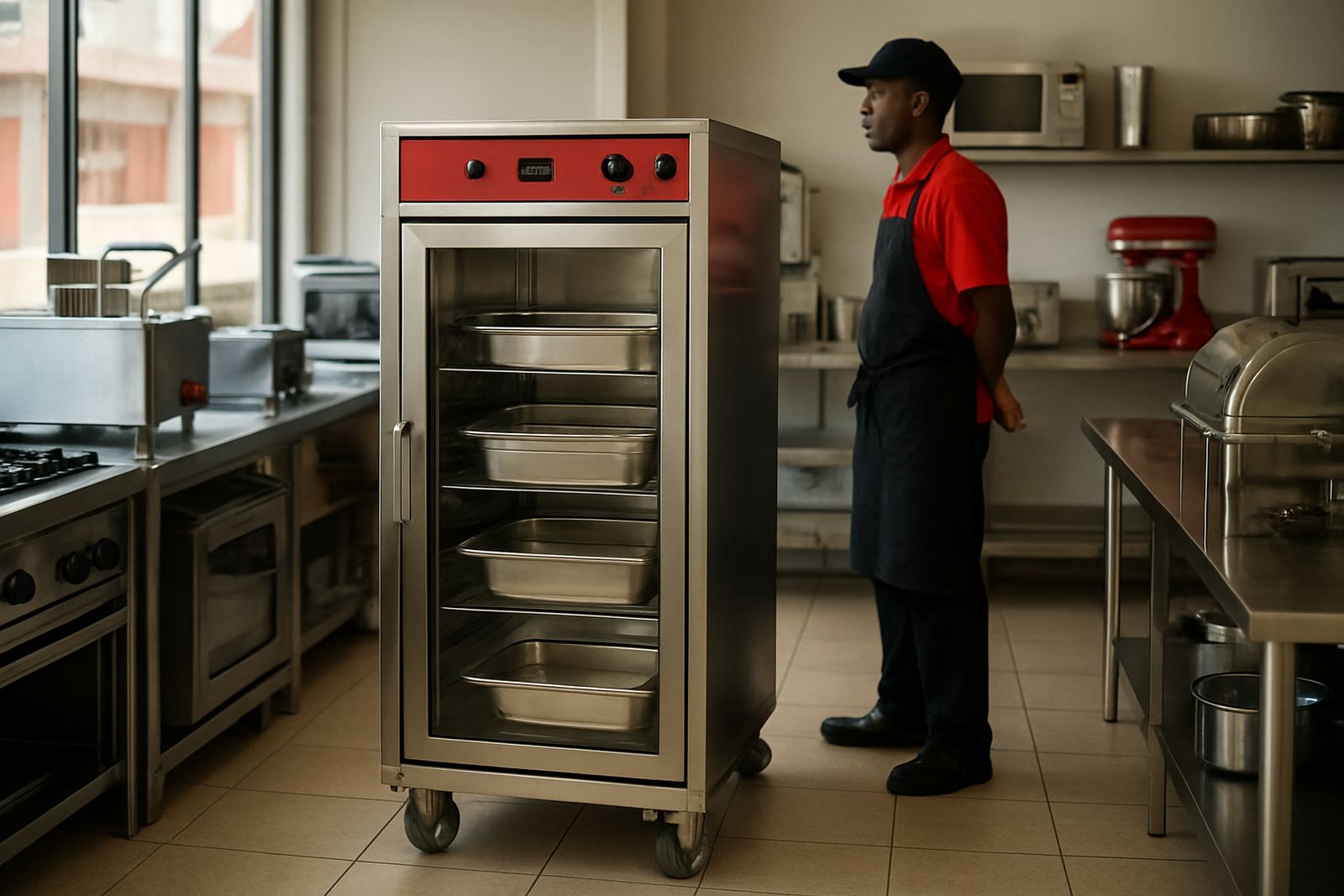
A hot holding cabinet is built to keep prepared food warm after cooking and before service. It is not a cooking unit as such, but a controlled holding space where trays, pans or plated meals stay at a safe temperature until needed. That makes it useful for lunch rushes, functions, school kitchens, takeaways and contract catering where timing matters.
Most units are enclosed, with insulated walls and a close fitting door to help hold heat inside. Depending on the model, heat may come from electric elements, dry heat circulation or humidity control. Some kitchens prefer a simple dry cabinet for chips, bakes and pastries, while others need a cabinet that keeps rice, meat dishes and saucy meals from drying out. The right choice depends on what you serve and how long the food must stand.
In Pretoria and Gauteng, these cabinets are often used in prep kitchens where power cuts can interrupt service planning. A unit that reaches temperature quickly and holds it steadily can make a real difference when the load shedding schedule changes or deliveries run late.
Sizes and options to match your tray load
Hot holding cabinets come in different widths and depths so you can match the unit to your kitchen layout. Common sizes are made to take standard gastronorm pans, full trays or combinations of both. Smaller units suit cafés and small catering operations, while larger cabinets are better for hotels, schools, mine kitchens and busy central production kitchens.
- Single door or double door cabinet options
- Fixed shelf, tray slide or mobile trolley styles
- Dry heat or moisture assisted holding
- Stainless steel finish for easier cleaning
- Castors for mobile use, or legs for fixed positioning
If your team needs to load and unload often, a cabinet with smooth tray runners and a clear internal layout helps keep service moving. Taller units are useful when you need storage for several pans at once, while narrower models fit tighter kitchens in central Pretoria or around Randburg where space is limited. The best size is the one that holds enough food without crowding the kitchen flow.
Where the cabinet suits best in Gauteng kitchens
These cabinets are suited to places where food is cooked in advance and served in stages. That includes school feeding schemes, hotel banqueting, company canteens, mobile catering, franchise kitchens and event caterers. They are also useful in butchery kitchens, bakeries and institutions where prepared meals must be kept ready for collection.
For kitchens in Midrand, Kempton Park and Boksburg, positioning matters. The cabinet should sit close to plating or dispatch, but not block hand washing points, prep counters or fire exits. In many municipal inspections, the inspector will want clear access around hot equipment and no unsafe cable runs across the floor. In a tight back-of-house area, one well placed hot cabinet can replace a messy row of covered trays on counters.
Where humidity is high, such as some commercial kitchens near the East Rand, a cabinet that manages moisture properly can help keep texture better. For dry foods, too much moisture can soften crisp items. For saucy dishes, a little humidity helps prevent skinning and waste.
Installation, power and site checks before you order
Before ordering, check the power supply and the space where the cabinet will stand. Most electric hot holding cabinets need a suitable single or three phase supply depending on size, and the circuit should be set up by a qualified person. If the unit is mobile, allow for safe cable routing and enough clearance so staff do not trip over leads during service.
For gas assisted or gas heated options, the kitchen must have the correct gas line, regulators and ventilation. Gas installations should follow local safety requirements and be handled by someone competent for the job. If the cabinet is going into a refurbished kitchen, it helps to confirm door swing, access routes and floor strength before delivery, especially if the unit must pass through narrow passages or lift areas.
- Check the electrical rating and plug type
- Confirm tray size and internal shelf spacing
- Measure doorways, ramps and service lifts
- Plan ventilation and heat escape around the unit
- Allow space for cleaning behind and under the cabinet
Our team can do site assessments, delivery and positioning, then install the unit so it fits the work area properly. That avoids the common problem of a cabinet arriving on site only to find the plug point is on the wrong side or the operator cannot open the door fully. A short check upfront saves time and money later.
Care, servicing and what keeps holding temperature steady
A hot holding cabinet needs regular cleaning and a basic maintenance routine to keep working well. The interior should be wiped down daily after cooling, with attention to door seals, runners and drip areas. Food spills left in corners can affect smell and performance, and in a busy kitchen they become a hygiene issue fast.
Servicing should include checking thermostats, heating elements, fans where fitted, switches and door seals. If the cabinet is not holding temperature evenly, food can over-dry on one shelf and stay too cool on another. That is often a sign of blocked airflow, a worn seal or a control fault. In coastal or damp conditions, corrosion around hinges and fasteners can also become a problem if the unit is left wet after cleaning.
We offer preventive servicing, breakdown repairs and workshop refurbishment for used units. If the cabinet is older, it can often be brought back into reliable use with new controls, replacement parts and a proper clean up. For kitchens that run every day, planned servicing is usually better than waiting for a failure during service.
What to check when requesting a quote
When you ask for a quote, give clear detail about your menu, tray size and daily volume. That helps us match the cabinet to your work instead of quoting a unit that is too small or bigger than needed. It also helps if you can share whether you need a new unit or a used cabinet that has been tested and serviced.
- Number of trays or pans to be held at one time
- Food type, for example dry items, saucy dishes or mixed menus
- Electrical or gas supply available on site
- Space available in metres, including door clearance
- Whether the cabinet must be mobile or fixed
- Any need for installation, training or positioning
Afchain Catering Equipment has been supplying kitchens since 2011 from Silverton, Pretoria, and we work across Pretoria Central, Centurion, Midrand, Kempton Park, Boksburg and Randburg. We handle quotes, sourcing and installation support, plus used equipment when a lower-cost option is needed. If you are fitting out a new kitchen or replacing older holding gear, send the details to quotes@afchain.co.za and we can work from there.
Key facts
| Product type | Enclosed hot holding cabinet for prepared food |
|---|---|
| Typical use | Tray holding before service in catering and institutional kitchens |
| Common sizes | Single door, double door, compact and full height models |
| Material | Stainless steel or coated metal finish, model dependent |
| Power options | Electric, and gas assisted options where specified |
| Service support | Delivery, installation, servicing, repairs and refurbishment |