What a Used Bain Marie Does on a Service Line
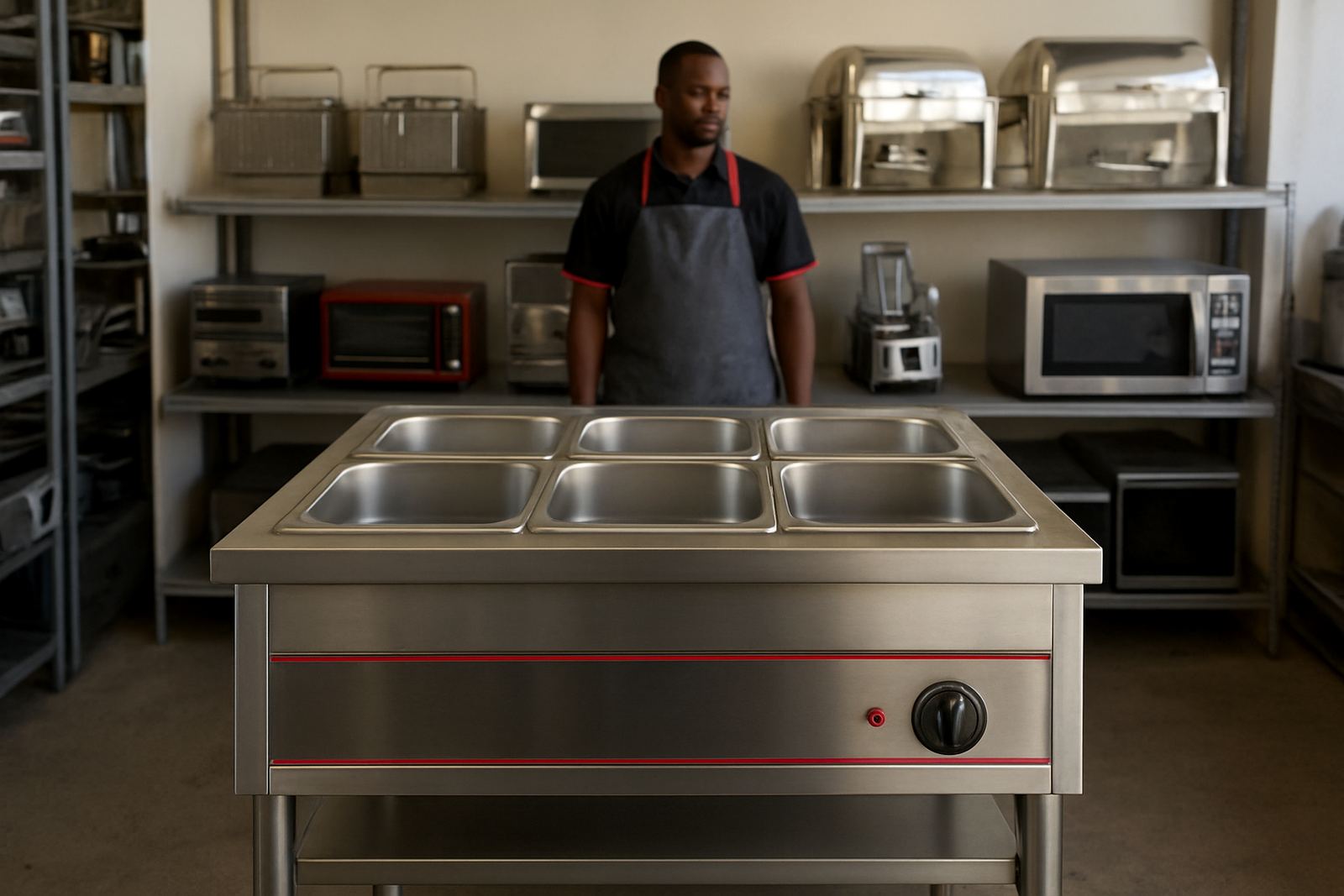
A bain marie is a hot holding unit that keeps food at serving temperature in pans set over heated water or on dry heat, depending on the model. It is commonly used for rice, vegetables, sauces, curries, pap, stews and breakfast items that must stay warm for service without drying out too quickly.
For a busy counter, canteen or buffet, second-hand equipment can be a sensible buy when it has been checked properly and still holds heat evenly. The main job is not to cook food from cold, but to keep cooked food in safe serving condition through lunch rushes, school breaks, church events or staff meal times.
- Suited to self-service counters and serving islands
- Useful for hot holding in school, staff and contractor canteens
- Works well where food is plated in batches through the day
- Can be matched with gas or electric kitchen setups
Sizes, Pan Layouts and Heating Options
Used bain maries come in different lengths and pan layouts, from compact single-bowl units to longer multi-pan counters. Common lengths are around 600 mm, 900 mm, 1 200 mm and 1 500 mm, with larger built-in units made to suit the counter space available. Depth and pan count matter as much as length, especially if you want enough room for lids and easy serving access.
Some units are dry heat and others use a water bath. Water bath units are generally gentler on food and help reduce scorching, while dry heat models are simpler to manage if you need quicker heat-up times. In practice, the best choice depends on what you serve, how often the line is opened, and whether the unit will run for a few hours or a full day.
- Single to six-pan layouts are common in second-hand stock
- Stainless steel tops are easier to clean and handle moisture better
- Glass sneeze screens may be fitted on some counter models
- Some units are mobile with castors, others are fixed in place
Where a Used Bain Marie Fits Best
These units suit places that need dependable hot holding without a lot of fuss. In Pretoria, Centurion, Midrand, Kempton Park, Boksburg and Randburg, we often see them used in takeaway counters, contract catering kitchens, clubhouses, tuck shops and training centres. They also work in guesthouse breakfast areas and community feeding programmes where menu items stay fairly simple.
If the kitchen faces load-shedding, a gas bain marie can be helpful because it is less dependent on the municipal power supply. Electric models are still common, but you should plan for the correct plug, circuit capacity and backup power arrangement if the unit must stay on during interruptions. In humid or coastal conditions, a well-kept stainless steel body is easier to maintain and rust less quickly, but you still need regular drying and cleaning.
- Buffet counters and hot food islands
- Canteens in offices, schools and factories
- Church halls, function venues and sports clubs
- Takeaway shops and small restaurants
Installation, Power and Gas Checks Before Buying
Before ordering, check where the unit will stand, how staff will reach it and whether the kitchen floor is level. A built-in bain marie may need a cut-out and proper support under the counter, while a mobile unit needs enough clearance for cleaning and safe movement. If the unit is to sit near a wall or serving window, allow space for lids, pans and the operator’s hands.
Electric models usually need a suitable supply point and must be matched to the correct voltage and amperage. Gas units need safe cylinder placement, proper ventilation and leak checks. If you are fitting the unit into a site with municipal or landlord rules, it is worth confirming extraction, fire safety and access for cleaning before delivery. A quick site assessment saves problems later, especially where the kitchen layout is already tight.
- Confirm whether the unit is electric or gas, and if it matches your supply
- Check overall size against counter space and serving height
- Ask if pans, lids and drains are included
- Make sure the floor, plug points and gas route are suitable
How to Check a Second-hand Unit Before You Commit
Used equipment should be inspected carefully, not just switched on for a minute. Look for even heating across the wells, clean wiring, sound controls and a body that has not been bent or badly patched. Rust around the base, burnt elements, loose switches or missing pan supports can turn a cheap unit into an expensive repair.
Ask for the working condition, age if known, and whether the unit has been serviced recently. Test the thermostat, check the drainage arrangement and make sure the heating method matches your food style. If the unit has been standing for a while, it may need fresh seals, cleaned connections or a workshop service before first use. We also recommend checking the lids and pan fit, because poor-fitting pans lose heat quickly and can cause extra steam or condensation.
- Heating evenness across all compartments
- Condition of elements, burners, wiring and controls
- Presence of pans, lids, taps or drains where fitted
- Signs of corrosion, leaks or previous repairs
Servicing and Care That Keeps It Trading
A bain marie lasts longer when it is cleaned after every shift and dried properly before storage. Water bath models should be drained, wiped out and left open so moisture does not sit inside overnight. On electric units, staff should avoid pouring water directly onto switches or control boxes, and on gas units the burners and jets need periodic attention so they do not clog.
We handle preventive servicing, breakdown repairs and workshop refurbishment for kitchens across Pretoria and Gauteng. If a unit is slow to heat, trips the supply or has damaged fittings, it is usually better to deal with it early before service slows down. For venues that run every day, a simple service plan can keep the hot line dependable and reduce unplanned downtime.
- Daily cleaning after use, with full drying before storage
- Regular thermostat and element checks on electric units
- Burner, jet and regulator checks on gas units
- Prompt repair of switches, taps, seals and supports
Key facts
| Product | Used bain marie hot holding unit |
|---|---|
| Typical sizes | 600 mm, 900 mm, 1 200 mm and 1 500 mm lengths |
| Heating options | Electric or gas, subject to stock |
| Common use | Buffets, canteens, counters and service lines |
| Construction | Stainless steel body, pan wells and removable gastronorm pans where fitted |
| Service support | Quotes, delivery, positioning, servicing and repairs |