What a plate warmer does in daily service
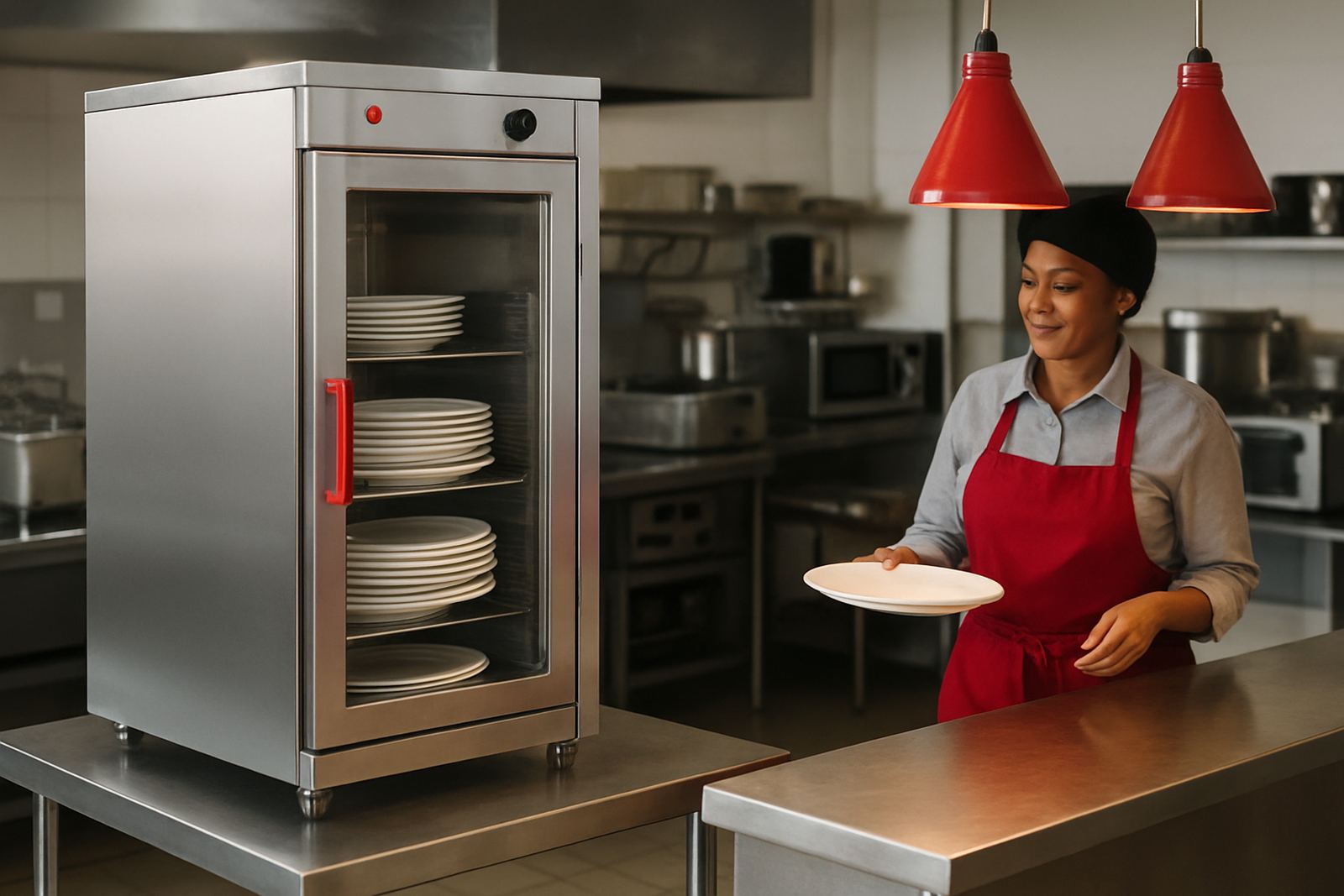
A plate warmer is a heated storage cabinet made for plates, bowls and other service crockery. It holds the crockery at a steady temperature so food stays hotter for longer once plated. In a busy kitchen this helps when meals are plated ahead of time, when service is spread over a few minutes, or when trays must move from prep to pass to dining area without losing heat.
Most units are insulated cabinets with one or more heated compartments, adjustable shelves, and a thermostat to control the chamber temperature. Some models are built as undercounter units, others are tall upright cabinets, and some come as mobile trolleys for use close to the pass. The right choice depends on how many plates you turn over per meal, how much floor space you have, and whether the unit must move between kitchen and serving point.
In Pretoria and Gauteng, plate warmers are common in operations where the kitchen works around load shedding, service peaks, and limited prep time. A good warmer should hold heat evenly without drying the plates too much or wasting electricity.
Sizes and layout options for different kitchens
Plate warmers come in different capacities, from compact units for small cafés to larger cabinets for hotel banqueting and institutional kitchens. The size is usually set by the number of plates it can hold, or by the internal shelf spacing. For many buyers, the useful question is not just how many plates fit, but what plate diameter the unit can take and how fast staff can load and unload it.
Common options include single-door cabinets, double-door cabinets, pass-through models and heated trolleys. A single-door unit suits a smaller service area or a satellite kitchen. A double-door model is better where plates are moved from one side to another, or where the warmer must feed two service points. Mobile trolleys are handy for banquets, hospitals and function venues because they can be parked near the serving line and rolled back for reloading.
- Compact undercounter units for smaller kitchens with limited floor space
- Mid-size upright cabinets for restaurants, clubs and school kitchens
- Larger trolley-style warmers for banqueting, canteens and event service
- Options for standard dinner plates, side plates and shallow bowls
When checking size, measure the plate diameter, the stack height, and the space available for door swing and loading. Also allow for staff movement, because a cabinet that fits on paper can still be awkward in a narrow galley. A unit that is 100 mm too deep can cause trouble every day.
Where plate warmers work best
Plate warmers are useful anywhere food is plated in batches or served across a long pass. Restaurants use them to keep dinner service moving. Hotels use them for breakfast buffets, plated banquets and conference meals. Schools, retirement kitchens, hospitals and contract caterers use them where meal timing must stay predictable and the plates need to be warm before food is portioned.
They also suit operations that work with delivery or holding times, especially where plates are chilled by air conditioning or stored in a cold room. In coastal areas around Gauteng's colder winter mornings, or in air conditioned dining rooms in Midrand and Sandton, warm plates make a real difference to how the meal reaches the guest. If the plate is cold, the first thing to cool is often the gravy or sauce.
For high-turnover service, a plate warmer can sit close to the pass, next to the hot cupboards or under the serving counter. For functions, it can be placed near the plating station so staff are not walking long distances with hot food. That saves time and reduces breakages too.
Power, installation and site checks before you buy
Most electric plate warmers need a standard mains supply, but the exact load depends on the size and heating method. Before ordering, check the available power point, the cable route, and whether the kitchen already has enough capacity on the distribution board. In older buildings around Pretoria Central, Randburg and Boksburg, this can matter more than the unit size itself.
If the kitchen is affected by load shedding, ask how the warmer behaves when power drops. Some units recover quickly when power returns, while others need time to get back to temperature. For kitchens that must keep service moving, it is worth planning a backup schedule so the plates are heated in batches before the outage starts.
Installation should allow proper ventilation around the cabinet, especially for units fitted tight against a wall or under counters. If the warmer is on castors, make sure the floor is level and the unit can be locked in position. If it is fixed in place, check clearances for cleaning and for staff to reach the rear and side panels. It sounds simple, but poor positioning can cause heat loss and extra wear on the controls.
- Confirm voltage and amperage before ordering
- Check plug point position and cable length
- Allow space for door opening, cleaning and airflow
- Plan placement near the pass or plating line to reduce walking
Care, cleaning and servicing to keep temperatures steady
A plate warmer needs regular cleaning and basic checks to stay reliable. Wipe the inside with a damp cloth and mild cleaner once it has cooled. Do not hose the cabinet or let water run into switches, thermostats or fan housings. If the unit has removable shelves or trays, take them out for cleaning and dry them before refitting.
The thermostat, door seals, hinges and heating elements should be checked during routine servicing. If the cabinet takes too long to heat up, or the temperature swings up and down, there may be a faulty element, worn seal or control issue. Units used in busy kitchens should be inspected before the winter rush and again before year-end trading, when service volumes usually rise.
Where the kitchen is near the coast or in a humid area, wipe down exposed metal parts more often to reduce surface corrosion. Stainless steel holds up well, but even stainless needs care, and loose grime can stain a unit over time. Keep the vents clear, because blocked airflow can make the cabinet work harder than it should.
What to confirm when requesting a quote
When asking for a plate warmer quote, send the basic details up front so the right unit can be matched to your kitchen. The plate size, daily meal count, available space and power supply all affect the recommendation. If you are replacing an old warmer, a photo of the existing unit and its data plate helps a lot.
It also helps to mention whether you need delivery and positioning, installation, or integration with other kitchen equipment. In some sites, the warmer must fit beside a bain marie, hot cupboard or pass counter, so the footprint and service clearances must be checked carefully. For refurbished kitchens or used equipment sourcing, ask about condition, servicing history and whether the unit has been tested before handover.
- Plate diameter and the number of plates needed per service cycle
- Required voltage, plug type and breaker size
- Cabinet width, depth and height available on site
- Whether you need mobile, fixed or pass-through layout
- Any need for repair support, preventive servicing or training for staff
Afchain Catering Equipment supplies quotes, servicing and practical installation support from Silverton, Pretoria, with work across Pretoria Central, Centurion, Midrand, Kempton Park, Boksburg and Randburg. If you need a plate warmer for a new kitchen or an old one that must be repaired, the safest start is to send the site details and the meal volume so the unit can be matched properly.
Key facts
| Product type | Heated plate warmer for service-ready crockery |
|---|---|
| Typical capacity | Single, double or large cabinet layouts for commercial plate holding |
| Temperature control | Adjustable thermostat for stable holding temperature |
| Construction | Insulated cabinet with metal body and adjustable shelving |
| Power | Electric mains supply, final rating depends on model size |
| Use cases | Restaurants, hotels, schools, canteens, banquets and contract caterers |