Why a commercial microwave suits busy service
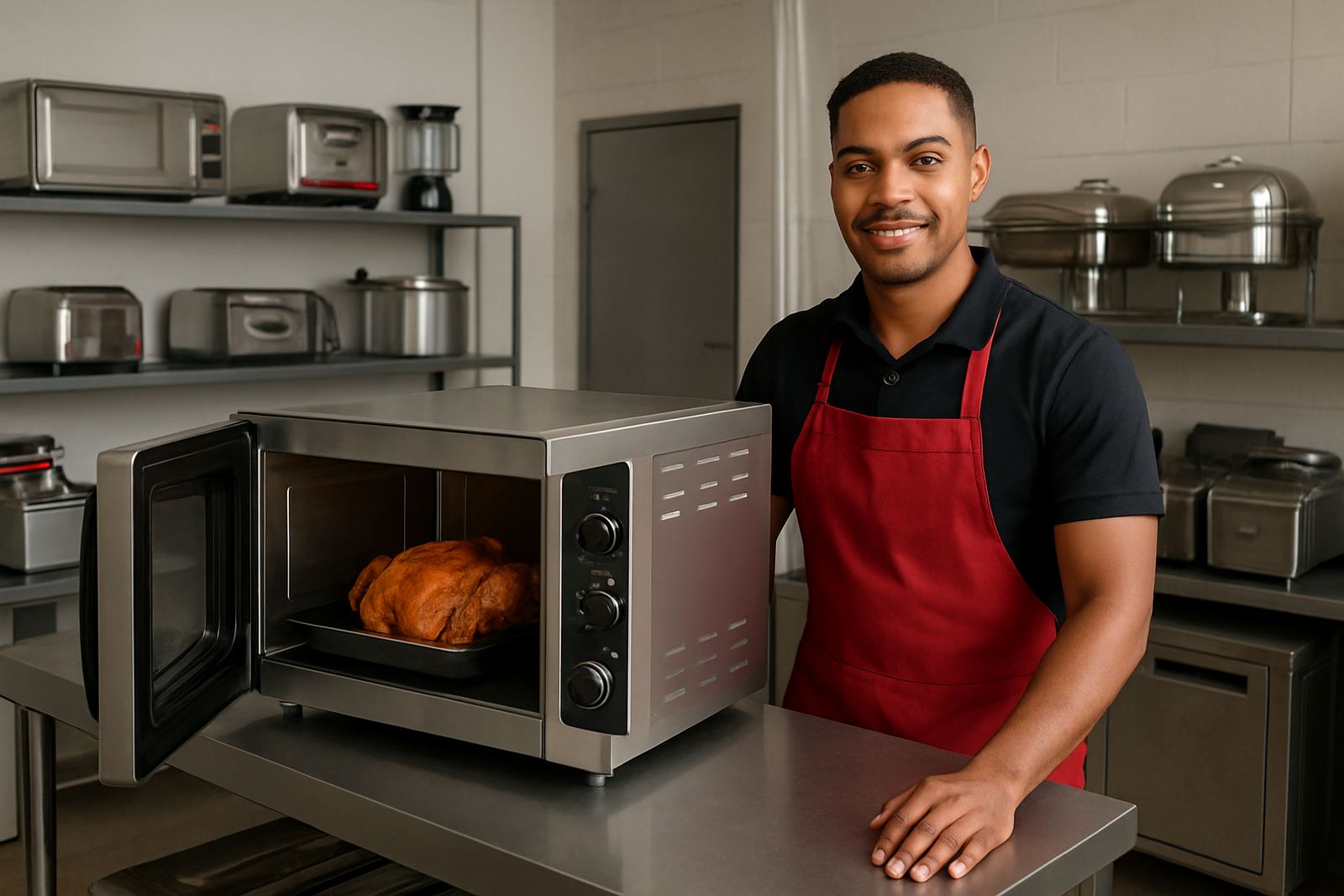
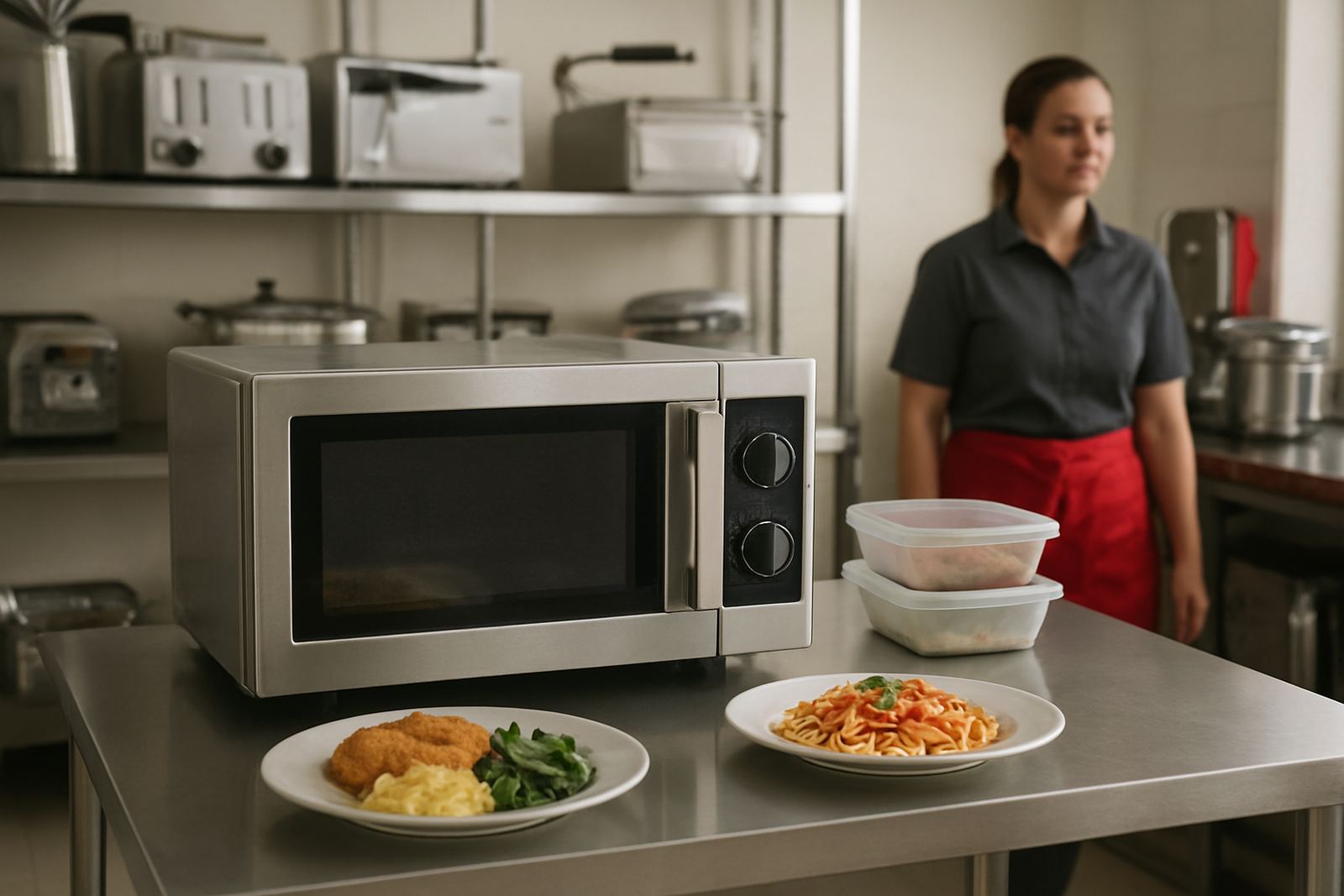
When tickets are moving and a fryer or oven is already under pressure, a commercial microwave gives you fast heat without holding up the line. It is used for reheating plated meals, finishing sauces, softening butter, warming pre-cooked portions and getting takeaway orders out faster. In a small café in Centurion, a staff can work off a single unit. In a school, lodge or canteen, you might need two units side by side for peak times.
These machines are made for repeated opening and closing through the day. The cavity, door latch and controls are usually heavier than a domestic microwave, and that matters when the unit is used 50 times before lunch is finished. If you are running a counter in Pretoria Central or a prep kitchen in Midrand, you need something that can keep going after load-shedding ends and power returns, without tripping over minor voltage swings.
Sizes, capacity and common options
Commercial microwaves are usually sold by power rating and cavity size. Smaller counter units are suited to coffee shops, office kitchens and convenience counters. Larger units suit takeaway kitchens, forecourt food counters and restaurants that need quick reheating of several dishes per hour. Most units fit on a stainless work table or under a shelf, but the door swing and ventilation space must still be planned properly.
Typical options include simple manual controls with a timer, or programmable controls with preset cook stages. Some kitchens prefer easy turn-knob operation for training new staff quickly, while others want digital memory keys for the same meal portions every day. If your team includes casual staff or part-time hands, straightforward controls are often better. If you serve the same menu repeatedly, programme keys save time and reduce mistakes.
- Compact single-unit counters for light to medium use
- Medium cavity units for plated meals and takeaway trays
- Higher wattage models for faster reheating during rush periods
- Manual timer or programmable control panels
- Stainless steel or easy-clean interior finishes
Where this equipment works best
This equipment suits kitchens that need quick turnover more than long cook times. It is commonly used in takeaway shops, forecourts, delis, cafés, pubs, canteens, hotel pantries and staff lunch rooms. In Gauteng, it is especially useful where lunch rushes are short and intense. A microwaves unit near the pass can save minutes on every order, and those minutes add up quickly.
It also helps where menu items are pre-prepared off-site or in earlier shifts. For example, you may portion soups, rice dishes, vegetables or sauced proteins in advance, then finish them to serving temperature just before sale. That makes stock control easier and reduces waste. If your kitchen handles pack meals, hospital trays or conference food, a commercial microwave can be part of the standard handover process for the team.
- Takeaway and fast casual service
- School and office canteens
- Hotel pantry and room service stations
- Staff eating areas and contract catering kitchens
- Back-of-house prep for reheating and finishing
Power supply, positioning and installation checks
Most commercial microwaves run on standard electrical supply, but the exact load must be checked before installation. Depending on wattage, some units can be plugged into a normal socket while others need a dedicated point on a suitable circuit. In older buildings around Pretoria Central or Randburg, it is worth checking the board capacity and socket condition first. A loose plug top or tired wall point can cause nuisance faults when the unit is used repeatedly.
Good positioning matters too. Leave space around the sides and back for cooling air, and do not push the unit tight against a wall or into a sealed cubby. Keep it level on a solid counter so the door seals properly. If the microwave sits near a steamer, fryer or dishwasher, steam and grease should be controlled, because heat and moisture shorten the life of switches and seals. There is no gas connection needed, but the electrical supply needs to be stable and safely protected.
For new counters or kitchen changes, Afchain can assist with site checks, delivery and positioning, and installation in Pretoria, Centurion, Midrand, Kempton Park and nearby areas.
Care, cleaning and servicing that keeps it useful
Daily cleaning is the best way to keep a microwave working properly. Wipe the cavity after service, clear splashes from the door seal, and check that the turntable or shelf is seated correctly where fitted. Food build-up around the latch area can affect closing pressure and eventually lead to weak heating or door issues. In humid coastal conditions a unit can deteriorate faster, but even in Gauteng grease and steam will slowly affect the inside if it is left dirty.
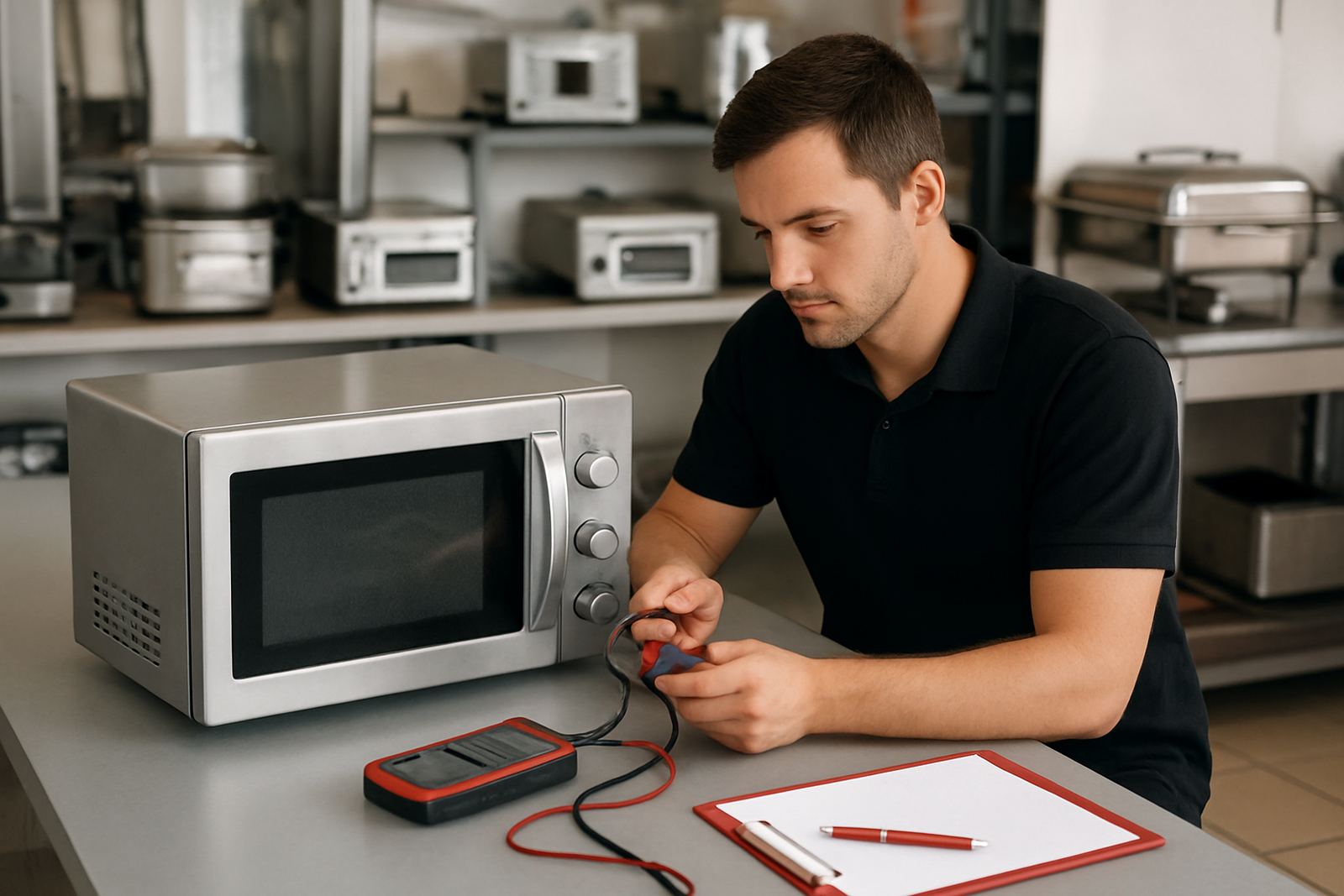
Preventive servicing should include door seals, hinges, control function, fan operation and general electrical condition. If the unit starts heating unevenly, takes longer than normal or makes an unusual noise, do not keep forcing it through a full day. Small faults become bigger faults fast, especially in a busy kitchen where staff are opening the door every few minutes. Our workshop can handle breakdown repairs and refurbishment on used equipment where it makes sense to restore value rather than replace immediately.
What to check before you place an order
Before you order, think about the food you serve, the number of staff using the unit and how much space you have on the counter. If the unit is for plated meals, check whether the cavity can fit your standard dishes and whether the door opens in a direction that works with your pass. If it is for takeaway, make sure your common container size fits without the lid touching the top. These are small details, but they affect daily speed and staff frustration.
Also confirm the electrical point, counter height, ventilation space and cleaning access. If you are buying used equipment, ask about working condition, previous use and any parts that have already been replaced. It is sensible to request a quote that includes delivery, positioning and installation so there are no surprises later. For operators in Pretoria and Gauteng, we can also help with sourcing, handover training and kitchen reconfiguration when the workflow needs a better fit.
- Check internal cavity size against your trays and plates
- Confirm wattage and electrical point requirements
- Measure the counter space and door swing clearance
- Ask about servicing history on used units
- Include delivery, installation and training in the quote
Key facts
| Type | Commercial microwave for reheating and finishing |
|---|---|
| Power supply | 220V to 240V single-phase, subject to model |
| Output power | Commonly 1000W to 1800W, depending on size |
| Controls | Manual timer or programmable keypad |
| Construction | Heavy-duty cabinet with stainless steel cavity and easy-clean surfaces |
| Typical use | Cafés, takeaway counters, canteens, hotels, schools and prep kitchens |