Electric urns made for steady tea service
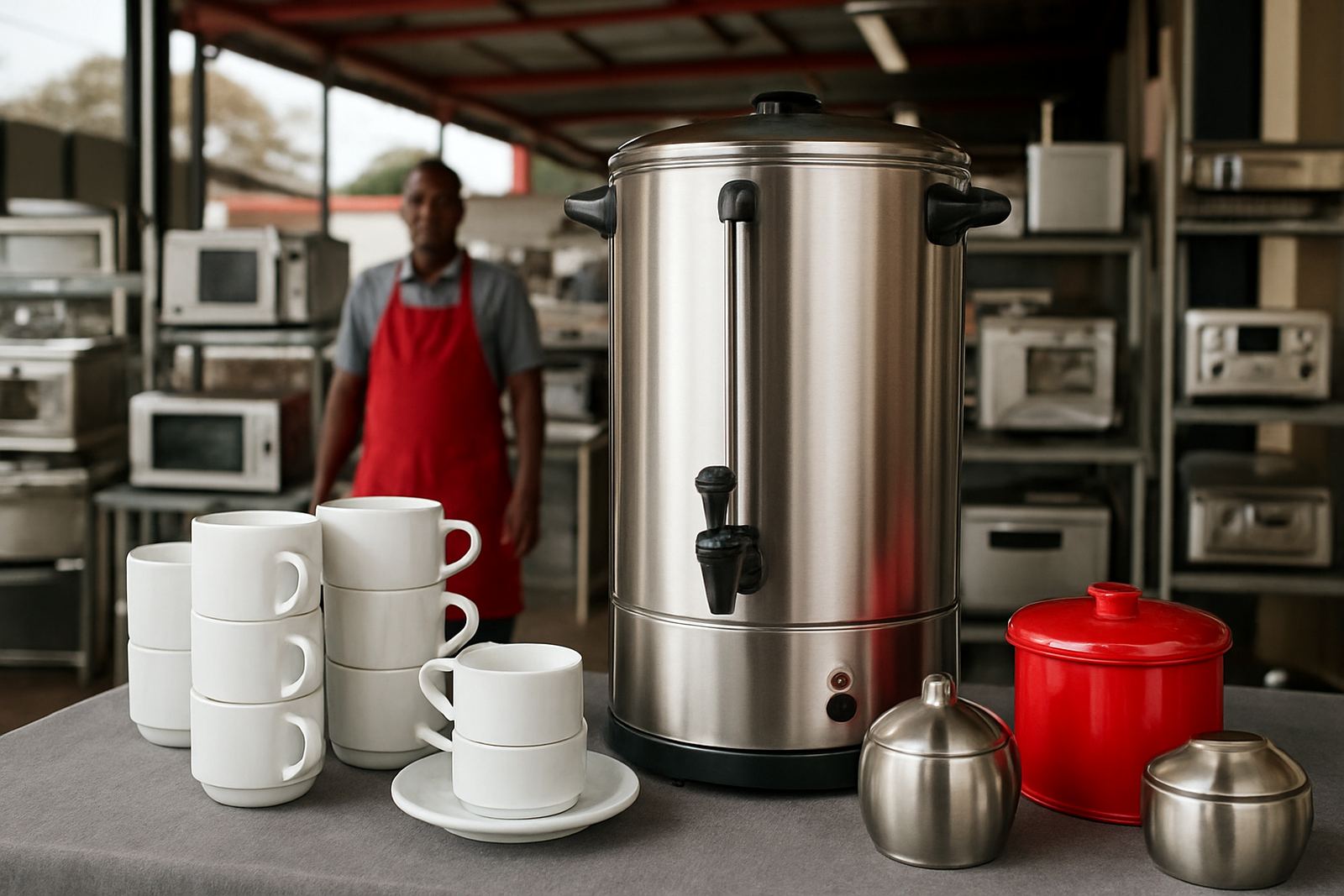
An electric urn is a heated stainless steel vessel used to hold large volumes of hot water at serving temperature. It is a practical choice for churches, offices, clinics, schools, community halls and event venues where tea, coffee and instant drinks are served repeatedly. Instead of boiling a kettle over and over, one urn keeps water ready and cuts down on queue time. For breakfast functions and waiting areas, that matters a lot.
Most units have a tap at the front, a water level marker, thermostat control and a lid that helps hold heat between uses. A good urn is simple to use, easy to clean and built for daily service. In Gauteng, where municipal water quality and power interruptions vary by area, the right unit also needs to be easy to maintain and quick to recover after switching off. That is where proper specification helps.
We supply electric urns for regular service in Pretoria Central, Centurion, Midrand, Kempton Park, Boksburg and Randburg, with advice on what suits your water usage and staff setup. If you need a unit for 20 people or 200, we can quote on the size that fits, not just the biggest option.
Sizes, capacity options and practical specs
Electric urns are normally chosen by litres, service speed and the amount of hot water needed per hour. Smaller models suit office tea points and small meeting rooms, while larger units are better for school functions, canteens and church events. If the urn will be used through the morning and again in the afternoon, it is worth choosing one with a bit of spare capacity so the unit is not running flat out all day.
- Compact units: 10 L to 15 L for light daily use
- Medium units: 20 L to 30 L for staff rooms and medium functions
- Large units: 40 L and above for high-volume service
- Stainless steel body for easier cleaning and better corrosion resistance
- Thermostat control for holding temperature once water is hot
- Tap outlet positioned low enough for cups, jugs and dispensers
When we quote, we also look at recovery time, wattage and how many cups are served per hour. A 20 L urn may be enough on paper, but if 80 people arrive at once for tea then the refill rate becomes the deciding factor. We will often ask how many people are expected, whether milk is added separately, and whether the urn will stand in a kitchen, foyer or hall. That makes the recommendation more accurate and saves you from buying too small.
Where an urn works best in Pretoria and Gauteng
Electric urns are useful anywhere hot water must be available without constant staff attention. They work well in breakfast service areas, boardrooms, clinic waiting rooms, staff canteens, church kitchens, school tuck areas and temporary event setups. If a venue serves tea before a meeting, during a funeral reception, or at a training venue with many breaks, an urn is usually easier than a kettle rota.
They are also handy for sites where space is limited and people come through in waves. In Centurion and Midrand, for example, we often see urns used in reception areas where visitors wait for sign-in or short meetings. In Pretoria Central and Silverton, the same unit may be used in a workshop lunch room, where speed and reliability matter more than appearance. Near the coast, stainless steel care becomes even more important because humidity can stain poor-quality metal faster than many buyers expect, though Pretoria users should still dry the unit after washing.
- Waiting rooms and reception areas
- Churches, clubs and community halls
- Training centres and seminar rooms
- Staff kitchens and canteens
- Outdoor functions with proper shelter from rain and dust
Power connection, positioning and site setup
Most electric urns plug into a standard electrical point, but the actual current draw must be checked before purchase. A small unit may run on a normal plug point, while larger models can need a dedicated supply, especially if several appliances share the same circuit. In older buildings and halls around Gauteng, overloaded sockets are common and that can trip breakers at busy times. We look at the site first if there is any doubt.
The urn should stand on a level counter or table with enough clearance around it for safe filling, cleaning and serving. It must sit near water access where possible, but not where splashing will reach sockets or switches. If the unit is going into a serving line, we can advise on the position so the tap faces the serving side and cup handling stays neat. For venues that run on generators or backup power during load-shedding, we also check whether the supply can handle the urn at the same time as fridges, microwaves or mixers. A quick check now avoids a lot of trouble later.
For new installations or kitchen reconfiguration, our team can assist with delivery and positioning from Silverton to sites across Pretoria and Gauteng. If the urn is part of a bigger catering setup, we can coordinate it with other equipment and handover training so staff know how to fill, heat and drain it correctly.
Cleaning, servicing and long term care
An urn lasts longer when it is drained, rinsed and dried after use. Hard water can leave scale inside the tank, which affects heating and can slow down the boil cycle. If a unit is used often, it should be descaled on a routine basis with the right cleaning solution, then rinsed properly before the next service. Staff should also keep the tap area free of tea stains and check that the lid closes correctly.
Our service team handles preventive servicing and breakdown repairs on catering equipment, including urns used daily in busy spaces. If a tap leaks, a thermostat fails or the unit stops heating, we can assess it and advise whether repair or replacement is the better choice. We also do workshop refurbishment for used equipment where the body is still sound but the working parts need attention. That can be a sensible option if the budget is tight and the unit does not need to look perfect on the outside.
- Drain and wipe dry after service
- Descale regularly in hard water areas
- Check the tap washer and lid seal
- Keep cord and plug dry at all times
- Book servicing before peak function season
What to check before you order
Before buying an electric urn, it helps to know exactly how the unit will be used. A school may need one for one rush period a day, while a church or waiting area may need steady service for several hours. Tell us how many cups you expect to serve, where the urn will stand, and whether staff will need to move it or keep it fixed in one position. That information shapes the right size and the right fittings.
Also check whether you need new or used equipment, whether the unit must match existing serving tables, and whether there is a safe plug point nearby. If the site has strict health and safety rules, the urn should be easy to clean and stable on its stand. In some kitchens, a taller tap position helps if cups are filled into jugs, while in other cases a low outlet works better for direct cup service. We can talk through those details and provide a written quote with supply, delivery and optional installation. For many buyers, that is the easiest way to get the right unit first time.
Key facts
| Product | Electric urn for hot water service |
|---|---|
| Typical capacities | 10 L, 15 L, 20 L, 30 L, 40 L and above |
| Material | Stainless steel body and tank |
| Power | Electric supply, wattage depends on size |
| Controls | Thermostat control and indicator light on selected models |
| Use areas | Tea service, waiting rooms, churches, staff rooms, halls and events |