What a rectangular chafing dish does on service
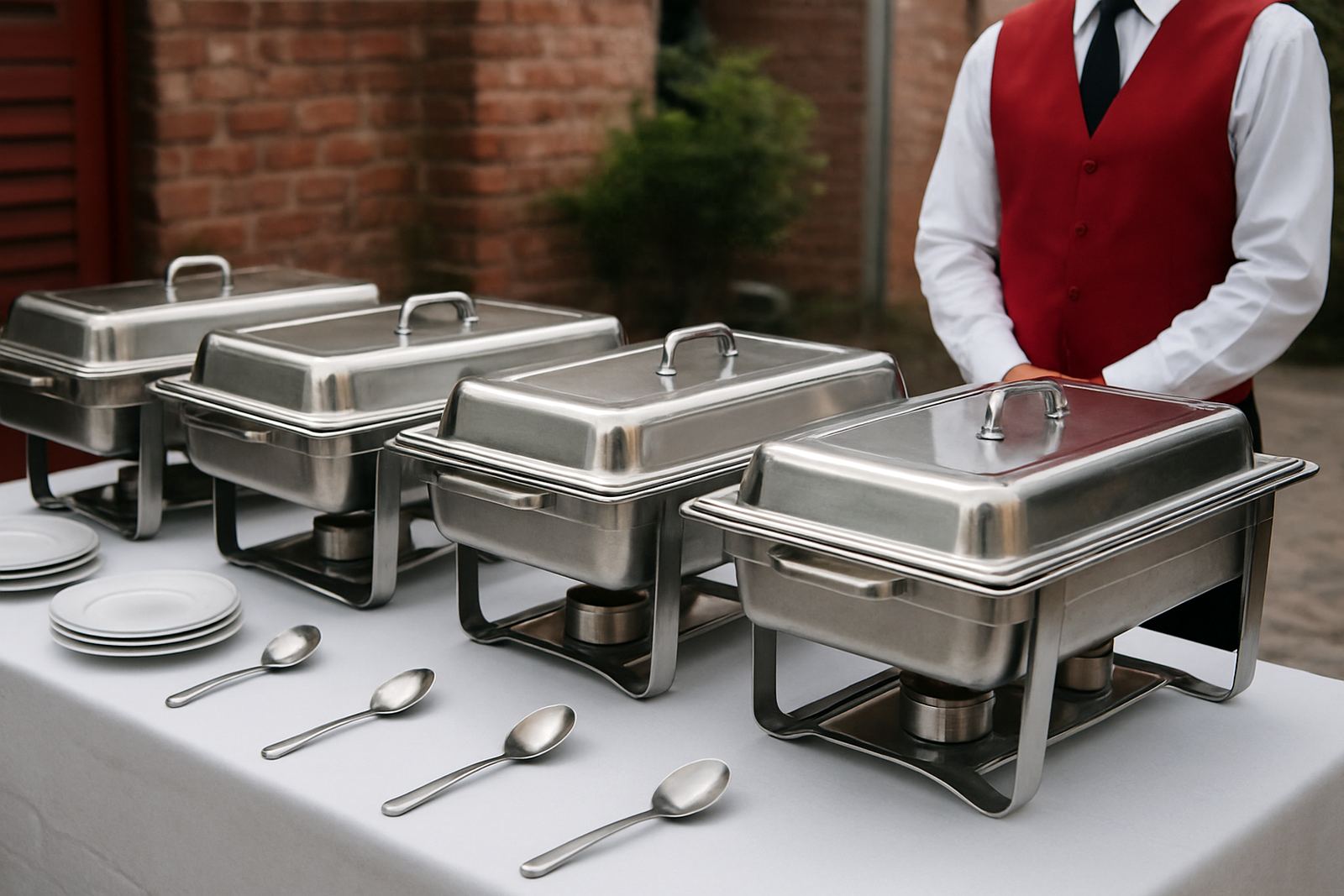
A rectangular chafing dish is a buffet holding unit used to keep hot food at serving temperature for longer periods. It normally has a water pan, food pan, lid and a frame that sits on a stable table or buffet counter. For service teams in Pretoria, Centurion and Midrand, it is a practical choice where guests serve themselves and the kitchen needs food to stay tidy and presentable.
The rectangular format gives you a wider food surface than a round unit, so it suits meals that are plated in larger quantities. Think rice, vegetables, stews, pasta, saucy chicken, wors and breakfast items like eggs and wors at a function breakfast. It also gives better line spacing when you need several dishes on one buffet table. That matters in venues where serving space is limited and the food has to move quickly.
Most units are used with gel fuel, though some sites prefer electric warming setups where power is available and the buffet stays in one place. If your venue is in an area with load-shedding, gel fuel units are often the safer choice for continuity, especially for weddings, conferences and school events.
Common sizes, pans and finish options
Rectangular chafing dishes come in a few standard footprints, with the most common being full-size and half-size buffet formats. Full-size units suit canteens and larger self-service counters, while smaller formats work well for mixed menus or smaller functions. The pan depth also matters. Deeper pans hold more food, but they can be heavier to lift and slower to refill during service.
- Full-size rectangular format for higher volume service
- Half-size options for side dishes, breakfast items or tasting menus
- Standard stainless steel finish for easy cleaning and daily use
- Glass or solid lid options depending on the look you want
- Different pan depths for light buffet lines or heavier meal service
Stainless steel is the usual choice because it handles regular washing and commercial use well. In coastal humidity or busy kitchens, it is best to keep the units dry after cleaning and store them indoors. Where the buffet is used often, a thicker frame and well-fitting lid can make daily handling easier and reduce wear over time.
Where rectangular chafing dishes fit best
These units suit any food service point where you need neat presentation and controlled holding. They are commonly used in hotel breakfast rooms, school dining halls, church functions, sports clubs, office canteens and catering trailers. In Gauteng, they are also popular for conference venues that host regular events and need buffet gear that can be set up fast.
For venues in Pretoria Central or Randburg, the rectangular shape helps when tables must be arranged in straight lines. In Centurion and Boksburg, where a lot of corporate catering is done, the format works well for lunch service because it keeps trays aligned and staff can refill from behind without crowding guests. If you are serving from a kitchen or servery window, it also gives a cleaner look than loose pots and tins.
Rectangular chafing dishes are especially useful where menu control matters. If you need to hold different foods at once, you can keep starches, proteins and vegetables separate without wasting table space. That makes stock control easier too, since each pan can be tracked and refilled as needed.
Power, fuel and setup on site
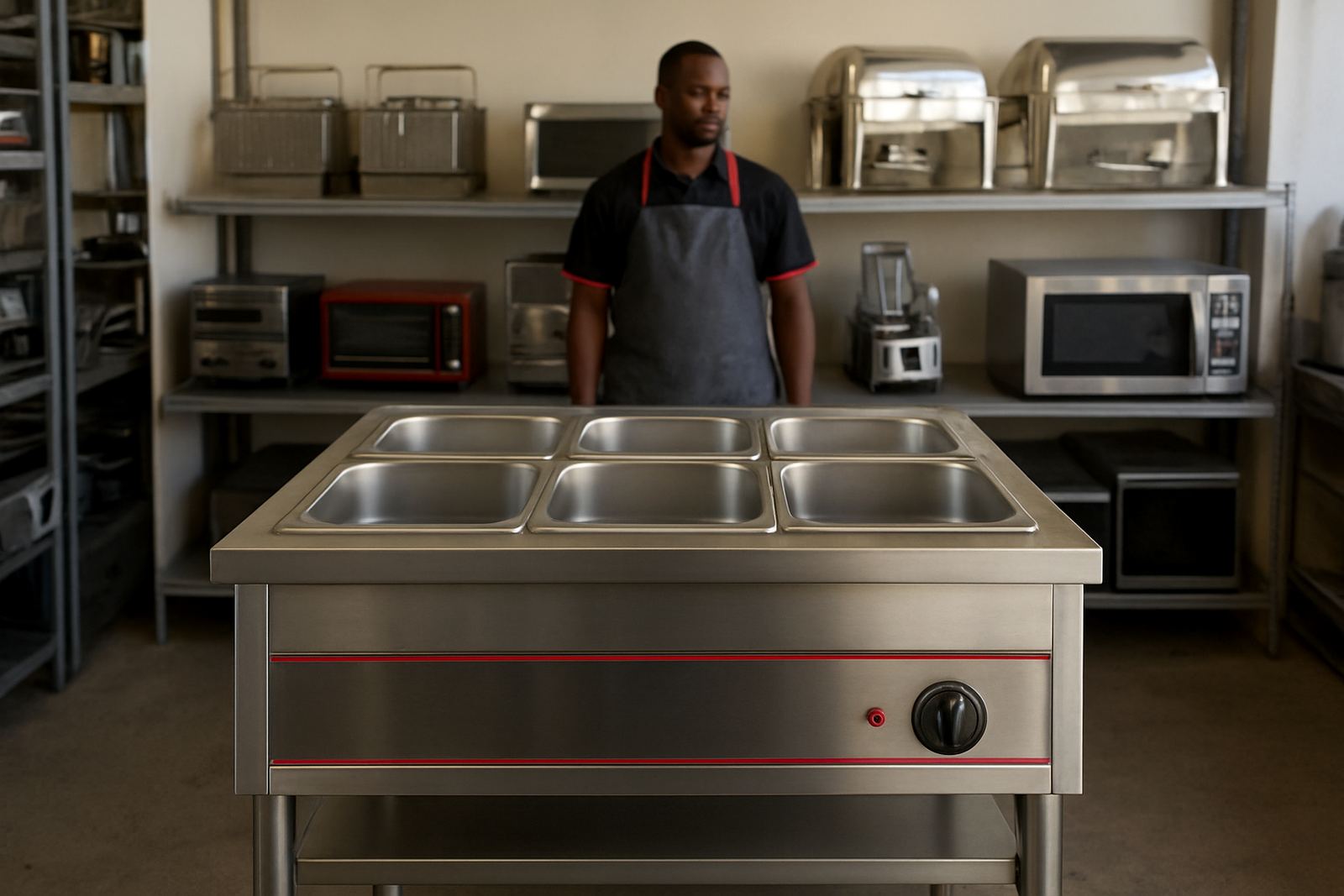
Most rectangular chafing dishes do not need electricity. They use fuel burners placed underneath the water pan, which is why they remain useful during outages and in mobile catering. If you are serving at a venue with limited plug points, gel fuel is usually the simplest option. Electric bain-marie style units are a different category and should be chosen only when you have a fixed serving point and proper power supply.
On site, the unit must stand level on a firm table or buffet counter. Uneven placement can make lids sit badly and food heat unevenly. Keep enough space around each unit for staff to lift lids safely and refill pans without crossing over guests. If the setup is in a public venue, check municipal and venue rules for open flame use, fire safety spacing and fuel storage. Some halls allow fuel burners only with supervision, so it is best to confirm before the event.
- Use on a level, heat-safe surface
- Keep fuel away from tablecloth edges and paper goods
- Allow clearance for safe lid opening
- Confirm venue rules for gel fuel or flame based warming
- Position units where refilling can happen out of guest traffic
Care, cleaning and servicing between events
Daily care starts with emptying the pans as soon as service ends and washing off food residue before it dries. Soak stubborn sauce marks in warm water and use non-scratch pads on stainless steel surfaces. Do not use harsh scourers on polished lids, because they leave marks that show up under buffet lighting. If the unit has a glass lid or inserts, handle them carefully and store them separately to avoid chips.
After cleaning, dry each part fully before stacking. In Pretoria and surrounding areas where kitchens may sit closed over weekends, leftover moisture can leave water spots or staining. Hinges, handles and frame joints should be checked for looseness, and worn fittings should be tightened before the next function. If a lid no longer sits square or a frame has bent from rough handling, send it for inspection rather than pushing it back into service. Small faults often become bigger ones during transport.
We also assist with servicing and workshop refurbishment for used buffet equipment. If you have older chafing dishes that still have value, they can often be cleaned, aligned and returned to use with the right repairs.
What to confirm before you place an order
Before ordering, check the serving volume, the type of food you will hold and how the unit will be transported. A buffet dish that works well for 30 guests may be too small for 120 guests with repeated service. It helps to know whether you need a full-size unit, a half-size unit or several matching dishes for one buffet line. You should also confirm whether you want lids with a viewing panel, solid lids or simple lift-off covers.
Other details matter as well. Ask about pan depth, fuel holder type, replacement parts and whether the frame is suitable for frequent moving. If your team will carry the units between storage and venue, weight and handle placement are important. For hotels, schools and caterers, it is also useful to order matching sets so presentation stays consistent across the line.
- Buffet size and guest numbers
- Food type and holding time required
- Pan depth and lid style
- Fuel or power setup at the venue
- Storage space and transport method
- Need for spares, repairs or used equipment sourcing
If you need a quote, site assessment or help choosing between new and used buffet gear, our Pretoria team can assist by email. We work across Silverton, Pretoria Central, Centurion, Midrand, Kempton Park, Boksburg and Randburg.
Key facts
| Product type | Rectangular buffet chafing dish |
|---|---|
| Typical use | Hot food holding for self-service buffets and catered functions |
| Common sizes | Full-size and half-size formats |
| Material | Commercial stainless steel |
| Heat source | Gel fuel or fixed warming setup depending on site |
| Best suited to | Caterers, hotels, schools, canteens and function venues |