Why the last 10 minutes matter more than the first 10
The end of service is when a griddle tells the truth about how it has been used. If fat, flour, onion bits and sugar are left to cool on the plate, they harden into a layer that blocks heat transfer and makes the surface work harder the next day. That means longer warm-up time, patchy cooking and more scraping before the first order even lands.
On a busy breakfast line in Pretoria Central or a lunch counter in Midrand, those few minutes after the last burger or toastie can make a real difference. A clean plate also gives you a better read on the machine itself, so hot spots, warped sections and worn thermostats show up sooner.
People often think a griddle only needs a fast wipe. That is fine for a light touch-up, but a proper close-down routine should remove grease film, loose food and any sugary residue before it bakes on overnight.
Start while the plate is still warm, not smoking hot
The best time to clean is once the plate has cooled slightly but before grease has set hard. If the griddle is still blazing, you will waste time and risk splashing hot fat. If it is stone cold, dried residue becomes much harder to shift and you end up pushing grit around.
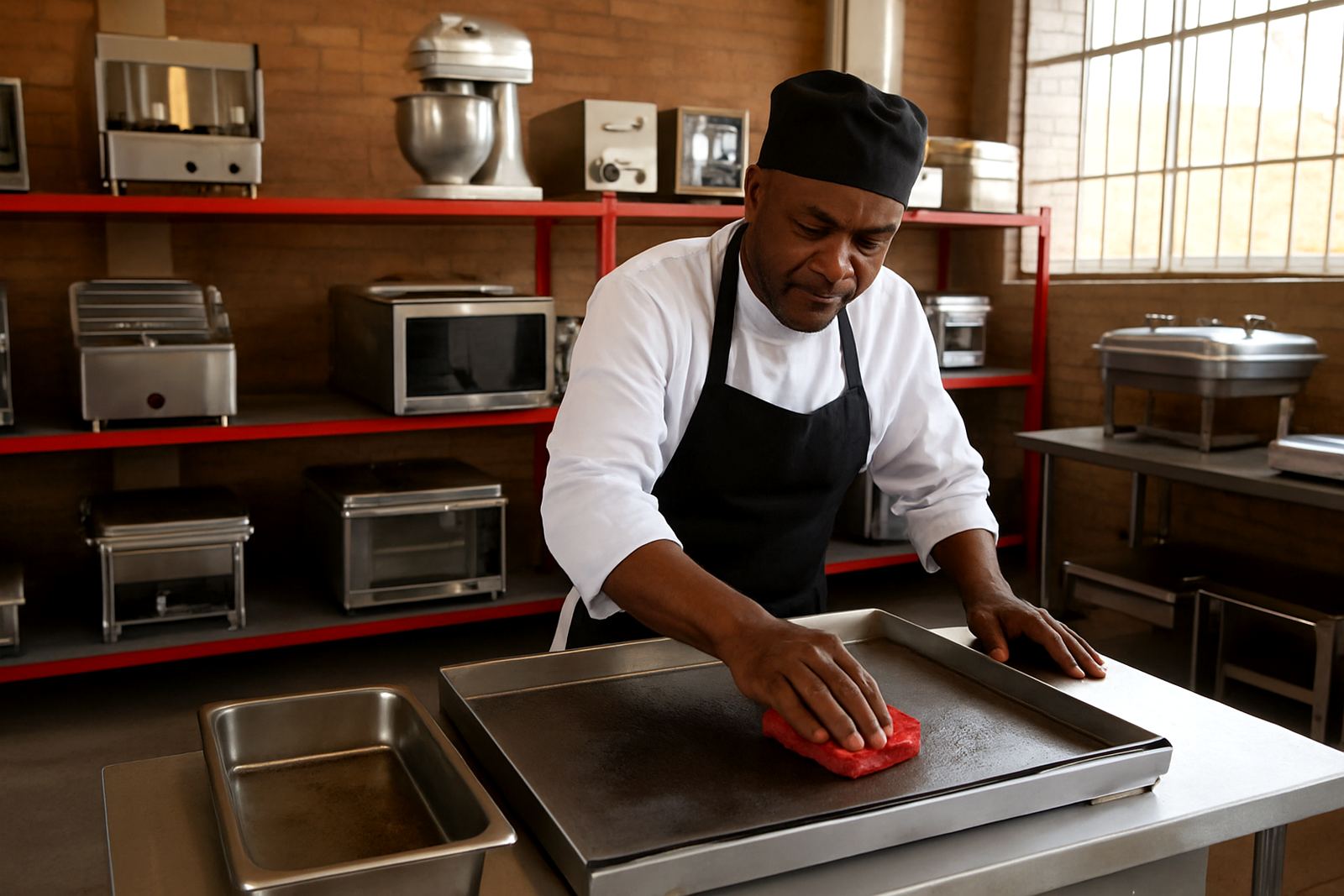
Use a scraper, a flat pad and clean cloths that are kept for kitchen equipment only. Work from the back towards the front so you pull debris into one direction. If there is a grease tray, empty it daily and check that the channel is not blocked with crumbs or old oil.
- Scrape loose food into a separate waste container.
- Wipe the plate with a lightly damp cloth, not a dripping one.
- Finish with a dry cloth so the surface does not rust overnight.
- Check splash guards, side rails and the drip tray as well.
For kitchens near the coast or with high humidity inside the prep area, leaving a plate damp is a bad habit. Even stainless sections can show light corrosion if they sit wet for long enough.
What to remove before it turns into a hard crust
Different foods leave different mess. Egg and batter create sticky patches. Cheese sets like glue. Sweet sauces and syrup can caramelise into black spots. On a griddle that also does bacon, onions and toasties, the mix can build up fast and start affecting the flavour of the next batch.
Do not use harsh metal that can gouge the cooking plate. Small scratches trap grease and make future cleaning harder. A smooth plate heats more evenly and is easier for your team to keep up. That matters whether you are running a canteen in Centurion or a take-away in Boksburg.
- Lift off burnt bits before they are baked into the steel.
- Remove sticky sweet residue while the plate is still slightly warm.
- Clear the edges where crumbs and oil often collect.
- Inspect the knobs, guards and surrounding panels for grease splatter.
Once the heavy residue is gone, a light final wipe is enough. There is no prize for over-wetting the plate or soaking the controls.
A simple close-down routine that works in real kitchens
A griddle close-down does not need to be complicated. What matters is that the same steps happen every night, in the same order, so nothing gets missed when the team is tired. In a high-turnover kitchen, especially one running through load-shedding with backup power or a reduced evening crew, simple is best.
Use this routine as your close of shift standard:
- Turn the heat down and allow the plate to settle.
- Scrape off all loose food and grease.
- Wipe the plate with a damp cloth and food-safe cleaner if required by your kitchen rules.
- Empty the grease tray and check the drain area.
- Dry the plate and switch off at the control and supply point.
- Leave the area tidy so the morning team can start clean.
If your operation works long hours, split the job between the person at the grill and the person closing the pass. That keeps the pace up and reduces the chance of someone missing the tray or leaving the plate wet.
When cleaning points to a bigger service issue
Sometimes the problem is not poor cleaning at all. If the plate keeps cooking unevenly even after a good clean, the issue may be heat distribution, a damaged element or a thermostat that is no longer reading correctly. A worn cooking surface can also hold grease in low spots, which means the same patch gets dirty quicker than the rest.
Watch for these signs:
- One side browns food faster than the other.
- The plate takes longer to recover after a heavy load.
- Grease smells burn even when the surface looks clean.
- The scraper keeps catching on rough spots or pits.
That is the point where a servicing visit makes sense. A technician can check the plate, controls, wiring and heat pattern before the issue turns into a full breakdown. In busy kitchens, a small fault can throw off service for the whole shift, so it is worth dealing with early.
How end-shift care helps used equipment stay worth keeping
Griddles that are cleaned properly after each service hold their value better, especially when they are part of a second-hand line-up. A buyer will notice straight away if the plate is flat, the body is clean and the controls have been looked after. It tells them the equipment was used with care, not battered until failure.
For kitchens in Pretoria and Gauteng that buy used equipment to manage cost, this matters. If you are fitting out a small takeaway in Randburg or replacing a backup unit in Kempton Park, a griddle that has been cleaned and serviced regularly is easier to place, test and hand over. It also makes workshop refurbishment more predictable because less damage has been allowed to build up.
A clean close-down routine is one of the simplest ways to protect the machine you already have. It reduces smoke, keeps flavours cleaner and gives the plate a better chance of heating properly the next morning. That is good housekeeping, and it saves time where it counts.