Start with spacing, not decoration
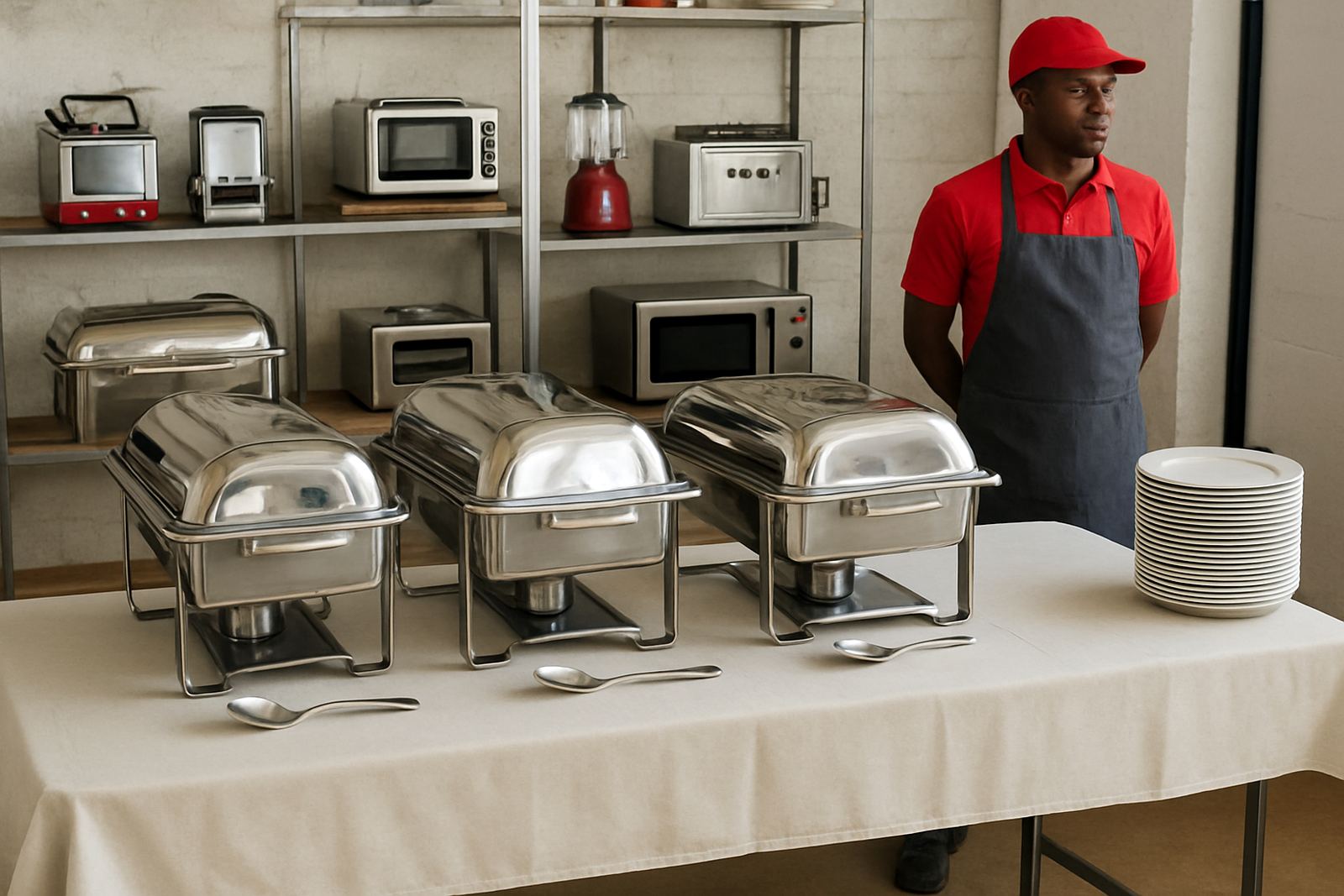
The first thing people notice at a buffet is not the food, it is whether the table looks organised. If platters are packed too close together, guests crowd the line, lids catch on each other and serving spoons end up in the wrong dish. Leave enough room between items so each tray has its own space, and keep hot and cold sections clearly separated.
In a busy hall in Centurion or a corporate lunch in Midrand, a bit of breathing room also helps staff refill faster. You can top up one dish without disturbing the full line, which keeps the table neat for longer. A tidy gap between items can make a basic spread look planned instead of rushed.
Choose serviceware that matches the menu
Guests judge quality by the containers as much as the food. A tray with bent lids, stained inserts or mixed shapes sends the wrong message. You do not need matching everything, but the serviceware should look intentional. Use items that suit the menu and the portion size, whether it is breakfast, lunch or a plated function.
- Use smaller dishes for sides, sauces and toppings so the line stays tidy.
- Keep larger pans for staple items like rice, vegetables and hot mains.
- Use clear labels where there are allergens, pork, beef or vegetarian options.
- Replace cracked lids and warped trays, they draw attention for the wrong reason.
For venues in Pretoria Central and Randburg, where functions often run back to back, durable pieces save time during turnover. A presenter can only do so much if the holders and pans are tired and mismatched.
Build the buffet in a guest-friendly order
The order of the table should follow how people eat. Start with plates and cutlery, then salads or cold starters, then mains and hot sides, and finish with sauces, condiments and desserts. This reduces bottlenecks and helps guests move through without stopping in the middle to ask questions.
Put the most popular items where the queue naturally opens up, not right at the entrance where people bunch together. If you are serving at a venue in Boksburg or Kempton Park, where staff may be moving around tables and bar areas at the same time, a clean flow makes service safer too.
- Place serving tongs and spoons at the same end as the item they belong to.
- Keep bread and rolls in covered baskets so they do not dry out.
- Position napkins and small waste bins close to the end of the line.
- Leave enough space for one person to step aside without blocking others.
Make hot food look cared for
Hot food loses its appeal when the lid is left open too long or the pan is overfilled. A dish that spills over the edge looks messy, even if it tastes good. Fill pans to a level that keeps the surface clean, and use smaller top-ups more often instead of dumping in a full batch. That also helps with temperature control during load-shedding, when staff may have to manage fuel, power and timing carefully.
Chafing dishes are useful because they hold heat without needing a full kitchen at the buffet point, but they still need attention. Wipe drips before they dry on, replace burnt fuel safely, and keep spare inserts ready. In humid coastal conditions people talk about rust, but in Gauteng the bigger problem is usually dust and fingerprints, so regular wiping still matters.
Use lighting, labels and height to guide the eye
Presentation is not only about what is on the table, but how it is seen. Even a simple buffet looks better when labels are readable, the light falls evenly and the dishes have slight height changes. A raised stand under a platter, or a covered unit beside a lower tray, breaks the line and makes the table feel more organised.
Keep labels short and clear. Guests should not have to guess what the chicken dish contains or whether the rice is plain or spiced. For school functions, staff lunches and private events in Pretoria, that small bit of clarity cuts down on delays and questions, which keeps the queue moving.
- Use card labels large enough to read from 1 metre away.
- Avoid mixing too many fonts, colours or decorative items.
- Keep cables, extension leads and fuel tins out of sight.
- Use clean trays under serving points to catch spills before they spread.
A Pretoria example shows how little changes matter
At a mid-sized function in Silverton, a catering team had a simple menu: rice, chicken, vegetables, salad and pudding. The food was fine, but the buffet looked crowded and the guests were slowing down at the start of the line. The fix was simple. The team spread the dishes out, swapped two damaged trays for cleaner ones, added labels and moved the cutlery to the front where people could pick it up first.
The meal did not change, but the whole table felt better organised and the guests moved through faster. That is often the point with buffet basics. You do not need a bigger budget, just better spacing, cleaner serviceware and a practical layout that suits the room. In many cases, that is enough to make the food feel more valuable than it actually cost.