What hospital kitchens need to get right
A hospital kitchen is not the same as a restaurant kitchen. Meals must leave on time, portions must stay consistent, and the layout has to support clean workflow from receiving to washing up. In many facilities the kitchen also works around diet lists, ward schedules and short turnaround times for tea rounds and supper, so equipment choice matters as much as floor space.
We usually help hospitals, clinics and care centres plan for bulk meal production, hot holding, safe cold storage and easy cleaning. If the kitchen serves patients, staff and visitors from the same preparation area, the equipment must cope with high use and still be simple for the team to manage during load-shedding, water interruptions and peak service periods.
For Pretoria and Gauteng sites, we also look at municipal practicalities such as grease control, drainage, extractor placement and positioning near wash-up points. A good set-up is about fewer steps, less carrying and less chance of cross-contamination.
Typical equipment for ward meal production
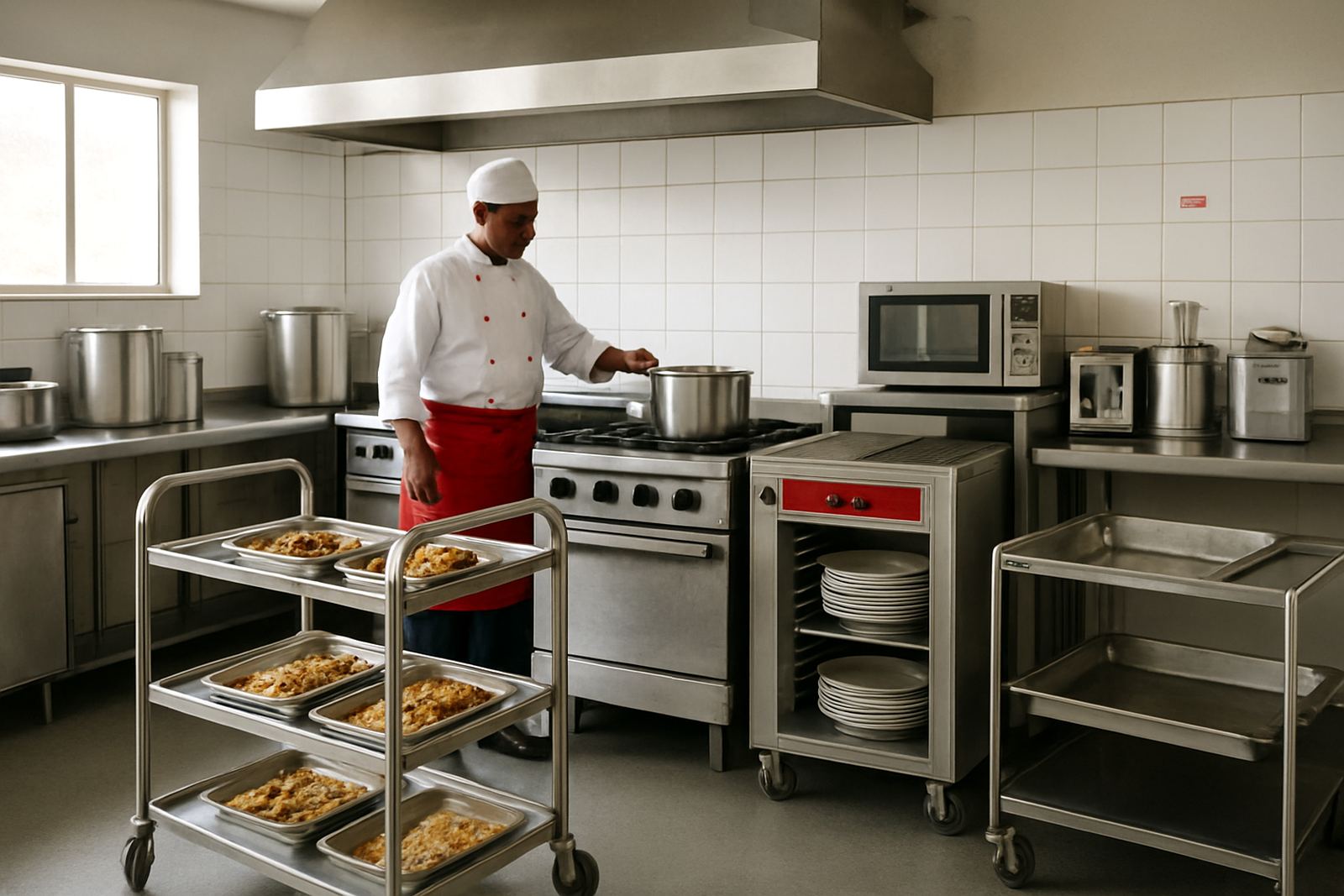
Most hospital kitchens need a mix of cooking, holding and prep equipment rather than one large machine doing everything. The exact list depends on patient numbers, menu cycles and whether meals are cooked on site or only finished and plated there.
- Electric or gas fryers for chips, vetkoek, snack lines and occasional bulk items
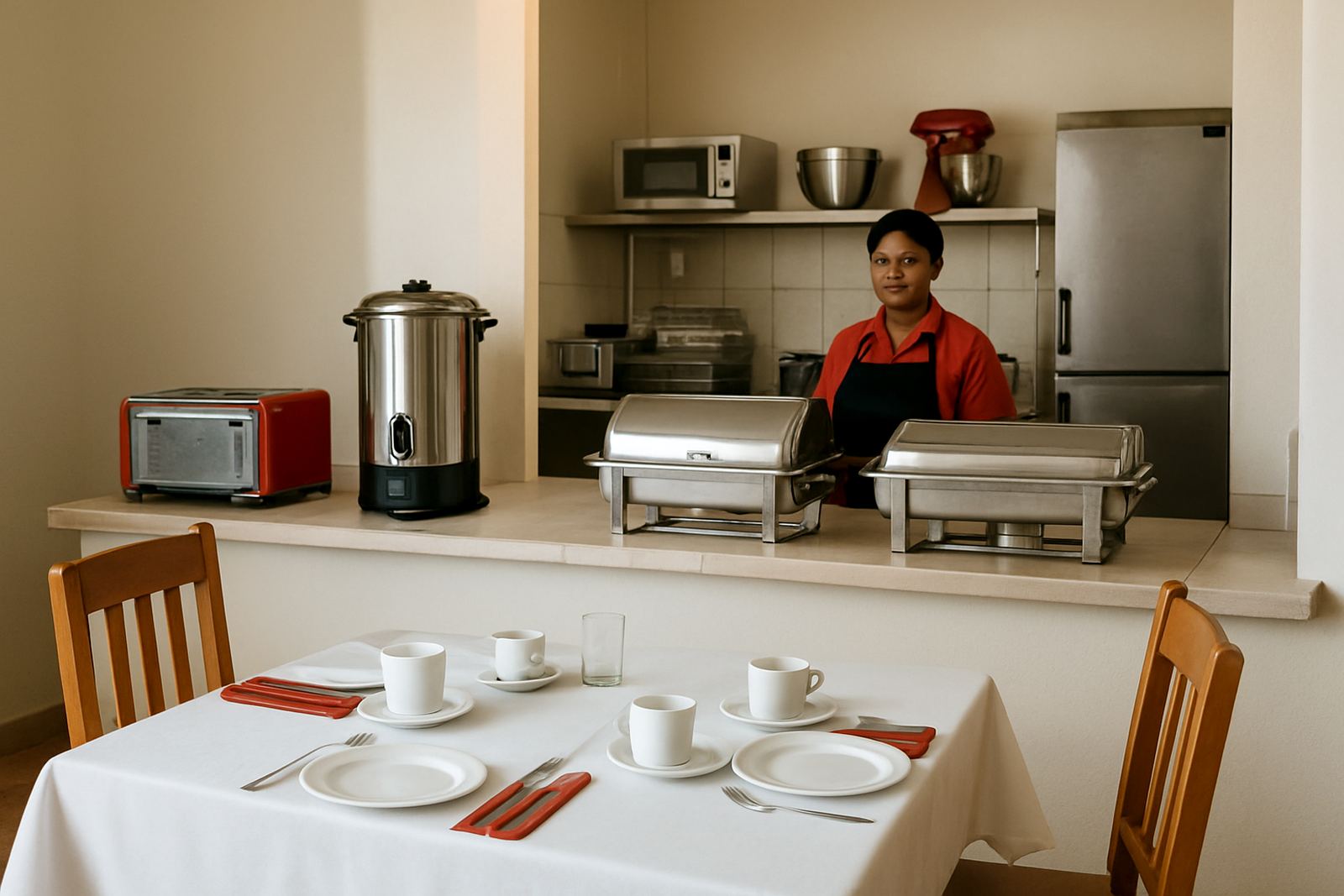
- Commercial toasters for breakfast service and toast rounds
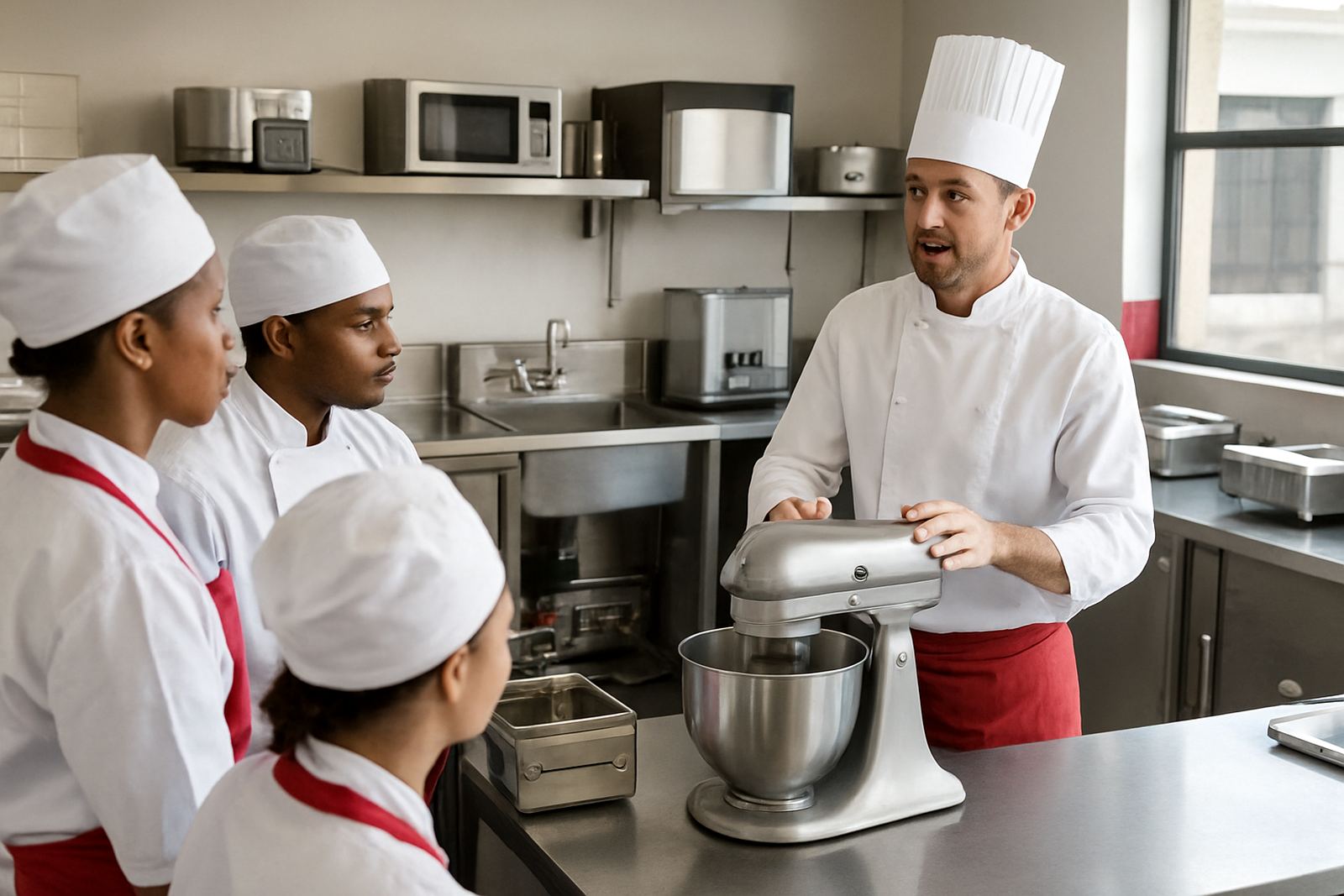
- Mixers for sauces, dough, mash and bulk prep work
- Microwaves for reheating, diet plating and small batch recovery
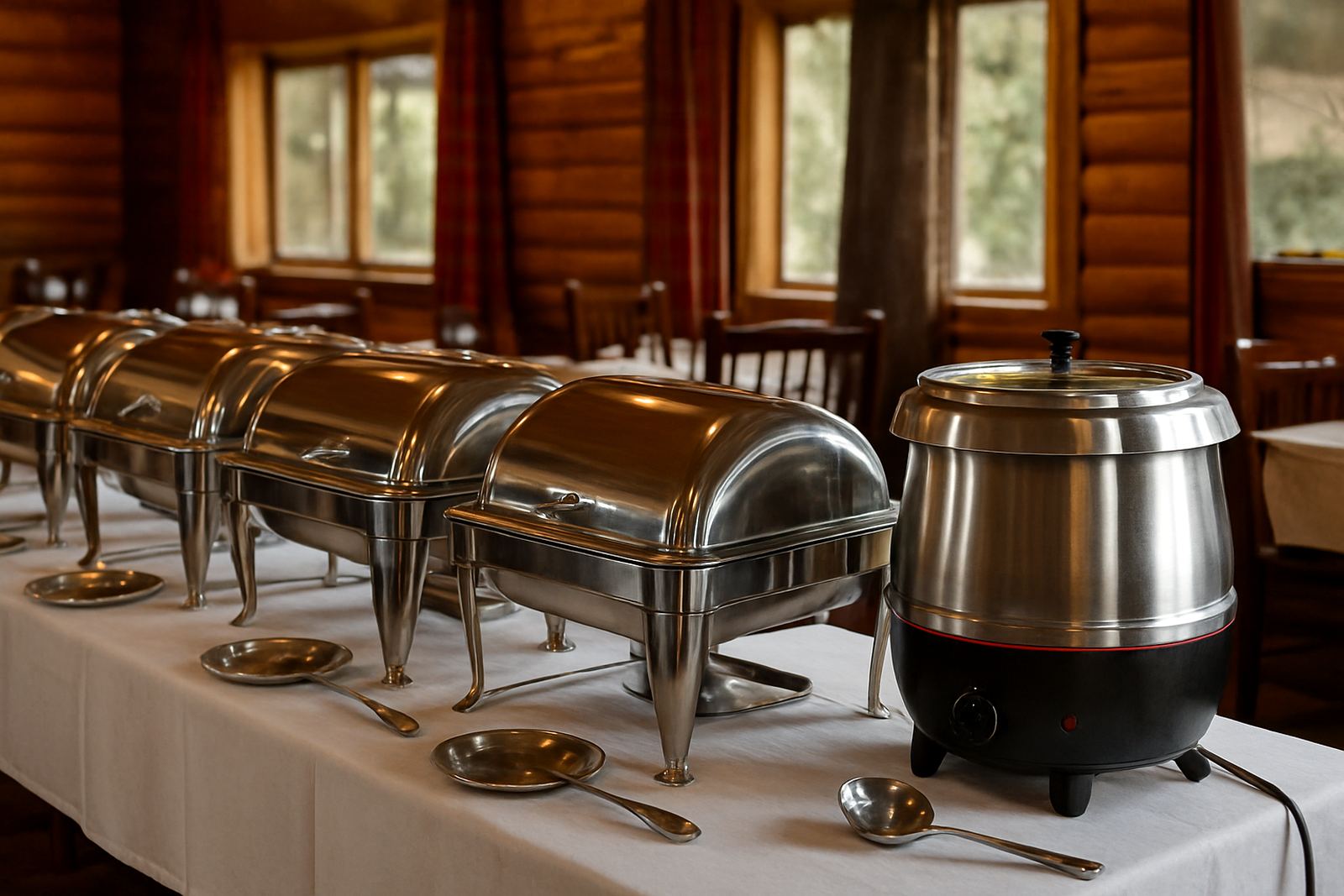
- Chafing dishes and heated holding units for service points and overflow meals
- Stainless prep tables, sinks and shelving for hygiene control
- Used equipment where budget allows, after workshop checking and refurbishment
We also supply quotes for items that are often overlooked, such as trays, insulated holding containers, extraction support and spare heating parts. For hospitals, it is worth planning a little extra capacity in the equipment list so the kitchen does not run at full stretch every day.
Layout planning for safer flow and faster service
The best hospital kitchens keep raw, cooked and clean items moving in one direction. That means receiving and dry stores should not force staff back through the cooking area, and wash-up should not cross paths with plated meals heading out to wards. If space is tight, reconfiguration can make a major difference without a full rebuild.
We often advise on positioning the hot line nearest to dispatch, with cold storage close to prep and a clear route to cleaning. In older buildings around Pretoria Central or inner Gauteng campuses, a small layout change can save steps and improve hygiene. It also helps during shift handovers, because staff can see what is ready, what is pending and where the bottlenecks are.
- Allow enough clearance for trolley movement and safe turning
- Keep hand-wash, prep and wash-up points separated
- Place hot holding where service staff can reach it quickly
- Plan power points and gas points before equipment arrives
- Leave access space for servicing, cleaning and future repairs
When the layout is done properly, the kitchen runs calmer and staff make fewer rushed movements, which reduces breakages and slips.
Common mistakes that cause delays and waste
One of the biggest mistakes is buying cooking gear before checking power supply, ventilation and floor space. A fryer or mixer that looks suitable on paper can be a problem if the kitchen has weak outlets, limited breaker capacity or no easy route for maintenance. Another common issue is placing holding equipment too far from service, so food cools down before it reaches the wards.
We also see hospitals underestimate how much wear and tear comes from daily cleaning. Wet floors, steam and detergent are hard on equipment, especially near the coast or in humid parts of Gauteng after summer rain. Stainless surfaces, stable stands and proper installation help reduce rust and loose fittings. It is worth planning for the real working conditions, not just the first day of use.
For used equipment, the mistake is taking items that have not been checked properly. A lower price can look attractive but if the unit needs new elements, controls or seals straight away, the saving disappears quickly. Our workshop support helps avoid that problem.
Budget ranges for hospital kitchen setups
Budgets vary a lot depending on whether the kitchen is a small care facility or a larger hospital feeding many wards. As a rough guide, a basic holding and prep package for a smaller facility can start from around R35 000 to R80 000. A mid-size setup with cooking, holding and prep equipment often sits between R90 000 and R250 000. Larger hospital kitchens, or kitchens that need several work zones and backup units, can move beyond R300 000.
Used equipment can reduce the spend, especially for items like toasters, mixers and some holding gear. The key is to balance first cost with servicing history and expected duty cycle. If the kitchen is running every day, a slightly higher spend on better suited equipment usually costs less over time.
We prepare quotes based on your meal volumes, available space and the condition of the existing kitchen. That makes it easier to compare options properly and decide where to spend and where to save.
Servicing, breakdowns and training after installation
Hospital kitchens cannot wait long when a vital unit fails. A breakfast rush or supper run does not stop because a heater, fryer or mixer is out of action. That is why we support preventive servicing, workshop refurbishment and breakdown repairs for equipment in Pretoria and the broader Gauteng area.
Our team also handles handover training so the kitchen staff know how to use the equipment safely, clean it properly and spot early signs of trouble. That is especially useful when there is staff rotation or new personnel joining the kitchen. Clear training reduces misuse and keeps the equipment in service for longer.
- Equipment quotes and site assessments
- Delivery and positioning on site
- Installation and kitchen reconfiguration
- Preventive servicing and repair support
- Used equipment sourcing and refurbishment
From Silverton in Pretoria, we support hospital kitchens in Pretoria Central, Centurion, Midrand, Kempton Park, Boksburg and Randburg, with practical advice on quotes, spares and setup. If you need a kitchen that can keep up with meal volumes and hygiene demands, send your requirements to quotes@afchain.co.za.