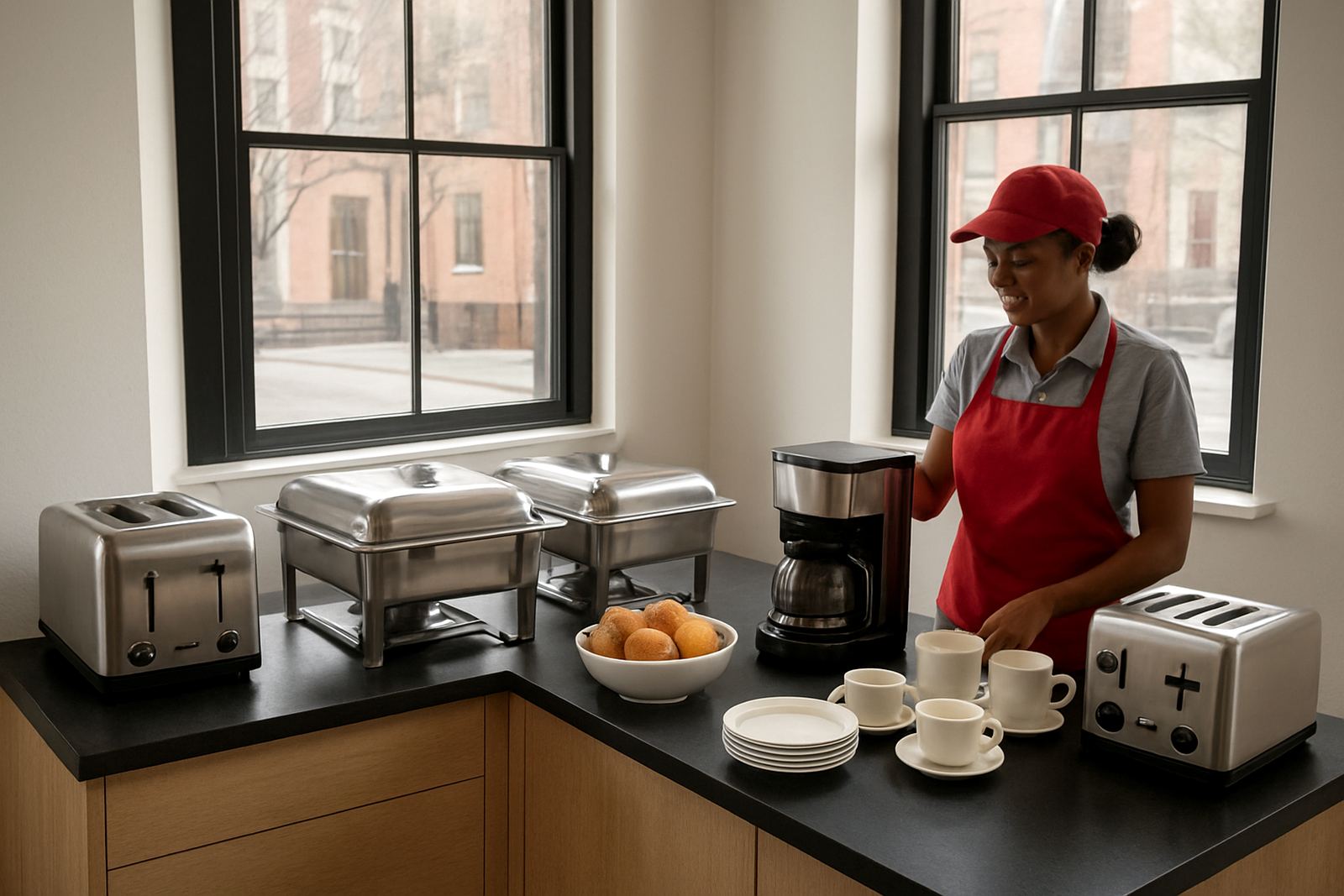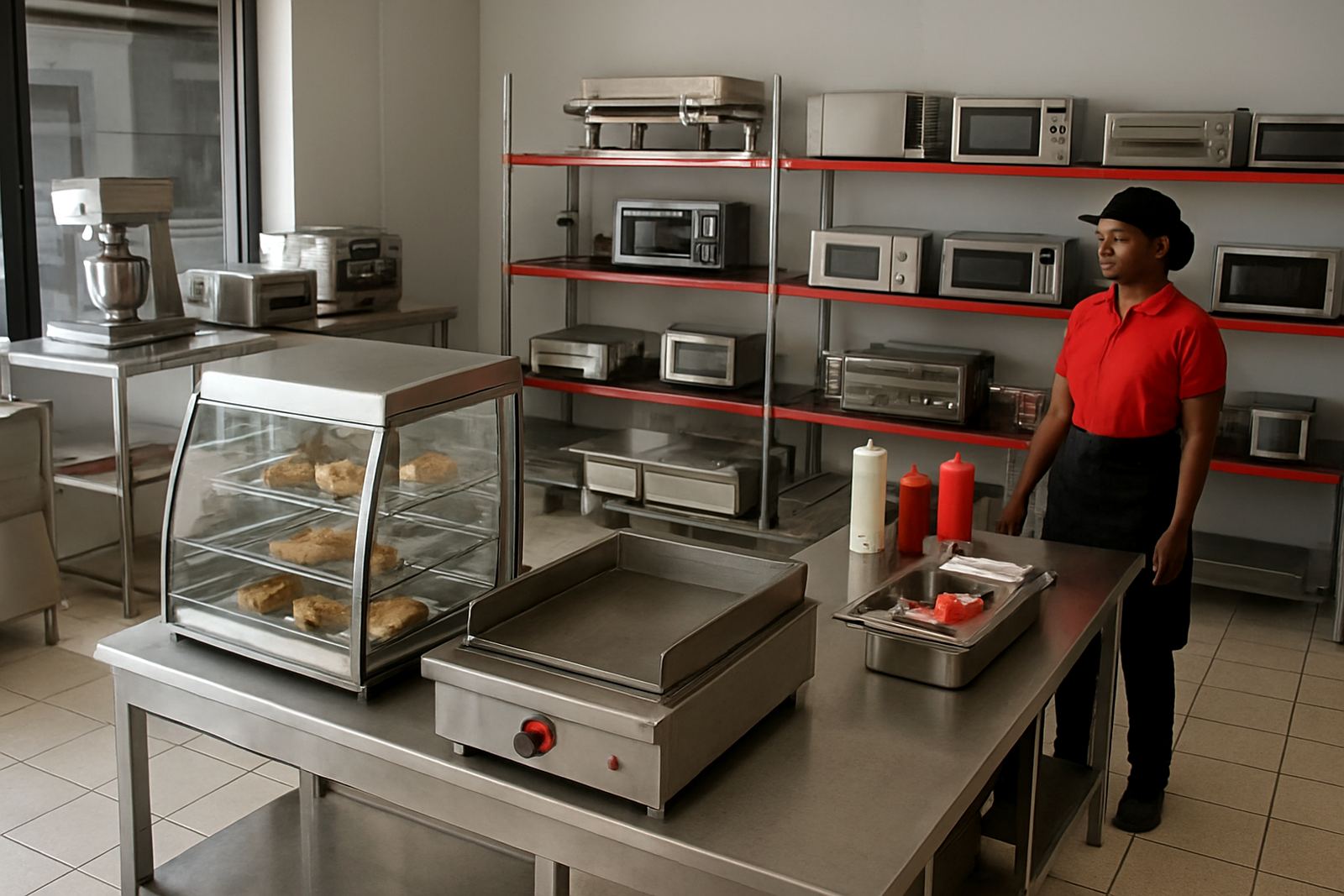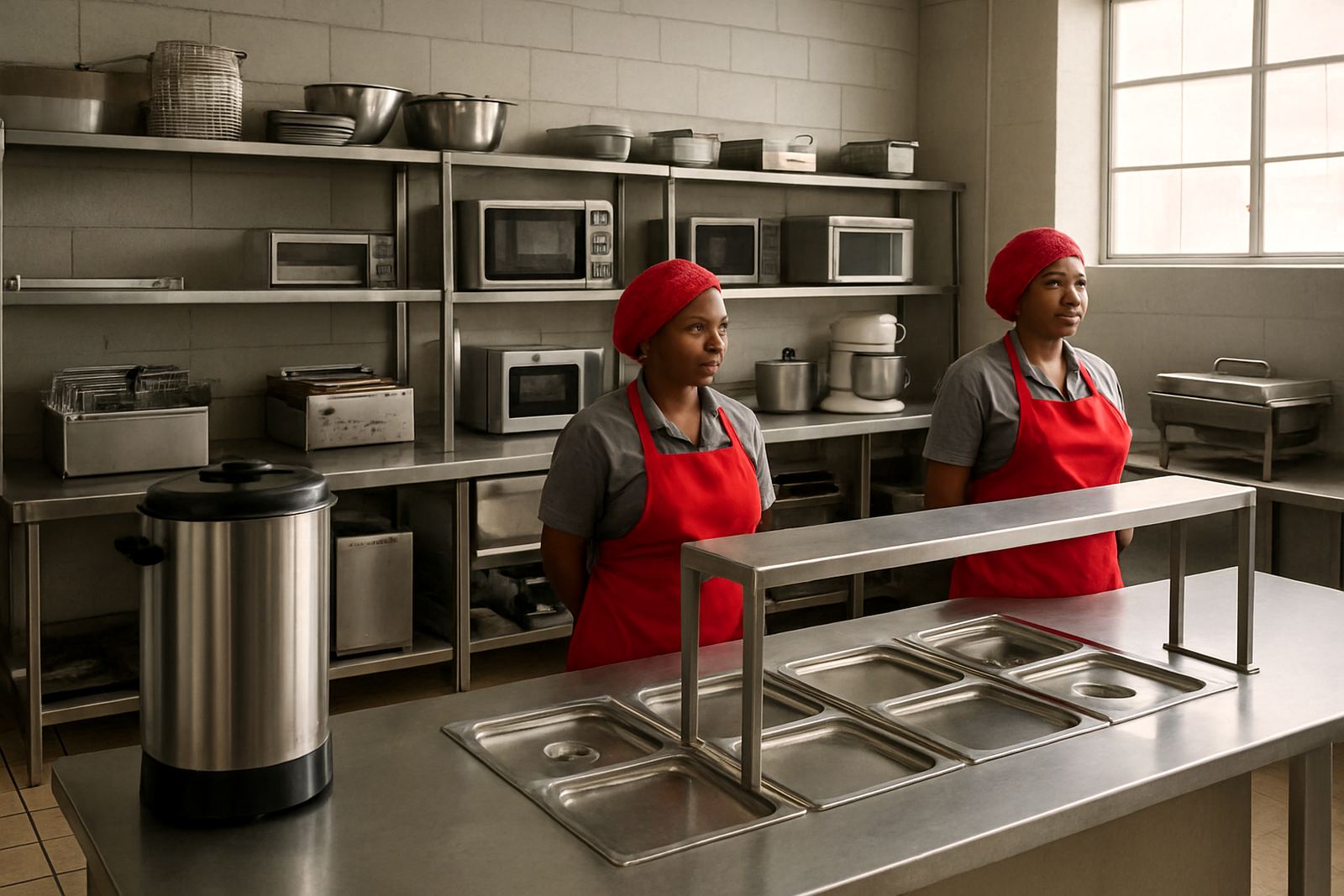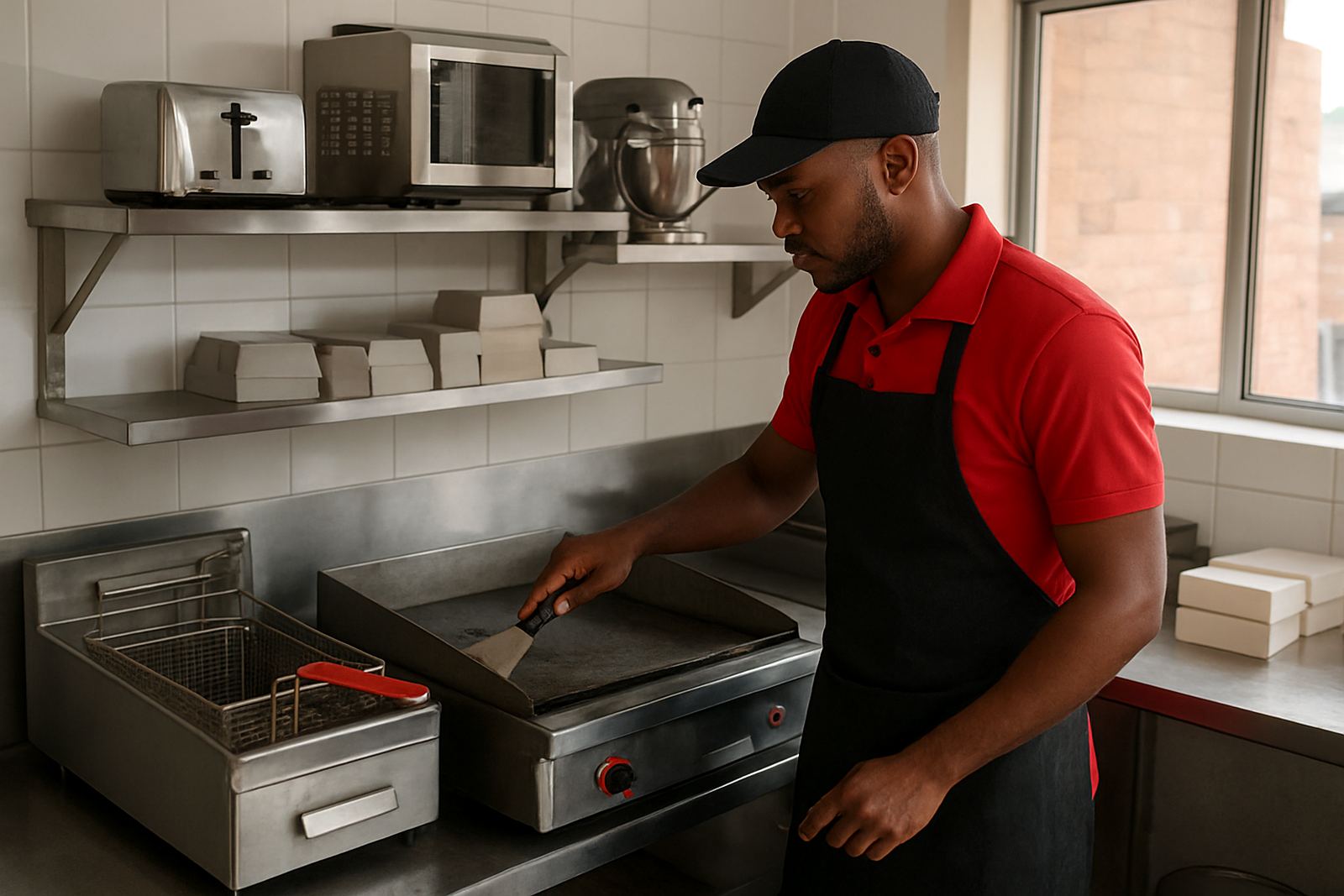
Brief from a busy Pretoria West takeaway
The client was a new takeaway operator in Pretoria West, serving chips, fried snacks and hot grab-and-go meals to passing trade and nearby workers. They wanted a compact line that could sit in a narrow front counter area, keep product moving and still look tidy for customers at the till.
The main brief was simple enough on paper: fry product fast, keep chips at the right holding temperature, and present cooked items in a warm cabinet without crowding the service counter. In practice, the site had low ceiling clearance, one wall socket bank that needed testing, and a front-of-house area where every mm mattered. We worked from a measured layout and kept the equipment footprint tight, because a takeaway can lose time every day if staff are forced to walk around each other.
- Site: Pretoria West, Gauteng
- Use: fast-food service and counter sales
- Core equipment: fryer, chip station, warm display cabinet
- Key need: quick service with a small footprint
Space limits and power checks on site
Before supply, our team checked the available floor space, doorway widths and electrical points. The building had an older fit-out, so we also looked at cable routing, access to the extraction area and where the equipment would sit for safe movement of staff. In a takeaway, a fryer that is too close to the traffic line becomes a problem very quickly.
Load-shedding was part of the conversation from the start. The client needed equipment that could be restarted without drama after interruptions, and the holding side had to recover quickly once power returned. We confirmed the circuit capacity, recommended a practical plug-and-play arrangement and made sure the line could be isolated for cleaning and maintenance.
- Measured on site before delivery
- Checked socket position and load points
- Allowed for safe cleaning access behind the line
- Kept the service side open for staff movement
The Pretoria West area can also be dusty, so we paid attention to ventilation, easy-wipe finishes and a cabinet layout that would not trap grease around the controls.
What we supplied and how it was set out
We supplied a commercial fryer sized for steady takeaway output, a chip station for holding and seasoning, and a warm display cabinet for cooked product that needed to stay presentable at the counter. The equipment was arranged in sequence so staff could move from frying to draining, then into the warm holding section without crossing paths.
The fryer was selected for reliable daily use, with a practical oil capacity for small to medium output. The chip station was set at counter height for efficient access, while the warm display cabinet gave the front counter a proper retail finish and kept the food visible to customers. The aim was not just to fit equipment in, but to make the line work as one motion from start to finish.
- Commercial fryer for chips and fried snacks
- Chip station positioned next to the fryer
- Warm display cabinet for holding and presentation
- Layout suited to a single-operator or two-person line
The client wanted enough capacity for lunch-time spikes without overbuying equipment they would not use. That balance matters, especially for new food businesses where cash flow is tight and every purchase must earn its keep.
Installation and handover in two weeks
From approval to final handover took two weeks. Week one was for confirming the layout, checking dimensions and preparing the line for delivery. Week two covered positioning, final setup, testing and handover training. That pace suited the opening schedule and avoided leaving the client with a half-finished counter area.
On installation day, we positioned the units, checked clearances and made sure the work area stayed neat. We also walked the client through daily start-up, shut-down, cleaning and safe chip management. For a takeaway, the first few days are usually the hardest, so we kept the instructions practical and short.
- Week 1: site confirmation and order finalisation
- Week 2: delivery, positioning and testing
- Handover included basic staff training
- Final checks covered access, heat and cleaning points
After setup, we stayed available for follow-up support in case the team needed help with routine operation or a small adjustment to the counter flow.
Results at counter level
The finished line gave the takeaway a cleaner front counter and a faster working rhythm. Chips could be fried and held in one movement, while cooked items stayed visible in the warm cabinet instead of being covered and lost at the back. That made service easier for staff and improved the customer experience at the same time.
Because the equipment was matched to the site size, the client did not have wasted space or unnecessary heat build-up around the prep area. The team could serve more steadily during lunch periods, and the counter looked organised instead of crowded. In a busy township-adjacent or roadside takeaway, presentation matters more than people sometimes think.
- Better service flow during peak trading
- Improved food visibility at the counter
- Less congestion around the fryer and chip area
- Tidier front-of-house appearance for walk-in trade
The client also reported that cleaning at the end of the day became easier, since each item had a clear place and there was enough room to work around the equipment without moving things twice.
What we would repeat on a similar job
On a similar Pretoria West or Gauteng takeaway project, we would again start with a full site measure and power check before quoting. That step saves time and cuts down on surprises once the equipment arrives. We would also keep the layout short and direct, because a compact food line usually works better than a wide one with too many hand movements.
We would keep the same approach to training as well. New takeaway teams need practical guidance on daily cleaning, oil handling and holding temperatures, not a long lecture. The first week is when habits form, so a clear handover matters. It is also worth planning for future servicing from day one, especially in an area where dust, long trading hours and power interruptions can put strain on equipment.
- Measure first, order second
- Keep the line compact and easy to clean
- Train staff on daily start-up and shut-down
- Plan servicing early, not after a breakdown
For this project, the final result matched the brief well: a practical takeaway line that could open, trade and hold product without fuss. That is usually the sign of a good fit-out, even if the customer never thinks about the layout after the first busy Saturday.
Key facts
| Project location | Pretoria West, Gauteng |
|---|---|
| Project type | Fast-food takeaway line fit-out |
| Main equipment | Commercial fryer, chip station, warm display cabinet |
| Delivery and installation | 2 weeks from approval to handover |
| Service support | Training, servicing and breakdown repairs available |
| Base and coverage | Silverton, Pretoria with Gauteng support |