A student meal point that had to move quickly
The client was a private student residence in Arcadia, Pretoria, serving breakfast and supper to a large number of residents in short windows between lectures and evening study time. The old meal point was slowing things down, with warm food running cold too quickly and staff having to move trays and pans around by hand. They needed a clean, organised servery that could handle repeat use every day without becoming hard to manage.
The main brief was simple: keep food at serving temperature, improve the flow of students, and make the line easier for staff to refill and wipe down between sittings. They also wanted equipment that would still function sensibly during load-shedding, because a residence cannot stop serving when the power dips. The dining area had limited width, so the layout had to work in a tight footprint and still leave enough space for a queue.
- High-turn serving point for breakfast and supper
- Space constraint in a narrow Arcadia dining area
- Stable holding temperatures for pre-cooked meals
- Simple cleaning and easy access for staff on shift
What we measured, and what had to be worked around
We started with a site assessment and measured the available wall length, power points, access routes and clearance for staff and students. The residence had a fixed serving door position and a tight corner near the dish return, so the line had to be arranged to avoid bottlenecks. We also checked the floor level, because a slight fall in the slab can make a long counter sit badly if it is not set correctly.
Another constraint was the local electrical loading. With heaters, fridges, lights and a number of small appliances already on the board, the new equipment had to be selected and placed carefully. We planned the points so the main heating units could be isolated in sections, rather than everything tripping at once. That gives the team more control during peak service, and it helps during outages when the generator or backup supply comes on line.
- Wall-to-wall measurement for a compact serving line
- Power balancing to suit the existing electrical board
- Clear space for two staff members to serve at once
- Access planned for cleaning, refilling and maintenance
Equipment supplied for the Arcadia servery
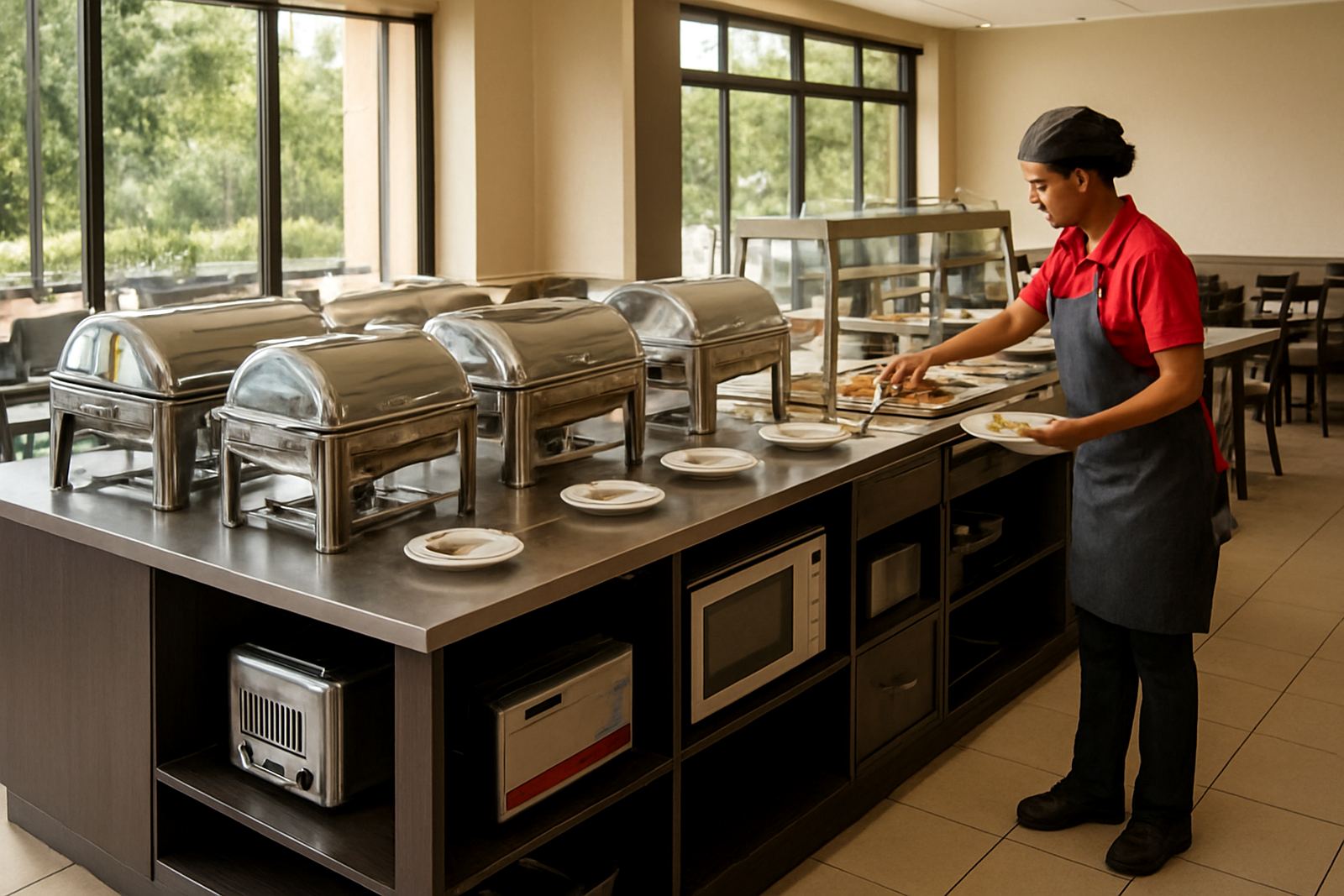
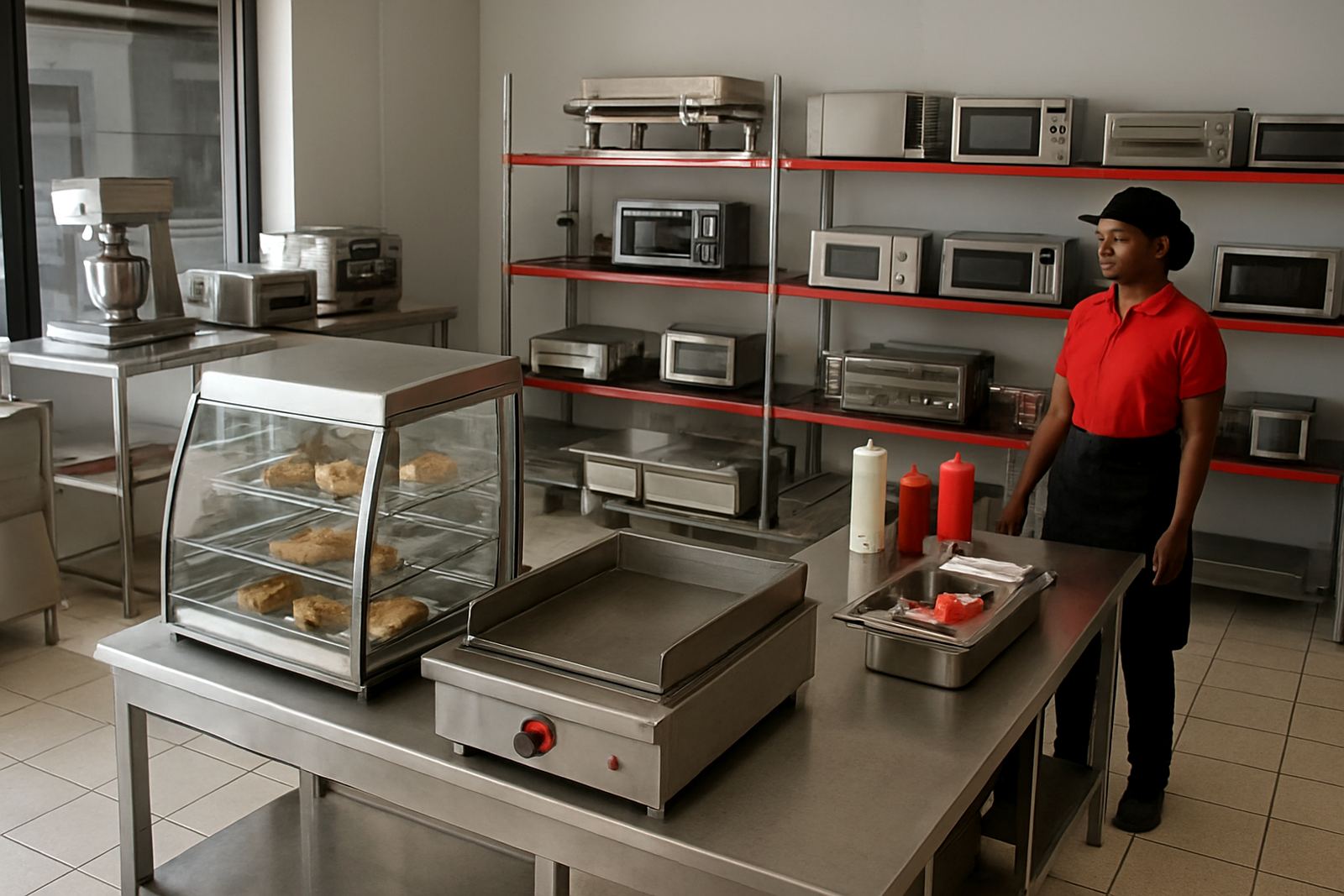
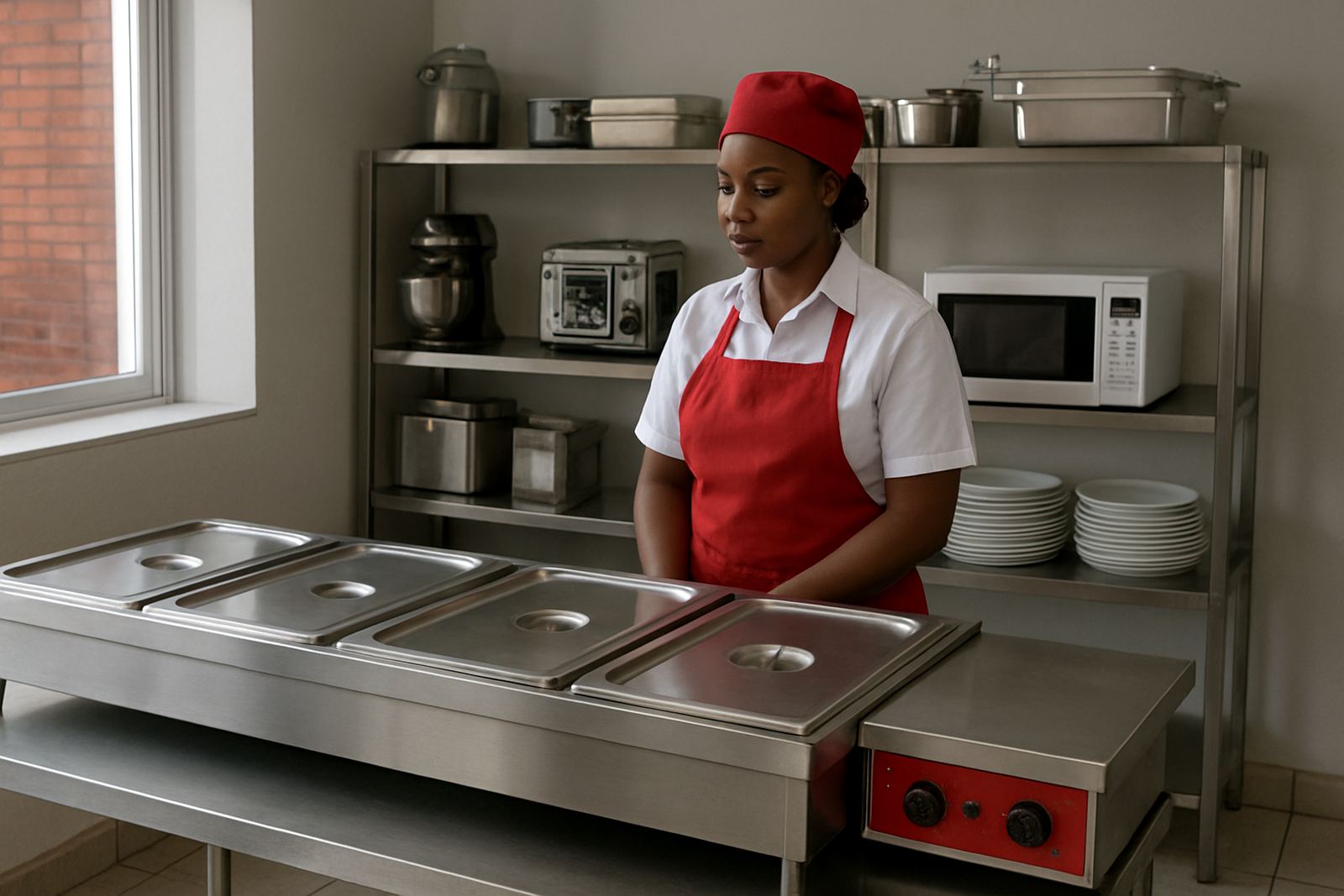
We supplied a working mix of serving and reheating equipment suited to student meal service rather than restaurant plating. The key items were a heated serving line with food wells for hot dishes, a countertop microwave station for quick reheats, and hot holding gear for plated meals and backup trays. We also included stainless counters and positioning to keep the workflow straight from kitchen pass to student collection point.
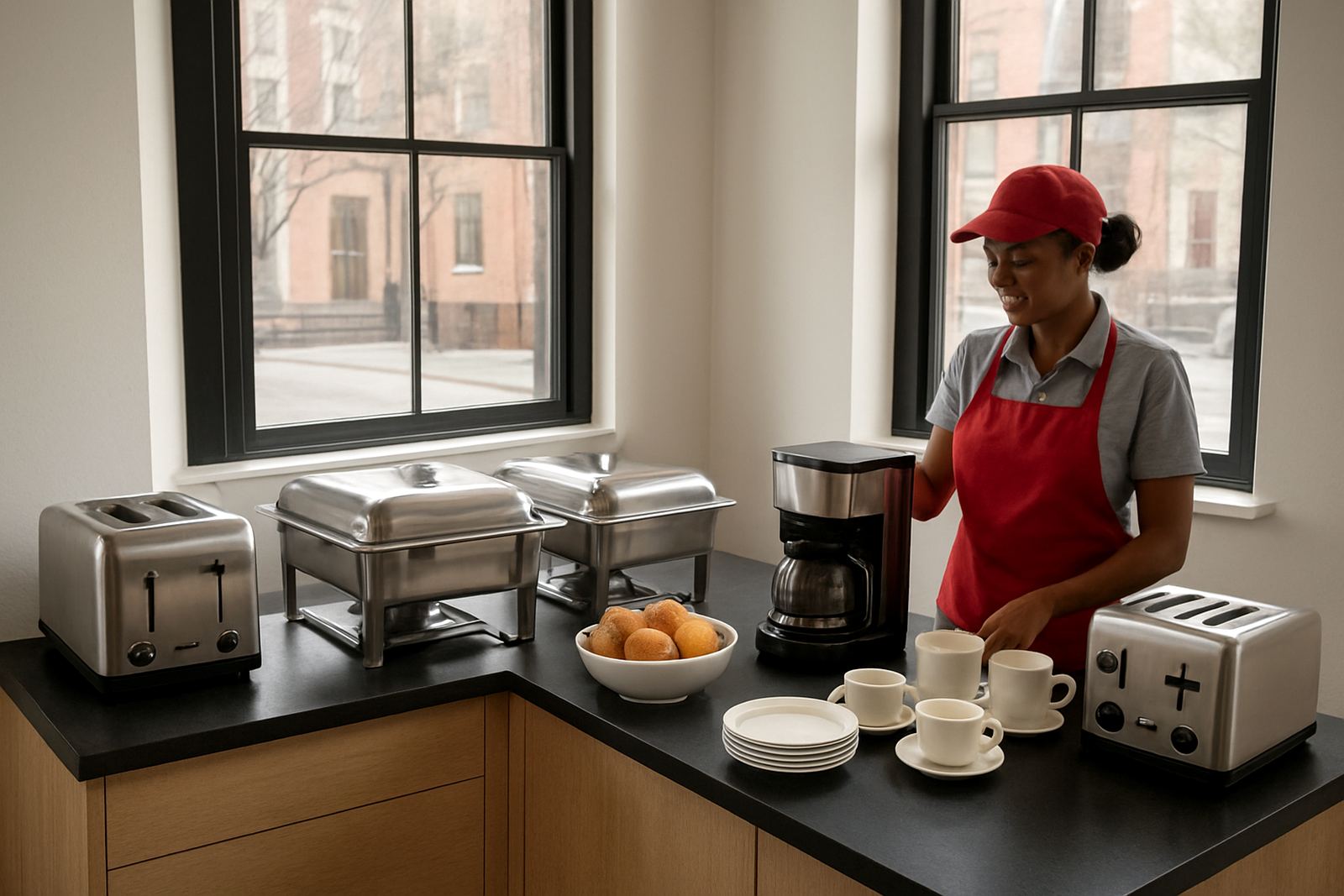
The food wells were selected for even heat distribution and daily use. The microwave units were placed where staff could reheat individual portions without crossing the main queue. We also supplied chafing dishes for flexible service during functions or special evenings, because residence meals are not always the same from one week to the next. The stainless finishes were chosen for easy wipe-down and better resistance to moisture in a busy kitchen, which matters in Pretoria when steam and water are present all day.
- Heated serving line with multiple food wells
- Countertop microwave station for fast reheating
- Chafing dishes for flexible holding and events
- Stainless work surfaces for easier cleaning
- Positioning that kept the queue moving in one direction
Installation and commissioning in under two weeks
The project ran over a short two-week period from final sign-off to handover. Week one covered the final quote, site confirmation and delivery scheduling. Week two covered installation, connection checks and a working run with staff. Because the residence needed the servery back in action quickly, we coordinated the drop-off around meal times and avoided the busiest student movement periods.
Our installation technician set out the counters, checked alignment, and made sure the heat units had enough ventilation around the sides and back. The service coordinator then tested the equipment under load, while the workshop team pre-checked the items before dispatch. Once the line was powered, we ran through temperature recovery, cleaning points and the order of use for opening and closing procedures. The handover was done on site so the staff could ask practical questions there and then.
- Week 1: site measure, final quote and delivery planning
- Week 2: install, commissioning and staff handover
- Same-day testing for heat recovery and safe operation
- Training on daily cleaning and basic fault reporting
How the new setup changed service
After the install, meal service became more controlled and far less stop-start. Staff could plate and serve in a single direction, while hot dishes stayed at a more reliable temperature during the busiest time. The residence reported fewer delays at the counter and less food waste from trays left too long before service. That matters in a student setting where portions need to stretch without losing quality.
The client also found that the new arrangement made closing easier. The surfaces could be wiped down faster, and the equipment layout meant fewer loose items had to be moved in and out each evening. In a place like Arcadia, where the meal point has to work around studies, security checks and different opening times, that kind of order makes a real difference. It gives the team confidence that service will hold, even on days when the schedule changes at short notice.
The residents noticed the line moved faster, and staff had fewer complaints about waiting. Food stayed hotter, the counter looked cleaner, and the whole point felt more organised. Small details, but they count when you are feeding a full house every day.
What we would repeat on the next residence project
If we were doing a similar servery again, we would keep the same sequence: site assessment first, then power planning, then a compact layout with separate holding and reheating zones. For student accommodation, the right mix is usually not about more equipment, it is about equipment that can be cleaned quickly and that can take regular use without extra fuss.
We would also keep a buffer in the installation plan for minor site surprises such as uneven floors, late access to the dining hall or a change in queue direction. Those things happen in real buildings. Planning for them saves time and avoids extra rework. In this project, the early measurements and proper handover kept things moving, and that is the part we would repeat without change.
- Measure first, then design the serving flow
- Separate heating, holding and reheating functions
- Keep cleaning access open at the back of the line
- Train the staff before the first full service
Key facts
| Project | Arcadia Residence Servery |
|---|---|
| Town | Arcadia, Pretoria |
| Client type | Student residence meal point |
| Timeline | 2 weeks from approval to handover |
| Main equipment | Heated serving line, microwave station, chafing dishes |
| Scope | Quote, site assessment, delivery, installation, commissioning and training |