What a soup kettle does at a serving point
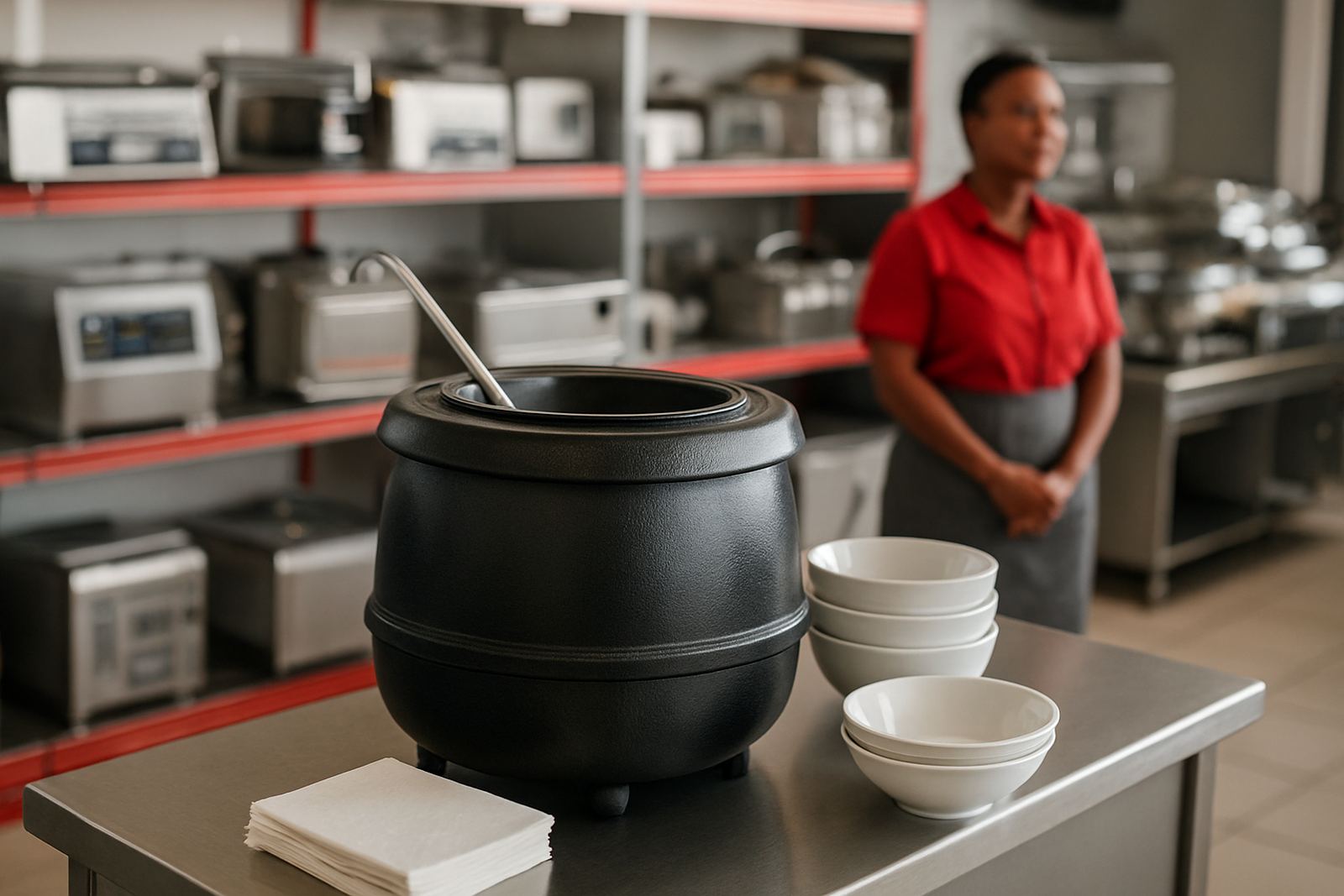
A soup kettle is a compact heated pot made for holding hot food at a controlled serving temperature. It is not a cooking pot for heavy boiling, but a holding unit that keeps contents warm and ready for ladling through breakfast, lunch and busy service periods.
In Pretoria, Centurion and Midrand, these units are often used where staff need quick service and limited counter space. They work well for soup, stew, curry sauces, mince gravies and thick drinks like porridge mixtures. For canteens and takeaway counters, the main advantage is simple service and less waste. Staff can prepare one batch, hold it safely and top up as needed, rather than reheating every few minutes.
Most units are designed with a round inner pot, a heated outer body and a lid that helps keep moisture in. Some models use a dial for temperature control, while others are fixed heat units. For wetter foods, that means less skinning on the top and a more even serving texture. In hot kitchens around Gauteng where the equipment runs all day, that consistency matters.
Sizes and options we normally supply
Soup kettles come in practical sizes to suit small counters or higher volume service. The right choice depends on how many servings you need in a rush, whether the food is thin or thick, and how often the kettle will be opened during service.
- Smaller counter units: usually around 8 L to 10 L, suited to light daily service.
- Medium units: around 11 L to 13 L, common for schools, offices and coffee shop counters.
- Larger units: around 16 L to 20 L, better for busy lunch periods and event serving.
- Stainless steel finish: easier to clean and better for regular use in humid or coastal conditions.
- Black or coated body finishes: neat on front counters and simple to match with other serving gear.
Some customers ask for a single soup kettle, while others order several units to separate different menu items. That makes service quicker and helps with menu control. We also supply used equipment where the budget is tight, but the unit must still be checked for the heating element, thermostat and lid fit. A kettle with a damaged lid or weak heat control usually gives trouble later.
If your operation runs through load-shedding periods, it is worth thinking ahead about how the kettle fits into your overall hot-holding plan. A soup kettle can keep food at serving temperature, but it still needs a stable power supply or a suitable gas setup if you are using a gas model.
Where soup kettles suit best in Gauteng kitchens
Soup kettles suit serving areas where food is meant to move quickly from pot to plate. They are common in company canteens, school tuck shops, church halls, takeaway counters, home industry kitchens, forecourt food stations and function venues in Pretoria, Randburg, Boksburg and Kempton Park.
They are also handy for businesses that serve the same item all morning or through lunch. A small catering team can keep one batch of soup, one curry sauce and one gravy on the counter without taking up the space needed for larger bain maries. In tight kitchens, every square metre counts, so the footprint is a real deciding factor.
The unit should sit on a firm, level surface with enough space around it for safe service and cleaning. If it is going on a stainless counter, make sure the counter can carry the filled weight. A full kettle can be heavier than it looks, especially once hot contents are inside. If it will stand near a wall, leave enough room to lift the lid and wipe around the body properly.
- Good for front-of-house serving stations.
- Useful where portions are ladled out in smaller amounts.
- Suitable for moderate, steady demand rather than fast cooking.
- Best used with staff who can monitor temperature and topping up during service.
Power, gas and installation checks before you order
Before ordering, it helps to confirm whether you need an electric or gas model. Electric soup kettles are the common choice for indoor counters, because they are simple to plug in and easy to manage in a fixed serving area. Gas models can suit sites with limited electrical supply, but they need safe gas storage, correct regulators and proper ventilation.
For electric units, check the plug point position, the available load on that circuit and whether the cable can reach without extension leads. If you are running several hot items at once in a Pretoria Central or Centurion kitchen, the electrician should confirm that the circuit will cope. Using too many appliances on the same line can trip breakers just when service gets busy.
Installation is usually straightforward, but the placement still matters. The unit must sit level so the contents heat evenly and the lid closes properly. If your counter is near washing areas or exposed to steam, ask for a position that keeps the controls out of direct splash. In workshop and site assessments, we often see small issues like poor plug access, unstable counters or no safe space for the ladle. Those details are easy to fix if they are planned early.
For new kitchens or reconfigured counters, it helps to think about the whole service flow. Where will the kettle sit, where will the staff stand, and where will the serving line move? Those questions save time once the unit arrives.
How to care for it and keep the heat steady
Good care starts with daily cleaning. Switch off, unplug or isolate the unit, then allow it to cool before wiping the body and removing food residue from the inner pot. Do not leave soup or sauce sitting overnight, because dried residue makes the next clean harder and can affect the flavour. A simple wash routine is cheaper than repairs, and it keeps the unit looking presentable on the counter.
Check the thermostat or heat setting regularly. If the contents are getting too hot at the edges or not holding temperature through service, the unit may need servicing. A kettle that overheats can scorch the food at the bottom while the top still looks fine. That often shows up first in busy sites where the lid is opened repeatedly.
For customers close to Johannesburg and the East Rand, we also recommend checking the power cord and plug top during routine servicing. Heat and moisture can wear those parts over time. If the kettle is a used unit, it is worth having the controls, element and lid seal inspected before it goes into daily use. A quick workshop check can save a midday breakdown.
- Clean after every service period.
- Do not immerse the electrical base in water.
- Keep the lid aligned and handle screws tight.
- Book preventive servicing if the unit runs daily.
What to check when placing an order
When ordering a soup kettle, the first thing to confirm is capacity. Think about how many litres you will serve before the next refill and whether the food is thick or thin. Thick stews need more attention than plain soup, so the size and heat control matter. If your site serves only a few portions at a time, a smaller kettle may be more practical than a large one.
Also confirm the power type, the voltage needed, and whether you want a plug-in unit or a gas model. Ask about the lid style, inner pot material and whether the unit includes a ladle opening or inset pot. For larger kitchens, check if you need more than one kettle so you can separate vegetarian items from meat-based soups. That is a small detail, but it helps with service and customer confidence.
When customers ask for a quote, we normally check the site, the available space and how the kettle will fit with the rest of the serving line. If delivery and positioning are needed, we can arrange that too. For Gauteng businesses working around renovations, municipal rules or tight access points, it is better to measure first than to force a unit into the wrong spot. A careful order now avoids returns and wasted time later.
Afchain Catering Equipment has supported Pretoria and surrounding areas since 2011, with quotes, installation, servicing and used equipment sourcing handled by a practical team that knows kitchen work from the ground up. If you need a soup kettle for a new counter or a replacement unit for an existing serving station, we can help match the size and setup to the job.
Key facts
| Product type | Heated holding kettle for soups, stews and sauces |
|---|---|
| Capacity options | About 8 L to 20 L depending on model |
| Power | Electric plug-in models available, gas options on request |
| Body material | Stainless steel or coated counter-top finish |
| Use | Serving stations, canteens, tuck shops and function counters |
| Service support | Quotes, delivery, installation, preventive servicing and repairs |